

adidas football jerseys earn their reputation for a few practical reasons, not just nostalgia. The brand has decades of top-level football credibility, long-running deals with elite clubs, and a product range that covers both match-spec shirts and more wearable fan versions. In market terms, adidas remains one of the two biggest forces in the category: one recent industry estimate put its football-jersey share at 32% in 2024, helped by partnerships with clubs including Manchester United, Bayern Munich, and Real Madrid, while the wider market was valued at USD 8.39 billion in 2026.
Why Your adidas Jersey Is More Than Just a Shirt
If you're trying to judge adidas as a football brand rather than just admire the badge, the short answer is this: it is a top-tier jersey maker because it consistently combines strong design identity, reliable fabric technology, and broad availability across price points. That matters whether you want a match-day shirt that feels close to what players wear or a replica you can wear every week without worrying about comfort. In my view, that balance is adidas's biggest strength—it serves serious players, everyday supporters, and collectors better than many brands that excel in only one lane.
The trade-offs are real, though. adidas authentic shirts often come with premium pricing, a slimmer cut that can be unforgiving off the pitch, and heat-pressed details that some buyers will find less durable than stitched crests over years of casual wear. Replica shirts solve most of that, but they do not feel as light or technical as the top-tier versions. So the brand's quality story is positive overall, just not one-size-fits-all.
Compared with Nike and Puma, adidas tends to be strongest when you care about club heritage, recognizable kit styling, and a clear split between player-spec and fan-spec products. Nike often pushes more aggressive visual experimentation, while Puma can offer excellent value and some standout templates, but adidas keeps showing up at the top end of football merchandising and licensed apparel. Another market report estimated the licensed football merchandise sector at USD 11.32 billion in 2024, with sports apparel taking 66.8% of revenue in 2023, which helps explain why jersey execution matters so much for a brand competing at this level.
A Symbol of Fandom and Culture
A football shirt still carries emotional weight, but that only lasts if the product itself holds up. adidas has built a lot of goodwill because many of its most famous shirts are attached to clubs and national teams with real history behind them, and because the jerseys usually feel like purpose-built sportswear rather than generic merch. Historical reporting has also shown that adidas's football strength is not a recent spike: one industry source noted a 34% football market share and more than 6.5 million replica jerseys sold in a record period, underlining how the brand is embedded in the category.
Of course, a lot of what makes a jersey special comes down to its look and feel. To really get what makes a kit iconic, you have to appreciate the art behind a great football t-shirt design.
How We Evaluated adidas Football Jerseys
adidas jerseys are judged on the factors that affect ownership, not just branding. The core criteria are material technology, comfort, durability, fit accuracy, crest and logo construction, authenticity safeguards, and overall value depending on whether you are buying as a player, a regular fan, or a collector.
What counts in adidas's favour: fabrics that manage sweat well, stitching and finishing that feel consistent, sizing that broadly matches the product description, and clear differences between authentic and replica models so buyers know what they are paying for. What counts against a jersey: overly delicate finishes for the price, a cut that works only for a narrow body type without warning, poor wash practicality, or seller listings that hide product codes and offer weak returns protection.
I also weigh buying-channel trust quite heavily. A shirt can be excellent on paper and still be a bad purchase if the listing lacks clear photos, the customization details are vague, or the seller gives you no realistic path to returns. If you want to double-check your own sizing before ordering, this quick measuring guide via Display Guru is a useful extra reference.
What This Guide Will Cover
We’ve broken the buying decision into the parts that matter most in real life:
- Authentic vs Replica: A clear breakdown of the two main types of jerseys so you can figure out which one is right for you.
- Tech and Materials: An assessment of where adidas performs well on moisture control, breathability, and build quality—and where premium shirts ask for compromises.
- Finding Your Perfect Fit: Real-world advice and tips to make sure your jersey fits exactly how you want it to, whether you go for a slim-fit Authentic or a more relaxed Replica.
- Spotting Fakes: The key details to look for to guarantee you’re buying a genuine adidas product and not a cheap knock-off.
- Where to Buy Securely: A practical comparison of official stores, club shops, specialist retailers like SoccerWares, and resale marketplaces.
By the end, you should have a much clearer view of adidas on quality, innovation, fit, authenticity, and buying options—not just which shirt looks nicest.
Authentic vs Replica: Which adidas Jersey Is for You?
So, you're looking to buy a new adidas football jersey. One of the first things you'll notice is a choice between 'Authentic' and 'Replica' versions. The names can be a bit confusing – don't worry, both are 100% official adidas products. But they’re built for completely different people and purposes. Getting this choice right is the key to loving your new shirt.
Here’s the easiest way to think about it: an Authentic jersey is the high-performance racing car, engineered from the ground up for the professional athlete. It’s the exact same piece of kit the players wear on match day. The Replica jersey, on the other hand, is the road-legal version of that car—it’s built for comfort, durability, and the fan cheering from the stands, the sofa, or the pub.
The Authentic Jersey: For the Player
The Authentic jersey is all about one thing: giving players a competitive edge. This is the shirt designed for the likes of Bukayo Saka or Marcus Rashford to wear during 90 minutes of intense action on the pitch.
- Fit and Cut: These shirts have a slim, athletic fit. They're cut to hug the body, reducing drag and giving you total freedom to move. If you have an athletic build or prefer a tighter feel, this may suit you. A word of warning, though: most fans find they need to size up from their usual T-shirt size to get a comfortable fit.
- Materials and Technology: The racing car analogy really hits home. Authentic jerseys use adidas's top-tier fabric tech, like HEAT.RDY, which is engineered for maximum breathability and cooling. The material is lightweight and often has a textured, perforated feel to help air flow and keep you cool under pressure.
- Badges and Logos: To shave off every possible gram of weight, the club crest and brand logos are heat-pressed onto the fabric. This method gets rid of the heavier stitching you'd find on other shirts, creating a sleek finish that won’t weigh a player down.
This simple flowchart can help you figure out which shirt aligns with what you're looking for.

It really comes down to whether your priority is on-pitch performance, everyday comfort, or long-term collectability.
The Replica Jersey: For the Supporter
The Replica jersey is made for the heart and soul of the game: us, the fans. While it has the exact same iconic design and colours as the Authentic version, it’s been fine-tuned for everyday comfort and wear-and-tear. This is the shirt you’ll see filling stadiums and worn with pride on streets everywhere.
It's the most popular choice for supporters by a country mile, and you’ll find an incredible selection over in the SoccerWares fan apparel collection.
The key distinction lies in the intended use. Authentic kits are for the pitch, prioritising lightness and athletic performance. Replica kits are for the stands, prioritising supporter comfort and long-lasting wear.
The replica is a more forgiving and practical choice for daily life.
- Fit and Cut: Replicas have a much more relaxed, standard fit, a lot like a regular T-shirt. It gives you more room in the chest and waist, making it a super comfortable choice for all body types. It's also perfect for layering over a hoodie on a chilly match day.
- Materials and Technology: These jerseys typically use adidas’s AEROREADY technology. It’s still fantastic at wicking moisture and keeping you dry, but the fabric is slightly heavier and more durable than the HEAT.RDY material. It’s built to handle the spin cycle and the stresses of being worn week in, week out.
- Badges and Logos: This is one of the most obvious differences. On a Replica jersey, the club crest and brand logos are stitched or embroidered on. This not only adds a classic, premium feel but is far more durable for long-term wear compared to the heat-pressed badges on the Authentic kits.
To make the choice even clearer, here’s a quick side-by-side look at the main differences.
adidas Authentic vs Replica Jersey at a Glance
| Feature | Authentic (Pro) Jersey | Replica (Fan) Jersey |
|---|---|---|
| Fit | Slim, athletic cut. Hugs the body. | Relaxed, standard fit. Like a T-shirt. |
| Sizing Tip | Consider sizing up one size. | True to your regular size. |
| Fabric Tech | HEAT.RDY – ultra-light & cooling. | AEROREADY – moisture-wicking & durable. |
| Badges & Crest | Heat-pressed for light weight. | Embroidered/stitched for durability. |
| Best For | Playing competitively, athletic builds. | Everyday wear, watching matches, comfort. |
Ultimately, your decision comes down to what you want from your adidas football jersey. Are you about to play a competitive match and need every possible performance advantage? Or are you showing your colours from the sidelines and want a comfortable, durable shirt that will last for seasons to come? Answering that one question will point you straight to the perfect choice.
Understanding adidas Jersey Technology and Materials
The simplest way to evaluate adidas on football jerseys is to ask whether the technology changes the wearing experience in a noticeable way. Usually, it does. adidas separates its range clearly: AEROREADY for fan-focused comfort and moisture management, and HEAT.RDY for lighter, match-oriented cooling and airflow. According to adidas product guidance on AEROREADY, the fabric system is built to manage sweat and support dry comfort during activity. On the premium side, adidas has also described HEAT.RDY as a cooling-focused performance platform designed to maximize breathability in hot conditions.

That split is one reason adidas clothing is generally seen as good quality in the football space: the brand is not pretending every shirt is the same. Replica kits are designed to be more forgiving, more durable in day-to-day use, and easier to wash and rewear. Authentic kits push harder on weight reduction, ventilation zones, and sleeker construction. From a buyer's perspective, that makes the range easier to understand than some brands that blur the line between performance and lifestyle.
Where adidas Jerseys Perform Well
adidas does several things consistently well in football shirts:
- Moisture management: AEROREADY replica shirts are comfortable in regular use and usually avoid the clingy feel cheaper polyester tops can have.
- Lighter match-spec construction: Authentic shirts do feel meaningfully lighter, and that matters if you play rather than just collect.
- Recognizable design language: adidas tends to keep a strong visual identity without making every club shirt look identical.
- Broad club execution: Across major partnerships, the baseline standard is usually dependable rather than hit-and-miss.
I tend to think adidas is at its best when it keeps the shirt clean and lets the materials and club identity do the work. Some of its strongest kits feel polished rather than over-designed.
Where the Limitations Show
The weaknesses are mostly practical rather than catastrophic. Authentic shirts are less forgiving for casual wear because the cut is tighter, the fabric can feel more delicate, and the heat-pressed finishing asks for more care. If you want a shirt to wear weekly, wash frequently, and keep for years, replica versions are often the smarter buy even when the authentic is technically superior.
That is also where crest construction matters. Heat-pressed badges and sponsor applications keep match shirts light, but many buyers still prefer embroidered elements because they feel sturdier over time. In my experience, this is the main point where shoppers mistake "pro-level" for "better in every way"—it is better for performance, not automatically better for ordinary ownership.
Editorial Take: Authentic vs Replica Fabric in Real Use
The fabric difference is obvious as soon as you handle both types side by side. Authentic adidas shirts usually feel thinner, more ventilated, and more specialized. Replica shirts feel slightly denser and less fragile, which is why I find them easier to recommend to most supporters. If I were buying one shirt to live in across a season, not just admire on launch day, I would usually lean replica.
Of course, the technology goes beyond just the fabric. Ergonomic seams are placed to follow the natural lines of the body, reducing chafing and allowing for a full range of motion. If you want to dive deeper into how tech is shaping the modern game, check out our guide on the wider role of technology in football.
The modern approach to sportswear design often requires this kind of consideration; as experts point out, achieving the perfect balance between style and function in activewear is key to creating gear that both looks great and performs exceptionally.
Finding Your Perfect Fit in an adidas Jersey
There’s nothing more gutting than waiting for your new kit to arrive, only to find it fits all wrong. It’s either strangling your shoulders or hanging off you like a tent. Getting the size right is a common headache, but it doesn't have to be. This is our hands-on guide to making sure your next adidas football jersey fits perfectly, so you can wear your team's colours with total comfort and confidence.
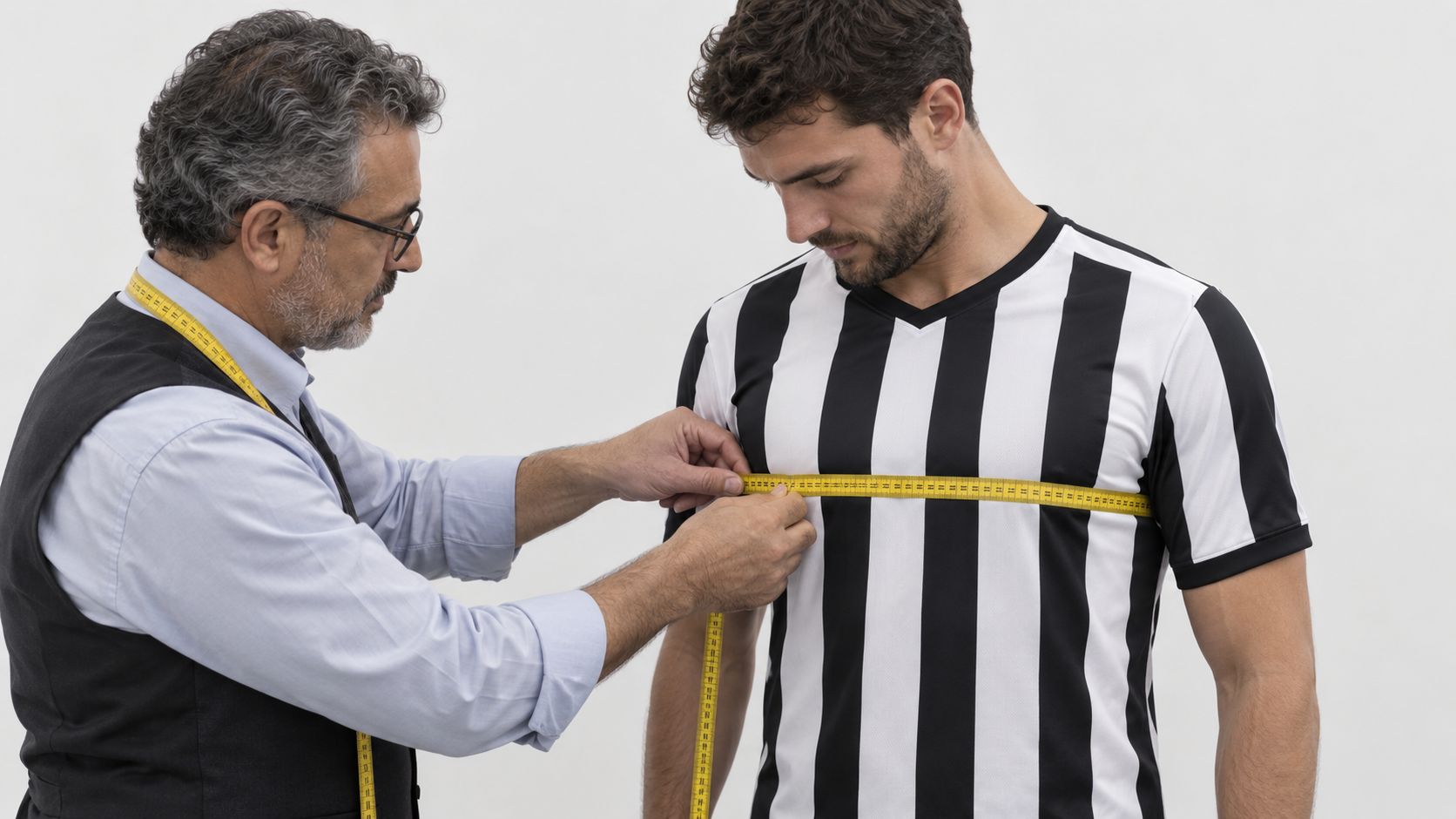
First things first, let's revisit the massive difference between Authentic and Replica jerseys. This is where most people get tripped up. Authentic kits are designed with a slim-fit profile for the pros, so they’re meant to hug the body. Replicas, on the other hand, have a more standard, relaxed fit—much closer to your everyday t-shirt.
Understanding that one distinction is half the battle won. If you love that athletic, on-pitch look or have a slim build, an Authentic in your usual size might be spot on. For most fans, though, the best advice is to size up if you're buying an Authentic jersey. It’ll give you that bit of extra room you need for a comfortable fit.
How to Measure Yourself for an adidas Jersey
The absolute best way to eliminate guesswork is to take two quick measurements. It takes about a minute and all you need is a flexible tape measure.
- Chest: Stand up straight, arms relaxed at your sides. Wrap the tape around the fullest part of your chest, keeping it level with the floor. You want it snug, but not so tight you can’t breathe.
- Waist: Find your natural waistline—it's usually just above your belly button. Wrap the tape around that point, again keeping it comfortable.
Got those two numbers? Brilliant. Now you can match them against the official adidas size chart on any product page. It's far more reliable than just picking your usual t-shirt size, especially when you’re buying online from a place like SoccerWares.
Don't just go by 'Medium' or 'Large'. Your chest measurement in inches or centimetres is the single most accurate predictor of a good fit in a football jersey.
This simple step is the difference between a shirt that lives in your wardrobe and one you never want to take off.
Practical Tips for the Perfect Jersey Fit
Beyond just the numbers, a few real-world bits of advice can help you nail the final decision. A jersey needs to fit your life as a fan, not just your measurements on a chart.
Here are a few extra things I always consider before buying:
- Consider Your Layers: Are you heading to a freezing Tuesday night game? If you plan on wearing your shirt over a hoodie or a thermal base layer, you’ll probably want to go a size up for that extra space, even with a Replica.
- Personal Preference: How do you like your clothes to feel? Some people love a closer, sharper fit, while others prefer something looser and more casual. There is no right or wrong, it is about what feels best for you.
- Fit for Different Genders: It’s worth remembering that many clubs now offer specific fits. If you’re looking for a cut designed for a woman's frame, see ladies football shirts, which often have a more tapered waist and a different sleeve cut.
By taking a moment to measure yourself and think about how you'll wear the shirt, you can buy your next adidas jersey without a single doubt. You’ll save yourself the hassle of returns and get a kit that feels like it was made for you from the second you put it on.
How to Spot a Fake and Guarantee Authenticity
With the market flooded with knock-offs, making sure you’re spending your hard-earned money on a genuine adidas football jersey is more important than ever. Nothing kills the buzz of a new shirt faster than realising it’s a cheap, poor-quality fake. But don’t worry, once you know the tell-tale signs, you can spot a dodgy one from a mile off.
The sheer demand for these shirts is exactly why the counterfeit market is booming. The numbers are mind-boggling. Take Real Madrid, one of adidas's top clubs, which sold a staggering 3.13 million shirts in 2025 alone. Here in the UK, adidas giants Manchester United and Arsenal are among Europe's highest earners from shirt sales, pulling in a combined €219 million every year. Those figures show just how much people want authentic shirts, a fact that counterfeiters are more than happy to cash in on.
First Things First: Check the Crest and Logos
The club crest is the soul of the shirt, and it’s often the first place a fake gives itself away. On a genuine Replica jersey, the crest should be cleanly embroidered with tight, precise stitching. You shouldn’t see any loose threads or fuzzy, frayed edges. It should look sharp.
On an Authentic (Pro) jersey, the crest is heat-pressed for a lighter, performance feel. A real one will be perfectly flat and smooth, with crisp lines and vibrant, solid colours. Fakes often have bubbly, peeling, or poorly aligned heat-pressed logos that look cheap and feel flimsy to the touch. The same high standards apply to the adidas logo and any sponsor graphics – they should be flawless.
The Product Code: Your Secret Weapon
This is probably the most reliable trick in the book for confirming authenticity. Every official adidas product has a unique product code printed on a small tag inside the jersey, usually found along the bottom side seam. It will be a mix of letters and numbers.
Now, grab the main swing tag that came attached to the shirt. You should find the exact same product code printed on there, too.
If the code on the inner tag and the swing tag don't match, you've almost certainly got a fake. Counterfeit manufacturers rarely go to this level of detail.
Feel the Fabric and Inspect the Stitching
Just run your hands over the material. A genuine adidas jersey, whether it uses AEROREADY or HEAT.RDY tech, has a very distinct, high-quality feel. It’ll be soft yet structured, and either smooth or have a specific technical texture designed for performance. Fakes often use cheap, shiny polyester that feels stiff, overly slippery, or just plain wrong.
Next, take a close look at the seams and hem. adidas takes huge pride in its construction quality. The stitching on a real jersey will be dead straight, even, and consistent all the way around. Counterfeits, on the other hand, frequently have messy, uneven, or loose stitching, especially around the collar and sleeves.
The Holographic Sticker and Swing Tags
Newer adidas jerseys often come with a small, holographic sticker on the swing tag that says 'Authentic Licensed Product' or something similar. Tilt it in the light; it should have a proper 3D effect. Fakes might try to replicate this, but they usually just use a simple shiny sticker that lacks any real holographic depth.
The swing tags themselves should feel like high-quality card stock, with sharp, clear printing and perfect branding. Any blurry text, flimsy paper, or spelling mistakes are massive red flags. The attention to detail on these small elements says a lot. And while spotting fakes is a great skill, you might also be interested in the stories behind some of the most iconic kits out there, which you can read about in our look at the enduring appeal of the classic Oxford United football shirt.
Ultimately, while these tips will help you dodge the obvious fakes, there’s only one way to be 100% certain: buy from a source you trust. Purchasing directly from the club, the official adidas website, or a reputable specialist retailer like SoccerWares is the only way to guarantee you’re getting the genuine article. It protects you from dodgy sellers and ensures your investment is in quality that’s built to last.
Where to Securely Buy Your adidas Football Jersey
Buying channel matters almost as much as the jersey itself. The safest option is not always the cheapest, and the cheapest option is rarely the most reliable once you factor in fakes, missing tags, poor customization, or no returns path. The best way to approach it is to compare each channel on authenticity confidence, price, customization, and after-sales protection. For a wider view of UK online demand and retailer visibility, the adidas UK retailer snapshot from Grips Intelligence is a useful market reference.
Official adidas Store
Buying direct from adidas is the cleanest low-risk choice. You should expect the highest authenticity confidence, full product descriptions, official photos, standard returns protection, and clear distinctions between authentic and replica models.
- Strengths: Highest trust level, clean SKU visibility, latest launches, consistent sizing info.
- Risks: Full retail pricing, popular sizes can sell out quickly, customization options may be more limited than some club-specific stores.
- Price expectation: Usually full price at launch, with discounts more likely later in the cycle.
- Best for: Buyers who want the simplest genuine purchase with minimal guesswork.
Official Club Shop
The official club shop is often the best place if customization matters. It usually offers the most accurate shirt-printing options, league patches, and club-specific packaging or launch details. For example, clubs such as Manchester United Official Store and Arsenal Direct remain useful reference points when you want direct-from-club buying options.
- Strengths: Strong authenticity confidence, official namesets and patches, club-specific personalization.
- Risks: Returns can be stricter on customized items, and prices are often at the top end.
- Price expectation: Similar to adidas direct, especially on current-season kits.
- Best for: Supporters who want the most official club presentation or exact player customization.
Specialist Football Retailer
A good specialist retailer can be the smartest middle ground, especially if you want selection, practical support, and a store that understands shirt buyers. Curation helps. A focused retailer such as SoccerWares can make it easier to compare styles, fan apparel, and giftable options without trawling through a huge general storefront.
- Strengths: Easier browsing, knowledgeable support, strong mix of fan gear and football-focused apparel, potential availability after official sites sell out.
- Risks: Quality varies by retailer, so you still need to verify reputation and returns terms.
- Price expectation: Can range from full retail to discounted stock depending on season and inventory.
- Best for: Buyers who want football-focused service, easier navigation, or a broader supporterwear selection beyond just the match shirt.
When is a specialist retailer the best choice? Usually when you want a trusted football-first store, you care about service, or you are shopping for more than one item. If your priority is absolute launch-day authenticity with official club patches, go direct to adidas or the club. If your priority is convenience, curation, and a broader supporter experience, a reputable specialist can be the better option.
Resale Marketplace
Resale platforms can be useful for sold-out shirts, older seasons, or collector pieces, but they require the most caution.
- Strengths: Access to rare shirts, discontinued seasons, and sometimes lower prices.
- Risks: Highest counterfeit risk, inconsistent photos, missing tags, vague condition descriptions, weak return options.
- Price expectation: Can be bargain-level or inflated, especially for hyped or retro kits.
- Best for: Experienced buyers who know how to verify product details and are comfortable taking more risk.
What to Check Before You Buy Anywhere
Whatever the channel, I would not buy until a listing passes a basic verification check:
- Returns policy: Clear, readable, and realistic—especially if the shirt is customized.
- Product photos: Multiple angles, close shots of the crest, logo, and tags where possible.
- SKU visibility: Product codes should be visible or available on request.
- Patch and printing details: Check whether namesets and badges are official, aftermarket, or just decorative add-ons.
- Seller reputation: Look for consistent reviews, football-specific knowledge, and signs the seller handles genuine stock regularly.
That buying discipline matters more than flashy storefront language. I am usually far more confident in a simple listing with clear codes, honest photos, and a solid returns policy than in a slick page that hides the important details.
Frequently Asked Questions
Is adidas a good football brand?
Yes. adidas is one of the strongest football brands because it combines elite-club credibility, reliable jersey technology, and a range that makes sense for different buyers. If you want one weakness, it is that some authentic shirts prioritize performance so heavily that casual wearers may prefer the replica instead.
Is adidas clothing good quality?
Generally, yes—especially in football apparel. The stronger points are fabric performance, consistency, and recognizable finishing standards. The caveat is that "good quality" does not mean every product is ideal for every use: match-spec items can feel less durable in everyday rotation than fan-focused versions.
What sports does adidas make jerseys for?
adidas makes jerseys and teamwear across football, rugby, basketball, cricket, running-inspired training ranges, and other sports categories depending on region and licensing. Football remains one of its most visible and commercially important jersey categories.
Should I buy an authentic or replica adidas jersey?
Buy authentic if you want the lightest performance-focused shirt and do not mind a slimmer fit or more delicate finishing. Buy replica if you want better everyday comfort, easier care, and stronger long-term practicality. For most supporters, replica is the more sensible purchase.
How do I care for an adidas football jersey?
Wash it inside out on a cold, gentle cycle, use mild detergent, and air dry it. Avoid tumble drying, bleach, and high heat, especially if the shirt has name printing on football shirts or heat-pressed details. That is the safest way to protect sponsors, crests, and sleeve patches.
What is the safest way to avoid a fake adidas jersey?
Buy from adidas, an official club store, or a reputable specialist retailer with clear returns, strong product photos, and visible SKU information. If a resale listing hides tags, uses vague stock images, or seems far cheaper than expected, treat that as a warning sign.
If you’re ready to compare options, browse the latest supporter gear at SoccerWares and explore services like expert name printing on football shirts when you want to customize your kit properly.