

Choosing the best football boots for kids comes down to three key things: a snug fit, genuine comfort, and the right studs for the surface they play on. While top models like the Adidas Predator for control or the Nike Jr. Phantom for agility are great starting points, the perfect boot is always the one that properly supports a growing foot.
How to find the perfect fit for your child's boots
Getting the football boot right always starts with the fit. It is the absolute foundation for your child's comfort, safety, and performance on the pitch. This is about more than just matching their regular shoe size; a young player’s growing foot needs special attention to avoid discomfort and potential injuries. Nail this, and they can focus on the game, not on painful blisters or a slipping heel.
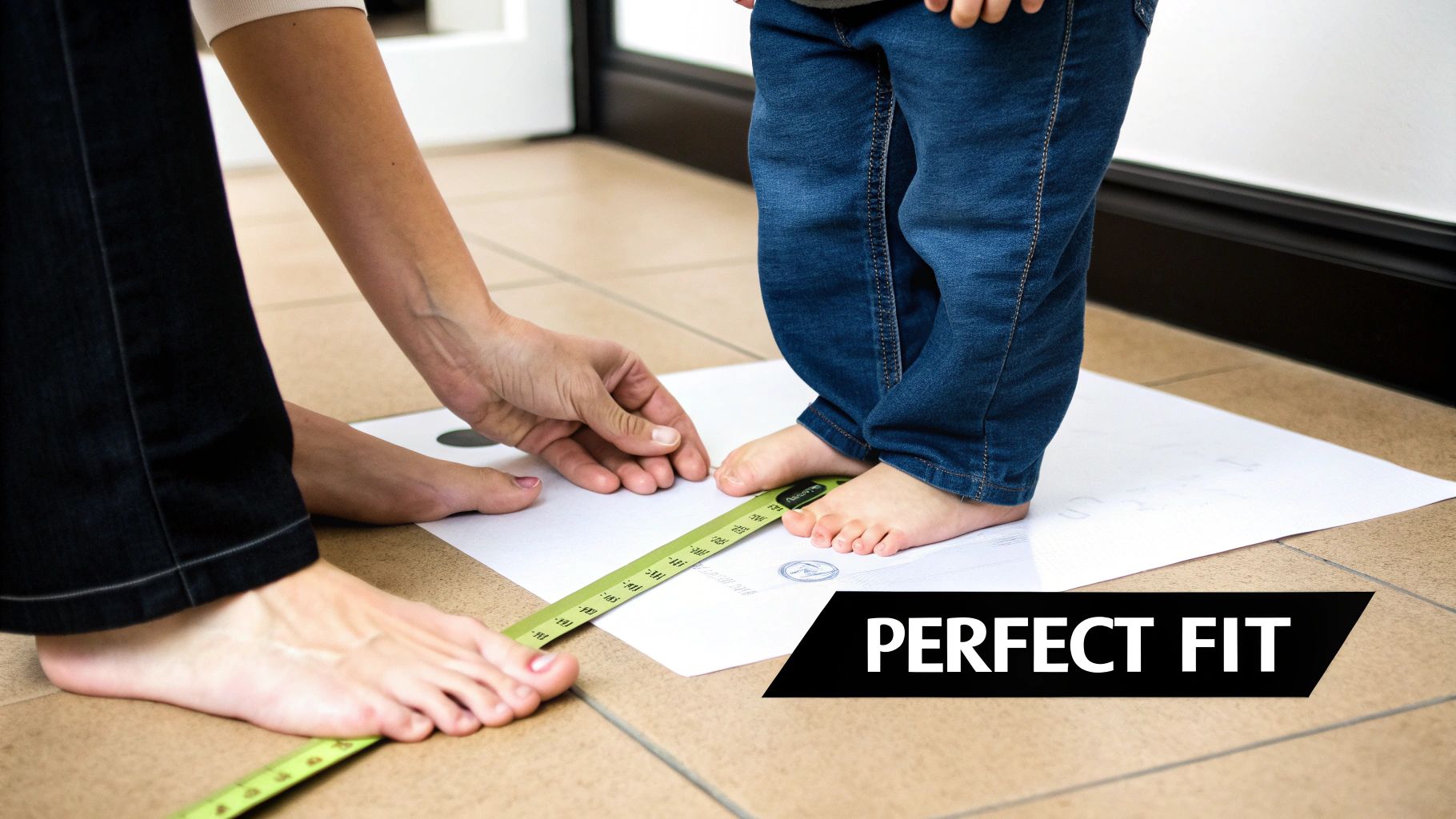
The buzz around grassroots football is impossible to ignore. There are around 125,000 grassroots teams across England alone, and that number is only going up. This boom is fantastic, bringing huge benefits from tackling childhood obesity to boosting mental well-being, which is exactly why getting them the right kit is so important.
Measuring at home: a simple guide
Before you even think about adding boots to your basket, getting an accurate measurement at home is a must. Kids' feet grow at an astonishing rate—sometimes jumping half a size in just a few months—so never assume last season’s size will still fit.
It's actually quite simple. Just follow these steps:
- Trace their foot: Get your child to stand on a piece of paper with their heel flat against a wall. Crucially, make sure they’re wearing the same football socks they’ll use for training and matches.
- Mark the longest toe: Carefully draw an outline around their foot and pop a clear mark at the tip of their longest toe (which isn't always the big toe!).
- Measure the length: Grab a ruler or tape measure and check the distance from the wall to the mark you just made.
- Do it again for the other foot: It’s really common for one foot to be slightly larger. Always measure both and use the bigger measurement to find their size.
To make sure you’re on the right track, you can convert your measurement into the correct boot size using a comprehensive kids shoe size chart before you start shopping.
The essential 'rule of thumb'
Once you have a rough size, the real test is when your child actually tries the boots on. The biggest mistake parents make is buying boots that are too big, thinking their child will "grow into them." Honestly, this is a recipe for trouble.
Oversized boots let a child's foot slide forward, which can lead to jammed toes and a real lack of stability. On the flip side, boots that are too tight will restrict growth and cause nasty blisters and pressure points. The sweet spot is a snug, supportive fit with just a little bit of wiggle room.
When you're checking, there should be about a thumb's width of space between the end of their longest toe and the very front of the boot. This gives them enough room for their foot to move naturally and allows for those inevitable growth spurts without making the boot feel loose.
The heel is just as important. Ask your child to have a little walk or jog around. Their heel should feel properly locked in, with little to no slipping. A secure heel is what prevents the rubbing that causes those painful blisters that can ruin a weekend match.
Once you've found the perfect pair, you'll need a good way to get them to and from the pitch. Check out our advice on choosing your football bag with a boot compartment to keep all their gear organised.
Quick fit checklist for kids' football boots
Here’s a simple checklist to run through when your child is trying on a new pair of boots. It helps ensure the fit is spot-on for comfort, safety, and performance.
| Check Area | What to Look For | Why It Matters |
|---|---|---|
| Toe Space | About a thumb's width (1-1.5cm) of space. | Prevents jammed toes and allows for growth without being too loose. |
| Width | Snug fit around the midfoot, with no pinching or excessive pressure. | A secure midfoot stops the foot from sliding sideways during quick turns. |
| Heel Lock | Minimal to no slipping when walking or jogging. | Prevents blisters caused by friction and provides crucial stability. |
| Arch Support | The boot's insole should comfortably contour to their natural arch. | Supports the foot's structure, reducing strain and fatigue during play. |
| Flex Point | The boot should bend naturally where their foot bends—at the ball of the foot. | Ensures comfortable movement and prevents the boot from working against them. |
Running through these quick checks can make all the difference, turning a good boot into the perfect boot for your young player.
Matching the boot to the playing surface
Once you’ve sorted the fit, the next big piece of the puzzle is matching the boot to the pitch. Think of it like tyres on a car—you wouldn’t take slick racing tyres off-road and expect to get very far. The studs on the bottom of a football boot are designed for a specific type of ground, giving your child the right amount of grip for those sharp turns, quick sprints, and stable footing.
Using the wrong boot isn’t just bad for their game; it can be genuinely dangerous. It can lead to slips and falls, or even worse, cause too much grip on certain surfaces, which is a major risk for ankle and knee injuries. Getting this right means they can play with confidence and, most importantly, with a much lower risk of getting hurt.
Decoding the boot types
When you start shopping for the best football boots for kids, you’ll immediately see a jumble of letters like FG, AG, and TF. This isn't just confusing jargon; it's a simple code that tells you exactly what surface the boot is made for. Learning this alphabet soup is the key to making the right choice.
Here’s what you need to know:
-
FG (Firm Ground): These are the classic, most common boots you'll see. They're built for natural grass pitches that are dry and firm. They usually have moulded plastic or rubber studs (bladed or conical) that offer fantastic traction for digging into the turf.
-
AG (Artificial Grass): These boots are made specifically for modern 3G or 4G artificial pitches. They typically feature more studs that are shorter and often hollowed out. This design helps spread pressure evenly and provides grip without getting stuck in the synthetic grass fibres.
-
TF (Turf) or Astro: Perfect for older, sand-based astroturf pitches or hard, dry training grounds. These look more like a beefed-up trainer with a pimpled rubber sole, giving lots of little contact points for grip on those shallow-pile surfaces.
-
SG (Soft Ground): You'll need these for those wet, muddy pitches that are a staple of the British winter. They have longer, often metal-tipped, screw-in studs designed to dig deep into soft turf to stop any slipping and sliding.
-
IN (Indoor): For indoor courts, like in a school sports hall. These are essentially trainers with a flat, non-marking rubber sole built for maximum grip on smooth, hard surfaces.
Why you can't mix and match
It’s tempting to just buy one pair of boots and hope they cover all the bases, but using the wrong boot for the surface is a classic mistake with real consequences. A perfect example is wearing standard Firm Ground (FG) boots on an artificial pitch. It’s a really bad idea.
The longer studs on FG boots can't sink into the synthetic surface properly. This creates nasty pressure points on the soles of your kid's feet and, even worse, can cause their foot to "stick" or "catch" in the turf during a turn. This puts a huge amount of strain on their ankles and knees.
On the flip side, using Turf (TF) trainers on a soft, grassy pitch will leave your child slipping all over the place. Those tiny rubber nubs just can't provide the traction needed. Matching the stud pattern to the ground isn't just a recommendation; it's non-negotiable for keeping your young player safe and effective.
Football boot types by pitch surface
To make it even clearer, this table breaks down the main types of boots. Use it as a quick reference guide when you're trying to figure out which pair is right for your child's weekly matches or training sessions.
| Boot Type (Acronym) | Ideal Pitch Surface | Stud Characteristics | Best For |
|---|---|---|---|
| Firm Ground (FG) | Natural, dry grass pitches. | Moulded conical or bladed plastic studs of varying lengths. | The most versatile and common option for standard grass fields. |
| Artificial Grass (AG) | Modern 3G and 4G synthetic pitches. | Numerous, shorter, and often hollow conical studs. | Players who train or play regularly on artificial turf. |
| Soft Ground (SG) | Wet, muddy, and soft natural grass. | Fewer, longer, and often metal-tipped, screw-in studs. | Winter league matches or playing on poorly drained pitches. |
| Turf (TF) | Older astroturf or hard, dry ground. | A rubber sole covered in small, pimpled studs. | Training on hard surfaces or playing on traditional astro pitches. |
| Indoor (IN) | Indoor courts, futsal pitches, and sports halls. | A flat, non-marking gum rubber sole. | Five-a-side football or indoor training sessions. |
By paying close attention to where your child will be playing most of their football, you can easily pick the boot that will give them the best possible support. It’s a simple step that helps them play their best game, safely.
Leather vs synthetic: Which material is best for young players?
Okay, so you’ve figured out the sizing and the right type of studs for the pitches your child plays on. The next big decision is what the boot is actually made of. The classic debate between traditional leather and modern synthetics isn't just about looks—it massively impacts comfort, durability, and how your child feels the ball at their feet.
Think of it like choosing between a classic wool coat and a modern waterproof jacket. One offers that traditional, break-in comfort that moulds to you, while the other gives you lightweight, low-maintenance protection from the elements. Neither is flat-out better; the right choice really depends on the situation and your priorities.
This handy decision tree can help simplify the process, guiding you from the type of surface to the ideal boot.
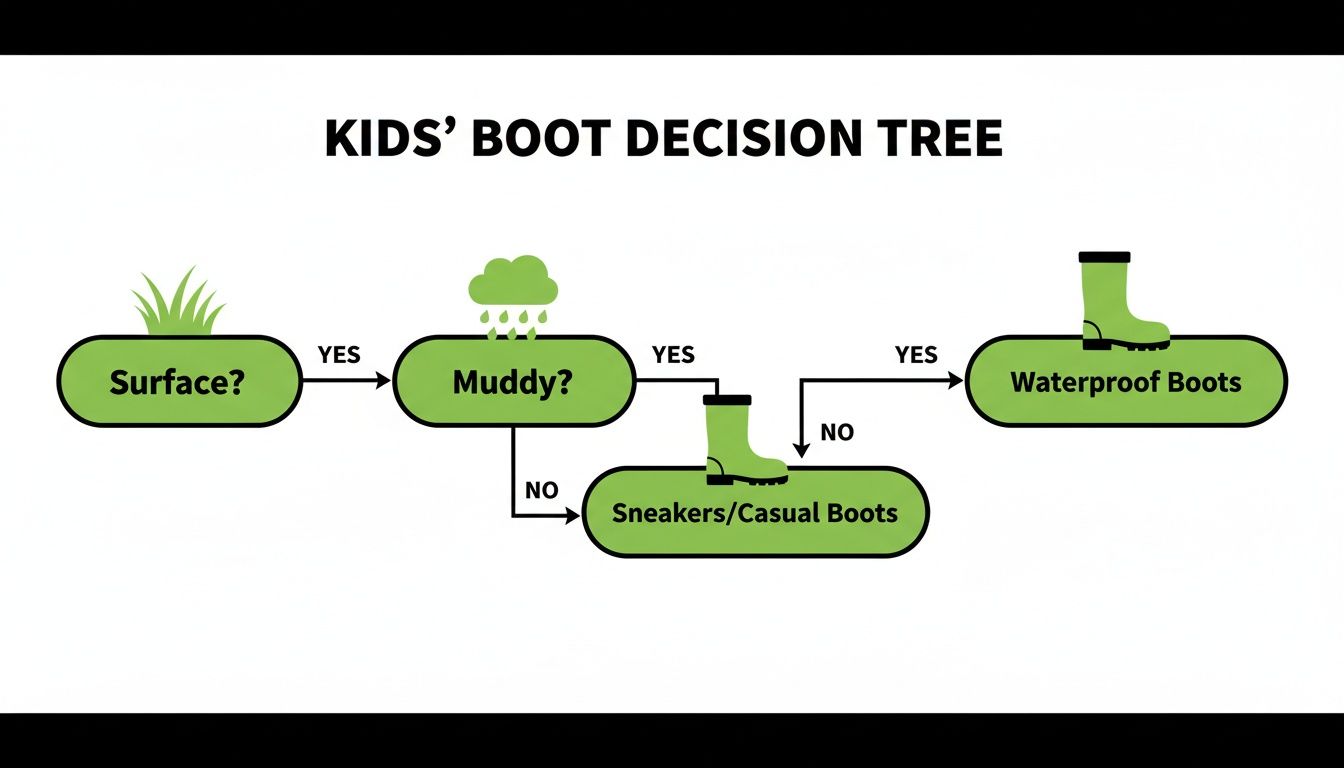
As you can see, the environment—from the ground itself to the good old British weather—plays a huge role in picking the right footwear.
The case for classic leather
For generations, leather was the only choice for football boots, and it's easy to see why it's still around. Its biggest strength is comfort. Natural leather, especially premium kangaroo leather (k-leather), is incredibly soft and supple. Over time, it moulds perfectly to the unique shape of a player's foot, creating a bespoke fit that’s tough to beat.
This softness also gives players a brilliant, natural feel for the ball. Many purists argue that leather offers a more sensitive touch, which can be a real help with close control and dribbling.
- Unmatched comfort: Leather stretches and shapes itself to the foot, which means fewer pressure points and a lower chance of blisters.
- Superb ball feel: The pliable material gives players a more direct, cushioned connection with the ball.
- Breathability: As a natural material, leather lets air circulate, helping to keep feet a bit cooler and drier during a long match.
The downside? Leather demands a bit of looking after. It needs to be cleaned properly and treated with a leather conditioner to stop it from drying out and cracking. It's also a bit of a sponge, absorbing water and getting heavy in wet, muddy conditions.
The appeal of modern synthetics
In recent years, synthetic materials have taken over the market, especially for kids' boots. These engineered fabrics have a ton of practical benefits that make them a fantastic choice for young, growing players. For starters, they are almost always lighter than leather, which can help with a little extra zip and reduce fatigue.
More importantly for parents, synthetic uppers are far more durable and resistant to scuffs and scrapes. They’re built to handle the rough and tumble of weekly training. They also don't soak up water, so they stay light in the rain and are an absolute dream to clean—a quick wipe-down is usually all it takes.
For many parents, the combination of durability, easy maintenance, and all the vibrant colour options makes synthetic boots the most sensible choice. They hold their shape well and can withstand the rigours of a full football season without demanding much upkeep.
Youth football is booming, with some UK clubs seeing their youth memberships jump by over 200%. The challenge is keeping these kids in the game as they get older. Having equipment that is functional, looks cool, and is easy to care for—like a great pair of synthetic boots—can play a small but vital role in keeping them engaged. To learn more about this, check out this detailed study on player engagement.
Choosing features for different age groups
A five-year-old taking their first wobbly steps onto a pitch has completely different needs from a teenager gunning for a spot on the school team. The best football boots for kids aren't one-size-fits-all; they need to evolve as your child grows in size, skill, and ambition. Getting the right features for their age is a game-changer for their comfort, safety, and how much they actually enjoy playing.
Think of it like a roadmap. For the youngest players, the journey starts with simplicity and fun. As they get older, the path leads to boots that can support their developing skills. Finally, for teenagers, the destination is a pair of boots that starts to mirror the tech and performance of adult models. This natural progression makes sure their footwear always keeps pace with where they are in their football journey.
Ages 4 to 7: the foundation years
For the little ones just starting out, it’s all about three things: comfort, simplicity, and protection. At this age, the game is about having a laugh and getting a feel for the ball, not about fancy performance features. The boots should be helping them, not getting in the way.
Honestly, the most important feature here is often how they do up. Look for boots with Velcro straps instead of laces. This gives young kids a bit of independence, letting them put their own boots on and take them off, and it’ll save you a lot of time and hassle before a Saturday morning kick-about.
Key features to look for:
- Soft, padded uppers: A forgiving synthetic upper is perfect for comfort and protects their feet from the inevitable accidental knocks.
- Simple studs: Short, moulded rubber studs are ideal. They offer just enough grip for grass without putting nasty pressure on young, developing joints.
- Flexible soles: The boot should bend easily with their foot. This allows for natural movement as they run, jump, and chase the ball around.
Ages 8 to 12: developing skills
As kids hit these pre-teen years, their skills really start to take shape. They're learning to control the ball with more purpose, their passes are getting better, and they actually understand a bit more about the game. Their boots need to reflect this, offering more support and features that can help them along.
At this stage, laces often replace Velcro, teaching them how to tie their boots properly for a snug, secure fit. You'll also see more defined stud patterns designed for better grip during quicker turns and sprints. Ankle support becomes a bit more important as the games get more intense, so some boots might have a slightly higher collar or a more structured heel.
This is the age where a good boot can genuinely help build confidence. When a child feels stable and secure on their feet, they are more likely to try new skills, make decisive runs, and fully engage with the game.
Football is still a massive part of growing up in the UK. In fact, data from a recent academic year showed that around 40 percent of children aged 5 to 16 in England played the sport. That’s a huge number, and it just shows how important it is to get the right, age-appropriate gear for all these young players. You can discover more insights about youth sports participation on Statista.com.
Ages 13 and up: performance and precision
Once players hit their teens, they often start taking football a lot more seriously. They might be playing for competitive school or club teams, and they probably have a preferred position on the pitch. As a result, their boots start to look and feel much more like the adult versions, with a focus on performance, speed, and precision.
Lightweight designs become a key selling point, helping players feel faster and more agile. You’ll also start seeing position-specific tech, like textured zones on the upper for better ball control or special stud shapes for explosive acceleration. Materials get more advanced, too, blending lightweight synthetics with features designed for a closer touch and better feel for the ball.
As performance becomes more of a focus, you might also be interested in how technology can help track their progress on the pitch. To learn more, check out our guide on football GPS vests for youth players.
Completing the kit: essential gear for young players
A great pair of boots is the foundation of any young player's kit, but it's really just the starting point. To be properly kitted out for training and match day, your young footballer needs the right supporting gear for safety, comfort, and performance. Getting these essentials right from the get-go means they can forget about their kit and just focus on the game.
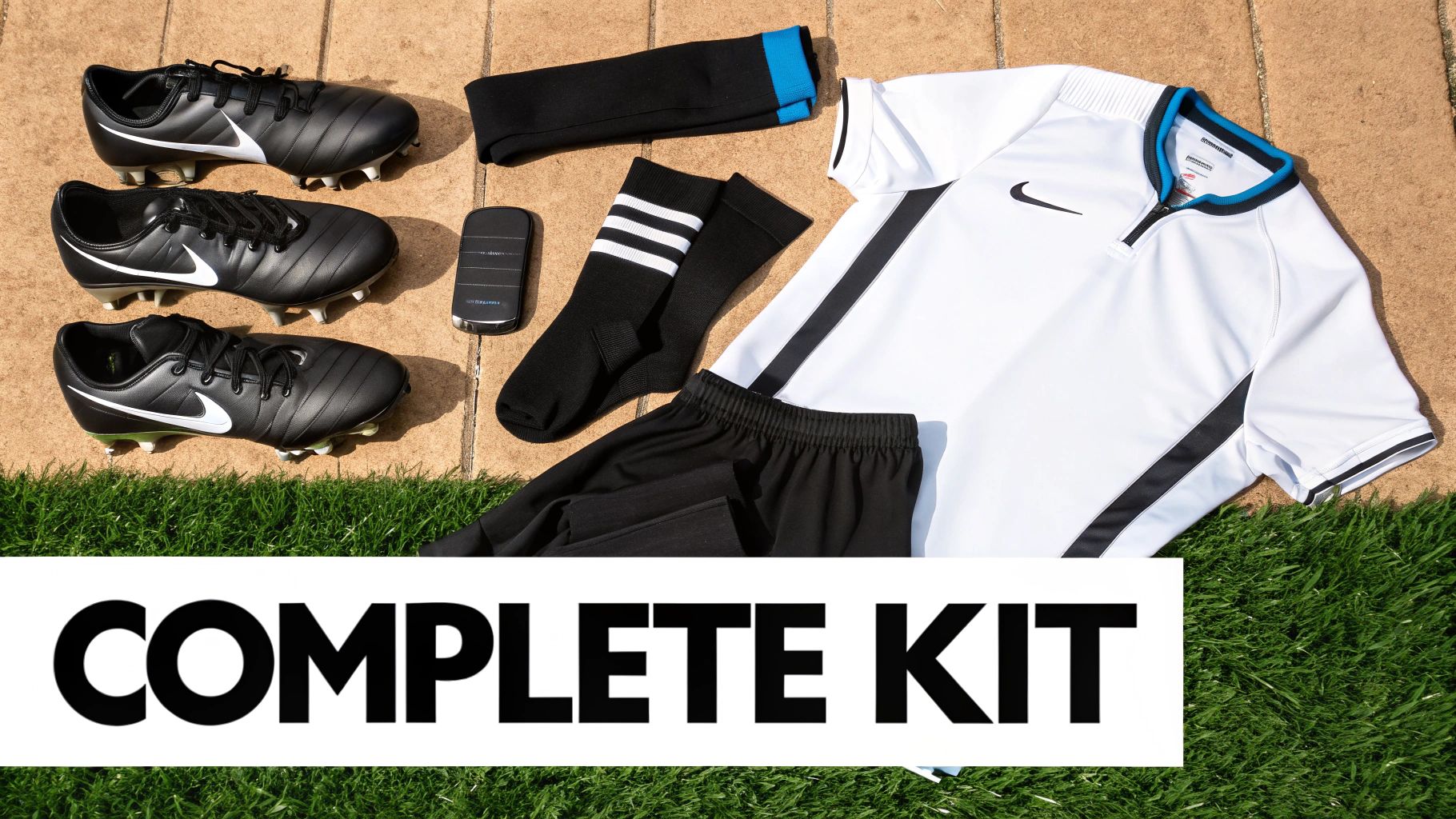
We'll kick off with the single most important piece of protective equipment after the boots themselves: shin guards. Honestly, these are an absolute non-negotiable for any player, at any age.
Shin guards: the most important piece of protection
Shin guards are mandatory in pretty much every organised league, and for very good reason. They are the first line of defence against the kicks, stray tackles, and impacts that are just part of the game. A direct knock to an unprotected shin isn’t just incredibly painful; it can lead to a serious injury.
When you're looking for a pair, you'll generally find two main styles:
- Slip-in shin guards: These are lightweight shields that you slide directly into a player's football socks or a compression sleeve. They offer brilliant freedom of movement and are often the go-to choice for older, more experienced players.
- Ankle shin guards: This style combines the shin shield with built-in ankle protection and a strap that fits under the boot. They're a fantastic choice for younger players, as they give extra support and padding to the ankle area and are far less likely to shift out of place during a match.
Fit is everything with shin guards. They should cover most of the area between the ankle and the knee without restricting movement at all. If a guard is too long, it’ll dig into their knee or ankle, but if it's too small, it leaves crucial areas exposed.
The right socks and training wear
Beyond protection, comfort is king for keeping a young player happy and focused on the pitch. The right socks and clothing play a massive part in this, especially during long training sessions or in rubbish weather.
Proper football socks are designed to be long enough to pull up and over shin guards, holding them securely in place. They’re also made from materials that help manage sweat and provide cushioning in high-impact zones like the heel and toes, which is a lifesaver for preventing blisters. Always pick these over standard cotton sports socks.
In the same way, training wear needs to be built for movement and comfort. When you're looking at things like training tops or base layers, understanding cotton vs. polyester fabrics for sports gear can be a real help. Modern synthetic fabrics are lightweight, breathable, and brilliant at wicking moisture away from the skin, keeping your child dry and comfortable whether they're playing in the summer sun or a winter drizzle.
Having the right gear lets your child move without restriction and helps regulate their body temperature, which is essential for both performance and just enjoying themselves. For a more detailed look, you can explore our complete guide to building the perfect kids football training kit.
Your questions answered about kids' football boots
Even after going through all the details on fit, surfaces, and materials, it’s natural to still have a few questions buzzing around. Let's be honest, choosing the right football boots for your kid feels like a big deal, and you want to get it right. So, this last section is all about tackling those common queries we hear from parents time and time again.
Think of this as your quick-fire guide for all the practical bits. From how to stop a pair of boots from smelling like a swamp to knowing when it's genuinely time for an upgrade, we've got you covered.
How do I properly clean my child’s football boots?
Keeping boots clean isn't just about looking the part; it's genuinely one of the best things you can do to make them last. When mud dries and hardens, it makes the material stiff and uncomfortable, and it'll start to break down much faster. Thankfully, cleaning them is pretty straightforward.
The approach changes a bit depending on the material. For most modern synthetic boots, a quick wipe-down with a damp cloth after a game is usually enough to get rid of the muck. Leather boots, though, need a little more TLC.
Here’s a simple routine that works every time:
- Get the big stuff off: First thing after a match, knock the soles together to dislodge the big clumps of mud. An old toothbrush or a soft brush is perfect for gently scrubbing any lingering dirt from the upper and around the studs.
- Wipe them down: Grab a cloth with some warm water and give the whole boot a good wipe. Steer clear of harsh soaps or detergents, as they can strip the materials and cause damage.
- Dry them properly: This is the most important step, and the one most people get wrong. Never put football boots on a radiator, near a fire, or blast them with a hairdryer. Direct heat is their worst enemy—it makes the materials brittle and can melt the glue holding the sole on.
- Stuff and air dry: Here’s the classic trick, and it works for a reason. Stuff them tightly with old newspaper. It soaks up moisture from the inside and, just as importantly, helps the boots keep their shape as they dry. Then, just leave them to air dry at room temperature.
For leather boots, once they're fully dry, it’s a great idea to rub in a bit of specialist leather conditioner or dubbin. This keeps the leather soft and stops it from cracking.
How often should my child get new football boots?
This is the million-dollar question for every football parent. The answer really boils down to two things: how fast your child's feet are growing, and the general wear and tear on the boots. Kids' feet can shoot up in size almost overnight, and a growth spurt can render a perfectly good pair of boots useless in just a couple of months.
Because of this, it’s a good habit to check the fit every month or two. Get your child to put them on (with their football socks) and check for that thumb's width of space at the end. If their toes are crammed right up against the front, it’s definitely time for a new pair.
It’s always better to replace boots a little too early than a little too late. Forcing a child to play in boots that are too small isn't just painful; it can lead to blisters, ingrown toenails, and even longer-term foot issues.
Beyond the fit, just keep an eye on the boots themselves. Look for the obvious signs that they’ve had their day—studs worn down to little nubs (which kills their grip), splits where the upper is coming away from the soleplate, or serious fraying. For a kid playing once or twice a week, you should probably expect to buy at least one new pair per season, often just because they've outgrown them.
Are expensive football boots really better for children?
It's so easy to fall into the trap of thinking a higher price tag means a better, safer boot. But for young, developing players, that's almost never the case. The top-of-the-range, elite-level boots are packed with fancy tech designed to give professional athletes tiny performance advantages—things like ultra-lightweight materials or specially engineered 'striking zones'.
While that stuff sounds cool, it’s completely unnecessary for a child who is still mastering the basics. A good quality, mid-range boot from a brand you trust will give them all the comfort, support, and durability they need to play happily and safely.
The 'best' boot is always the one that fits correctly and is right for the surface they play on. Spend your money getting those two fundamentals right, not on the latest model worn by their favourite Premier League hero.
Can my child wear Firm Ground boots on an artificial pitch?
This is a really common question, and an important one for safety. The short answer is: it’s not a good idea. Firm ground (FG) boots have studs, often bladed ones, that are designed to dig into natural grass to give you grip.
On an artificial grass (AG) or 3G pitch, those longer studs can't penetrate the surface properly. This causes two big problems. First, it can create nasty pressure points on the soles of your child's feet, which is really uncomfortable. Second, and much more dangerously, the studs can get 'stuck' in the synthetic turf when they twist or stop suddenly. This creates way too much grip, putting immense strain on their ankles and knees and seriously increasing the risk of injury.
It is always, always safer to use boots designed for the specific surface. If your child plays regularly on artificial pitches, investing in a proper pair of AG or multi-ground (MG) boots is a smart move for their long-term comfort and safety.
At SoccerWares, we believe every young player deserves the right gear to feel confident and play safely. From that very first pair of boots to the shin guards and training kit that complete their look, we’re here to support their football journey.
Explore our full range of youth football essentials at SoccerWares