

You're standing in a toy aisle with a birthday card in one hand and a child's wish list in the other. The shelves are full, the online recommendations keep multiplying, and yet one question remains stubbornly difficult: what will this child play with after the wrapping paper is gone?
The safest answer isn't always the newest blockbuster toy. A football goal, a creative kit, a family game or a well-chosen piece of training equipment can become part of a child's routine, especially when it suits their energy, interests and available space. The best gift ideas for kids usually have a clear purpose, invite somebody else to join in and offer enough variety to stay interesting.
Introduction That Makes Gift Choosing Easier
A present can look exciting in the shop and still become clutter by the following weekend. I've seen this happen with children who already have shelves of toys but light up when somebody gives them something connected to their current passion, whether that's football, drawing, collecting, building or exploring outdoors.
That's the useful starting point: don't ask only, “What's popular?” Ask what kind of play does this child return to without being prompted? A lively child may need a gift that creates a reason to run. A thoughtful child may prefer a puzzle, construction set or science activity. A young supporter might value club-inspired clothing or drinkware because it lets them show what they care about every day.
UK gifting habits support this broader view. Parents are spending more on children's presents, but that doesn't mean every expensive item offers good value. It means the choice deserves a simple filter that separates lasting play from short-lived novelty.
Start with the child, not the category
Before you browse, note four things:
- Age and ability: Can the child use the item safely and independently?
- Play style: Do they build, compete, create, move, collect or make up stories?
- Setting: Will the present be used in a flat, bedroom, garden, park or sports hall?
- Occasion: Is it a main birthday present, a small reward, a Christmas bundle or a thoughtful surprise?
This guide follows those questions in order. It looks at value, fun, quality and safety before comparing active, creative, educational, fan-focused and technology-enabled gifts. It also shows how to turn one item into a purposeful bundle, so the child receives an invitation to play rather than another object to store.
A useful test: If you can quickly explain how the child will use the gift tomorrow, next month and with another person, you're probably looking at a strong choice.
Active gifts deserve particular attention. A pop-up goal or rebounder might not have the instant novelty of a flashing gadget, but it can support practice, challenges and shared games. That repeat use is often what makes a present feel generous long after the occasion has passed.
What Makes a Great Gift for Kids Today
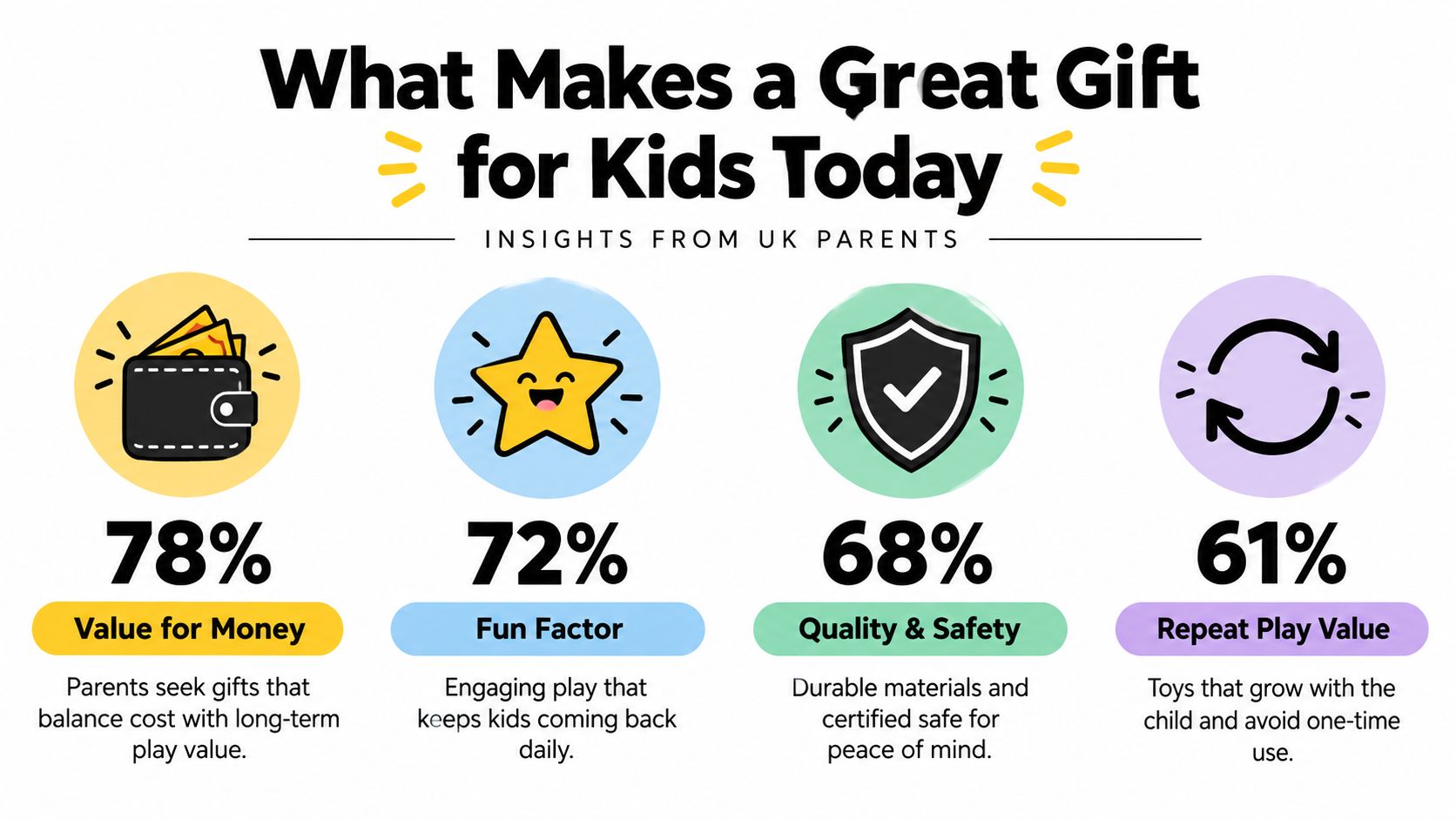
A great children's gift sits where value for money, enjoyment, safety and repeat use overlap. Remove one of those elements and the choice becomes less convincing. A cheap item that breaks quickly isn't good value, while a beautifully made present that never matches the child's interests won't create much play.
UK parents are allocating more to children's gifts overall. Among UK parents of children aged 1–16, average monthly spending on gifts for kids rose 35%, from £61 in 2021 to £82 in 2024, according to The Insights Family's UK gifting research. Spending on their own children rose 30% to £47, while spending on gifts for other children rose 43% to £35, showing why thoughtful choices matter for birthdays, classmates, relatives and wider family occasions.
Value means more than a low price
The same UK research found that 73% of respondents expected kids' gifts to consist predominantly of toys and games. Those categories remain familiar because they're easy to understand and usually offer immediate entertainment, but parents still need to judge whether a particular item will earn its place at home.
A 2024 family infographic from the UK Toy Retailers Association, available through BrightMinds, reports that parents of 3–9-year-olds rank quality at 50% and safety at 49% among major selection criteria. Value for money comes first for 30%, with fun and entertainment close behind at 29%. These figures point towards a practical definition of value: a gift should be engaging, durable and suitable, not merely inexpensive.
Look for features that make repeated use easier:
- Durable construction: The item should tolerate ordinary handling and storage.
- Simple upkeep: Washable or wipe-clean surfaces help active and younger children.
- Flexible play: A goal can support shooting, passing, target games and family challenges.
- Clear fit: The child should understand how to use it without constant adult rescue.
Purposeful play can still be fun
The UK toy economy is substantial rather than niche. Statista's overview of the UK toy industry records nearly £12.5 billion spent in 2023 on games, toys and other hobby-related items, compared with about £6.7 billion in 2005. The figures show a long-term expansion in household spending on play, learning and entertainment products.
That doesn't make every large toy a wise purchase. It does suggest that families are looking for meaningful ways to support children's interests. An agility ladder, indoor training mat or family game may be more useful than another single-purpose novelty if it gives the child a reason to practise, invent rules or invite somebody else into the activity. For ideas about movement-focused equipment, explore football agility equipment for UK training.
The best gift isn't necessarily the biggest or most fashionable. It's the one that fits the child's real routine and keeps offering a reason to begin again.
How to Match Gifts to Age and Safety Needs
Age guidance isn't decorative packaging. It helps adults match a toy's physical design and complexity to the child who'll use it. A gift can be entertaining and still be unsuitable if it contains parts a younger child could detach, swallow or pull around themselves.
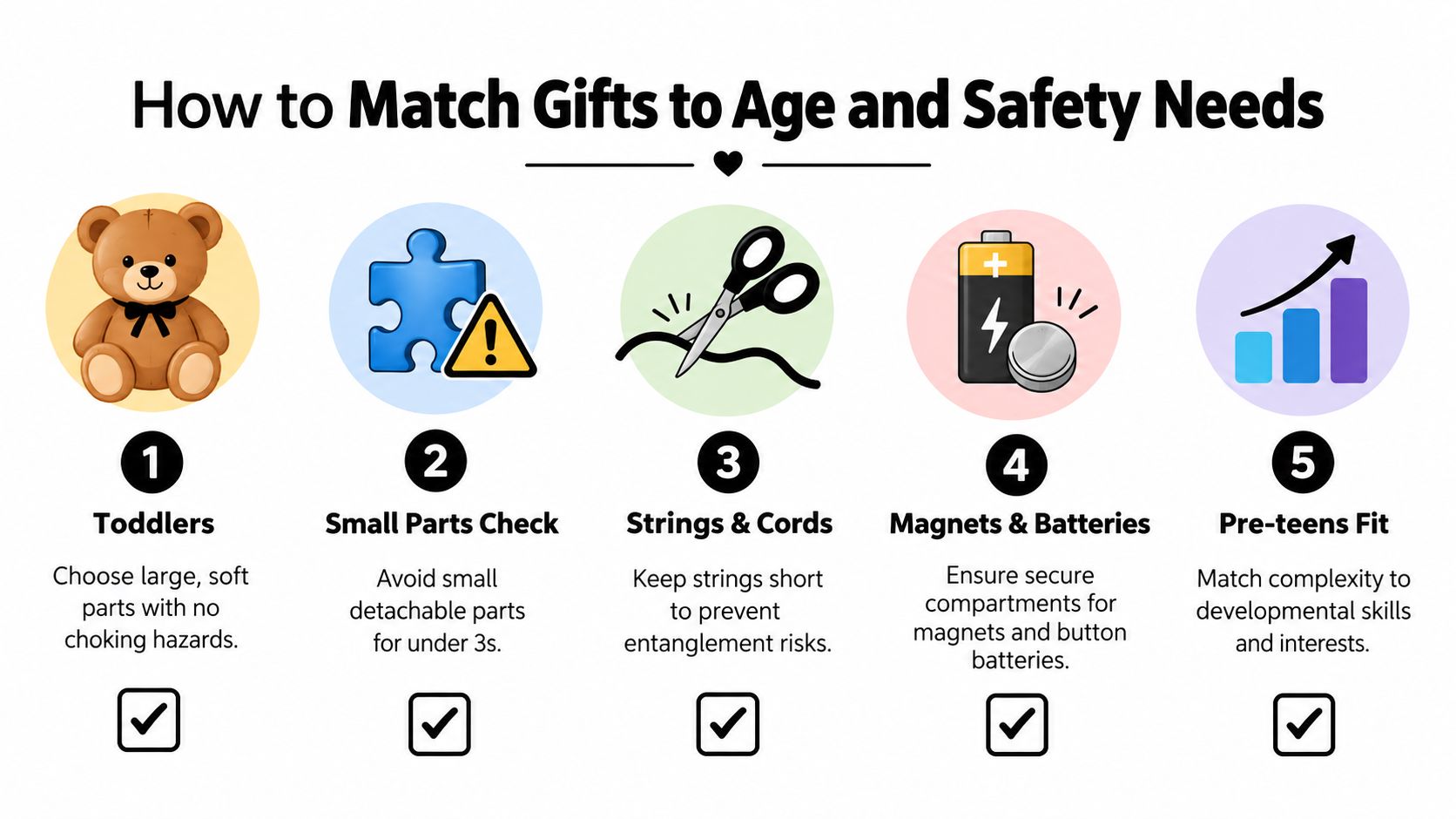
For toddlers aged 2–3, practical guidance from Argos's toddler gift advice warns against strings, magnets and small batteries because of choking and entanglement risks. Washable toys are also preferable for everyday hygiene. Chunky shape sorters, stacking systems and low-part-count toys make sensible choices because they're easy for small hands to grasp and don't depend on complicated electronics.
Use a three-question safety check
Before buying, ask:
- Could the child detach and swallow a small part? Small detachable parts can create choking risks for children under 36 months, as explained in this UK product safety report on a children's busy board.
- Could anything wrap around the child or become trapped? Long strings, cords and loose attachments need careful thought.
- Can the child use it at the intended level? A complicated construction kit may frustrate a preschooler, while a very simple toy may bore an older child.
UK toy law requires toys intended for children under 36 months to carry a warning such as “Not suitable for children under 36 months” or “Not suitable for children under three years”, unless the toy is clearly unsuitable for that age by its function, dimensions or characteristics. The requirement appears in the Toys Safety Regulations 2011.
The government also says warnings and hazard information must be in English, clearly visible, easily legible, understandable and accurate, and placed on the toy, an attached label, its packaging or its instructions, as set out in the Great Britain toy safety guidance.
Match complexity as children grow
For preschool children, choose gifts with large, manageable components and a clear action. Shape sorters, stacking toys, washable play surfaces and soft movement games suit children who are still developing grip, balance and coordination.
Primary-age children can usually explore more involved creative, building and sports gifts, provided the product's own age guidance fits. A child who has started football might enjoy a soft indoor ball, a small target game or a supervised pop-up goal. The gift should still match the available space and the adult's ability to supervise.
Pre-teens often want ownership. Training tools, club-inspired clothing, a personal water bottle or a technology-enabled sports accessory can feel more meaningful than a toy chosen solely by age. The right question is whether the item supports a genuine interest, not whether it looks advanced.
For a focused equipment option, XS shin guards for younger football players can be considered alongside the child's age, fit and intended use. Never assume a sports label replaces checking the product guidance.
Exploring the Main Gift Categories for Kids
The most useful comparison starts with play style. Two children of the same age may need completely different presents, and a child with a full toy box may appreciate an activity that changes the room, garden or family routine.
| Gift Category | Best For | Budget and Space Notes |
|---|---|---|
| Active and sports gifts | Children who need movement, challenge or practice | Goals and rebounders need more room, while indoor mats and guards are easier to store |
| Fan apparel and drinkware | Young supporters who enjoy showing club identity | Clothing and bottles are practical, personal and usually simpler to store than large toys |
| Educational and creative toys | Children who enjoy building, making, solving or experimenting | Often work indoors, but check clean-up, component storage and adult involvement |
| Family games | Siblings, friends and children who enjoy rules or friendly competition | Choose a format that fits the household's patience, table space and ages |
| Tech-enabled play | Curious older children interested in tracking, cameras or interactive challenges | Check charging, privacy, supervision and whether the technology adds useful play |
| Outdoor discovery gifts | Adventurous children who enjoy exploring parks, gardens or local spaces | Consider weather, storage and whether an adult needs to join the activity |
When active gifts beat another toy
An active present has a strong advantage when the child already owns plenty of boxed toys. A foldable goal can become a shooting target, a passing station or part of a timed family challenge. A rebounder adds a moving response, so the child can practise alone and then use it for games with a parent or friend.
Indoor space doesn't rule out movement. A training mat can create a defined practice area, while cones can support footwork, balance games or imaginative obstacle courses. The gift becomes more valuable when the child can change the activity rather than follow one fixed set of instructions.
Sports gifts also work well for children who want something different from the usual shortlist. A pair of shin guards, a football bottle or club-inspired top can recognise an interest without adding another screen or character-branded toy. Football nets for kids can help families turn a garden or suitable indoor setting into a shared play space, subject to safe clearance and supervision.
Don't overlook quieter categories
Creative and educational gifts remain excellent choices for children who concentrate through making. Building sets, art materials, puzzles and family games can support independent play or cooperation, but the best option depends on whether the child enjoys open-ended freedom or a defined challenge.
For younger children, readers may also find a helpful age-focused comparison in Ocodile's recommendations for toddlers. Use any list as a starting point, then check the specific product's age grading, construction and care instructions.
Tech-enabled play should earn its place. A tracker, sports camera or interactive device may appeal to a curious child, but it should create a real activity rather than add another screen. Ask what the child will do with it when the novelty fades.
Gift Bundles and Real World Examples That Work
A bundle can make one present feel like an invitation. The trick is to combine items that support the same activity, not to fill a box with unrelated extras. A child should be able to open the package and understand what they can do next.
The garden football bundle
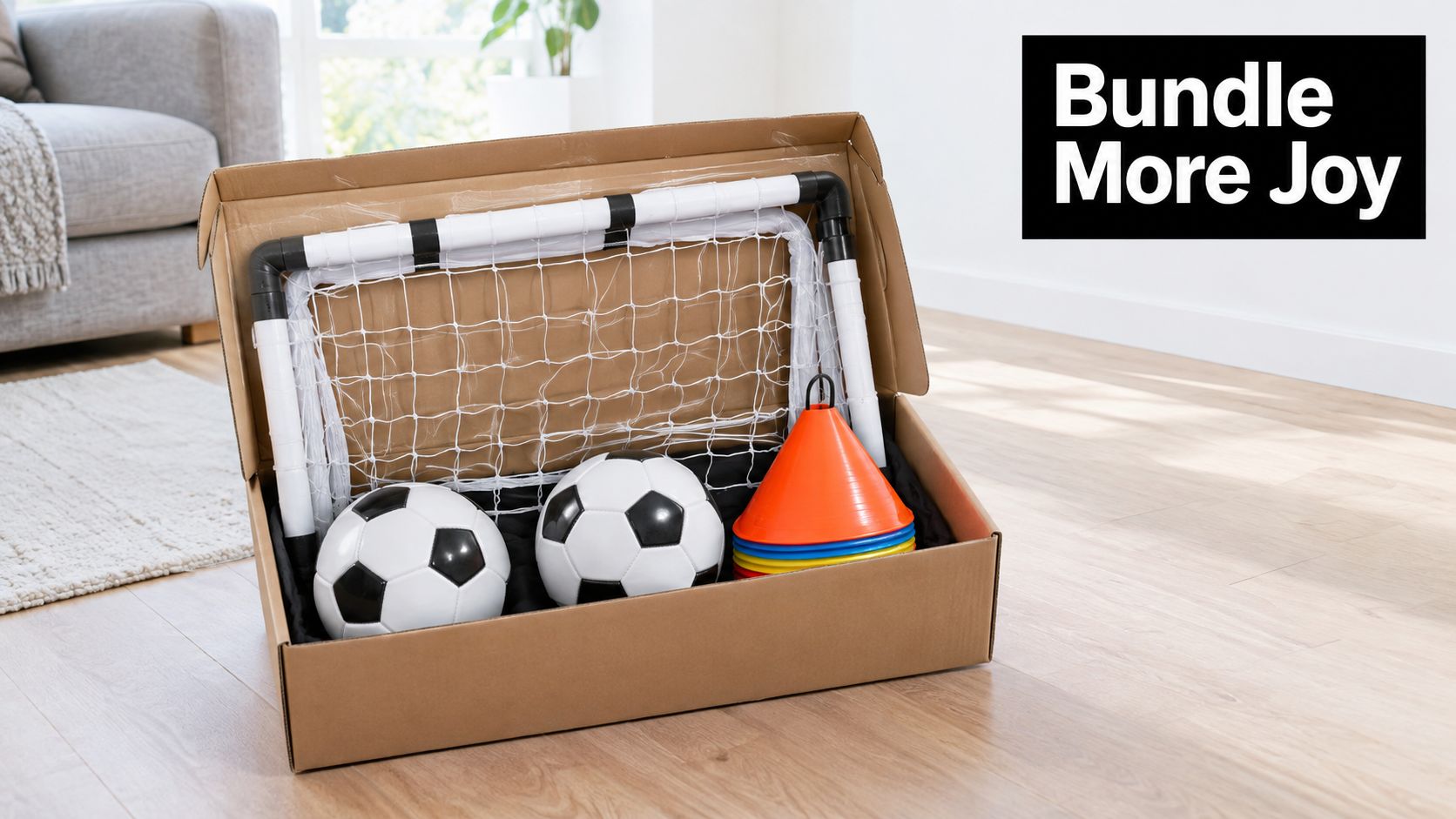
Start with the 2-Pack Foldable Pop-Up Football Goals. Add a suitable football and a small set of training cones, then include a handwritten challenge card with games such as “five passes before shooting” or “hit the corner target”.
Two goals create more possibilities than one. Children can play a small-sided match, practise attacking and defending, or set up a target course. The foldable format also makes the bundle more practical for families that need to pack equipment away after play.
A soccer rebounder goal can form the centre of a different bundle for a child who enjoys solo practice. Pair it with a ball and a simple practice plan that varies passing, receiving and shooting.
The young fan bundle
Choose club-inspired apparel in the child's preferred colours, then add a stainless steel water bottle. This feels personal without being purely decorative, because the clothing can be worn and the bottle can travel to school, training or family outings.
If you're unsure of sizing, drinkware can stand alone as the main item, with a card explaining why you chose the club. A scarf, mug or training accessory can replace clothing when you don't know the child's preferred fit.
The development bundle
For a tech-curious player, combine an indoor training mat with a football GPS tracker where the product is appropriate for the child and the family understands how it works. The mat provides a physical routine, while the tracker can add a sense of progress and personal goals.
Keep the presentation simple. Wrap the main item separately, place smaller accessories together and include one activity to try on the day. Families who want to make a wider active-lifestyle present can also give the gift of outdoor recreation through an experience-led option.
Choosing Gifts by Occasion and Budget
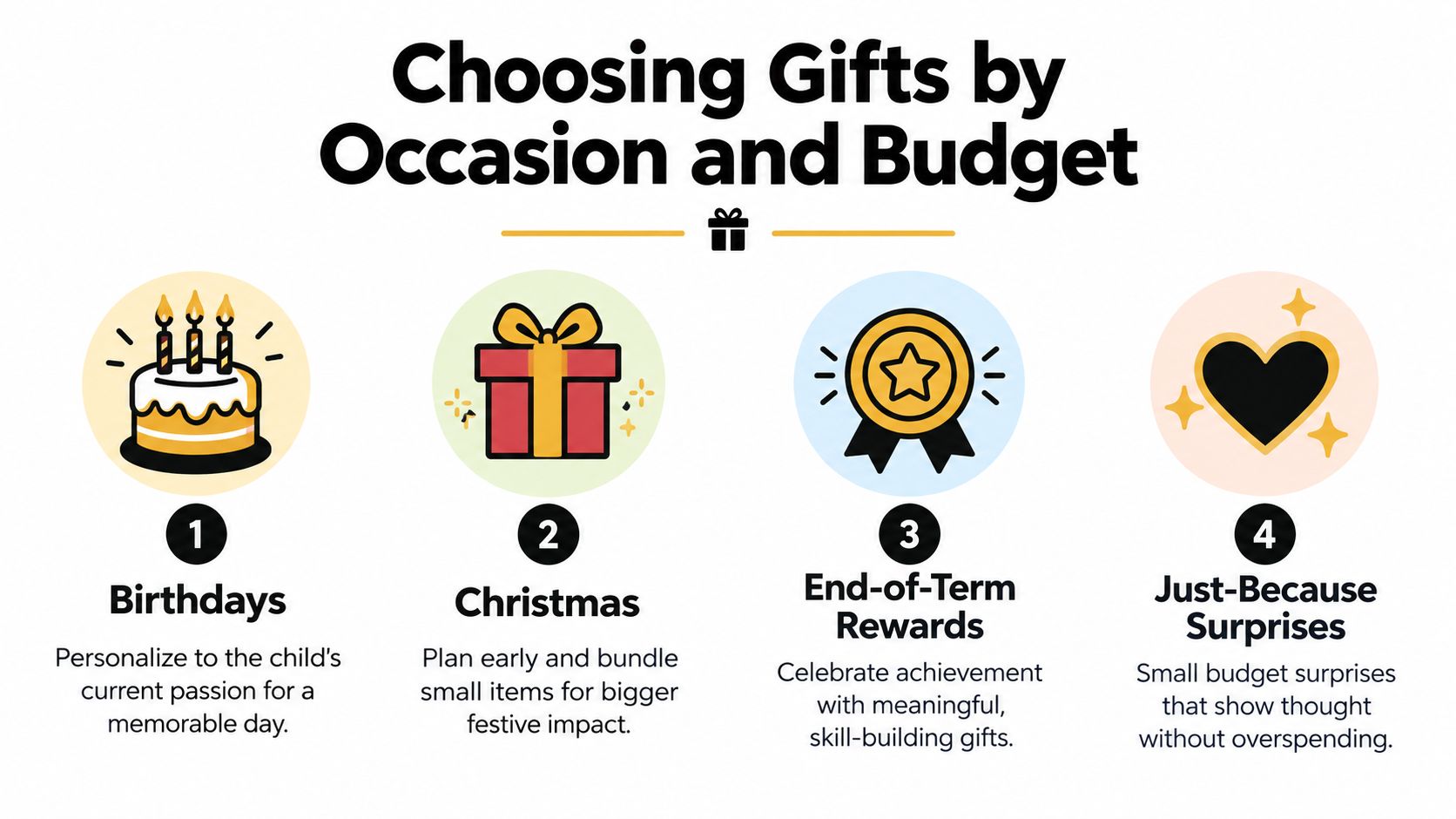
The occasion changes what “right” means. A birthday present can focus closely on the child's current obsession, while an end-of-term reward may work better when it recognises effort and supports a skill the child wants to develop.
Birthdays
Choose the present around a current interest rather than a generic age label. A football-loving child might receive a goal bundle, a fan top or a training mat. A creative child might prefer a high-quality craft set with storage for the materials.
Personalisation can come from the activity, not only the product. Add a challenge card, choose club colours or arrange a family game around the gift.
Christmas
Christmas often brings several presents from different people, so coordination helps prevent duplication. A main active item can be paired with smaller practical accessories, such as a ball, bottle, cones or protective equipment, rather than another unrelated toy.
UK festive research indicates that 53% of consumers planned to increase spending on presents for children, while 73% expected children's gifts to mainly be toys and games, according to Statista's UK toy industry data. That concentration makes it sensible to look for a distinctive format, such as a sports bundle or shared outdoor activity, if the child already has many conventional toys.
End-of-term rewards
A reward doesn't need to be large to feel meaningful. Choose something connected to an achievement, such as a new training accessory for a child who has worked on football skills, or a creative tool for someone who has enjoyed making and learning.
Just-because surprises
Small surprises work best when they solve a real need or reflect a child's personality. A drink bottle, ball, puzzle or compact creative item can show attention without creating a storage problem.
For movement-based gifts such as balance equipment, safety deserves the same care as with any toy. Kids balance bike safety guidance from Rider 18 offers a useful reminder to consider fit, protective equipment, supervision and the environment before presenting an active gift.
Your Confident Gift Choosing Takeaway
The best gift ideas for kids don't begin with a bestseller list. They begin with a child.
Use this short decision flow:
- Check age and safety first. Read the age grading, inspect small parts and avoid strings, magnets or small batteries where they create a risk for younger children.
- Identify the play style. Does the child move, build, create, solve, collect, compete or imagine?
- Match the setting. Measure the practical space, consider storage and decide whether the gift needs an adult or another child to work well.
- Choose repeat value over a quick reaction. Look for several ways to use the item, or pair it with an accessory that opens another activity.
- Fit the occasion. A birthday can celebrate a passion, Christmas can support a larger bundle, and a small reward can mark progress with a useful tool.
- Personalise the detail. Club colours, a training goal, a favourite activity or a handwritten challenge can make a straightforward present feel carefully chosen.
Before you buy: Ask whether the child can use it safely, whether they'll want to use it again and whether someone else can join in.
A sports gift isn't automatically better than a toy, and a premium product isn't automatically better value. The strongest choice combines quality, suitability, active engagement and the child's own interests. That might mean a football goal for a garden, a washable stacking toy for a toddler, a family game for a rainy afternoon or a club water bottle for a devoted supporter.
The wrapping matters for a moment. The play that follows is what makes the present memorable.
SoccerWares offers football goals, rebounders, indoor training mats, shin guards, GPS trackers, club-inspired apparel and stainless steel drinkware for young players and supporters. Visit SoccerWares to choose a practical football gift that fits the child's interests, space and next opportunity to play.