

Choosing the best shin pads for adults is all about finding that sweet spot between protection, comfort, and mobility. The top choices usually feature a tough outer shell—think carbon fibre or polypropylene—backed with comfortable EVA foam. This combination provides brilliant impact absorption without feeling like you've strapped bricks to your legs.
Why Choosing the Right Shin Pads Is a Game-Changer
That split-second before a crunching tackle can make or break your confidence on the pitch. Choosing the right shin pads isn’t just about ticking a box in the rule book; it’s about freeing yourself up to play your best game. A good pair doesn’t just shield you from kicks—it gives you the conviction to go for that 50/50 ball without a second thought.
Imagine a Sunday league match. A midfielder lunges into a challenge. With flimsy, ill-fitting pads, there's always a hint of hesitation. But with a solid, well-fitted pair, they can commit fully, focused on winning the ball, not the incoming studs. That mental edge is precisely why investing in proper gear is so important.
The True Impact of Quality Protection
Beyond just stopping bruises, the best shin pads for adults are a crucial piece of injury prevention kit. They are engineered to absorb and distribute the force from a direct hit, which could otherwise lead to nasty contusions, fractures, or worse. Protecting your shins is fundamental to staying on the pitch week in, week out.
A well-chosen pair of shin pads acts as your personal armour. It’s not about being invincible; it’s about having the confidence to play your natural game without fear, knowing your equipment is up to the task.
This guide will dive into how the core elements—type, material, fit, and even your playing style—all come together to create a pair of pads that feel less like equipment and more like a part of you. This is how you get to focus on your performance, not on the next big challenge.
To truly stay safe out there, it’s also smart to understand how to prevent sports injuries more broadly. While shin pads handle direct impact, your overall fitness and awareness are key to dodging other common football injuries. Arming yourself with the right gear and the right knowledge is the best strategy for a long and successful season.
Decoding the Different Types of Shin Pads
Stepping into the world of shin pads can feel a bit overwhelming, but it really just comes down to three main designs. Each one is built for a different kind of player, and knowing the difference is the secret to finding the right pair for your game. Think of it like choosing the right boots for the pitch; what works for a quick winger won't be the best fit for a tough-tackling centre-back.
The choice you make here has a real impact on your comfort, how freely you can move, and your confidence when you go into a challenge. Let's break down the options so you can see which one fits you perfectly.
Slip-In Shin Pads: The Minimalist Choice
Slip-in shin pads are protection in its purest form. They’re simply a hard, shaped shield you pop directly against your shin. Your football socks or a separate compression sleeve are all that hold them in place.
Their biggest draw is how incredibly light and unobtrusive they are. For agile players like wingers and strikers, that’s a massive plus. You get the vital protection you need without any extra bulk to slow you down, giving you total freedom when you’re sprinting or dribbling past defenders.
The flip side of this minimalist design is the complete lack of built-in ankle protection. If you find yourself in the thick of heavy tackles or play a position where your ankles take a beating, you will probably want something a bit more substantial.
Ankle Shin Pads: The All-In-One Guardian
Next up, we have ankle shin pads – the traditional, all-in-one guardians for your lower leg. These combine a main protective shield with extra padding that’s physically attached, wrapping around and protecting your ankle bones.
This all-in-one design gives you a real sense of security. It’s no surprise that defenders and hard-as-nails midfielders often go for this style, as it shields against those stray kicks and challenges aimed lower down. That bit of extra structure around the ankle can also make you feel more stable on your feet.
Of course, the trade-off for all that protection is a bit more bulk and weight. For some players, especially those who rely on fast footwork, the attached ankle guard can feel a little restrictive. It’s a classic choice between maximum security and agility.
Sleeve Shin Pads: The Modern Hybrid
Sleeve shin pads are the modern, hybrid approach that aims to give you the best of both worlds. This design pairs a separate protective plate with a dedicated compression sleeve that has a special pocket to hold it.
This system gives you the lightweight freedom of a slip-in guard but with a much more secure fit. The compression sleeve holds the shield tight against your shin, preventing that annoying slippage that can sometimes happen mid-game with basic slip-ins. It means no more messing around with tape and guarantees your protection stays exactly where you need it.
The rise of this design has been huge. In fact, data from UK adult leagues showed a 41% drop in shin fractures between 2015-2023 after FIFA endorsed sock-integrated pads. They are now used by around 60% of semi-pro players.
This style is becoming a favourite across every position on the pitch because it strikes a brilliant balance between protection, comfort, and reliability. It’s a versatile choice for the modern footballer. As tech in football gear keeps moving forward, we’re seeing even smarter designs. If you’re curious about what’s next, have a read of our guide on smart shin guards for football.
Choosing the right type is the first big step. After that, it’s all about the materials and getting the fit spot on.
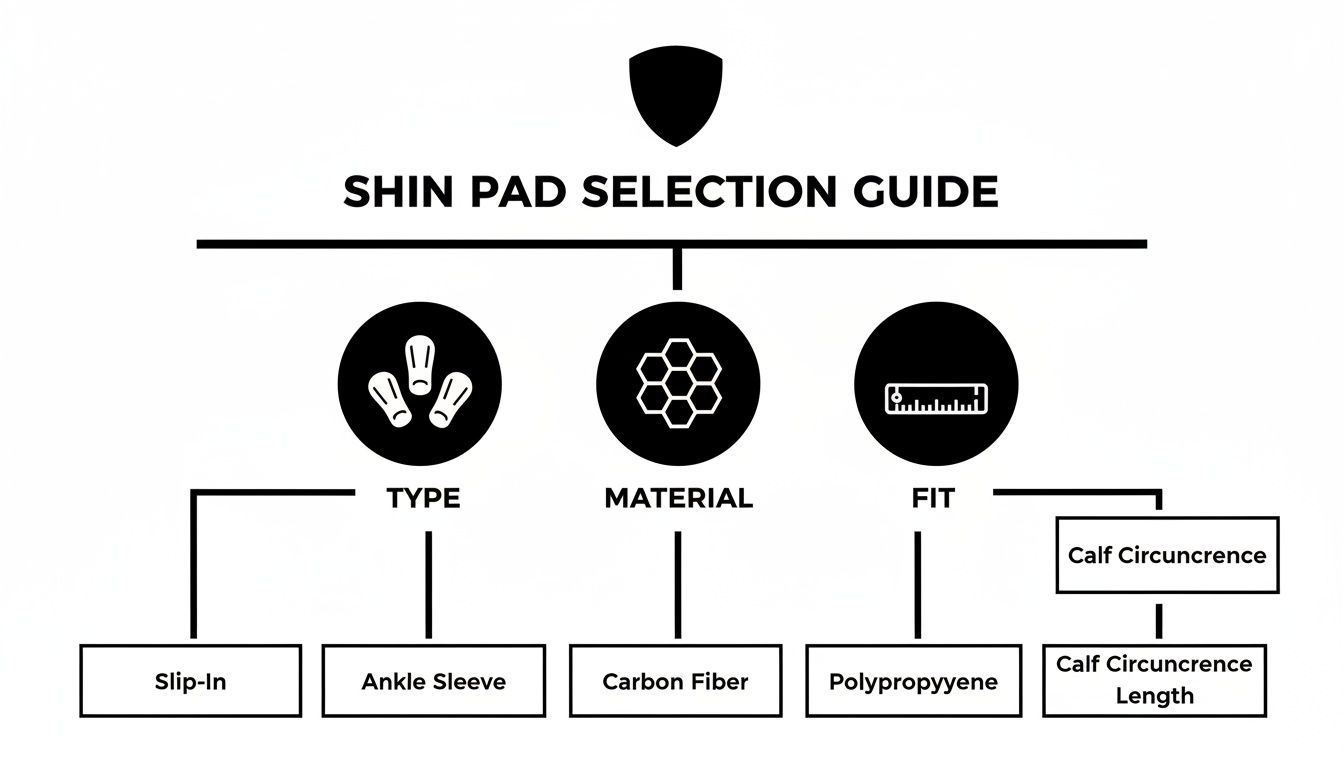
This visual guide shows how your perfect shin pad is found where these three things meet: the type, the material, and the fit.
The core principle is simple: match the shin pad's design to your personal playing style. A defender's needs are fundamentally different from a winger's, and your equipment should reflect that reality on the pitch.
To make things even clearer, here's a quick comparison of the three types.
Shin Pad Type Comparison for Adult Players
| Shin Pad Type | Key Features | Best For | Potential Downsides |
|---|---|---|---|
| Slip-In | Lightweight shield, no ankle guard | Attackers, wingers, and players prioritising speed | Can slip out of place, no ankle protection |
| Ankle | Integrated shield and ankle padding | Defenders, defensive midfielders, physical players | Can feel bulky and slightly restrictive |
| Sleeve | Separate shield held in a compression sleeve | All-rounders, modern players wanting a secure fit | Relies on the sleeve for fit, slightly more kit to manage |
Ultimately, picking between these three comes down to what you value most on the pitch.
- Prioritise Speed and Agility? The Slip-In pad is your best bet, offering essential protection with zero fuss.
- Crave Maximum Security? The Ankle shin pad delivers peace of mind with its all-round protection for shins and ankles.
- Want a Secure, Balanced Fit? The Sleeve shin pad offers a modern solution that keeps a lightweight plate exactly where it needs to be.
Once you get your head around these key differences, you're well on your way to picking the perfect shin pads for your game, making sure you step onto the field feeling both protected and ready to play.
Understanding Shin Pad Materials and Protection Levels
The materials in your shin pads are the unsung heroes of your protection. Think of them like the engine of a car; you might not see them, but they are doing all the critical work. To find the best shin pads, you have got to look under the bonnet and understand what makes them tick. The construction is usually a two-part system: a hard outer shell and a soft inner backing.
Each part plays a distinct but equally important role. The outer shell is your first line of defence, built to take the full force of a tackle and spread it out. The inner backing is the shock absorber, soaking up the leftover force while making sure the pad sits comfortably against your shin.
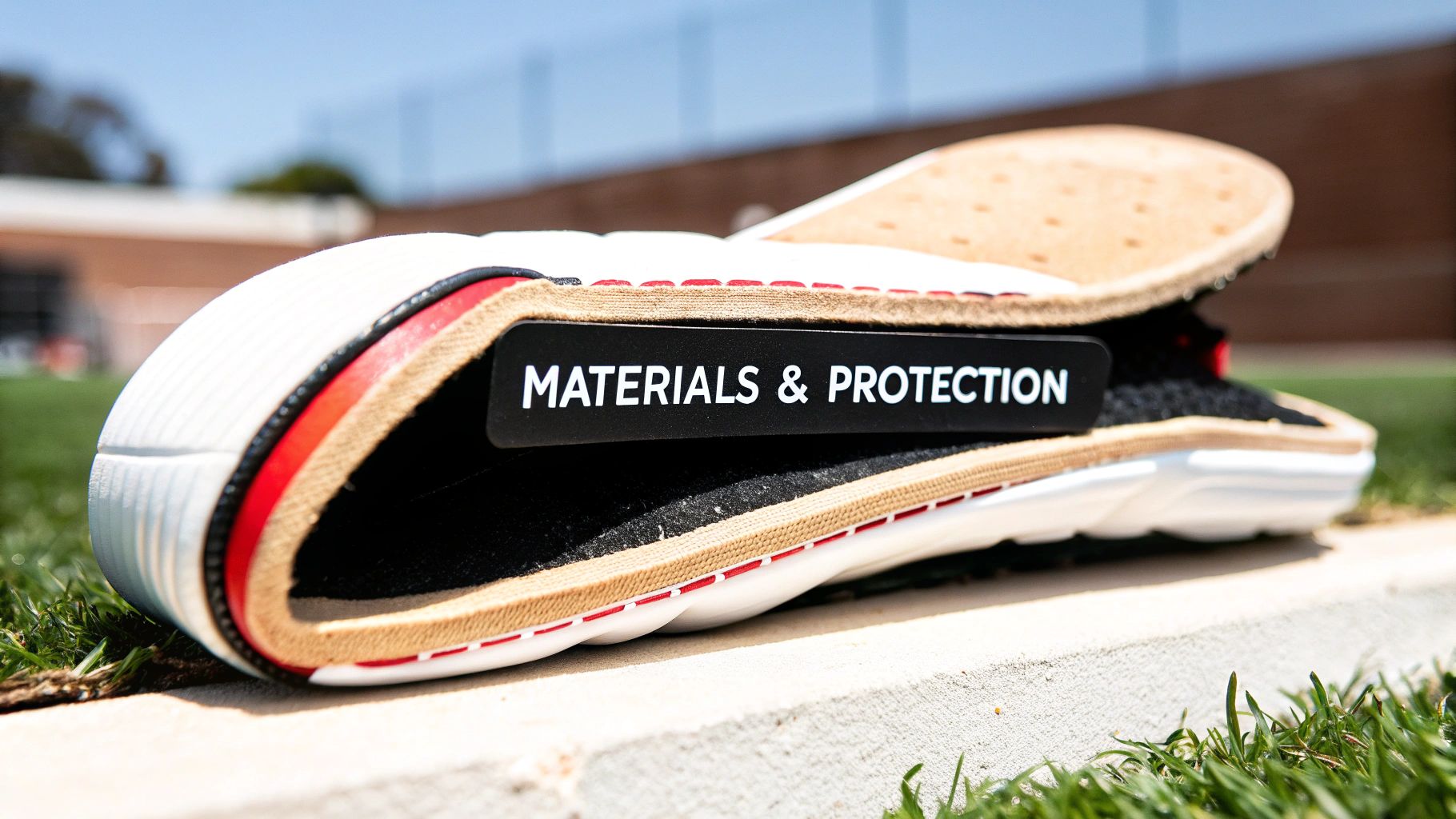
The Outer Shell: The First Line of Defence
The outer shell provides the shin pad's structure and its ability to resist impact. This is where you’ll find the biggest differences in material tech, with each offering its own balance of strength, weight, and flexibility. You’ll generally see two types: hard shells and soft shells.
Hard shells are the traditional choice, acting like a knight's armour for your shins. They are rigid, tough, and brilliant at dispersing the energy from a direct, powerful impact. The most common materials are:
- Polypropylene: This is the workhorse of shin pad materials. It's a durable, lightweight plastic that offers excellent protection without breaking the bank, making it a reliable choice for most players.
- Carbon Fibre: Found in premium shin pads, carbon fibre is the top-tier option. It has an incredible strength-to-weight ratio, meaning you get maximum protection from a shell that is exceptionally thin and light.
- Fibreglass: A solid middle ground, fibreglass offers more strength than polypropylene without the hefty price tag of carbon fibre. It's a popular choice for serious players who want a step up in protection.
Soft shells, on the other hand, are a more modern innovation. They stay flexible during play, moving with your body for a less restrictive feel, but are engineered to harden instantly on impact. This technology is often found in pads that prioritise mobility and comfort without sacrificing safety.
The Inner Backing: Comfort and Shock Absorption
If the shell is the shield, the backing is the cushion. This layer sits right against your skin, and its main jobs are to absorb shock and provide comfort. Without decent backing, even the strongest shell would be painful to wear during a collision.
The most common material used here is EVA (Ethylene Vinyl Acetate) foam. It's a fantastic shock absorber that’s both lightweight and comfortable. You’ll find it in different densities; thicker, denser foam generally provides more cushioning but can feel a bit bulkier.
The real magic happens when the outer shell and inner backing work together. A tough shell disperses the force, while the foam backing absorbs the shock, a partnership that keeps you safe and comfortable on the pitch.
Modern advancements are starting to blur the lines between these layers. A 2023 Prozone analysis revealed that 95% of Premier League midfielders use advanced pads where the foam itself acts as both shield and cushion. These materials can flex 200% more than rigid competitors, leading to a 37% reduction in contusion risks during impact studies.
Finding the Right Material Combination
So, how do you choose? The best material for you really depends on your position and style of play.
- Defenders: You will likely want the robust protection of a Carbon Fibre or Fibreglass hard shell. You are in the thick of it, so you need the highest level of impact resistance for those constant physical battles.
- Midfielders: A good balance is key here. A high-quality Polypropylene shell offers a great mix of protection and mobility, letting you cover every blade of grass effectively.
- Attackers and Wingers: Lightweight performance is everything. A minimalist Polypropylene shell or an advanced Soft Shell pad will give you the protection you need without weighing you down or slowing your pace.
Many modern designs also build honeycomb structures or grooved channels into the foam backing. These features not only help to reduce weight but also improve airflow, keeping your legs cooler and drier during an intense match. For example, pairing a lightweight shield with well-designed honeycomb compression shin pad sleeves can offer a fantastic blend of security and breathability.
Ultimately, understanding these materials helps you make a smarter choice. It lets you see past the marketing and appreciate the real technology that’s keeping you protected, giving you the confidence to go into any challenge.
How to Get the Perfect Shin Pad Fit
A shin pad that slips, twists, or pinches mid-game isn’t just annoying—it's a liability. Nailing the fit is one of the most critical steps for your comfort and, more importantly, your protection on the pitch. A poorly fitting guard can leave you exposed or even get in your way, so taking a few minutes to get it right is time well spent.
The good news? Finding your size is incredibly simple. It all comes down to one quick measurement that will tell you everything you need to know. A little preparation here ensures your gear is working with you, not against you, when that crunching tackle comes in.
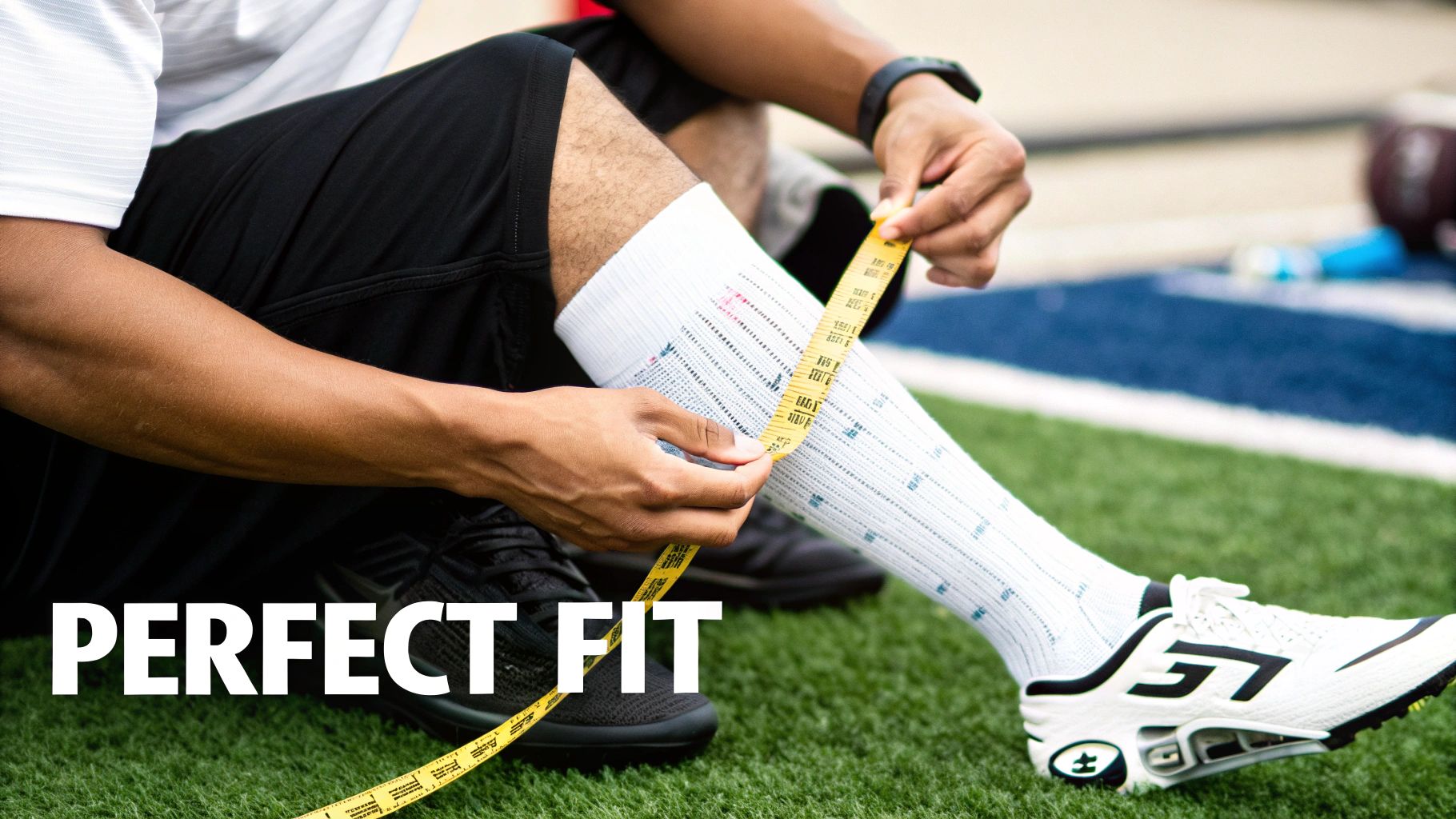
Measuring Yourself for Shin Pads
Forget the guesswork; your best friend here is a simple tape measure. Just follow these steps to get an accurate measurement of your shin.
- Get into Position: Sit on a chair with your foot flat on the floor, so your knee is bent at a 90-degree angle. This mimics a natural playing stance and engages your calf muscle correctly.
- Find Your Landmarks: Feel for the bony bit just below your kneecap. Next, find the point on your ankle where the top of your football boot would usually sit.
- Take the Measurement: Measure the distance between those two points. That length, whether in inches or centimetres, is your shin size. That’s the number you’ll use against the sizing charts.
A perfect fit means the shin pad covers your tibia (the big bone at the front of your lower leg) completely, without digging into your knee or restricting your ankle movement.
From Measurement to the Right Size
Once you have your number, you can match it against a brand’s sizing chart. Most manufacturers will suggest sizes based on height (e.g., Small for 4'11" - 5'3"), but using your actual shin measurement is always more accurate. Think about it—two players could be the same height but have totally different leg proportions.
A 5'10" player might have the exact same shin length as someone who is 6'0", so just going by height can lead you astray. Always trust your own measurement first.
With over 11 million people playing football in England each year, and adults aged 16-55 making up around 65% of them, the demand for properly fitting gear has never been higher.
Securing Your Shin Pads for Match Day
Getting the right size is only half the battle. Now you need to make sure your pads stay locked in place for the full 90 minutes. A guard sliding down into your sock is useless when you need it most.
Here are the best ways to keep your pads exactly where they should be:
- Compression Sleeves: This is the go-to modern solution. You pull the sleeve over your shin, pop the guard into its dedicated pocket, and you get a snug, secure fit without any messing about with tape.
- Shin Guard Tape: A classic for a reason. A few wraps of tape around your sock, both above and below the pad, creates a solid hold that prevents any shifting.
- Shin Guard Straps: These are just reusable, adjustable elasticated straps that wrap around your calf (over the sock) to hold the pad in place. They’re a great alternative to single-use tape. If you want to get this right, check out our guide on how to use shin guard straps effectively.
Ultimately, the right protective gear only works if it fits correctly. You can learn more about the importance of finding the perfect fit for your gear in this great guide. Pro tip: always try on new shin pads with your full kit on, especially your football socks. It gives you a true feel for how they’ll perform when it really counts.
Matching Shin Pads to Your Position and Playing Style
Choosing the right shin pads isn’t a one-size-fits-all deal. The perfect pair for a powerhouse centre-back would feel clumsy on a speedy winger, and what protects an aggressive tackler is overkill for a technical dribbler.
The key is to match your gear to your job on the pitch. Thinking about your position is the best place to start, as each role comes with unique demands and risks. A defender’s priorities are worlds away from a striker’s, and your shin pads should reflect that.
Defenders: The Last Line of Defence
If you play at the back, your game is all about physical challenges, blocking shots, and winning tackles. You need shin pads that offer maximum protection and coverage, period.
Look for robust, larger guards, often with integrated ankle protection, that extend further around the calf. These heavier-duty pads are built to absorb constant impact. The extra bulk is a small price to pay for the confidence that comes from knowing you’re well-protected in the heart of the battle.
Midfielders: The Engine Room
Midfielders cover the most ground and have to be masters of both attack and defence. This means you need a balanced approach to your equipment. Your shin pads should offer solid protection for tackling and shielding the ball but remain light enough not to slow you down.
A versatile sleeve-style pad or a well-fitted slip-in with a hard polypropylene shell is often the sweet spot. This gives you the freedom to sprint, pass, and shoot without feeling weighed down, while still providing the protection needed for the midfield scrap.
Your playing style is just as important as your position. An aggressive, all-action player needs more substantial protection than a player who relies on passing and movement to avoid challenges.
Strikers and Wingers: The Attackers
For those playing up front, speed and agility are everything. The last thing you want is bulky gear slowing you down as you try to beat a defender. This is where lightweight, minimalist shin pads really shine.
Look for small, low-profile slip-in pads, often made from advanced materials like carbon fibre for maximum strength with minimal weight. These provide essential protection against stray kicks without getting in the way of your movement, letting you focus on creating chances and scoring goals. Popular models like the Nike Mercurial Lite are favoured by 42% of Premier League pros for this exact reason; their lightweight 120g design and EVA foam padding reduce impact by 45% in lab tests. You can find more insights into the football equipment market on cognitivemarketresearch.com.
Beyond your position, think about how you actually play the game.
- Aggressive Tackler: If you love a crunching challenge, opt for more coverage and ankle support, regardless of where you are on the pitch.
- Technical Dribbler: If your game is built on close control and quick feet, a smaller, lighter pad will feel much more natural and less restrictive.
When you connect your gear directly to your gameplay, a simple piece of equipment becomes a genuine performance tool.
Caring for Your Pads (And Knowing When to Say Goodbye)
Even the toughest pair of shin pads needs a bit of TLC to keep performing and, just as importantly, to stop them from stinking out your kit bag. Looking after your gear is simple, but it’s the difference between reliable protection and a smelly, bacterial mess.
After a hard-fought match or a muddy training session, your pads are going to be soaked in sweat and grime. Do not just chuck them in your bag and forget about them until next week. That’s a one-way ticket to a funky smell and potential skin irritation.
Keeping Your Shin Pads Clean and Fresh
First things first: keep them out of the washing machine. The intense spin cycles and high heat can wreck the protective shell and break down the foam padding, which is the bit that actually absorbs the impact. It’s just not worth the risk.
Instead, a quick hand-wash is all you need:
- Give them a gentle scrub with some mild soap and lukewarm water.
- Rinse them properly to get all the soap off.
- Let them air-dry completely. Lay them flat or hang them somewhere with good airflow, but keep them away from radiators or direct sunlight, as extreme heat can warp the materials.
A quick clean doesn't just stop the smell; it prevents bacteria from building up, which can lead to rashes and other skin issues. A few minutes of care goes a long way.
Knowing When It’s Time for a New Pair
Shin pads are your armour on the pitch, but even the best armour wears out. Using a pair that’s past its prime is a massive, unnecessary risk. Give your pads a quick once-over every few weeks and look for these tell-tale signs:
- Visible cracks or deep gouges in the hard shell. Any compromise here means they won’t distribute impact properly.
- The foam has gone flat. If the padding feels compressed and doesn't bounce back when you press it, its shock-absorbing days are over.
- Straps or sleeves are shot. If they’ve lost their stretch and can't hold the pad firmly in place, they’re not going to protect you when you need them most.
Remember, top-tier pads are built to last longer and offer better protection. For instance, some pro-level models worn by 30% of EFL players use advanced gel padding that disperses 65% more impact than standard shells. You can dive deeper into the stats with shin pad market reports on marketreportanalytics.com. If your current pads are showing their age, it is time to invest in a new pair and make sure you stay properly protected out there.
Your Shin Pad Questions Answered
We’ve covered the different types, materials, and how to get the perfect fit. But you probably still have a few questions rattling around. This last section tackles the most common queries we hear from adult players, giving you quick, straight-to-the-point answers so you can buy with total confidence.
Do I Have to Wear Shin Pads for 5-a-Side?
Absolutely. You will find that almost every organised league, 5-a-side included, makes shin pads mandatory. It’s all about safety and insurance. The game is incredibly quick, played in tight spaces, and accidental kicks or collisions are pretty much guaranteed.
Wearing pads is non-negotiable if you want to prevent a painful, needless injury. It’s a simple rule that keeps everyone on the pitch instead of sitting on the sidelines.
How Do I Stop My Slip-In Shin Pads from Moving?
This is a classic problem, and every player has been there. The most reliable fix is a dedicated compression sleeve or shin guard stay. They are designed specifically to hold the pad flush against your leg, and they do a fantastic job.
Another popular trick is using shin guard tape. A couple of wraps around your sock, both above and below the pad, will lock it in place. Some players also swear by wearing the pad between two layers of socks for that extra bit of stability.
Are Carbon Fibre Shin Pads Worth the Extra Money?
For competitive players in physical leagues, they often are. Carbon fibre gives you an unmatched level of protection for its weight, which means the pads are significantly stronger, thinner, and lighter than the standard plastic ones.
If you’re after top-tier impact resistance without feeling weighed down, the investment in carbon fibre provides superior performance and real peace of mind during those intense matches.
Can I Put Shin Pads in the Washing Machine?
It’s best to avoid this. The high heat and aggressive spinning in a washing machine can warp the protective shell and break down the foam backing over time, which seriously compromises how well they can protect you.
The best method is always to wash them by hand with a bit of mild soap and lukewarm water. Once you are done, give them a good rinse and let them air dry completely, away from direct heat like radiators. This simple routine keeps them hygienic and in top condition.
At SoccerWares, we know that the right gear makes all the difference. From grassroots to the big leagues, our selection of high-quality training essentials is curated for players who are passionate about the beautiful game. Explore our collection to find the perfect equipment to elevate your performance.
Find your next pair of shin pads and other essential gear at https://soccerwares.com.