

Ever wondered what the secret is to getting thousands of extra touches on the ball without needing a training partner? The answer is simpler than you think: a football rebound wall.
Think of it as your most reliable teammate. It's a piece of training equipment specifically built to fire the ball right back at you, creating a perfect loop for solo practice. For any player serious about levelling up their game, it’s an absolute must-have—a tireless partner that gives you a realistic, consistent return, time and time again.
Why a Rebound Wall Is Your Ultimate Training Partner
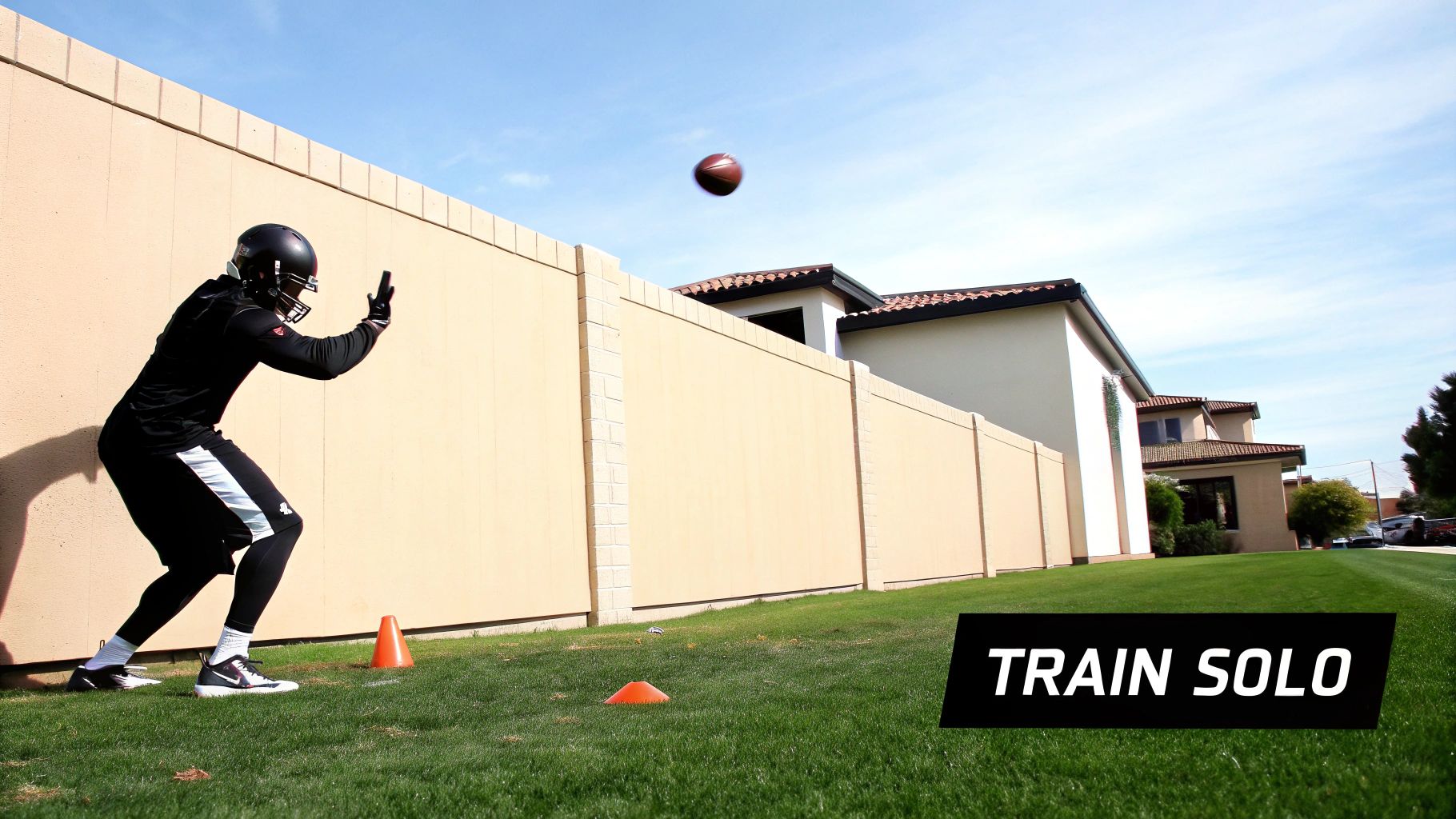
Imagine a training partner who never misplaces a pass, never gets tired, and is ready to go whenever you are. 24/7. That’s exactly what a football rebound wall offers. It completely transforms solo practice, turning a simple kick-about into a high-intensity session that feels much closer to the fast, unpredictable nature of a real match.
This brilliantly simple tool is designed to fast-track a player's development in several crucial areas. Because it sends the ball back instantly, it forces you to react quickly, sharpening your reflexes and decision-making under pressure. This constant cycle of passing and receiving is how you build the muscle memory needed to perform when it really counts.
Accelerating Skill Development
Using a football rebound wall lets you zero in on the fundamentals that make all the difference. Instead of wasting time chasing stray passes or waiting for a partner, every single second is spent with the ball at your feet. It’s all about maximising your training time, letting you get hundreds of quality touches in just a short session.
Key benefits include:
- Improved First Touch: The wall will return the ball at different angles and speeds, forcing you to learn how to control it instantly with any part of your body.
- Enhanced Passing Accuracy: You get immediate feedback. A crisp pass comes back crisp. A sloppy one doesn't. This helps you fine-tune the weight and precision of every pass you make.
- Quicker Reaction Times: The relentless, repetitive nature of rebound drills hones your cognitive responses, helping you think and act a split-second faster on the pitch.
"The ability to practice alone with game-like intensity is what makes a rebounder so valuable. It closes the gap between individual training and match-day readiness, turning repetition into instinct."
Ultimately, adding a rebound wall to your routine makes practice far more engaging and seriously productive. It’s a cornerstone of modern player development and a vital part of any player’s toolkit.
Key Skills Developed with a Football Rebound Wall
Here’s a quick look at the core football abilities you can dramatically improve by incorporating a rebound wall into your practice sessions.
| Benefit | Skill Developed | How It Helps in a Match |
|---|---|---|
| Ball Mastery | First Touch & Control | Helps you instantly trap a pass from a teammate, even under pressure from a defender. |
| Passing Prowess | Accuracy & Weighting | Ensures your through-balls and short passes reach their target with the perfect pace. |
| Mental Agility | Reaction Speed | Allows you to make quicker decisions in crowded midfields or when defending a fast break. |
| Shooting Technique | Volleys & Half-Volleys | Prepares you to strike the ball cleanly as it comes to you, perfect for finishing crosses. |
By consistently working on these areas, you’re not just practising—you’re building the foundational skills that define a complete player.
To build a full training setup, you can learn more about all the essential football coaching equipment that works perfectly alongside a rebounder. The range of rebound walls and other training aids available here at SoccerWares gives you everything you need to start dominating the pitch.
The Secret to a Perfect First Touch
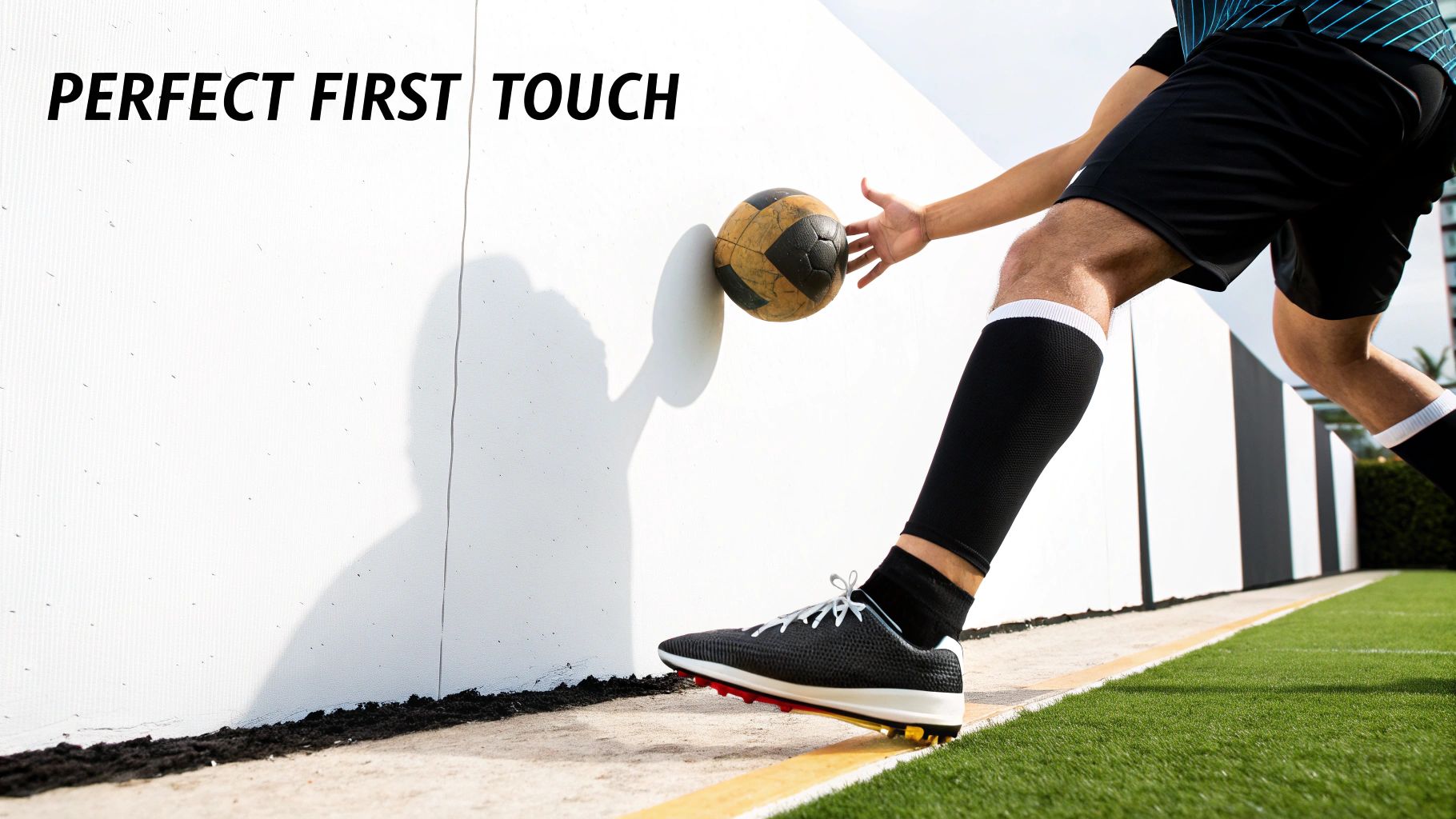
In football, the split-second after the ball hits your boot can be the difference between a goal and a turnover. A great first touch isn't just a flashy skill; it’s the foundation for everything that comes next. It’s what allows you to keep the ball under pressure, spin away from a defender, or launch a lightning-fast counter-attack.
Honestly, it's the one skill that truly separates good players from great ones.
So, how do you nail it every single time? The answer is simple but not easy: repetition. Thousands and thousands of realistic, consistent touches. This is where a football rebound wall becomes your best training partner. Think of it as a tireless teammate who always passes the ball back perfectly, letting you focus entirely on your technique.
Building That Instinctive Touch
Mastering your first touch is all about building muscle memory. Your body needs to learn how to adjust, cushion the ball, and prepare for the next move without you even thinking about it. A rebounder fast-tracks this whole process by giving you the sheer volume of practice you need.
Every single time that ball pings back, you're fine-tuning the tiny movements that add up to elite control. It trains your feet and your brain to act as one.
The benefits you'll see are massive:
- Control with Any Surface: Get comfortable taking the ball with the inside of your foot for simple control, the outside for a quick turn away from pressure, or your laces to deaden a zipping pass.
- Adapt to Different Paces: By simply changing how hard you pass into the wall, you can mimic everything from a soft lay-off to a rocket of a cross, forcing you to adjust your body and technique instantly.
- Game-Realistic Speed: The ball comes back fast. A rebound wall replicates the pace of a real match, teaching you to think on your feet and make a decision before an imaginary defender closes you down.
"A flawless first touch is non-negotiable at the elite level. It buys you time, creates space, and sets the rhythm of the game. Repetitive drill work with tools like a rebound wall is how you turn that fundamental skill into an automatic, match-winning instinct."
From the Garden to the Game
The hard work you put in with a rebound wall translates directly to your performance on the pitch. When you can consistently kill the ball dead, you stop reacting to the game and start dictating it. This control is what lets you get your head up, scan for options, and make smarter plays.
It means you can effortlessly take a pass in your stride, create that vital yard of space from your marker, and be ready to either ping a pass or drive forward.
For players serious about improving this critical skill, check out the range of durable rebound walls at SoccerWares. They're built to withstand thousands of impacts and help you forge that perfect first touch, one repetition at a time. The drills you do at home are the very building blocks for composed, confident play when it matters most.
Sharpening Your Passing and Shooting Accuracy
Once you’ve nailed your first touch, it’s time to turn that control into lethal precision. A football rebound wall is your best mate for this, letting you sharpen up both your passing and shooting in realistic, game-like scenarios that demand accuracy under pressure. It's all about that consistent, rapid return—letting you get hundreds of reps in to perfect your technique.
The real magic of a rebounder is how it mimics the speed of a proper match. You’re not just mindlessly kicking a ball against a brick wall; you’re setting up dynamic, one-touch passing drills. This forces you to get your body shape right, judge the weight of your pass perfectly, and execute it all before the ball is right back at your feet. It's the best way to build the muscle memory you need for those quick, clever passes in a packed midfield.
Drills for Deadly Precision
To get the most out of your time, focus on drills that feel like situations you'd actually face on the pitch. The reliable bounce-back from a rebounder lets you practise specific, targeted movements that a simple wall just can’t replicate, especially when it comes to more complex strikes.
Here are a few high-impact drills to get you started:
- One-Touch Passing Sequences: Stand about 5-10 metres away and simply ping one-touch passes against the board. Get comfortable using both your left and right foot, and try mixing it up by using the inside and outside of your boot to control where the ball comes back.
- Volley and Half-Volley Practice: This is where an adjustable rebounder really shines. Tilt the angle back so the ball loops up towards you around waist or chest height. It’s the perfect way to simulate a cross coming into the box, letting you practise clean volleys and half-volleys over and over again.
- Driven Shots and Weighted Passes: Use the rebounder to really work on your striking technique. Concentrate on your body shape—keeping your head over the ball and following through smoothly. The wall gives you instant feedback: if you hit a pass with the right weight, it'll come back nicely. If you smash it too hard, it'll come flying back out of control.
A rebounder doesn’t just return the ball; it returns feedback. A clean pass comes back clean. A powerful, accurate shot returns with pace. This immediate response is crucial for making the small adjustments that lead to significant improvements.
Perfecting Your Technique
Every single time that ball comes back from the rebound wall, it’s a fresh opportunity to fine-tune your form. Pay close attention to how you’re striking the ball. Are you leaning back when you shoot, sending it over the bar? Is your standing foot planted firmly next to the ball for balance? These tiny details make all the difference.
By repeating these actions hundreds of times, your body simply learns the correct mechanics for different types of passes and shots. That builds real confidence, so when a chance pops up in a match, your technique is pure instinct. For more ideas on how to weave these movements into your sessions, have a look at our guide on 8 essential soccer drills for passing and moving.
At SoccerWares, we’ve got a range of rebounders built to take a beating from powerful, repeated strikes. They're the perfect training partner for any player committed to taking their accuracy to the next level.
How to Choose the Right Football Rebound Wall
Picking the perfect football rebound wall can feel like a tough choice, but it becomes much easier when you break it down. The right rebounder for you will depend on your training space, what skills you're trying to improve, and of course, your budget. If you think about how and where you’ll be using it most, you can find a piece of kit that will genuinely level up your game.
First, think about the material and build. A heavy-duty rebounder with a sturdy steel frame is built to withstand powerful shots, day in and day out. This makes it a brilliant choice for strikers or any player who wants to hammer the ball in intense shooting drills. They’re usually heavier but provide rock-solid stability and a reliable, consistent return every time.
On the other hand, a lightweight, portable net rebounder is fantastic for practice in the garden or for players who need to pack their gear away after a session. These models are often a breeze to set up and move around, giving you loads of versatility for working on your passing and first touch without needing a permanent spot.
Size and Portability
The size of your football rebound wall really just depends on the space you’ve got. For a smaller garden, a compact model will do the trick perfectly for close-control drills and short, snappy passing. But if you’ve got access to a larger pitch or training ground, a wider rebounder provides a bigger target, which is much better for practising long-range passes and shooting.
Portability is another massive factor. If you plan on taking your rebounder to the park or different training grounds, look for one that folds down easily and won’t break your back carrying it.
- Fixed Models: These tend to be larger and more robust, ideal for a dedicated training spot where they won't need to be moved often.
- Portable Models: Look out for features like carry bags and quick-release pins that make setting up and packing away a piece of cake.
This flowchart gives you a good idea of how your main training goal—whether that’s nailing your passing or sharpening your shooting—can point you to the right choice.
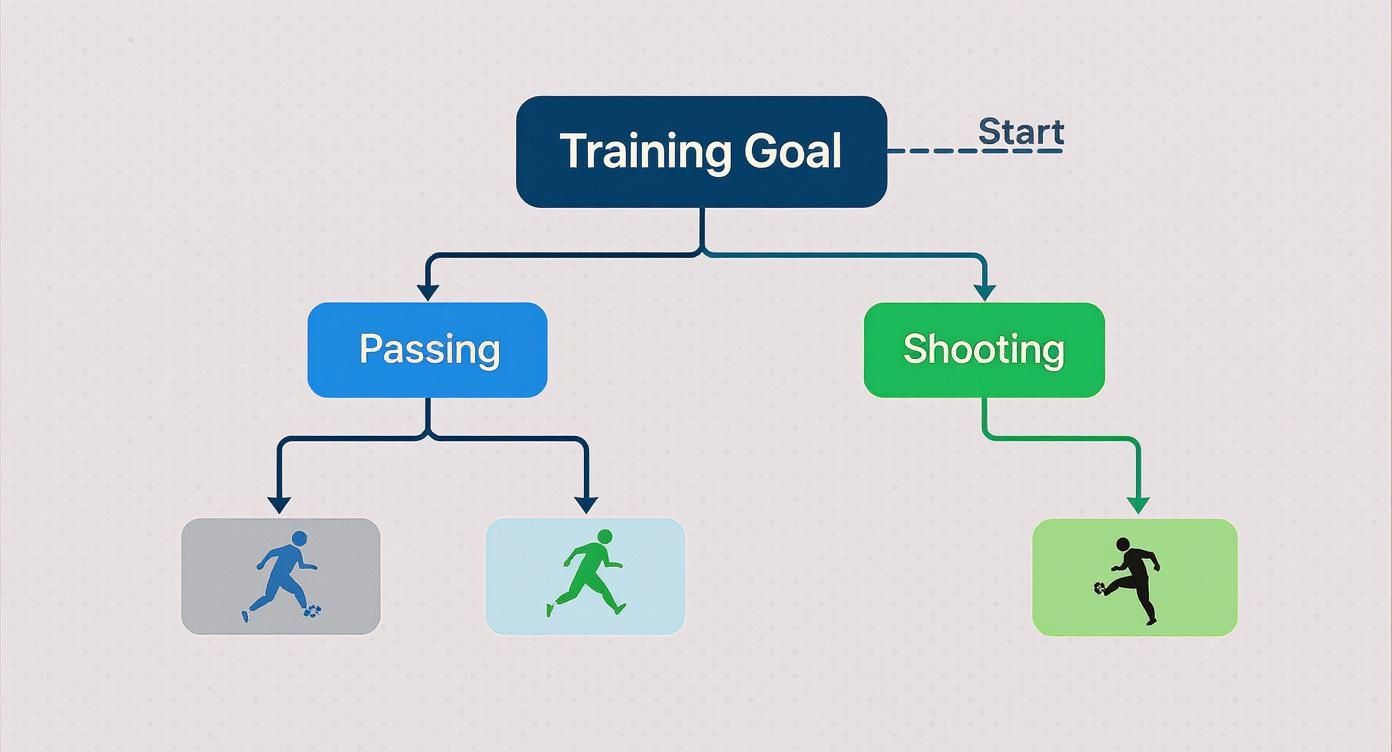
As the graphic shows, a focus on passing might lead you toward a rebounder with a flat, consistent surface for ground passes. A focus on shooting, on the other hand, suggests a larger, more durable frame that can handle the power.
Angle and Adjustability
The angle of the rebound surface is what really makes your training dynamic. A rebounder with a fixed, upright angle is perfect for practising crisp ground passes, but an adjustable model opens up a whole new world of drills.
The ability to change the rebound angle is crucial for simulating different match scenarios. A slight tilt can turn a ground pass into a looping return, perfect for practising volleys or controlling balls out of the air.
By tilting the frame back, you can work on your chest control, headers, and half-volleys, mimicking the flight of crosses and high passes. This kind of versatility ensures your training sessions stay challenging and do a much better job of replicating the unpredictable nature of a real match.
Ultimately, the best football rebound wall is the one that lines up with your ambitions. Think about what you need to work on most, then head over to SoccerWares to explore the different football rebounders we have. You’ll find a training partner that’s ready to work as hard as you are.
The Role of Rebound Walls in Inclusive Football
A football rebound wall isn't just a clever tool for solo training; it's a vital piece of kit that makes the beautiful game more open and accessible to everyone. Its role in inclusive football is significant, creating fast-paced, dynamic environments that break down barriers for players with different abilities.
The idea is simple: keep the ball constantly in play. This concept is a cornerstone of many adapted sports. By getting rid of traditional throw-ins and constant stoppages, the game becomes more fluid and continuous. This not only boosts the time each player spends on the ball but also sharpens orientation and spatial awareness—critical skills in certain disciplines.
A Game Changer in Paralympic Sport
You can see the impact of rebound walls perfectly in Football 5-a-side, a Paralympic sport designed for athletes with visual impairments. In this format, the pitch is completely enclosed by rebound walls, which are fundamental to the game's structure and relentless pace. Players can use the walls to play one-twos with themselves or ping passes to teammates, creating a non-stop, thrilling spectacle.
This adaptation was a standout feature at the London 2012 Paralympic Games, showing the world how rebound walls create a faster, more engaging game by cutting out endless interruptions. This design ensures the ball stays live, reducing stoppages and keeping the action flowing. For a closer look at this version of the game, you can learn about the rules of Football 5-a-side.
By fundamentally changing how the game is played, the football rebound wall proves that with thoughtful design, football can be adapted for everyone to enjoy. It transforms the sidelines from a boundary into an active part of the pitch.
This same principle—maximising time on the ball and creating a non-stop environment—is exactly why a rebound wall is so effective for your individual practice. It’s a brilliant example of how a single piece of equipment, championed right here in the UK, can serve both elite solo training and the inspiring world of inclusive sport.
Your Guide to Setup and Maintenance
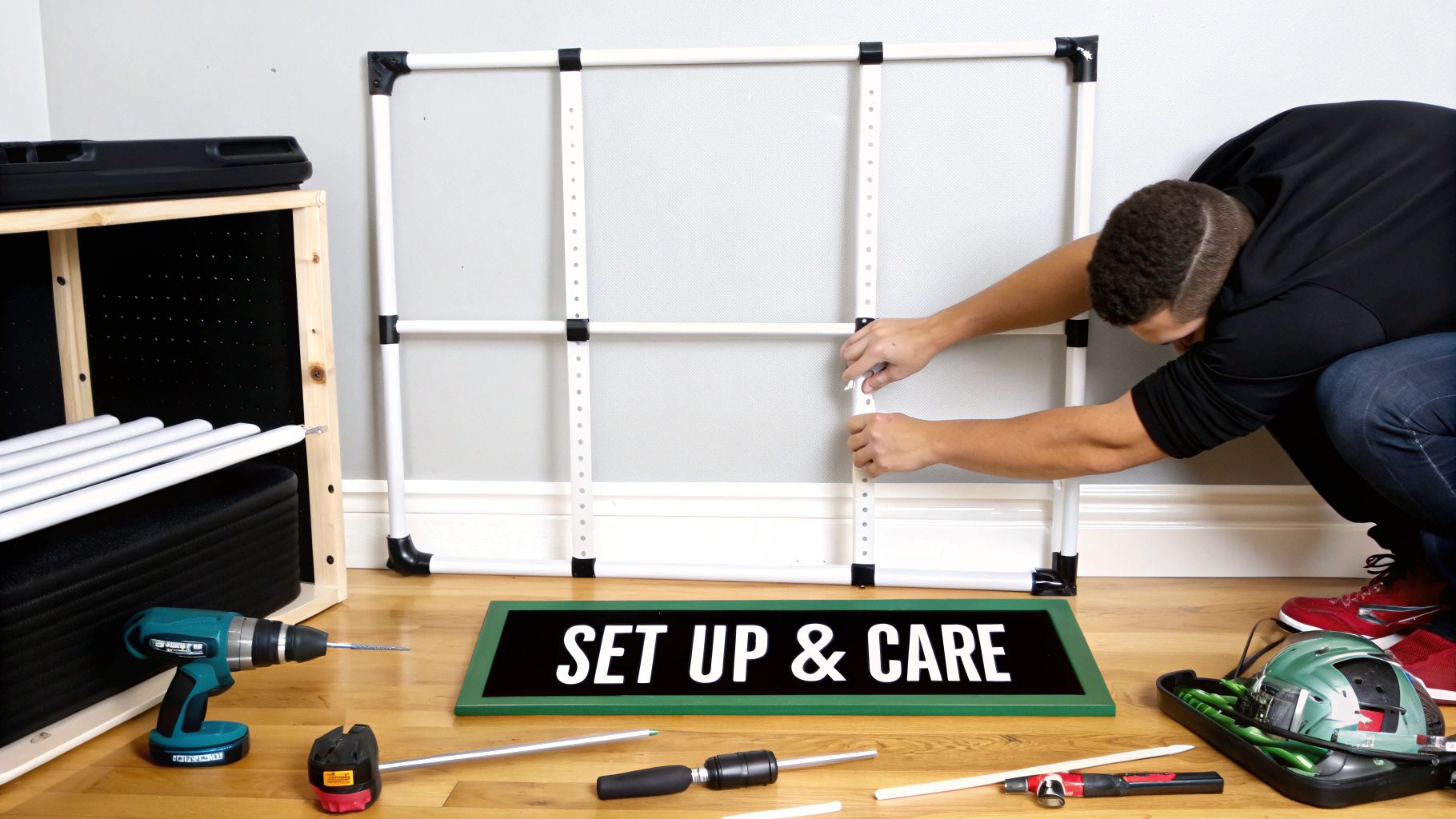
So, you’ve got your rebound wall. To get the best out of it and make sure it lasts for seasons to come, a bit of attention to setup and care goes a long way. Think of it this way: spending a few minutes on maintenance now protects your investment and keeps it a safe, reliable training partner.
Getting the assembly right is the first job on the list. Always follow the manufacturer’s instructions to the letter, making sure every bolt is tight and the frame feels solid. This isn’t just for stability; it’s what gives you that consistent, true bounce you need to really sharpen your skills.
Positioning for Safety and Performance
Where you put your rebound wall is more important than you might think. Start by finding a flat, level bit of ground in your garden or training area. A wobbly base is no good for anyone and can be a real hazard during intense drills.
For extra stability, especially with the lighter models, it’s a good idea to anchor the frame down with ground stakes or a couple of sandbags.
Before you start pinging passes, take a quick look around.
- Clear the Area: Make sure the space is free of trip hazards like garden furniture, stray stones, or toys. A clear zone of at least 5 metres around the wall is a good rule of thumb.
- Consider Your Neighbours: Be mindful of where a stray ball could end up. Try to position the rebounder so it faces away from next door's windows or greenhouse!
- Check the Surface: A flat patch of grass or turf is perfect. It gives you a predictable ball return and is much more forgiving if you take a tumble.
If you want more detailed setup advice, we've got a complete guide covering the portable football rebounder net that’s packed with tips for different settings.
Long-Term Care and Storage
A little TLC will keep your rebounder in top nick. After you’ve finished a session, just give the frame a quick wipe-down with a damp cloth. This gets rid of any mud and moisture and is the best way to stop rust from creeping in on metal parts.
A simple monthly check-up can prevent bigger problems down the line. Have a quick look over the net for any small holes or fraying, and double-check that all the frame connections are still nice and tight.
When the season ends or you know you won’t be using it for a while (especially during a grim winter), proper storage is your best friend. If you can, take it apart and store it somewhere dry and sheltered, like a garage or a shed. This simple step protects it from the worst of the weather and will seriously extend its lifespan, making sure your investment keeps paying off.
Common Questions About Football Rebound Walls
It’s natural to have a few questions before adding a new piece of kit to your training setup. So, let's tackle some of the most common ones we hear about football rebound walls to help you decide if one is right for you.
Are They Suitable for Young Children?
Absolutely. A football rebound wall is a fantastic tool for young players just finding their feet. Many models have adjustable angles and tension, which means you can dial it back for a softer, more predictable return. This is perfect for building confidence with a first touch or passing.
For kids, it’s a brilliant way to make repetitive practice feel like a game. They can work on technique without the pressure of a formal coaching session. We'd always point parents toward a lightweight, portable model that’s easy to pop up in the garden and safe to use.
Can Goalkeepers Use a Rebound Wall?
Yes, and they’re incredibly effective for keeper training. A rebounder gives a goalkeeper the chance to practise handling and reaction saves without needing someone to pepper them with shots. It’s a great way to work on dealing with unpredictable deflections and awkward bounces.
It’s also brilliant for improving distribution. A keeper can work on their throwing and kicking accuracy by aiming at the wall, simulating the start of a quick counter-attack and building the confidence to launch play from the back.
A football rebound wall is one of the most versatile pieces of solo training kit you can own. It works for every position on the pitch—from a striker honing their volleys to a keeper sharpening their reflexes. That alone makes it a worthwhile investment for any dedicated player.
How Much Space Do I Need?
This really comes down to what you’re planning to do. For basic passing drills and close-control work, a clear patch of about 5-10 metres in front of the wall will do the trick just fine.
If you’re thinking bigger—like practising shooting or long-range passing—you'll naturally need a bit more room to play with. The good news is that many models are designed to be compact enough for a typical British garden, bringing quality solo training right to your back door.
Ready to find the perfect training partner? Explore the full range of durable and versatile rebounders at SoccerWares.