

Ever wondered how professional players always seem a step ahead, physically dominant from the first minute to the last? A big part of the answer is tucked neatly between their shoulder blades: a football tracking vest.
Think of it as your personal sports scientist, worn like a simple crop top. Inside a small pocket on the back sits a GPS pod that tracks every single sprint, jog, turn, and tackle you make. It takes all that raw effort and converts it into hard numbers you can actually understand on an app.
The Pro Player Tech Now in Your Kit Bag
This is the exact same technology that was once exclusive to Premier League clubs and elite academies. Now, it's accessible to any player who is serious about improving their game, whether you're playing on a Sunday morning or pushing for a semi-pro contract.
This clever bit of kit moves you beyond guesswork. It translates your every movement on the pitch into real, actionable data. No more wondering if you put in a good shift—you can see exactly how far you ran, your top speed, and how many sprints you clocked during a tough 90 minutes.
Why This Tech Matters for Your Game
The magic of a football tracking vest is that it makes the invisible, visible. It helps you understand your physical limits so you can push them safely and smartly. Instead of just feeling knackered after a match, you can look at the data and see exactly why. That knowledge is the key to smarter training and faster recovery.
For any player with ambition, this data provides a clear roadmap. It can help you:
- Benchmark Your Performance: See how your stats stack up against your last game, your teammates, or even the pros. It’s the ultimate reality check.
- Train with Purpose: Did your sprint count drop off after 60 minutes? Are you not making enough high-intensity runs? The data flags your weaknesses so you can tailor your training drills to fix them.
- Reduce Injury Risk: By keeping an eye on your workload, you and your coaches can spot the warning signs of overtraining long before an injury happens. It helps keep you on the pitch, not on the sidelines.
In short, a football tracking vest gives you the same feedback loop that was once reserved for top-flight professionals. It’s the evidence you need to train smarter and gain a genuine edge over the competition.
In this guide, we'll break down exactly how this technology works, what the numbers mean for your game, and how you can start using it to take your performance to the next level.
How Your Football Tracking Vest Works
You’ve probably seen pro footballers wearing them – that tight, crop-top-like vest peeking out from under their jersey. It might look like a simple piece of kit, but it’s actually a seriously smart piece of technology designed to do one thing: turn your hard work on the pitch into cold, hard data.
Tucked into a small pocket between the shoulder blades sits a little pod. This pod is the brains of the whole operation. Inside, a high-tech GPS module maps every single run you make, tracking fundamental stats like the total distance you’ve covered and your top speed in a match.
But that’s just scratching the surface. The real magic lies in the other sensors working alongside the GPS.
The Sensors Behind the Stats
To build a full profile of your physical performance, these vests use a combination of clever sensors. Each one is responsible for a different piece of the puzzle, ensuring the data you get is both detailed and accurate.
It might seem complex, but the technology inside a modern football tracking vest is what separates basic activity tracking from genuine performance analysis. Each sensor plays a crucial role in capturing the nuances of your game.
Key Technologies Inside Your Football Tracking Vest
| Technology Component | Primary Function | What It Measures |
|---|---|---|
| GPS Module | Location & Speed Tracking | Total distance, top speed, sprint distance, heatmaps of your position on the pitch. |
| Accelerometers | Explosion & Intensity | The number of sprints, acceleration bursts, sudden stops, and overall work rate. |
| Gyroscopes | Agility & Balance | How quickly you change direction, your body rotation during turns, and balance. |
| Magnetometers | Directional Orientation | Provides accurate compass direction to ensure your movements are correctly mapped. |
| Heart Rate Monitor | Physiological Strain | Your heart rate zones, cardiovascular load, and recovery metrics like HRV. |
Together, these components don't just count your steps; they tell the story of your physical output, from explosive sprints to sharp turns, giving you a complete picture of your performance.
This is how the vest connects you, the player, directly to data that can give you a real competitive advantage.
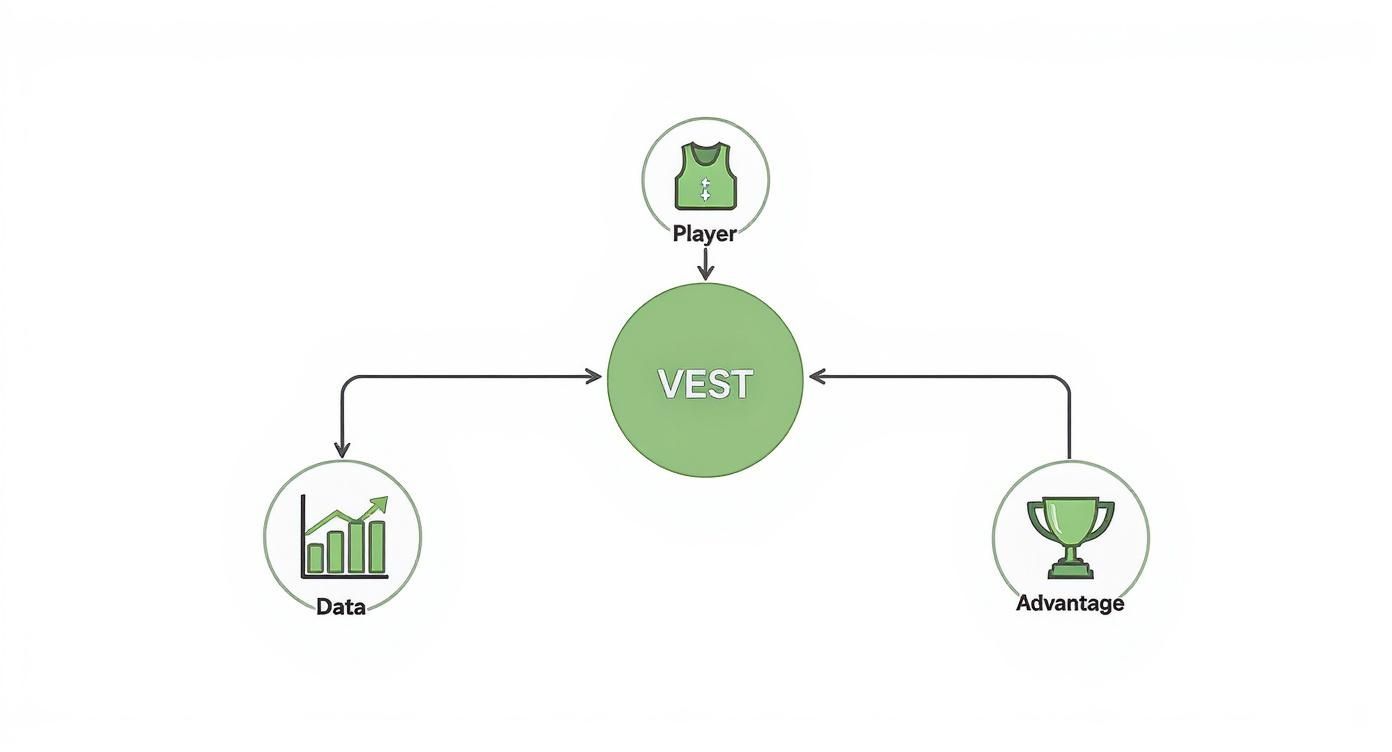
As you can see, it’s a simple but powerful concept: your physical actions are captured by the vest and translated into performance data, creating a massive strategic edge.
More Than Just Movement
The technology in these vests is moving incredibly fast. The latest systems can now capture over 1,000 data points per second, offering incredibly granular insights into everything from your running style to signs of fatigue.
Many vests also track your heart rate, either through sensors woven into the fabric or by pairing with a chest strap. One of the most important metrics here is Heart Rate Variability (HRV), which gives you a fantastic window into how well your body is recovering and if you're ready for the next tough session. To get your head around it, it's worth understanding Heart Rate Variability (HRV) and its significance in performance, as it’s a key indicator of your overall fitness and readiness.
Ultimately, these sensors aren’t just spitting out random numbers. They work together to build a detailed story of your effort on the pitch. This gives you, your coach, or your parents a clear, data-driven picture of what you’re putting in, session after session.
Translating Data into On-Pitch Performance
So, you've finished a tough session, synced your football tracking vest, and now you’re staring at a screen full of numbers, charts, and graphs. What does it all actually mean for your game? The real magic of this tech is turning that raw data into a clear story about your performance on the pitch.
It’s all about looking past the figures and understanding the footballing context behind them. To really get the most out of your vest, you need to learn how to translate the insights, much like diving into the rich world of interactive video data analytics where context is everything.
Speed and Stamina Metrics
Think of this group of stats as your engine room—they measure your endurance and explosive pace over a full 90 minutes. These are the foundational metrics every player should be keeping an eye on.
- Total Distance: This is your overall ground coverage. While a big number looks impressive, it’s the quality of that distance that really matters. A box-to-box midfielder, for example, might aim for 10-12km per match.
- Max Speed: Your absolute peak velocity in a single burst. This stat is massive for wingers and strikers, showing off your ability to leave defenders for dead. Hitting speeds over 30 km/h is a benchmark of genuine, elite-level pace.
- Sprint Distance: This is the total ground you covered while running near your max speed. Honestly, this is a far better indicator of your impact than total distance alone, as it shows how often you made those game-changing, lung-busting runs.
A high total distance is good, but a high sprint distance is great. It proves you’re not just jogging between the lines but making explosive runs that actually influence the game.
Work Rate and Power Metrics
These metrics go a level deeper, revealing the raw intensity of your movements. They measure the explosive, stop-start nature of football that often goes unnoticed but is absolutely vital for high-level performance. This is what separates the merely busy players from the truly effective ones.
Your work rate isn't just about covering ground; it's about the number of explosive actions you perform. These powerful movements—accelerating, decelerating, and making impacts—are what truly define your physical influence on the match.
Key power metrics to watch for include:
- Accelerations: The number of times you significantly ramped up your pace. This shows your intent to get involved, whether that’s pressing an opponent or making a darting run into the box.
- Decelerations: How often you slammed on the brakes. This is just as physically demanding as accelerating and is a key sign of an agile player who can change direction on a sixpence.
- Impacts: The vest can even pick up on the physical jolts from tackles and collisions, giving you a proper sense of the physical toll a game has taken on your body.
Tactical Positioning Insights
Finally, the GPS data paints a picture of your tactical discipline, and the Heat Map is one of the most powerful visual tools your football tracking vest offers.
It gives you a bird's-eye view of the pitch, lighting up the areas where you spent most of your time. For a winger, you’d want to see intense activity up and down the touchline. For a centre-back, that heat map should be concentrated firmly in your own defensive third.
This visual feedback is perfect for seeing if you’re holding your position correctly or drifting out of place. Learning how to read football GPS data is the first step to turning these insights into smarter decisions when you're back out on the pitch.
How Vests Actually Help Players, Coaches, and Teams
A football tracking vest is way more than just a cool-looking gadget. Think of it as a powerful tool that gives a real edge to everyone involved in the game—from the player wearing it to the coach on the sidelines and the team as a whole.
For a player, this is about taking ownership of your own development. Forget guesswork; the vest gives you hard evidence. You can see exactly where your game drops off—maybe your sprint speed dips after the 70-minute mark—and then build training drills to fix that specific weakness.
It's also about understanding your body's limits. By keeping an eye on your workload, you can train hard while dodging the burnout and overtraining that lead to those frustrating injuries that keep you out of action.
For the Modern Coach
For coaches, this technology provides an objective eye over the entire squad, putting an end to those classic debates based on opinion. The data from a tracker offers undeniable proof of a player's work rate and physical output, whether in a tough training session or a crucial match.
This leads to much smarter player management. For example, if a player's acceleration numbers are way down mid-week, a coach can make an informed call to rest them, potentially stopping a muscle strain before it even happens. Training sessions become razor-sharp, ensuring every single drill serves a specific physical purpose for each player.
The real game-changer for coaches is proactive workload management. Spotting fatigue in the data before it becomes a visible problem is absolutely crucial for keeping the squad fit through a long, grinding season.
For the Ambitious Team
When the whole team buys in, it creates a powerful culture of accountability and collective improvement. Suddenly, there's an environment where every player is pushing to hit objective physical targets, which naturally lifts the competitive standard for the entire group.
This shared goal of hitting peak physical condition gives you a serious competitive advantage. It ensures the team isn't just tactically ready but also physically capable of executing the game plan at high intensity from the first whistle to the last.
This kind of technology isn't just for the elite anymore. The UK has become a global hub for football GPS tracking, and as prices have dropped, clubs in the lower leagues have gained access to insights once reserved for top-flight teams. This levelling of the physical playing field is happening across all levels of the game, which you can read more about in this piece on the rise of football GPS tracking.
Choosing the Right Football Tracking Vest
Alright, so you're ready to get serious about your performance. But picking the right football tracking vest can feel a bit overwhelming. There are lots of options out there, so the trick is to match the technology to what you actually want to achieve, whether you're an ambitious youth player, a parent looking for a brilliant gift, or a semi-pro who needs every last bit of data.
This kind of technology used to be something only elite clubs had access to, but the market has completely opened up. Now, individual players can get their hands on it. We've seen a massive trend of aspiring academy kids buying their own GPS trackers to monitor their progress and get that extra edge. For a closer look at this trend, you can discover more insights about the football equipment market on Precedence Research.
This boom means there’s a perfect device out there for every level of the game. Let's break it down.
For Youth Players and Parents
If you’re buying for a young, aspiring footballer, keep it simple. The goal is motivation and a solid understanding of the basics, not burying them in complicated data. You need something that's easy to use and provides fun, engaging feedback.
- Key Features: Look for a user-friendly app with clear visuals. Features like leaderboards to compete with friends and personal best achievements are gold for keeping them engaged. Core stats like Total Distance, Max Speed, and Sprint Count are more than enough to start with.
- Budget: Most entry-level models offer fantastic value without needing a monthly subscription, making them a great one-off purchase.
- The Goal: It’s all about fostering a love for improvement. You want to help a young player see the direct link between hard work in training and real results on the pitch.
For Semi-Pro and Serious Amateurs
When you're playing at a higher level, the game changes. You’re hunting for those small, marginal gains that can make a massive difference on match day. Your choice of tracking vest needs to reflect that.
At this level, it's less about basic motivation and more about strategic physical development. The right vest becomes a crucial tool for peak performance management, injury prevention, and tactical analysis.
This is where you start looking for the more advanced features that paint a full picture of your physical output.
- Deeper Metrics: Start prioritising vests that track Accelerations, Decelerations, and give you detailed Heat Maps. Some of the top systems will even let you compare your stats against professional benchmarks.
- Subscription Models: Don't be put off by a subscription fee. Often, this is what unlocks the powerful stuff: advanced analytics, cloud storage for your session history, and team-based features that are invaluable for serious players.
- Battery Life: This is a big one. Make sure the device can comfortably last through a couple of training sessions or a full 90-minute match without dying on you.
Making Your Final Decision
To help you narrow it down, here’s a quick comparison of what different players should be looking for.
Which Football Tracking Vest is Right for You?
| User Profile | Key Features to Look For | Budget Considerations | Recommended Focus |
|---|---|---|---|
| Youth Player/Parent | Simple app, leaderboards, personal bests, core stats (speed, distance). | Aim for one-off purchase models; avoid subscriptions initially. | Motivation, fun, and building good habits. |
| Amateur Player | Heat maps, sprint counts, total distance, user-friendly data sync. | Mid-range models often offer a good balance of features and cost. | Identifying strengths and weaknesses, tracking fitness over a season. |
| Semi-Pro/Aspiring Pro | Advanced metrics (accelerations/decelerations), player benchmarks, team dashboards. | Subscription models are often necessary for advanced analytics. | Marginal gains, peak performance management, and injury prevention. |
| The Tech-Focused Player | Data export options, high GPS accuracy, integration with other apps. | Premium models with detailed software suites are worth the investment. | Deep-diving into performance data to find tactical advantages. |
The right vest is the one that fits your game, not just the one with the most features.
Ultimately, the best football tracking vest is the one you’ll actually use week in, week out. Before you buy, think about the whole package – how comfortable is the vest? Is the app easy to use on your phone? What’s the total cost over a year or two?
By matching the features to your personal goals and budget, you’ll find the perfect partner to help elevate your game. For a deeper dive into the latest tech, check out our guide on the best wearable football sensors for 2025.
Your First Session with a Tracking Vest
Alright, your new tracking vest has arrived. Let's get it out of the box and onto the pitch. The goal here is to make this bit of tech feel like just another part of your kit, not some complicated gadget you have to wrestle with.
Before you even think about stepping onto the grass, there are a couple of quick things to do. First, get that little sensor pod on charge – it usually takes about an hour to get a full battery. While that’s happening, grab your phone, download the app, and set up your player profile. This is where you'll pop in details like your position and weight.
Gearing Up for Kick-Off
Putting the vest on properly is more important than you might think. For the sensors to get accurate readings, it needs to be snug against your body, almost like a second skin. If it’s loose, the pod will bounce around during a sprint or a tackle, and your data will be all over the place. Make sure it's tight, but not so tight that you can't breathe or move freely.
Once the vest is on, grab the fully charged pod and slide it into the little pocket between your shoulder blades. You should feel it click or slot securely into place. That’s it – you’re ready to play.
Keeping It Simple at First
When you finish your first session and sync the data, you’re going to be hit with a dashboard full of numbers, charts, and heatmaps. It’s easy to get lost in all of it. Our advice? Don't even try to analyse everything at once.
For your first run-out, just focus on two key metrics: Total Distance and Sprint Distance. These two numbers give you a brilliant, simple baseline of your overall work rate without overwhelming you.
Long-Term Care and Maintenance
Looking after your vest and pod is dead simple, but it's key to making sure it lasts.
- Washing the Vest: Take the pod out first! Then, just treat the vest like any other piece of performance gear. A cool machine wash is usually fine, but always double-check the label. Definitely don't tumble dry it, or you’ll ruin the elasticity.
- Caring for the Pod: The pod is the brain of the operation. Just give it a wipe with a dry cloth to keep it clean. Store it somewhere safe and dry, away from extreme temperatures, to protect the delicate tech inside.
Got Questions? Let's Clear a Few Things Up
Before you jump in, you probably have a few practical questions. Let's tackle some of the most common ones we hear about using these vests day-to-day.
Can I Wear It in an Official Match?
Yes, most of the time. Major governing bodies like FIFA have given the green light to Electronic Performance and Tracking Systems (EPTS) in official matches. The main rules are that the gear must be safe for all players and the data can't be fed to the sideline for real-time tactical changes.
That said, you should always check the specific rules for your own league or competition. Regulations can and do vary, so a quick check beforehand is just smart.
How Accurate is the GPS Data?
Modern trackers are incredibly accurate. They don't just rely on one satellite system; they often pull from both GPS and GLONASS to get a solid lock on your position.
For the pro-grade vests, you’re looking at accuracy down to within a single metre. That's more than enough to give you reliable data for analysing sprints, total distance, and those all-important heat maps. To get into the nitty-gritty, check out our guide on the accuracy of GPS trackers in youth football.
Do I Need a Subscription to Use It?
This is a big one, and it really depends on the brand. Some vests come with a mandatory subscription – a monthly or yearly fee that unlocks all the deep analytics, player comparisons, and cloud storage.
Others are sold as a one-off purchase, giving you lifetime access to a more basic, but still very useful, dashboard. Make sure you read the small print before buying so you know the full long-term cost.
Ready to stop guessing and start measuring? See how data-driven insights can give you the edge. Explore the range of high-performance training gear and football tracking vests right here at SoccerWares.
Shop now at SoccerWares and start training smarter today.