

The shrill of the morning alarm, the frantic search for a missing shin guard, and the quick slice of toast before rushing out the door — this is the familiar routine for a dedicated football parent. While the joy of watching your child play is immeasurable, the preparation can often feel like managing a professional club's logistics on a much smaller budget. A chaotic start can impact everyone's mood and, more importantly, your child's focus and performance on the pitch.
But what if you could transform matchday mornings from stressful scrambles into smooth, organised operations? This comprehensive guide provides the ultimate matchday checklist for football parents, designed to bring calm and structure to the beautiful game. We've broken down the entire day into eight manageable, chronological stages, ensuring nothing is left to chance.
From essential equipment checks and pre-match nutrition to sideline etiquette and post-match recovery, this checklist covers every crucial detail. By following these steps, you can eliminate last-minute panic and ensure you arrive at the pitch calm, prepared, and ready to be your child's number one supporter. Let's work together to make this season the most organised and enjoyable one yet.
1. Equipment and Uniform Check
A systematic review of all required football gear is the foundational first step in any successful matchday checklist for football parents. This isn't just about avoiding a frantic last-minute search for a missing sock; it’s a crucial discipline that prevents game-day delays, ensures your child's safety, and respects the team's rules. A complete and correct kit allows your young player to focus entirely on the match, not on what they've forgotten.
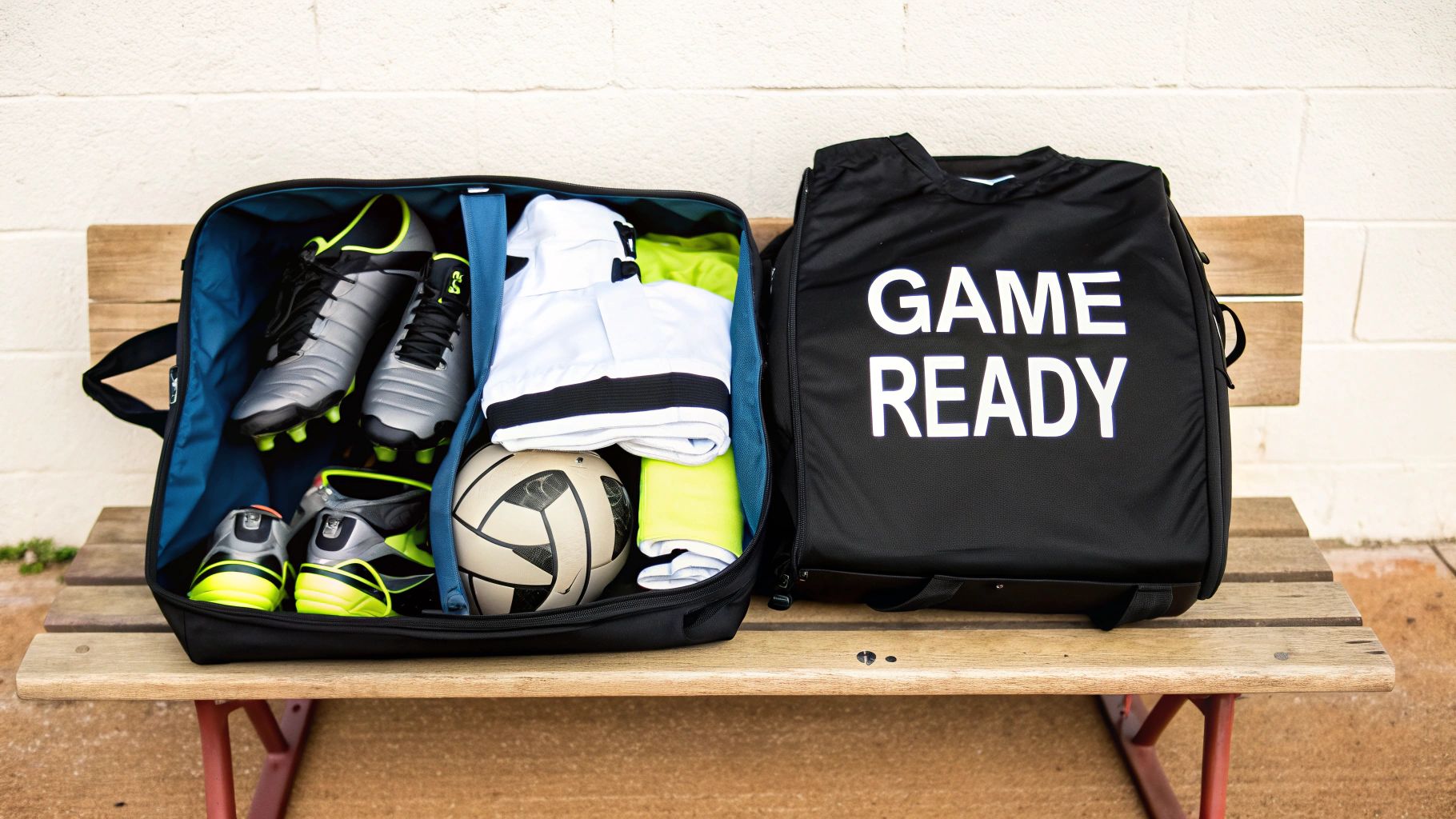
Major youth football organisations and even professional academies stress the importance of pre-match equipment verification. This process ensures every player is properly protected with correctly fitting shin guards and suitable footwear, directly contributing to injury prevention. It also reinforces a sense of responsibility and professionalism from a young age.
Actionable Tips for a Flawless Kit Check
To make this a seamless part of your routine, consider these practical strategies:
- The Night-Before Rule: Always pack the kit bag the evening before the match. This eliminates morning stress and provides ample time to find or wash any missing items.
- Establish a "Football Zone": Designate a specific bin, bag, or corner where all football gear lives. After washing, everything goes back to its home, making packing a simple grab-and-go task.
- Label Everything: Use a permanent marker or iron-on labels to put your child's name and number on every piece of kit, from the shirt to individual socks. This makes recovering lost items at a busy tournament much more likely.
- Keep Spares in the Car: A spare pair of socks, an old training top, or even shin guard straps stored in your car's boot can be a lifesaver in an emergency.
Choosing the right equipment is just as important as remembering to pack it. The right boots, for instance, are critical for performance and safety. For guidance on selecting the best footwear, you can explore our detailed guide on the best football boots for kids.
2. Nutrition and Hydration Planning
Strategic planning of what your child eats and drinks is as vital as packing the right boots. Proper nutrition and hydration are the fuel that powers performance, aids concentration, and speeds up recovery. This isn't just about handing over a bottle of water at halftime; it's a considered approach to pre-match meals, in-game hydration, and post-match recovery that makes a tangible difference on the pitch.

Leading sports programmes, such as those run by US Soccer and top Premier League academies, provide detailed nutritional guidance for their youth players. They recognise that a well-fuelled body is less prone to fatigue and injury. Adopting this professional mindset helps your young athlete build healthy habits that will support their entire sporting life and is a key element of any complete matchday checklist for football parents.
Actionable Tips for Optimal Matchday Fuelling
To build a simple yet effective nutrition plan, integrate these practical strategies into your pre-game routine:
- Time the Pre-Match Meal: Aim to provide a meal rich in complex carbohydrates 2-3 hours before kick-off. Think pasta, porridge, or wholemeal toast with a light topping. This allows for full digestion and provides slow-release energy.
- Avoid Pre-Game Pitfalls: Steer clear of heavy, fatty, or overly sugary foods in the hours leading up to the match. These can cause digestive discomfort and lead to energy crashes.
- Pack Smart Snacks: For half-time and post-match, have easily digestible snacks ready. Sliced oranges, bananas, granola bars, or a small handful of nuts are excellent for a quick energy boost and to start the recovery process.
- Hydrate Continuously: Hydration starts the day before. Ensure your child drinks plenty of water throughout the 24 hours prior to the game. On matchday, pack at least two full water bottles; one for before and during the match, and one for after.
A well-planned diet directly impacts on-pitch stamina. For more ideas on how diet can boost your child's endurance, explore our insights on how to improve stamina in football.
3. Transportation and Logistics Coordination
Efficiently planning your travel is a non-negotiable part of a stress-free matchday. This goes beyond simply knowing the venue’s address; it involves coordinating departure times, anticipating traffic, understanding parking situations, and having contingency plans. Solid logistics ensure your player arrives on time, calm, and ready to perform, rather than flustered from a rushed and chaotic journey.
Major tournament organisers and professional club academies recognise the impact of smooth travel. Everton FC, for example, often helps facilitate parent transportation networks to streamline arrivals for academy matches. This coordinated approach minimises late arrivals, which can disrupt warm-ups and team talks, and is a key element of any serious matchday checklist for football parents.
Actionable Tips for Flawless Travel Planning
To master your matchday logistics and eliminate travel-related anxiety, integrate these strategies into your pre-game routine:
- Embrace Navigation Apps: Utilise apps like Waze or Google Maps for real-time traffic updates. Don’t just check the route; use the "arrive by" feature the night before to understand typical journey times.
- The 30-Minute Buffer Rule: Plan to leave at least 30 minutes earlier than your navigation app suggests. This buffer accounts for unexpected delays, road closures, or difficulty finding parking, ensuring a relaxed arrival.
- Organise a Carpool: Coordinate with other parents to create a carpool schedule. This not only shares the driving responsibility but also builds team camaraderie and provides a reliable backup if your own transport fails.
- Scout Parking in Advance: If travelling to an unfamiliar venue, use Google Street View to look for parking options beforehand. For large tournaments, check the organiser’s website for dedicated parking maps and instructions.
4. Weather Preparation and Adaptation
Understanding and preparing for the day's weather is a non-negotiable part of any comprehensive matchday checklist for football parents. Beyond simple comfort, this foresight is critical for your child's health, safety, and performance on the pitch. Failing to account for heat, cold, or rain can lead to everything from distracting discomfort to serious health risks like heat exhaustion or hypothermia, turning what should be a fun day into a miserable and potentially dangerous one.
Football organisations worldwide have strict weather-related protocols for a reason. Youth football associations in hot climates often mandate specific hydration breaks and heat policies. Similarly, UK football bodies provide detailed guidance on cold-weather play, emphasising the need for appropriate thermal layers to ensure player safety during winter fixtures. Being prepared allows your player to adapt and perform their best, whatever the conditions.
Actionable Tips for All-Weather Readiness
To ensure the weather never catches you off guard, integrate these strategies into your pre-match routine:
- The Double-Check Forecast: Look at the weather forecast two or three days before the match to get an initial idea, and then check it again on the morning of the game for the most up-to-date information, paying attention to the "feels like" temperature and wind chill.
- Layer Up, Layer Down: For cool or unpredictable days, pack multiple thin layers rather than one thick one. A base layer, a training top, and a lightweight waterproof jacket provide the flexibility to adapt as your child warms up or the weather changes.
- Sun Safety First: For sunny days, apply a broad-spectrum, water-resistant sunscreen (SPF 30+ at a minimum) at least 15 minutes before leaving the house. A cap or visor for whilst on the sidelines and sunglasses are also wise additions.
- Wet-Weather Wins: Always pack a waterproof bag or even a few plastic bags to protect phones, wallets, and dry clothes from a sudden downpour. An extra towel and a complete change of dry clothes kept in the car can be a true game-changer post-match.
5. Medical and Safety Preparation
Ensuring your child’s health and safety is paramount, making medical preparation a non-negotiable part of any matchday checklist for football parents. This goes beyond having a few plasters on hand; it involves a systematic approach to compiling medical information, packing essential supplies, and understanding emergency protocols. Being prepared can drastically reduce the severity of an incident and provide peace of mind, allowing you and your child to focus on the game.
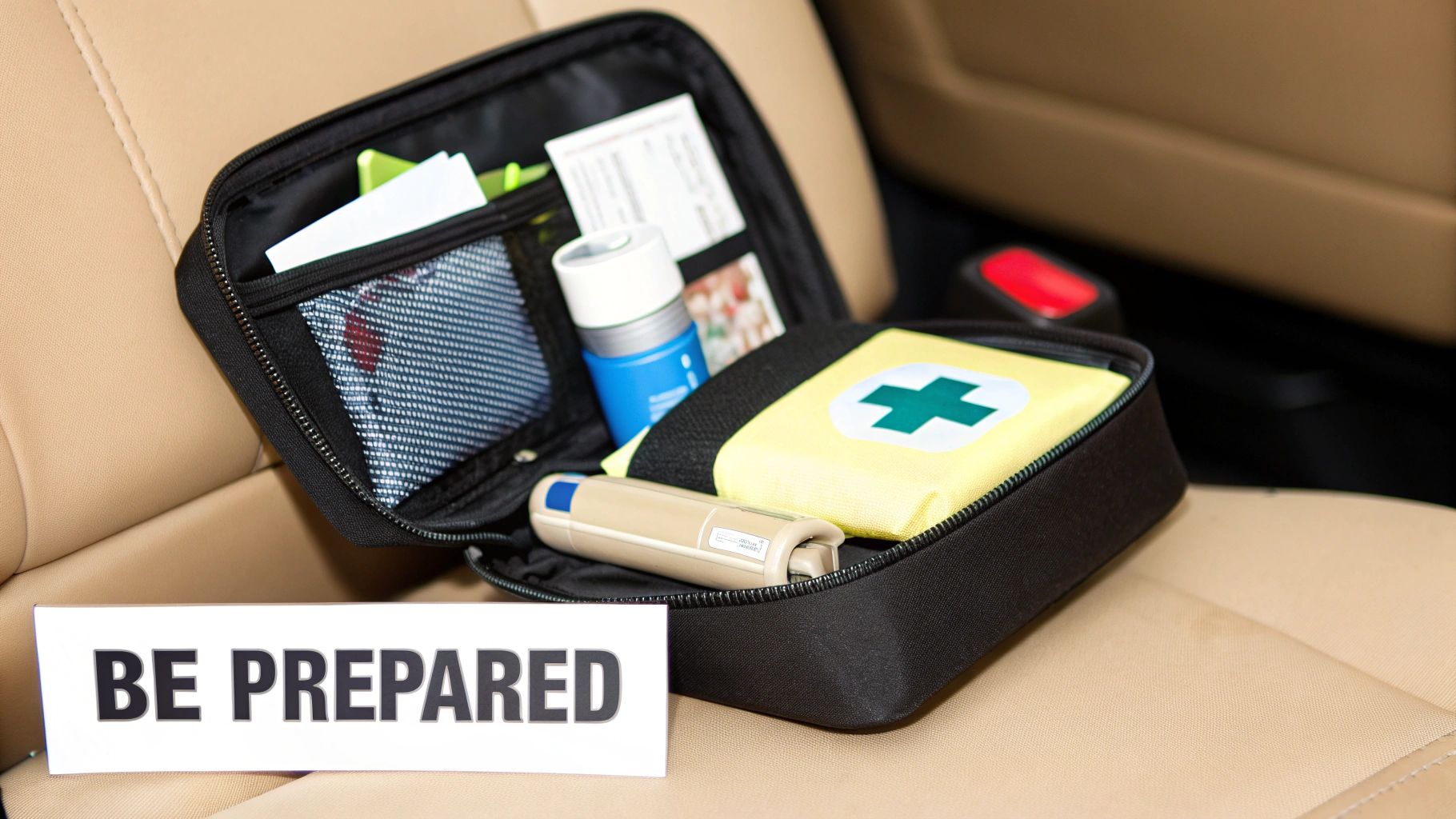
Major youth sports bodies like the U.S. Soccer Federation and the Youth Sports Safety Institute have established robust safety protocols that emphasise parental preparedness. These guidelines recognise that quick access to medical information and first aid can be critical in an emergency. By having this information organised, you empower coaches and first responders to act swiftly and correctly if an injury occurs.
Actionable Tips for Flawless Medical and Safety Preparation
To integrate this crucial step into your matchday routine, consider these practical strategies:
- Create a Medical Information Card: Laminate a small card with your child’s key details: full name, date of birth, any known allergies, ongoing medical conditions, GP's contact number, and your emergency contact information. Keep this in their kit bag.
- Communicate with the Coach: Ensure the coach is aware of any medical conditions, such as asthma or severe allergies. Keep necessary medications like inhalers or EpiPens in a clearly labelled, accessible part of the kit bag and show the coach where they are.
- Pack a Personal First Aid Kit: While the club may have a kit, a personal one is invaluable. Include plasters, antiseptic wipes, sterile dressings, tape, instant ice packs, and any specific items your child might need.
- Know Your Venue: Before the match, try to locate the designated first aid station and find out if there's a defibrillator (AED) on-site. Knowing this in advance saves precious time in a serious emergency.
- Understand Concussion Protocols: Head injuries are a serious concern in football. Familiarise yourself with basic concussion protocols, and understanding concussion assessment and its signs can be crucial in ensuring your child's safety.
Proactive safety also involves understanding injury prevention. To reduce the risk of common but serious issues, you can learn more about how to prevent ACL injuries.
6. Game Schedule and Commitment Planning
Effective organisation of the match schedule is a non-negotiable part of any matchday checklist for football parents, transforming a potentially chaotic day into a smooth, well-managed experience. This goes beyond simply knowing the kick-off time; it involves understanding travel logistics, venue specifics, and the format of the day’s play, especially during tournaments. Being well-prepared with this information prevents last-minute panic and ensures your child arrives calm, on time, and ready to perform.
Top-tier youth academies and grassroots clubs increasingly rely on digital platforms like TeamSnap or Spond to centralise communication and scheduling. These tools provide real-time updates on pitch numbers, changes in timing, and directions, demonstrating the importance of a single, reliable source of information. This level of organisation removes guesswork and allows families to plan their entire day with confidence.
Actionable Tips for Flawless Schedule Management
To master your family's football calendar and avoid any logistical hiccups, integrate these strategies into your pre-match routine:
- Centralise Your Calendar: Immediately transfer all match details, including warm-up times and venue postcodes, into a shared digital calendar like Google Calendar or Apple Calendar. This ensures all guardians are synchronised.
- Embrace Club Communications: Actively subscribe to and monitor all official communication channels, whether it's an app, email newsletter, or a team WhatsApp group. This is your primary source for last-minute changes.
- Plan for Tournament Formats: For tournaments, take time to understand the structure. Note whether it's a round-robin, knockout, or group stage format, as this will dictate the total time commitment and the potential for multiple matches.
- Keep a Physical Backup: Print a copy of the day’s schedule and keep it in your car's glove compartment. Technology can fail, and a paper backup is an invaluable fallback that ensures you always have the essential details to hand.
7. Mental Preparation and Motivation Support
A player's mindset is just as crucial as their physical kit, making psychological readiness a key part of any matchday checklist for football parents. This involves managing pre-game nerves, building confidence, and fostering a healthy attitude towards competition. Your support can directly influence your child's enjoyment and resilience, helping them to focus on their performance rather than being overwhelmed by pressure.
Leading youth development programmes, including those at Premier League academies, increasingly integrate sports psychology to nurture young talent. These organisations recognise that a child's mental state affects their decision-making, effort, and overall experience on the pitch. By providing positive and constructive emotional support, you help build a foundation for long-term passion and participation in the sport.
Actionable Tips for Positive Mental Support
To effectively prepare your child mentally for the match, integrate these strategies into your routine:
- Focus on Effort, Not Outcome: Before the game, frame your encouragement around controllable actions. Simple phrases like, "Play your hardest and have fun," shift the focus from the pressure of winning to the enjoyment of playing.
- Establish a Calming Pre-Match Ritual: This could be listening to a specific playlist on the way to the game, practising a few deep breathing exercises together, or having a quiet chat about their favourite part of playing. Consistency creates comfort.
- Practise Visualisation: Encourage your child to spend a few moments picturing themselves making a great pass, a strong tackle, or celebrating with teammates. This positive mental rehearsal can build confidence and reduce anxiety.
- Model Good Sportsmanship: Your reaction to the referee, the opposition, and the final score is the most powerful lesson. Show them how to win with humility and lose with grace, reinforcing that football is, above all, a game.
Creating a supportive environment where effort is celebrated regardless of the result is vital. For more in-depth strategies, explore our guide on how to keep kids motivated in football.
8. Spectator Behaviour and Sideline Etiquette
How you conduct yourself on the sidelines is one of the most impactful elements of your matchday checklist for football parents. Proper etiquette isn't just about being polite; it directly shapes the matchday experience for your child, their teammates, the opposition, and the officials. Your behaviour sets the tone, models good sportsmanship, and contributes to a positive environment where young players can develop a genuine love for the game without undue pressure.
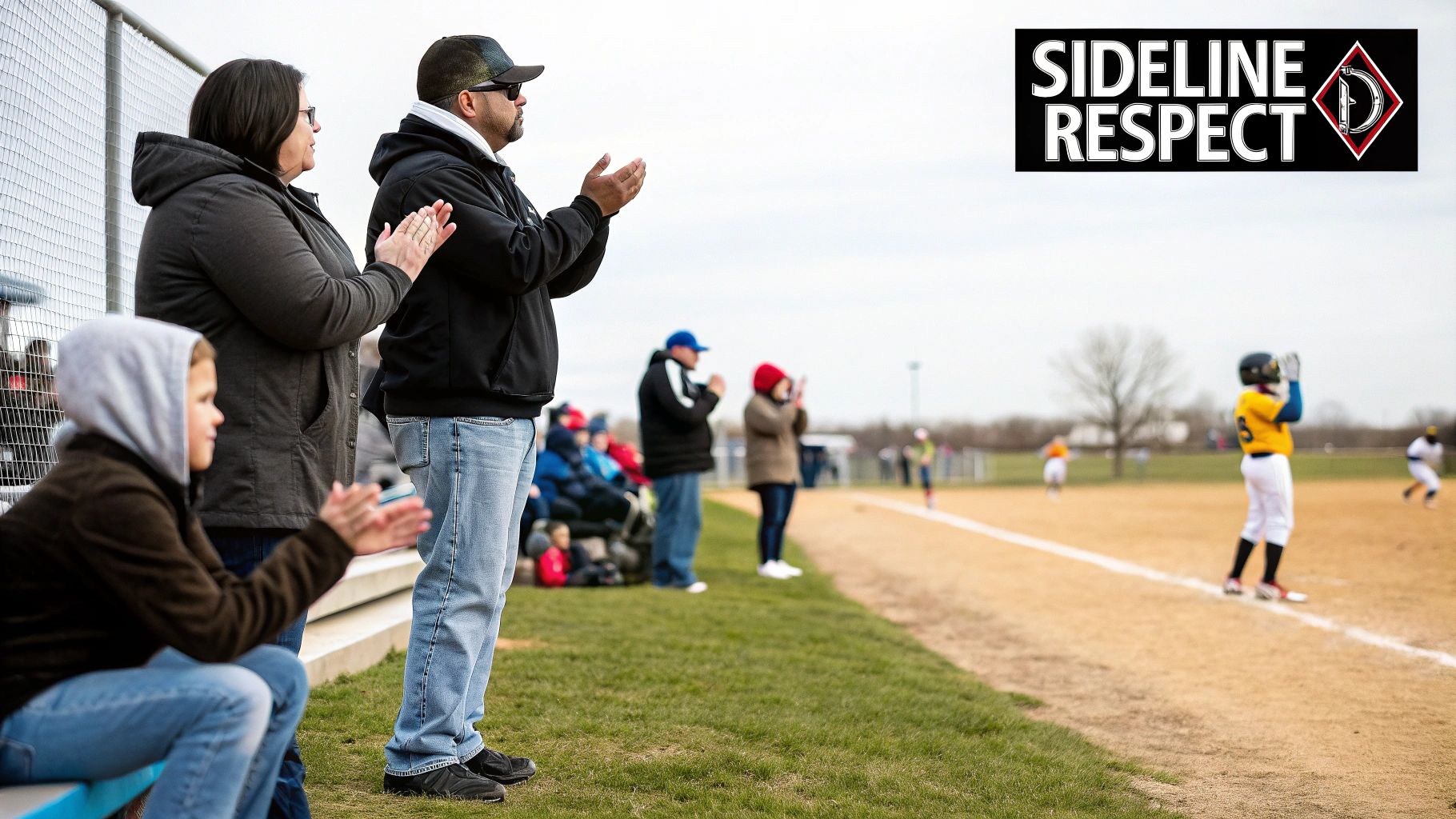
Leading organisations like U.S. Youth Soccer and The FA in England have established clear Codes of Conduct for parents, recognising that a supportive sideline is fundamental to youth development. Initiatives such as 'Silent Saturdays' or 'Let Them Play' campaigns are becoming more common, reinforcing the idea that children learn best when allowed to play freely and make their own decisions, guided by their coach rather than a chorus of sideline instructions.
Actionable Tips for Positive Sideline Conduct
To ensure you are a positive force on matchday, integrate these simple rules into your routine:
- Review the Code of Conduct: Before the season starts, familiarise yourself with your club's specific rules for spectators. This shows respect for the club's culture and sets clear expectations.
- Let the Coaches Coach: Avoid shouting instructions or tactical advice from the sidelines. This can confuse players and undermines the coach's authority. Your role is to offer encouragement, not direction.
- Respect the Officials: Referees, many of whom are young and learning themselves, have a difficult job. Never criticise or question their decisions publicly. A positive relationship with officials is crucial for the game.
- Cheer for Effort, Not Just Outcomes: Praise good sportsmanship, a great tackle, or a determined run just as enthusiastically as you would a goal. This teaches children that effort and resilience are what truly matter.
- Stay in Designated Areas: Respect the boundaries set for spectators. This ensures the safety of players and officials and maintains a professional atmosphere around the pitch.
Football Parents: 8-Item Matchday Checklist
| Item | 🔄 Implementation Complexity | ⚡ Resource Requirements | 📊 Expected Outcomes | Ideal Use Cases | ⭐ Key Advantages (💡 Tip) |
|---|---|---|---|---|---|
| Equipment and Uniform Check | 🔄 Low–Medium — routine checklist | ⚡ Low physical resources; moderate time | 📊 Fewer delays; lower injury risk | Weekly matches, growing children | ⭐ Ensures readiness & safety. 💡 Do night-before checks and label gear |
| Nutrition and Hydration Planning | 🔄 Medium — timed meal planning | ⚡ Moderate — food prep, cooler, cost | 📊 Improved energy, focus, faster recovery | Tournaments, multi-match days, hot conditions | ⭐ Enhances performance and recovery. 💡 Pack carbs 2–3 hrs pre-match; electrolytes |
| Transportation and Logistics Coordination | 🔄 Medium — timing & coordination | ⚡ Moderate — vehicles, planning tools | 📊 Punctual arrivals; calmer pre-match routine | Away games, tight schedules, carpool groups | ⭐ Reduces stress and missed warm-ups. 💡 Leave 30+ mins early; use GPS apps |
| Weather Preparation and Adaptation | 🔄 Low — forecast checks & packing | ⚡ Low–Moderate — extra clothing/gear | 📊 Maintains comfort; reduces weather-related risks | Extreme heat/cold, rainy or variable climates | ⭐ Protects health and play continuity. 💡 Check forecast day-of; pack layers & sunscreen |
| Medical and Safety Preparation | 🔄 Medium — documentation & kit prep | ⚡ Moderate — first-aid supplies, meds | 📊 Faster emergency response; compliance | All matches, allergy-prone or high-contact play | ⭐ Improves safety and peace of mind. 💡 Keep updated med card + accessible meds (EpiPen/inhaler) |
| Game Schedule and Commitment Planning | 🔄 Low — calendar setup & updates | ⚡ Low — digital tools/time for syncing | 📊 Fewer conflicts; better family planning | Season planning, tournaments, multi-child families | ⭐ Prevents missed matches and confusion. 💡 Use shared digital calendar and print backups |
| Mental Preparation and Motivation Support | 🔄 Medium — ongoing emotional work | ⚡ Low–Moderate — time, possible expert help | 📊 Reduced anxiety; stronger confidence & resilience | Nervous players, key competitions, youth development | ⭐ Builds long-term mindset and enjoyment. 💡 Focus praise on effort; practice breathing/visualization |
| Spectator Behaviour and Sideline Etiquette | 🔄 Low — guidelines & self-control | ⚡ Low — familiarity with club code | 📊 Positive team culture; fewer conflicts | All matches; clubs emphasizing community values | ⭐ Models respect and supports coaching. 💡 Review code of conduct; cheer effort not outcomes |
Your Winning Formula for a Stress-Free Season
Being a football parent is one of the most rewarding roles you can have, but it undoubtedly comes with its fair share of logistical challenges. The frantic search for a missing shin pad or the last-minute dash to the petrol station can easily turn a morning of excitement into a stressful ordeal. This is where a structured, repeatable system transforms your experience. By consistently using this matchday checklist for football parents, you are not just organising your weekend; you are building a foundation of reliability and calm that your child will notice and appreciate.
The real power of this checklist lies in its ability to move beyond simple logistics. It’s a framework for fostering independence and responsibility in your young athlete. When you meticulously check their kit, plan their pre-match meal, and discuss the game plan, you are modelling the discipline and preparation required to succeed, both on and off the pitch. These habits, established now, will serve them well in all future endeavours.
Key Takeaways for a Seamless Matchday
Let’s distil the core principles that will make the biggest difference:
- Proactive Preparation is Paramount: The most significant takeaway is to shift from reactive to proactive. Packing the bag, checking the weather, and confirming transport details the night before eliminates the vast majority of matchday morning stress.
- Empower Your Player: Involve your child in the process. From checking their own boots to helping pack their snacks, giving them ownership over their preparation builds valuable life skills and a deeper connection to the sport.
- Control the Controllables: You can't control the referee's decisions or the final score, but you can control your own preparedness and attitude. Focus on providing consistent support, proper nutrition, and unwavering encouragement, creating a positive environment regardless of the outcome.
- Safety First, Always: Never overlook the importance of a well-stocked first-aid kit and clear emergency contact information. Having these items readily available provides peace of mind and ensures you are ready for any minor scrapes or incidents.
Ultimately, mastering this routine allows you to be fully present on the sidelines. Instead of worrying about a forgotten water bottle or the post-match plan, you can focus entirely on cheering for your child, celebrating their effort, and sharing in their passion for the game. The greatest victories of a season are often found not on the scoreboard, but in the positive experiences and lasting memories you create together. This checklist is your game plan for ensuring every match is a winning one for your family.
Ready to upgrade your matchday essentials? Explore the curated collection at SoccerWares for everything from professional-grade training equipment to durable water bottles and comfortable supporter apparel. Visit SoccerWares today to find the high-quality gear that will complete your family’s perfect matchday checklist.