

Sure, a standard raincoat will keep you dry on a walk to the shops, but wear it on the football pitch and it quickly becomes a liability. That’s because specialised football rain jackets are engineered for something completely different: high-intensity, athletic movement. They use lightweight, breathable fabrics that won’t weigh you down or hold you back.
Think of it this way: you wouldn't wear your office shoes for a 5k run. The same logic applies here—only one is actually built for performance.
Why Your Everyday Raincoat Fails on the Pitch

Your regular raincoat has one main job: to create an impenetrable barrier against water. It does this brilliantly when you're just strolling around, but the second you start running, that same design traps all your body heat and moisture inside. On the pitch, this leads to that horrible, clammy, ‘boil-in-the-bag’ feeling we all know and hate.
This happens because the heavy, non-breathable materials in casual rainwear just can't handle the amount of sweat your body produces during a match or a tough training session. Instead of letting that moisture escape, it gets trapped, leaving you feeling damp from the inside out. In colder conditions, this can even cause your body temperature to drop, which is the last thing you want.
Built for Movement, Not Restriction
A proper football rain jacket is a different beast altogether. It’s built from advanced, lightweight materials that do two things at once: keep the rain out and let your sweat escape. This dual-functionality is what sets it apart and makes it a non-negotiable piece of kit for any serious player.
- Athletic Fit: They’re cut closer to the body to reduce drag when you’re sprinting and to give you a full range of motion for shooting, tackling, and turning. No baggy material getting in the way.
- Sweat Management: Breathable fabrics actively pull sweat vapour away from your skin, keeping you dry and comfortable no matter how hard you’re working.
- Lightweight Design: You’ll barely even notice you’re wearing it. This lets you keep your focus entirely on the game, not on feeling weighed down by your gear.
This need for specialised gear is seen across the industry. In the global rainwear market, jackets are the biggest category, making up around 53.4% of the market share. That’s largely down to all the innovation in breathable, waterproof textiles that serve everyone from city commuters to elite athletes.
At SoccerWares, we understand that pro-level tech needs to meet the styles you actually want to wear. Our selection of football training wear is designed with these performance principles at its core, offering protection that helps your game instead of hindering it.
Understanding the Tech That Keeps You Dry
To really get why a proper football rain jacket is in a different league to your average pac-a-mac, we need to lift the bonnet and look at the tech inside. These aren't just bits of fabric; they're clever systems designed to fight off the weather while you're pushing your limits on the pitch. Once you get your head around a few key terms, you'll be able to pick the right gear with total confidence.
The first spec you'll almost always see is the waterproof rating, measured in millimetres (mm). This number isn't about how thick the material is, but how much water pressure it can handle before it starts to leak.
Picture this: a one-inch square tube placed on the fabric. The rating tells you how high you could fill that tube with water before it begins to seep through. It's a simple, effective test of its resilience.
A jacket with a 5,000mm rating is fine for a quick shower or light drizzle. But if you’re facing persistent, driving rain during a long training session, you’ll want something rated 10,000mm or higher to guarantee you stay dry.
This little number is a huge clue to how well a jacket will actually protect you when the heavens open.
The One-Way Door of Breathability
Keeping water out is only half the battle. If your sweat can't escape, you’ll end up soaked from the inside anyway. This is where breathability comes in, measured in grams per square metre (g/m²/24h). This figure tells you how many grams of water vapour can pass through one square metre of the fabric over a 24-hour period.
Think of it as a one-way door for moisture. The fabric's microscopic pores are too small to let big, wet raindrops in, but they're just big enough to let tiny sweat vapour molecules out. It's the secret to avoiding that horrible 'boil-in-the-bag' feeling when you're working hard.
A higher g/m² number means more sweat can escape. For something as intense as football, a rating of 10,000g/m² or more is what you should be looking for. It's what keeps you comfortable, not clammy. We touch on how these materials fit into a full setup in our guide to the best football training clothes.
Let's break down those numbers so you know exactly what to look for based on your typical playing conditions.
Waterproof vs Breathability Ratings Explained
This table makes it easy to see what those technical numbers actually mean for you out on the pitch. Use it to match a jacket's specs to the weather you'll be training in and how hard you'll be working.
| Rating Level | Waterproof Rating (mm) | Best For (Weather) | Breathability Rating (g/m²/24h) | Best For (Activity Level) |
|---|---|---|---|---|
| Light Protection | Up to 5,000mm | Light showers, drizzle, short bursts of rain. | Up to 5,000 g/m² | Low-intensity work, walking, spectating. |
| Solid Performance | 5,000mm - 10,000mm | Moderate to heavy rain, consistent downpours. | 5,000 - 10,000 g/m² | Moderate activity, jogging, light training drills. |
| High Performance | 10,000mm - 20,000mm | Heavy, persistent rain and stormy conditions. | 10,000 - 20,000 g/m² | High-intensity training, match play, intense drills. |
| Elite/Stormproof | 20,000mm+ | Extreme conditions, torrential downpours. | 20,000 g/m²+ | Elite-level exertion, maximum performance needs. |
Choosing a jacket with the right balance is key. A stormproof jacket might be overkill for a light training session, while a basic one just won't cut it in a winter downpour.
Sealing the Deal Against Leaks
Even the most waterproof fabric on the planet is useless if the seams leak. Every time a needle punches through the material to stitch it together, it creates a tiny hole—a perfect entry point for water. That’s why any decent football rain jacket will have taped seams.
This is simply a strip of waterproof tape that's heat-sealed over the seams on the inside of the jacket. It blocks up all those tiny needle holes, creating a completely watertight barrier. It’s a small detail that makes a world of difference when you're caught in a storm.
Here are a few other game-changing features to keep an eye out for:
- Storm Flaps: These are extra bits of fabric that cover the zips. They act as a shield, stopping wind and rain from forcing its way through the zipper teeth.
- DWR Coating: A Durable Water Repellent finish is a chemical treatment applied to the outside of the jacket. It makes water bead up and roll right off, stopping the fabric from getting saturated and heavy.
- Adjustable Components: Look for adjustable cuffs, hems, and hoods. These let you cinch everything down to create a tight seal, locking out rain and wind from sneaking in through the gaps.
When you're thinking about fabrics, remember that performance materials like polyester are chosen for a reason. For a deeper dive, this complete fabric guide on cotton vs. polyester offers some great insights into why certain materials are better suited for sportswear. Getting to grips with this tech means your next rain jacket will be truly ready for the pitch.
How the Right Fit Unlocks Peak Performance
Go beyond waterproof ratings and breathability for a moment. The single biggest thing that separates a high-performance jacket from just another piece of rainwear is the fit. It’s not about just grabbing your usual size off the rack; it’s about function. The right fit dictates how you move, how comfortable you are, and ultimately, how well you can play your game.
For players, the aim is always a performance fit. Think of it as an athletic, streamlined cut designed to sit close to your body without ever feeling tight or restrictive. This cut gets rid of any excess material that could create drag when you’re sprinting for a through-ball or get snagged by an opponent in a tackle. It’s engineered to move with you, not against you.
On the other hand, a supporter fit is much more relaxed and generous. This is the style you want for wearing over a hoodie or another layer while you’re cheering from the stands. It’s all about comfort and having space to layer up, not aerodynamics, which makes it perfect for fans on a chilly, wet match day.
Checking the Critical Fit Points
When you're trying on a rain jacket for football, there are a few specific details you need to check for that enable proper athletic movement. These small things are what truly unlock your ability to perform at your peak, even when the weather is doing its worst.
- Articulated Elbows: These are pre-bent sections in the arms that mirror your natural elbow joint. It sounds simple, but it means you can throw, shield the ball, and maintain your balance with a completely unrestricted range of motion.
- Dropped Hem: A slightly longer back gives you that extra bit of coverage when you’re bending down to take a touch or leaning into a tackle. It stops the jacket from riding up and exposing your lower back to the rain and wind.
- Shoulder Construction: Look for a shoulder design, often called a raglan sleeve, where the seam runs from the collar straight to the underarm. This clever design removes the traditional shoulder seam, allowing for far greater freedom of movement for your arms.
This diagram breaks down the core technologies that work together with a great fit to give you total weather protection.
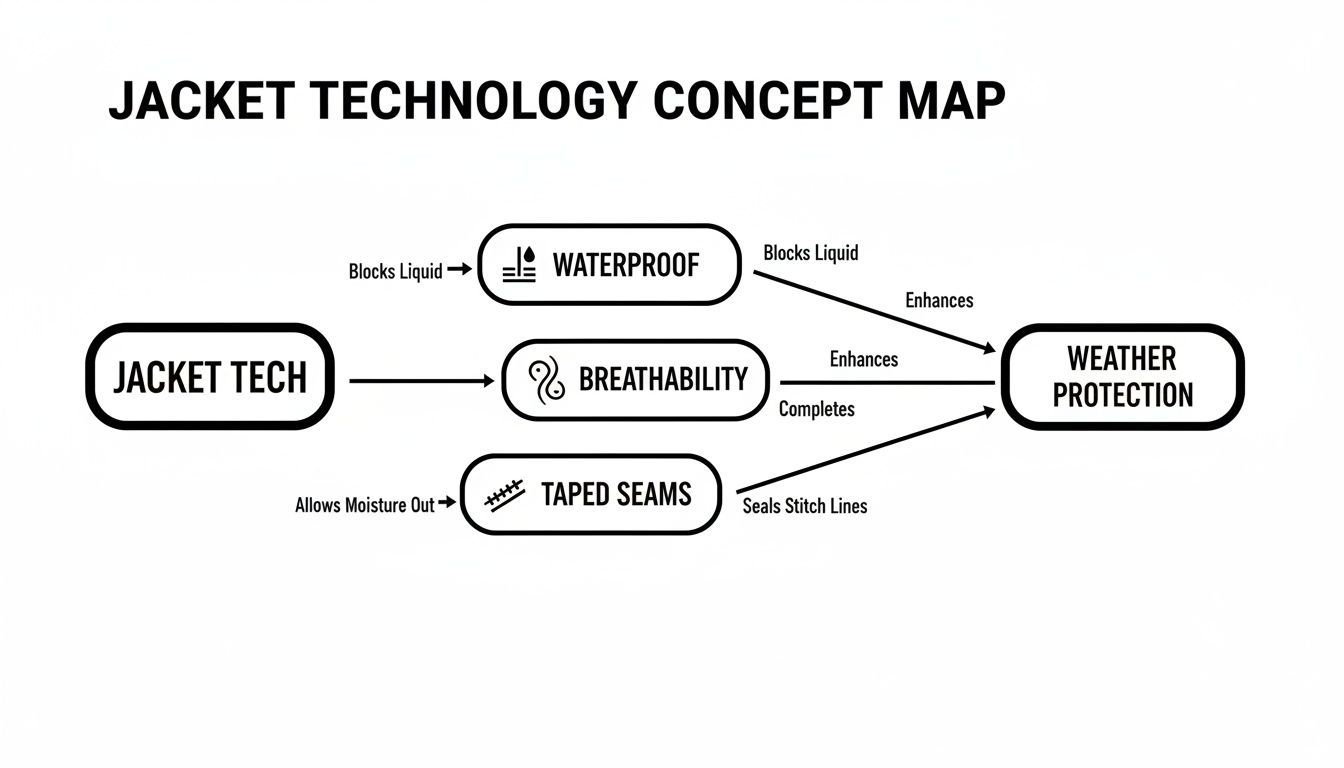
As you can see, it’s the combination of waterproofing, breathability, and properly sealed seams that creates a truly effective shield against the elements.
Choosing between a performance or supporter fit depends entirely on your primary role. A player needs a jacket that feels like a second skin, while a fan needs one that accommodates layers for warmth and comfort.
The growing demand for high-quality, functional sportswear really highlights this distinction. The UK sports apparel market generated USD 405.0 million in revenue back in 2022 and is projected to smash USD 604.8 million by 2030, with jackets being a massive part of that. This growth just goes to show that both players and supporters are investing in gear tailored to their specific needs. You can learn more about this trend and see what the UK sports apparel market is expected to do next.
Ultimately, getting the fit right ensures your gear is an asset, not a distraction, making it a crucial part of any complete football training kit.
Mastering Your Layering System for Any Weather
Staying dry and comfortable on a miserable, wet day isn't just about the jacket you pull on. It's about what you wear underneath it. Think of the most advanced football rain jackets players wear as the final piece of a puzzle, not the whole picture. When you get the layering right, you create a system that lets you adapt to any forecast, keeping you warm, dry, and focused on the game.
The jacket itself is your first line of defence. Most high-performance options are made from lightweight synthetics like polyester that don't soak up water. They’re usually coated with a Durable Water Repellent (DWR) finish, which makes rain bead up and roll straight off the surface. This stops the fabric from getting saturated and heavy, but its real power is unlocked by what’s going on underneath.
The Proven Three-Layer System
To properly manage your temperature and deal with sweat, top athletes stick to a simple but incredibly effective three-layer system. Each layer has a specific job, and when they work in sync, they create a personal microclimate that keeps you comfortable no matter what the weather throws at you.
This system is built around three core jobs:
- Base Layer: This is the layer touching your skin, and its one and only job is moisture management. A good base layer, like a compression top or a football skin, is made from a synthetic, sweat-wicking material. It pulls sweat away from your body, keeping you dry from the inside.
- Mid-Layer: This is your insulation. Its job is to trap your body heat and keep you warm. A fleece-lined training top or a lightweight quarter-zip works perfectly here. It’s the air trapped within the fabric that provides warmth, not the weight of the material itself.
- Outer Shell: This is your football rain jacket. Its purpose is simple: protection from the elements. It blocks the wind and rain while letting the moisture pulled away by your base layer escape. It's the final, crucial step in the system.
This layered approach is so much better than just wearing one thick, heavy top. It gives you the flexibility to add or remove layers to perfectly match how hard you're working and the changing conditions.
Building Your Kit for Any Condition
The real beauty of this system is how adaptable it is. You can mix and match the layers to create the ideal setup for any scenario, from a frosty winter training session to a mild but drizzly autumn match.
Here are a few real-world examples of how you could build your system:
- Cold and Wet Winter Training: Start with a long-sleeved base layer to manage sweat, add a thermal mid-layer to lock in heat, and finish with your waterproof jacket to shut out the wind and rain.
- Cool, Drizzly Autumn Match: A short-sleeved wicking base layer might be all you need under your rain jacket. This combo will keep the light rain off without you overheating during the game.
- Windy but Dry Day: On a day like this, you might ditch the rain jacket altogether. A wind-resistant mid-layer over your base layer will be enough to cut out the chill.
Once you understand these principles, you can build a versatile kit that’s ready for anything. For younger players, getting these habits right early on is a game-changer. You can find more tips in our guide to kids' football skins, which are the perfect foundation for any layering system.
Choosing the Right Jacket for Your Role

Let’s be honest, not all football activities demand the same from your kit. The feather-light jacket that’s perfect for a quick five-minute warm-up just won’t cut it for a two-hour coaching session in a biblical downpour.
Matching your jacket to the occasion is the secret to staying comfortable so you can focus on what matters—the game. By thinking about your role, you can invest in a piece of gear that genuinely works for you, whether you're a player, coach, or fan.
For Intense Training Sessions
During a high-intensity training session, your body is a furnace, pumping out heat and sweat. In this scenario, breathability is your number one priority—even more so than pure waterproofing.
- Key Feature: Look for a jacket with a high breathability rating, at least 10,000g/m², to make sure all that moisture can get out.
- Why It Matters: Without it, you'll feel damp and clammy from the inside out, which completely defeats the point of wearing a jacket. A lightweight design with pit zips for extra ventilation is a massive bonus here.
For Match Day and Warm-Ups
On match day, you need something you can throw on and off in an instant. It has to offer reliable protection from a sudden shower without weighing you down or taking up half your kit bag.
- Key Feature: Prioritise a lightweight, packable design. A jacket that can be stuffed into a side pocket is ideal.
- Why It Matters: You want zero distractions. It needs to keep you dry during the warm-up and then disappear until it’s needed again. Simple as that.
For Coaching from the Touchline
Coaches spend hours exposed to the elements, often standing still for long stretches. This role demands a jacket built like a fortress—durable, all-day protection is the name of the game.
- Key Feature: Durability and a higher waterproof rating (at least 10,000mm) are non-negotiable. Look for robust materials, fully taped seams, and a well-designed, adjustable hood.
- Why It Matters: Unlike a player, you're not generating much body heat. Your jacket has to be an impenetrable shield against biting wind and persistent rain to stop you from getting chilled to the bone.
For Supporting from the Stands
As a fan, your priorities are a little different. It's a blend of style, comfort, and reliable weather protection. You need a jacket that looks the part and can be easily layered over a hoodie or jumper for warmth on those cold Tuesday nights.
A supporter's jacket is all about staying warm and dry for the full 90 minutes. It needs to fend off wind and rain while offering a more relaxed fit for comfort and layering.
This mix of function and style is a huge deal right now. The UK's outerwear market is massive, with just the down jacket segment alone valued at USD 9,134.57 million for 2025. It shows there’s a massive appetite for jackets that serve both on and off the pitch, which is where team-branded apparel really shines. You can read more about this trend in the UK down jacket market report.
How to Care for Your Football Rain Jacket
Your football rain jacket is a piece of high-performance kit, and treating it right is the secret to making it last. Get the care wrong, and those technical features you paid for—waterproofing, breathability—will stop working. A few simple steps will protect your investment and make sure your jacket is ready for the next downpour.
Just chucking your jacket in with the weekly wash is the quickest way to ruin it. Regular detergents and fabric softeners are designed for cottons, not technical fabrics. They leave behind residues that clog the microscopic pores your jacket needs to breathe, effectively suffocating the material and trapping sweat inside.
Cleaning and Drying Your Jacket
To keep your jacket performing at its best, you need a different game plan. Using the right products will shift the mud and grime without stripping away the delicate coatings that keep you dry.
- Use a Specialised Wash: Always go for a technical cleaner, often called a tech wash, made specifically for waterproof clothing. This stuff cleans without damaging the DWR coating.
- Check the Label: Before you do anything, read the care label inside the jacket. It'll tell you the right temperature and cycle. Most technical gear prefers a cool, gentle wash.
- Air Dry or a Gentle Tumble Dry: The best way is to hang the jacket up to air dry. But if you’re in a rush, a short, 20-minute cycle in the tumble dryer on low heat can actually work wonders for reactivating the waterproof finish.
Restoring Water Repellency
Over time, that factory-applied DWR (Durable Water Repellent) coating that makes water bead up and roll off will start to wear down. You’ll know it’s time for a refresh when the fabric starts absorbing water and looking dark and damp, a process known as 'wetting out'. Don't worry, restoring it is surprisingly simple.
Once the jacket is clean, reviving its water-repellent shield is straightforward. Often, a quick tumble dry on low heat is enough to reactivate the DWR that's already there. If that doesn't bring it back to life, it's time to reapply.
To re-waterproof your jacket, grab a spray-on or wash-in DWR product. Use it right after cleaning the jacket with a tech wash. This one simple step restores its ability to shed water, keeping the fabric lightweight and breathable. Follow these instructions, and your football rain jackets gear will perform flawlessly every time you step onto the pitch.
Your Questions Answered
Got a few lingering questions about football rain jackets? You're not the only one. Here are the most common things players and fans ask us.
Can I Wear My Football Rain Jacket for Other Sports?
Absolutely. While it’s been designed with the sharp, explosive movements of football in mind, its best features translate brilliantly to other activities. The lightweight feel, serious breathability, and solid waterproofing make it perfect for a weekend run, a bike ride, or any other outdoor sport where you need to stay dry without boiling in the bag.
How Do I Know When to Re-Waterproof My Jacket?
You'll know it's time when water stops beading up and rolling off the surface. Instead, it will start to soak into the outer fabric, making it look dark and feel heavy. This is a classic sign of 'wetting out'. When that happens, a quick wash with a proper tech wash followed by a fresh DWR spray or wash-in treatment will bring it right back to life.
Is a More Expensive Rain Jacket Always Better?
Not always. A higher price tag usually gets you higher waterproof and breathability ratings, or maybe some extra premium features. But the 'best' jacket is the one that actually fits what you do. A player training three times a week in torrential rain needs a much more technical bit of kit than a supporter who just needs it for a few chilly matches a year. Focus on the features that matter for your time on or off the pitch.
At SoccerWares, we build gear that matches performance technology with the true passion of the game. Take a look through our collection to find the perfect jacket for your needs.