

The tournament has finished, the kit is muddy, and six water bottles are lying beside the changing-room door. Two leak into kit bags, several crests are already scuffed, and nobody knows which bottle belongs to which player. That's a familiar outcome when a team buys on appearance alone.
Custom team water bottles work best when they're treated as squad equipment rather than novelty merchandise. The right bottle supports regular drinking, gives each player clear ownership, carries the club identity beyond the pitch, and survives the cleaning routine used by families and kit staff. The wrong one creates avoidable work, from replacing faded prints to sorting unclaimed bottles after every fixture.
Why Custom Team Bottles Matter More Than You Think
A bottle issued before the season can become a daily piece of squad equipment. Players use it at training, carry it to school or work, pack it for away fixtures, and wash it between sessions. A leaking cap, hard-to-clean mouthpiece, or print that disappears after a few washes turns that purchase into a replacement problem.
Custom team water bottles should therefore be specified around use, not just appearance. Check that materials are suitable for contact with drinks, lids close securely, and the bottle can handle the cleaning routine expected from families, coaches, and kit staff. Ask suppliers for food-contact compliance information and care instructions before approving the artwork.
From giveaway to team asset
A one-off giveaway usually prioritises low unit cost and a prominent crest. A team asset has a wider brief. Players need a closure they can operate quickly, a shape that fits a kit bag, and a finish that remains identifiable after regular washing. The club also needs consistent replacement stock, especially when bottles are lost or damaged during a season.
Squad logistics deserve the same attention as branding. Names, squad numbers, age-group colours, or position codes can speed up distribution when several teams share a changing area. Keep the identifier in a visible location, and record which player received each numbered bottle. That simple process reduces mix-ups and makes it easier to identify missing items after training or an away match.
Supporters use branded bottles beyond the pitch. One may travel in a work bag, accompany a child through a school day, or be used on the journey to a fixture. Drinkware can therefore form part of a wider club merchandise plan, while still serving a practical team need.
Reusable bottles also sit within a growing UK category. The cited UK market outlooks give different market estimates and growth projections, so their figures should not be combined or treated as directly comparable. The useful takeaway for a club is simpler: suppliers offer a broad range, and specifications need checking rather than accepting a generic promotional description.
What a good bottle must deliver
For a youth or senior squad, the purchasing brief should cover:
- Reliable hydration: Players can drink quickly without wrestling with the lid or spilling water into a bag.
- Food-contact suitability: The supplier provides relevant compliance information for the bottle and any components that touch the drink.
- Leak resistance: The closure remains secure during transport and ordinary match-day handling.
- Visible ownership: Names or numbers make handout, collection, and replacement easier.
- Durable branding: The crest stays recognisable after repeated handling and cleaning.
- Simple replenishment: The club can reorder the same style or hold a small reserve.
- Appropriate presentation: The finish suits the team, whether the brief is a practical training bottle or a supporter product.
A useful test is straightforward: if players would not choose the bottle without the crest, review the specification before ordering. A strong club bottle earns repeat use through dependable performance, clear ownership, and manageable distribution.
Choosing Materials and Print Methods That Last
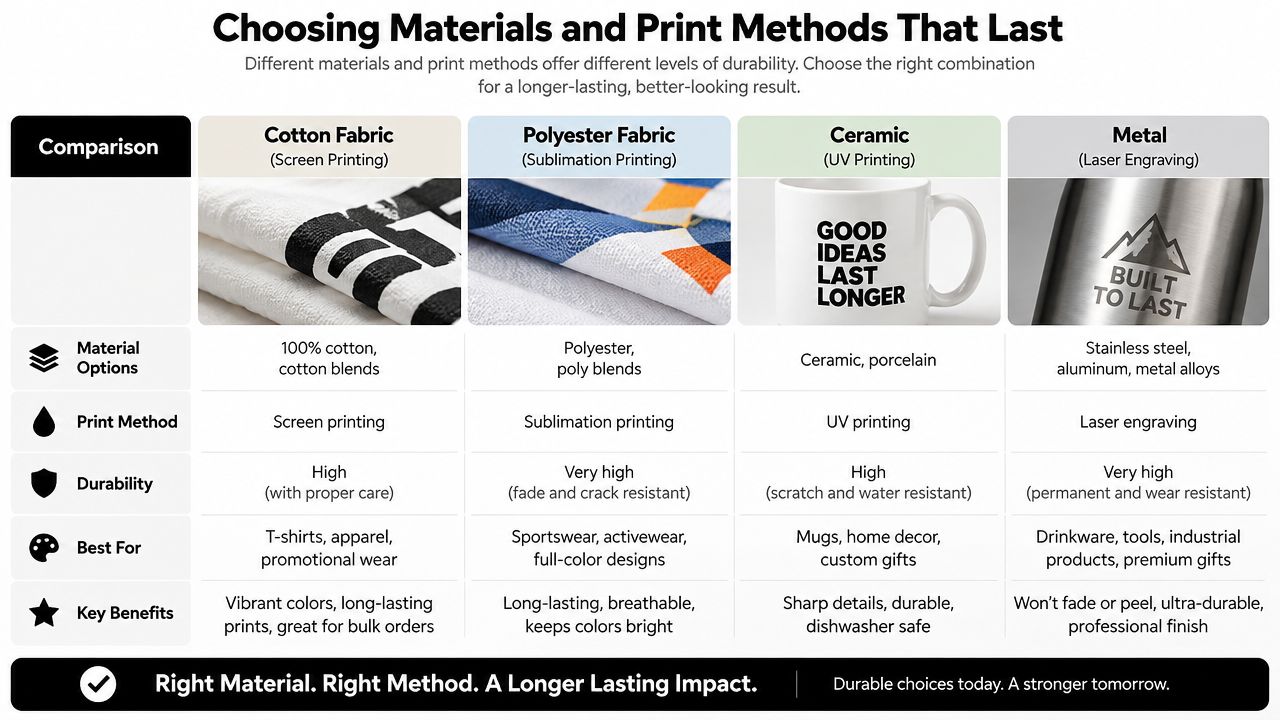
A bottle can look good on the order form and still fail during the season. The material affects weight, insulation, impact resistance, decoration, cleaning, and how easily players use it. Plastic often suits a large junior order because it is light and easy to carry. Metal fits a club seeking a longer-lived product with a more substantial finish.
UK printing suppliers report that metal bottles are materially more durable than standard plastic bottles and therefore have longer expected lifespans. Insulated promotional bottles are also commonly specified to keep drinks cold for up to 24–48 hours and hot for up to 12 hours, depending on wall construction and cap design. Treat those figures as model-specific limits, not a promise for every bottle. Request the exact construction, closure, and performance details before approving an order.
Match the substrate to the job
Lightweight plastic works well for open days, festivals, community events, and squads carrying bottles between sessions. It is generally easier to handle in larger quantities, but standard plastic usually provides less insulation and can show wear sooner after rough handling or aggressive washing. Check the material description and ask whether the bottle and lid are suitable for food contact. That documentation should cover every part that touches the drink, not only the bottle body.
Stainless steel gives a more substantial feel for senior squads, sponsor gifts, supporter ranges, and players carrying a bottle throughout the day. Double-wall vacuum construction improves temperature retention, while adding weight, bulk, and more surfaces to clean. A young player using a narrow kit-bag pocket may get more value from a lighter bottle than from maximum insulation.
| Material Type | Lifespan and Insulation | Best Print Approach | Watch Out For |
|---|---|---|---|
| Standard plastic | Lightweight, with limited insulation and a shorter expected life than metal | Screen printing or compatible digital decoration | Scuffs, odour retention, and print wear |
| Stainless steel | Longer expected lifespan, with single-wall or insulated options | Laser engraving or surface printing approved for the coating | Added weight, dents, and lid compatibility |
| Double-wall vacuum-insulated metal | Strong temperature retention, depending on construction and cap design | Laser engraving or a tested coating-compatible print | Higher cost, greater weight, and more parts to clean |
The closure deserves the same scrutiny as the body. Test whether it seals securely in a kit bag, opens quickly at training, and can be refilled without spilling. Ask the supplier how the seal, valve, and lid should be cleaned, then confirm that replacement lids are available if the squad loses them.
Choose decoration for the washing routine
Screen printing suits bold crests, sponsor marks, and limited-colour artwork. It can control cost, but the ink remains on the surface, so abrasion, repeated washing, and harsh detergent can reduce sharpness over time.
Laser engraving works well on coated metal where a single contrasting tone suits the design. It avoids printed ink peeling away, although it cannot reproduce a multicolour club crest in the same way as surface printing. Digital and transfer methods handle more detailed artwork, but compatibility depends on the coating and the supplier's process.
Request a decoration sample and written wash guidance. A supplier should explain how the finish was tested and which cleaning methods it supports. Compare metal finishes and construction in this guide to personalised stainless steel water bottles. Before distribution, supply care instructions and assign names or squad numbers consistently. Proper sealing, suitable cleaning, and keeping bottles out of strong sunlight help protect both the bottle and its printed logo.
Finding the Right Size Capacity and Lid for Your Squad
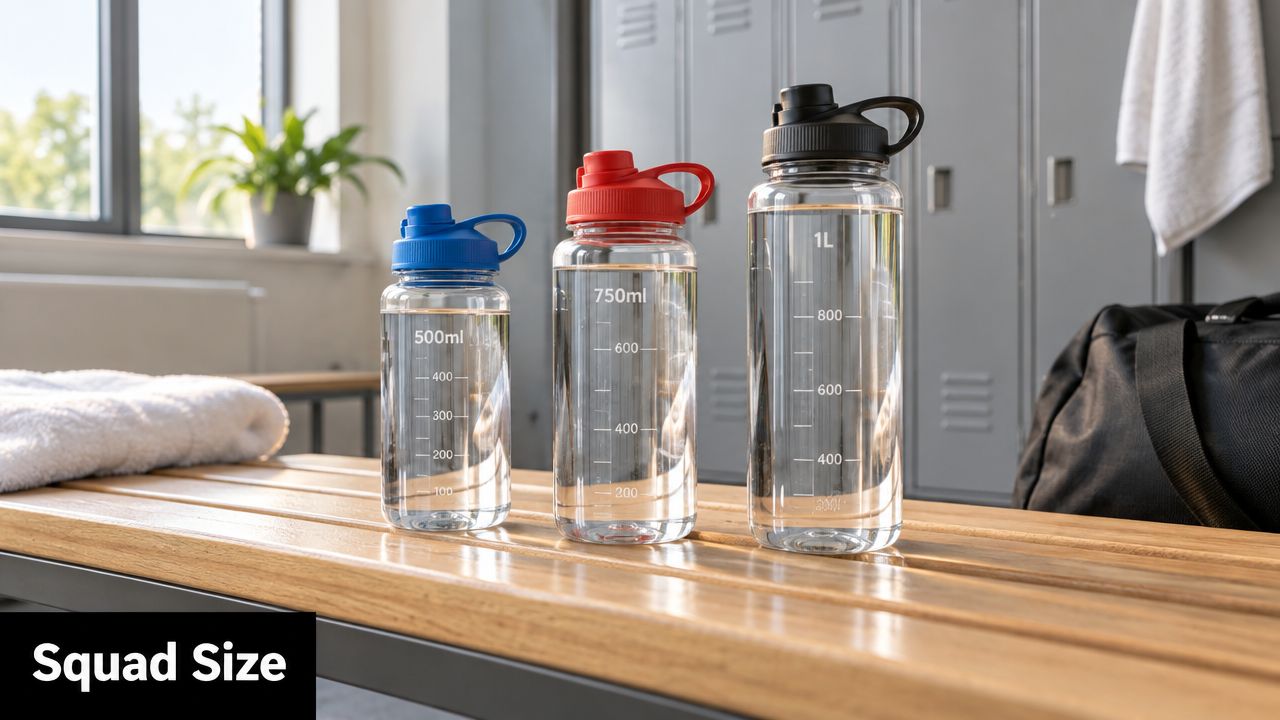
A bottle that fits the player but not the kit bag becomes a daily nuisance. Match capacity to the session, the player's age group, and the refill points available at the ground. Smaller, lighter bottles suit younger players and shorter activities. Senior squads, longer training sessions, and travel may need more capacity, provided the bottle still fits bags, carriers, and storage crates.
Check the physical dimensions before ordering. Measure the bottle's height and diameter, then compare them with kit-bag side pockets, team bottle carriers, and transport cup holders. A tall insulated model may keep drinks cold for longer, but it can be awkward to store beside boots, clothing, and medical equipment.
Select the closure before the artwork
The lid affects whether players can drink quickly, carry the bottle safely, and clean it properly.
- Squeeze tops: Useful during training when players need one-handed access, although the valve must resist leaking in a kit bag.
- Screw caps: Straightforward and dependable for travel, but slower to remove and usually require two hands.
- Flip lids: Convenient for regular carrying when the hinge and seal are well made.
- Straw lids: Comfortable for frequent sipping, though the straw and extra parts add cleaning work.
- Sports valves: Fast at the touchline. Check that the valve closes fully before distribution.
Food-contact compliance belongs on the supplier checklist. Ask for the bottle's material specification, confirmation that the components are suitable for contact with drinking water, and clear cleaning instructions. A lid that cannot be dismantled and washed properly can create more problems than a slightly smaller bottle.
Leak-proof performance also matters. In 2025 UK promotional-merchandise data, leak-proof design was the top purchase driver at 58%, while durability was 52%. The same source reports that 69% of consumers would welcome another bottle from a trusted brand and 67% take their bottle everywhere, supporting a practical choice based on daily use rather than logo visibility alone. These figures appear in UK promotional-merchandise data.
Use one ordering system
A mixed order is manageable if the records are clear. Keep the same colour, crest position, and naming convention across the squad. Vary capacity or lid only for a defined age-group or use-case reason. Record each player's bottle type beside their name, and store spare lids separately from spare bottles.
A club might issue a lighter sports bottle to younger players and an insulated model to senior players and coaches. Review temperature-retention options through insulated sports bottles.
Refill access should shape the choice. A 2025 UK survey found that 85% of people own a reusable bottle, while 31% identify refill-station access as a barrier and 64% would be more likely to carry one while travelling if more fountains existed. The UK refill survey highlights the operational point for clubs: a larger bottle helps only when players can refill it, so tell families where water will be available on matchdays.
Designing Artwork Numbers and Personalisation That Stays Sharp
A crest that looks clean on a monitor can fail on a curved bottle. Small lettering becomes hard to read, fine lines vanish, and wraparound artwork may place key details beside a seam or beneath the player's hand. Check the physical print area before approving the design.
Request the supplier's actual artwork template rather than working from a generic product photograph. Provide a vector logo where possible, convert text to outlines, and include the club's approved colour references. If the printer requires a raster file, ask which resolution and colour format suit its process. A screenshot exported from a messaging app rarely gives reliable results.
Build a controlled artwork system
Create one master design with defined variable fields. Fixed elements may include the club crest, team name, sponsor mark, and season identifier. Variable fields can hold the player name and squad number. This system reduces spelling errors and keeps replacements consistent across youth and senior squads.
Place names and numbers away from the base, shoulder, lid, and areas normally covered during use. A bold sans-serif typeface usually reproduces more clearly on a curved surface than a thin script. Leave space around the crest and number. A readable bottle is more useful on matchday than a crowded design filled with slogans and sponsor marks.
Use this artwork checklist:
- Confirm the print area: Ask for usable height, width, seam position, and any taper.
- Check contrast: Pair dark artwork with a light bottle body, or light artwork with a dark body. Inspect the smallest text at its final size.
- Limit fine detail: Remove lines and decorative features that the selected print size cannot reproduce consistently.
- Standardise variable data: Use one spelling convention, number format, and player order throughout the file.
- Request a digital proof: Check the crest, colours, names, numbers, orientation, and lid position before production.
- Approve a physical sample where possible: Curvature, coating, texture, and hand placement can reveal problems hidden by a screen proof.
- Archive the final file: Store the approved artwork, player list, bottle specification, and supplier notes together for future reorders.
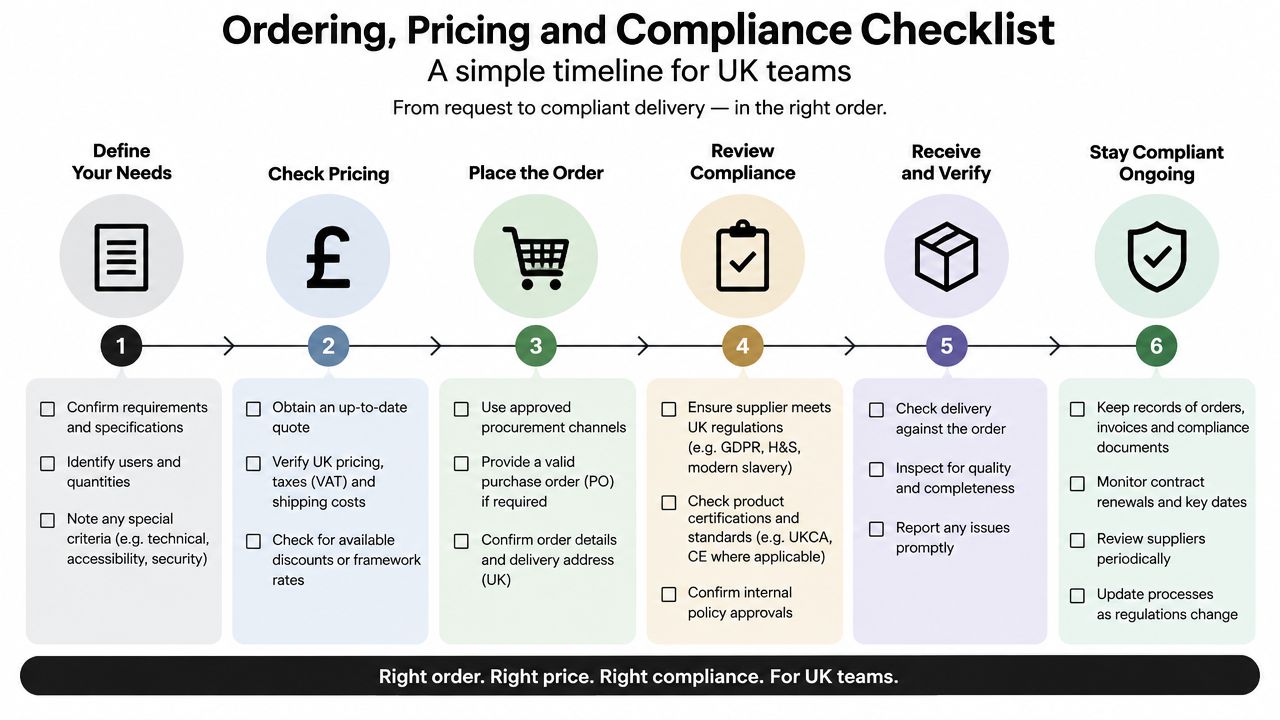
Allow time for corrections before production. Teams also need to track quotes, minimum quantities, proofing, compliance, and distribution, as shown in this ordering timeline.

Make numbering useful after delivery
Numbering should support distribution, not only appearance. Match each bottle number to the squad list and keep an issue log recording the player, bottle variant, issue date, and whether a spare was provided. If bottles are stored centrally, label crates by team and place personalised spares in a separate compartment.
A secondary identifier helps when two age groups share the same colours. Use an age-group abbreviation, discreet coach mark, or contrasting lid colour. Keep it limited so players can identify their own bottle quickly.
Neck labels can support temporary identification during events or batch distribution. Bottle Neck Tags provide a reference for separating batches before personalised bottles are handed out. They supplement permanent numbering rather than replace it.
Ordering Pricing and Compliance Checklist for UK Teams
A team order can fail before delivery if the specification, artwork, commercial terms, and compliance evidence are handled separately. Confirm each point in writing before production, while there is still time to correct an unsuitable bottle or print method.
Request a quotation that names the exact model, material, capacity, lid, decoration method, print area, quantity, delivery terms, setup charges, and sampling costs. Compare equivalent specifications. A lower price may reflect thinner construction, less durable decoration, or an omitted service rather than better value.
Confirm the food-contact position
Custom team bottles supplied in the UK should be assessed as food-contact materials. The relevant scope can include the bottle, cap, inks, adhesives, labels, and printed decoration if they contact the drink or could transfer constituents during normal or foreseeable use. The Food Standards Agency packaging guidance describes suitable marking, including “for food contact” wording or the fork-and-glass symbol where applicable.
The retained version of Regulation (EC) No 1935/2004 sets the core Great Britain framework for materials intended to contact food or drink. The GOV.UK food-contact regulations guidance explains its application in England, Wales, and Northern Ireland. For England, the Materials and Articles in Contact with Food Regulations 2012 came into force on 20 November 2012.
Ask the supplier to provide:
- A declaration of compliance: It should cover the complete bottle and cap assembly, not only the blank body.
- Material identification: Confirm that every component is intended for food contact.
- Decoration evidence: Check the inks, adhesives, labels, and coatings used on the finished item.
- Correct marking: Confirm the food-contact wording or fork-and-glass symbol where applicable.
- Written records: Save the documents with the purchase order and approved proof.
UK bottled-water guidance also requires containers to meet food-grade standards without adversely affecting the water's microbiological or chemical characteristics. Calling an item a “sports bottle” does not replace verification.
Treat price as a specification decision
Material, construction, lid complexity, decoration, artwork variation, sampling, quantity, and delivery all affect the final cost. An insulated bottle may suit senior players who use it daily, while a lightweight plastic model can be easier to replace across a large junior group. Refill speed, seal performance, and cleaning access also matter more than a low unit price. Use this sports water bottle buying guide to compare practical features, then rely on the supplier's written specification and compliance documents.
Before approval, record the minimum order quantity, production schedule, delivery date, proofing process, replacement policy, and payment terms. Allow time to inspect the shipment before the first fixture, especially if names, numbers, or team variants differ. A guide to ordering team uniforms can help coordinate bottle artwork and delivery with the wider squad order.
Keep the approved specification, quote, proof, and compliance documents together. That file gives the club a clear reference for checking the shipment and reordering the same product.
Caring for Bottles and Managing Team Distribution
The first training session after delivery is the right time to control the stock. Count every bottle against the order, check names and squad numbers, inspect caps and seals, and photograph damage before distribution. A spelling error or cracked lid found on matchday creates avoidable replacement work.
Create an issue register containing the player name, squad number, bottle variant, issue date, and replacement status. Keep shared training bottles clearly numbered in a labelled crate. Personalised bottles should be assigned to individual players, with responsibility for bringing, washing, and returning them. Add refill locations to the team sheet and issue log so players know where to top up at the training ground and during away travel.
Give families clear care instructions
Provide short written guidance with every issue. Players and parents should follow the manufacturer's washing instructions, particularly when lids, gaskets, straws, or printed finishes require different treatment. Safe storage also means sealing the bottle correctly and keeping it away from direct sunlight.
- Rinse promptly: Remove sports drink residue before it dries inside the bottle.
- Clean all removable parts: Valves and seals can retain odour even when the main body looks clean.
- Avoid harsh cleaning: Aggressive chemicals and abrasive tools may damage decoration, seals, and other components.
- Dry with the lid open: Airflow reduces trapped moisture and unpleasant smells.
- Inspect regularly: Replace a bottle when its seal, cap, or body no longer performs reliably.
Issue a spare only after recording the reason for replacement. This shows whether failures come from damaged components, lost bottles, or unsuitable use, and helps the kit manager plan the next order.
A visual stock system helps clubs handling several accessory types. The bottled up supplies for quilters resource is unrelated to football equipment, but its clear grouping and labelling approach is useful when supplies move between players, coaches, and families.
A separate supporter accessory, the Arsenal Fan Beer Can Bottle Opener, North London Forever Heart Design, has a matte polycarbonate top, a metal underside with two opening mechanisms, strong magnets, and a compact 3-inch, 7.6 cm bottle-cap shape. It is designed for adults and should be cleaned with warm water and dish soap after spills or stains.
Keep the issue log, care instructions, approved artwork, and compliance evidence together. SoccerWares offers soccer merchandise and training essentials, including club-branded drinkware and stainless steel water bottles, allowing teams to review bottle options alongside wider football products.
Choose the bottle by use case, confirm the lid and print method, approve personalised artwork carefully, and obtain food-contact documentation before purchase. Visit SoccerWares to browse club drinkware and football training essentials for a more organised, durable team order.