

We’ve all been there: that pre-match scramble with a manual pump, frantically trying to get the balls ready. It’s a frustration every player and coach knows well. An electric football pump is the simple solution—a small, automatic gadget that inflates footballs to the perfect pressure in seconds. It removes the guesswork and hard work, making it an essential upgrade for anyone serious about their game.
Why Your Manual Pump Is Costing You Game Time

Picture this: training kicks off in ten minutes, but you’re staring at a bag of a dozen flat footballs. With a manual pump, you’re in for a race against the clock. It’s a tiring workout before the real warm-up even starts. You’re putting serious effort into each ball, and getting the pressure just right feels more like luck than science.
This isn’t just a minor hassle; it’s a thief of valuable preparation time. Those minutes spent hunched over a pump are minutes you could be using for stretches, strategy talks, or running drills. The whole manual process is inefficient and, worse, delivers inconsistent results.
The Problem of Inconsistent Pressure
When you're pumping by hand, it’s almost impossible to get every ball to the exact same pressure. One might end up rock-hard, affecting a player's first touch, while another is too soft, giving it a sluggish, unpredictable flight path. This inconsistency can ruin the quality of a training session.
A football’s performance—its bounce, flight, and feel—is directly tied to its internal pressure. If that pressure isn't consistent, players can't build a reliable touch or shooting technique because the ball behaves differently every time.
For players to develop muscle memory and truly refine their skills, they need equipment that responds predictably. A perfectly inflated ball is the foundation of any good training session.
An Effortless and Precise Alternative
Now, let’s replay that scene with an electric football pump. The coach simply sets the required pressure—say, 0.8 BAR (11.6 PSI)—attaches the nozzle, and presses a button. In under a minute, the ball is perfectly inflated, and the pump shuts off automatically. The coach can then grab the next ball and repeat the quick, effortless process.
This efficiency completely changes pre-match preparation. What was once a chore becomes a simple, automated task. It's why electric football pumps are no longer a luxury but a must-have tool for:
- Coaches: Who need to prepare multiple balls quickly and ensure they’re all identical for team drills.
- Parents: Who can get their child’s football ready for a weekend match without any fuss.
- Players: Who want to keep their own gear at optimal levels for solo practice.
By cutting out wasted time and guaranteeing precision, an electric pump ensures every minute on the pitch is spent playing, not prepping. It maximises your training time and lets everyone focus on what really matters—the beautiful game.
How Electric Football Pumps Actually Work
Ever wondered what’s going on inside that little gadget bringing your footballs back to life? It’s not just a motor. A modern electric pump is a clever, miniaturised system designed for one thing: precision. Think of it as a tiny, intelligent compressor that knows exactly when to stop, protecting your gear from damage.
At its heart, the process is quite straightforward. You press the button, and a small electric motor kicks in. This motor drives a compressor, which sucks in air from its surroundings, squeezes it through a narrow chamber to increase the pressure, and then sends it down the hose and into your ball.
But the real magic lies in the components that manage all this, ensuring every single inflation is spot on without you having to do a thing.
The Brains Behind the Brawn
The single most important part of a modern electric pump is its pressure sensor. This tiny component constantly measures the air pressure inside the ball as it fills. It acts as the pump’s brain, feeding real-time information back to the main circuit.
This constant feedback is what makes the auto-shutoff feature possible. You just dial in your target pressure, and the sensor tells the motor the exact moment to switch off. This completely removes the guesswork and the risk of over-inflation, which can ruin a ball’s seams and bladder over time.
Here’s how the core parts work together:
- The Motor and Compressor: The powerhouse duo that gets the air moving and pressurised.
- The Pressure Sensor: The intelligent part that monitors the pressure inside the ball.
- The Power Source: Usually a rechargeable lithium-ion battery for use on the go, or a mains plug for non-stop power.
- The Digital Display: Your control panel for setting the pressure and monitoring progress.
Understanding Pressure: PSI vs BAR
When you’re setting up your pump, you’ll see two main units: PSI (Pounds per Square Inch) and BAR. Don’t get bogged down by them; they’re just different ways of measuring the same thing—air pressure. Most footballs have the recommended pressure printed right next to the valve.
For a standard size 5 football to perform at its best, it needs to be inflated to between 0.6 and 1.1 BAR, which is the same as 8.5 to 15.6 PSI. Getting this right is crucial for how the ball behaves on the pitch.
This isn’t just for professionals. A perfectly inflated ball gives you a consistent bounce, a predictable flight, and a much better feel off the foot. An under-inflated ball feels soggy and heavy, while an over-inflated one is like kicking a rock. Using an electric pump from SoccerWares means your footballs will perform exactly as they were designed to. It’s one of the simplest yet most effective upgrades for any training session, and you can find more like it in our guide to the top grassroots football gadgets for 2025.
From Minutes to Seconds
The speed of an electric pump is a massive advantage over the old manual ones. Some of the best models can get a flat ball match-ready in under 60 seconds—a huge difference from the tiring, minutes-long workout of a hand pump. This is a lifesaver for coaches getting a bag of balls ready for training.
In fact, some studies show that under-inflation is behind roughly 25% of all match-day equipment problems. It’s a simple issue that the right tool can solve in seconds.
Essential Features of a Great Electric Pump
Trying to pick the right electric pump can feel a bit overwhelming, with so many models vying for your attention. But if you know what to look for, you can quickly cut through the noise and find a pump that genuinely makes a difference to your pre-match prep.
It’s about more than just blowing up a ball; it’s about finding a reliable tool that gives you precision, convenience, and durability for seasons to come. Let's break down what separates a brilliant pump from a basic one.
Power Source: Portability vs Performance
One of the first decisions you'll need to make is whether to go for a battery-powered pump or one that plugs into the wall (mains-powered). Each has its own clear advantages, depending on how and where you’ll be using it.
-
Battery-Powered Pumps: These are the champions of portability. Perfect for away matches, tournaments, or a kickabout in the park, they run on rechargeable batteries. They’re compact, lightweight, and easy to throw in a kit bag, so you can have perfect pressure wherever you play.
-
Mains-Powered Pumps: Think of these as the workhorses of the equipment room. They might be less portable, but they deliver consistent, powerful performance without ever running out of charge. They’re the ideal choice for schools, clubs, or sports centres that need to inflate a large number of balls at once.
For most individual players, parents, and travelling coaches, a good-quality battery-powered pump hits that sweet spot between convenience and power.
Precision Pressure Control
The single best feature of any good electric football pump is its digital pressure gauge paired with an auto-shutoff function. This is what transforms it from a simple inflator into a proper piece of kit. It lets you set the exact pressure you need—usually between 0.6 and 1.1 BAR for a football.
You just dial in the target pressure, press go, and the pump inflates the ball, stopping the second it’s perfectly done. This feature completely gets rid of guesswork and protects the ball’s bladder and stitching from damage caused by over- or under-inflation. If you want to delve into the nitty-gritty of why the right pressure is so crucial, have a read of our detailed guide on understanding football PSI and pressure.
A pump with a clear digital display and auto-shutoff isn't just a nice-to-have—it's essential for looking after your equipment and ensuring consistent performance on the pitch.
This simple flowchart shows how to determine the right pressure setting for your football.
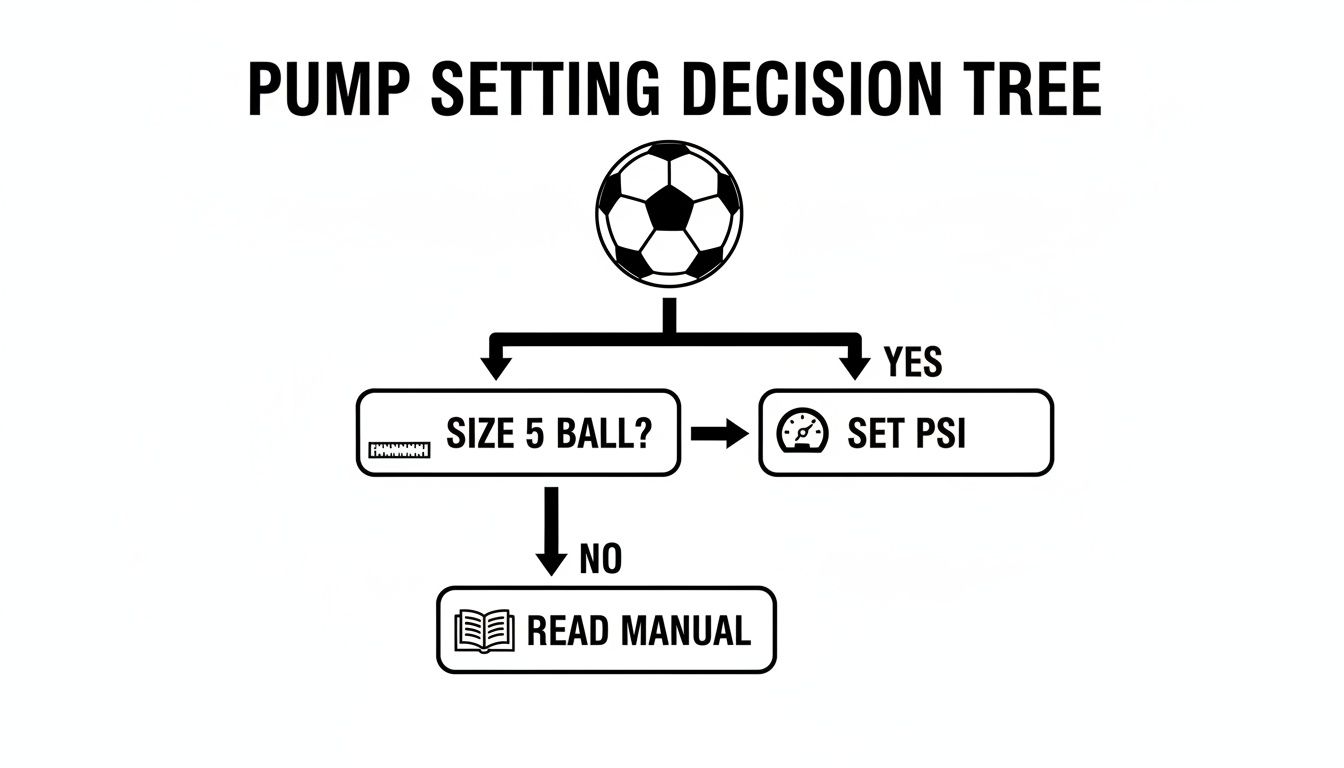
As you can see, checking the ball’s size and the manufacturer’s guidelines is always the best first step to getting that perfect inflation every single time.
Comparing Electric Football Pump Features
To help you decide, here’s a quick-glance comparison of the essential features. Whether you’re a parent sorting one ball or a coach managing thirty, this table breaks down what really matters.
| Feature | What to Look For | Best For |
|---|---|---|
| Power Source | Rechargeable battery (USB-C) or mains-powered (corded) | Battery for portability; mains for high-volume club use. |
| Pressure Control | Digital gauge with auto-shutoff | Anyone who wants consistent, accurate inflation without damaging balls. |
| Inflation Speed | Under 60 seconds for a size 5 ball | Coaches and clubs who need to inflate multiple balls quickly. |
| Nozzle Compatibility | A set of different needles and adaptors included | Families and multi-sport households who need to inflate more than footballs. |
| Build Quality | Robust, solid materials that can handle being in a kit bag | Everyone. A durable pump is a better investment in the long run. |
Ultimately, the best pump is the one that fits your routine. A portable, precise, and durable model will quickly become one of the most-used items in your kit bag.
Speed and Nozzle Versatility
While precision is key, inflation speed is a massive bonus. Nobody wants to stand around waiting for a ball to inflate. Top-tier models can get a standard size 5 football ready to go in under 60 seconds, which is a huge time-saver compared to a hand pump. When you're shopping, look for a pump that mentions its inflation rate, often measured in Litres Per Minute (LPM).
Just as important is nozzle compatibility. Most footballs use the same standard needle, but a versatile pump will come with a range of different nozzles. This means you can also inflate basketballs, netballs, or even air mattresses and pool toys, making it a handy gadget for the whole family. The best pumps often arrive as a complete 12 volt electric pump kit with everything you need included.
Build Quality and Durability
Finally, have a good look at the pump's construction. A durable pump should feel solid in your hand, not like a flimsy piece of plastic. You want models made from robust materials that are built to survive being knocked about in a kit bag. This is where a good electric pump really leaves its manual counterparts behind.
In fact, a reliable electric model can last for well over 500 inflations, whereas many manual pumps give up after around 200. That extra durability means you’re replacing your pump 60% less often, making it a much smarter financial choice for parents and clubs over time. A pump that's built to last is a dependable tool you can count on, season after season.
Who Really Needs an Electric Pump?
Look, anyone who's ever fumbled with a manual pump on a cold Saturday morning will tell you an electric one is a welcome upgrade. But for some people, it’s not just a convenience—it's an absolute necessity.
These pumps solve real, recurring headaches for anyone managing football equipment regularly. We’re talking about saving precious time, ensuring every ball has the perfect pressure, and ultimately, protecting the investment you've made in your gear. Let’s break down who benefits the most and why these pumps become such an essential piece of kit.
Coaches and Football Clubs
For any coach, preparation time is sacred. The last thing you want is to waste 20 minutes before a big match or a crucial training session manually pumping up a dozen footballs. An electric pump turns that tedious job into a quick, hands-off task, freeing you up to focus on your game plan and player warm-ups.
But the real game-changer for coaches is consistency. An electric pump inflates every single ball to the exact same pressure. This means the ball behaves predictably with every pass, shot, and first touch, creating a uniform training environment where players can build reliable muscle memory. It takes the guesswork out of the equation.
- Huge Time Saver: Inflate a whole bag of 10-15 balls in just a few minutes, not half an hour.
- Perfect Pressure, Every Time: No more over-inflated bouncers or dead-feeling footballs. Just consistent, reliable performance.
- Looks Professional: It shows you're serious about preparation and sets a high standard for the entire team.
Bottom line? More time spent on actual coaching, which directly translates to better player development.
Parents of Young Footballers
Every football parent knows that pre-match scramble. You're trying to get the kit ready, find the shin pads, and then... the ball is flat. Cue the frantic search for the manual pump and a few minutes of stressful, guesswork pumping. An electric pump makes all of that disappear.
It's a simple, foolproof solution. You set the desired pressure, connect the pump, and let it do its thing. Not only does it save you a headache, but it also gives you peace of mind that the ball is properly inflated and safe for your child to use. No more worrying about a rock-hard, over-inflated ball causing a nasty knock.
For a busy parent, an electric pump is the ultimate 'set it and forget it' gadget. It’s a small investment that pays you back every single weekend by making life that little bit easier.
Serious Players and Schools
Dedicated players who train on their own get it. The quality of your equipment matters. If you're using performance gear like the GPS trackers from SoccerWares, having a precisely inflated ball is non-negotiable. An under-inflated ball can completely skew your performance data, providing inaccurate feedback on your kicking power and speed.
Schools and sports centres are another group that see massive benefits. With hundreds of children using the equipment day in, day out, keeping everything in top condition is a constant battle. For an equipment manager, an electric pump is a lifesaver, allowing them to prepare and maintain a huge inventory of footballs with minimal effort.
This isn't just a niche trend, either. The demand for sports-specific electric pumps has shot up in the UK. The portable ball pump market is expected to grow, with electric models already capturing about 40% of the market. You can see more on this global trend over at datainsightsmarket.com. It just goes to show how many people are catching on to the practical, real-world advantages these devices offer.
Using and Maintaining Your Electric Pump
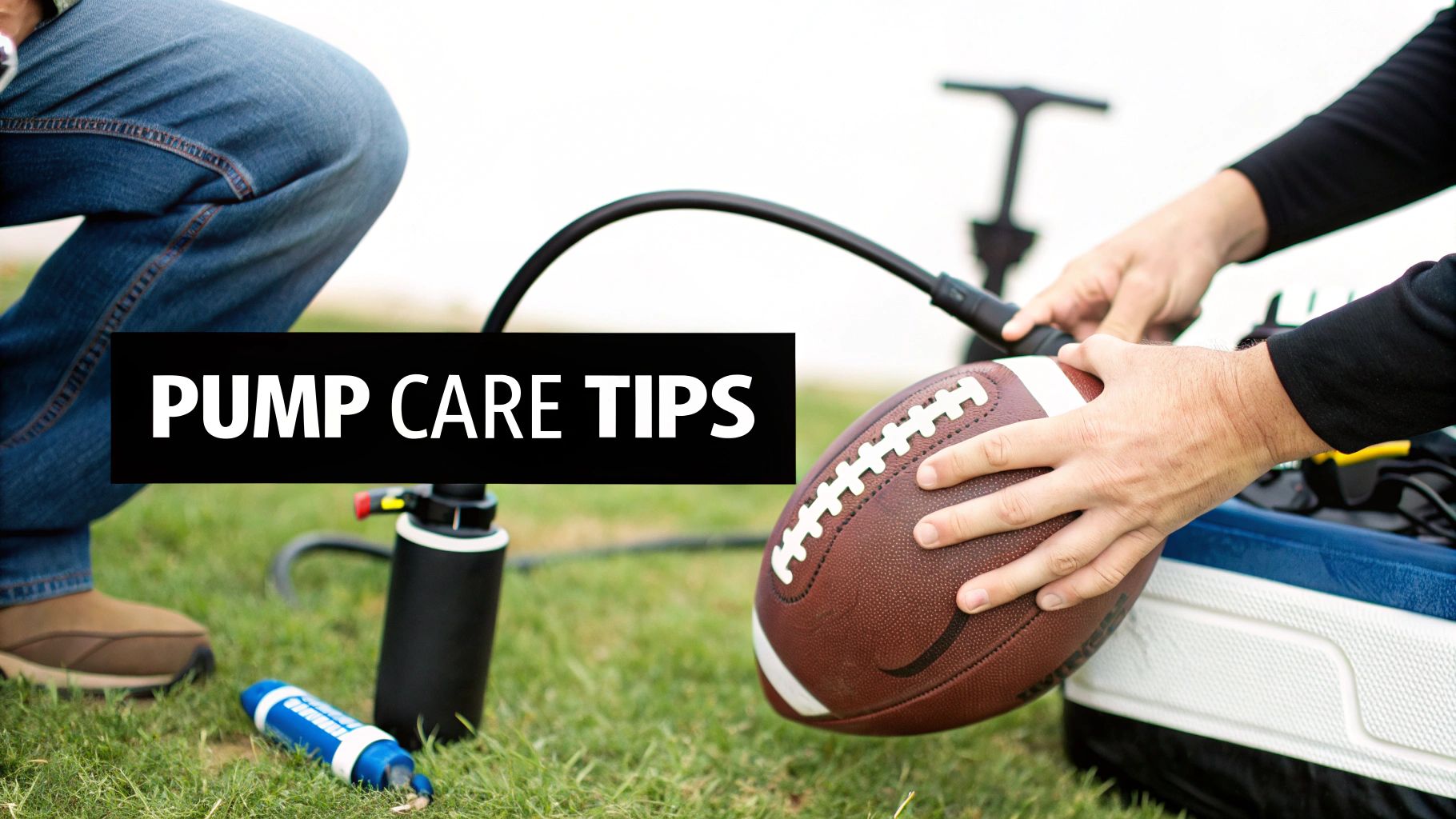
Owning an electric football pump is a fantastic upgrade, but to get the most out of it, you need to use it correctly and look after it. Proper handling doesn't just guarantee perfectly inflated footballs every time; it also extends the life of your pump and your gear.
The good news? It’s incredibly simple and quickly becomes second nature.
First things first, always prepare the needle. Before you think about inserting it into the ball's valve, get into the habit of moistening the tip with a drop of water or silicone spray. This tiny step allows it to slide in smoothly and prevents damage to the delicate valve, which is a common cause of slow leaks down the line.
Once the needle is in, input your target pressure into the pump's digital display. For a standard size 5 ball, you’re looking at somewhere between 0.6 and 1.1 BAR (8.5–15.6 PSI). With the pressure set, just hit the start button and let the auto-shutoff feature do its job. It'll stop automatically once it hits the target, completely removing the risk of over-inflation.
Simple Steps for Safe Operation
Having a consistent routine is the best way to get safe, effective results. It protects your equipment and ensures every single ball is match-ready with identical pressure.
- Check the Ball's Recommended Pressure: Always look for the manufacturer's guidelines printed right next to the valve before you start.
- Moisten the Needle: A quick dip in water or a dab of glycerine lubricant protects the valve from tears during insertion. Simple.
- Secure the Connection: Insert the needle straight into the valve. Don't wiggle it around or force it in at an angle.
- Set Your Target PSI/BAR: Use the controls on your electric pump to dial in the exact pressure needed.
- Start and Monitor: Press the power button and let the pump work its magic. The auto-shutoff feature is your safety net.
For serious players, this level of precision is more than just a convenience. Academy trainees using GPS trackers need accurately inflated balls for reliable data, as underinflated ones can skew speed and impact stats by as much as 10%.
Essential Maintenance and Care Tips
Just like any other piece of valuable kit, your electric pump needs a bit of care to keep it performing at its best. A few simple habits will ensure it remains a reliable tool season after season.
Proper storage and battery care are the two most important factors in prolonging the life of your pump. A little effort here goes a long way in protecting your investment.
Keep these tips in mind:
- Store It Safely: Keep your pump in a cool, dry place, ideally in a protective case or its original box. This prevents dust from getting into the motor and protects it from being knocked about in a crowded kit bag.
- Manage Battery Life: For portable models, try not to leave the battery completely flat for long periods. Best practice is to charge it fully after use and give it a top-up every couple of months if it’s not in use.
- Keep Nozzles Organised: Most pumps come with a handy little storage compartment for needles and adaptors. Using it means you’ll never be scrambling to find the right attachment minutes before kick-off.
And what about when you need to let some air out? Knowing how to deflate a football safely is just as important as inflating it properly, as doing it wrong can damage the bladder. Follow these simple steps, and your electric pump will be an indispensable part of your gear for years to come.
Find the Right Electric Pump at SoccerWares
Making the switch from a manual to an electric football pump is one of those simple decisions that pays off every time you’re getting ready for a match. It’s about swapping frustration for efficiency, guesswork for precision, and wasted time for more time on the pitch. You’ve seen how they work and what features separate a good pump from a great one; now it’s time to find the perfect fit for your kit bag.
At SoccerWares, we’ve hand-picked a selection of high-quality electric football pumps built to meet the demands of players, parents, and coaches. Our range is all about reliability, accuracy, and portability, ensuring you get a tool you can genuinely count on. Forget about inconsistent pressure and that pre-match fuss—our pumps deliver perfect inflation in seconds.
Your Go-To for Match-Ready Gear
Getting the right equipment online should be straightforward. When browsing a store like SoccerWares for the perfect pump, knowing a few essential site search best practices can really speed things up, helping you find exactly what you need without endless scrolling.
Upgrading your gear is about more than just convenience. It's an investment in better training, consistent performance, and protecting the life of your footballs. An electric pump makes sure every ball is perfectly prepared, every time.
As more people shop online—with e-commerce set to capture 60% of sales—we're making sure we have the best kit ready. Market forecasts for 2025-2033 show that powerful 300 PSI models, ideal for high-pressure match balls, are expected to dominate 52% of the market. You can read more on these market insights at datainsightsmarket.com.
Explore our collection today and see why so many are making the switch. And while you’re here, check out the other essentials that go hand-in-hand with a new pump, like our premium match balls and professional-grade football training equipment. Get yourself the tools that truly elevate your love for the beautiful game.
Got Questions? We’ve Got Answers
Thinking about grabbing an electric pump but still have a few things you're not sure about? That's completely normal when you're investing in new kit. We've pulled together some of the most common questions we hear from the SoccerWares community to give you clear, honest answers.
This is all about clearing up any last-minute doubts so you can feel confident you’re getting the right tool for the job.
Can I Use an Electric Pump on Other Sports Balls?
Yes, absolutely. In fact, one of the best things about a quality electric pump is its versatility. Most don't just come with the fine needle you need for footballs, rugby balls, and netballs.
They usually include a conical nozzle too, which is perfect for bigger inflatables like paddling pools or air beds. It quickly becomes a handy gadget for the whole family, not just for sport. Just make sure to double-check the product description to see exactly which adaptors come in the box.
How Long Does a Portable Pump Battery Last?
This is the big one for anyone who will be using their pump away from home. Battery life varies between models, but a good quality portable electric football pump will comfortably inflate between 20 and 30 footballs from a single full charge.
That’s more than enough power to get a full squad's equipment match-ready or to cover you for several weeks of individual training sessions. Many newer pumps also have a battery level indicator, so you'll never get caught out with a flat battery right before kick-off.
It's almost impossible to over-inflate a ball with a modern electric pump, thanks to the auto-shutoff function. Think of it as the ultimate safety net for your footballs.
You just dial in your target pressure—say, 0.8 BAR (11.6 PSI)—and the pump cuts out the second it hits that number. This clever feature doesn't just stop you from damaging the ball's bladder and stitching; it also guarantees you get perfect, consistent pressure every single time. It’s a simple bit of tech that helps your gear last a whole lot longer.
Ready to make pre-match prep quicker and easier than ever? At SoccerWares, we’ve hand-picked a range of reliable and precise electric football pumps designed for every level of the game.
Browse our collection of electric football pumps at SoccerWares today!