

Picking out the right football gear for a young player can feel like a mission, but it all starts with the most important piece of kit: the ball itself. Choosing the correct size is crucial, as it directly impacts a player's skill development, safety, and overall enjoyment of the game.
In the UK, football sizes are carefully matched to specific age groups. This structured system is designed to help young players build confidence and master the fundamentals with a ball that suits their physical abilities. The standard progression is a Size 3 for ages 6–9, a Size 4 for ages 10–13, and a Size 5 for ages 14 and up. It’s a simple but effective framework to ensure the ball is a perfect fit for the player.
Your Quick Guide to Youth Football Sizes
Choosing the right football for a young player is more than just grabbing one off the shelf. Using a ball that’s too big or heavy can be frustrating, making it difficult to control and potentially leading to poor technique or, worse, an injury. Think of it as the first step in ensuring their safety, development, and, most importantly, their love for the game.
This guide will walk you through the key sizes, starting with the ball.
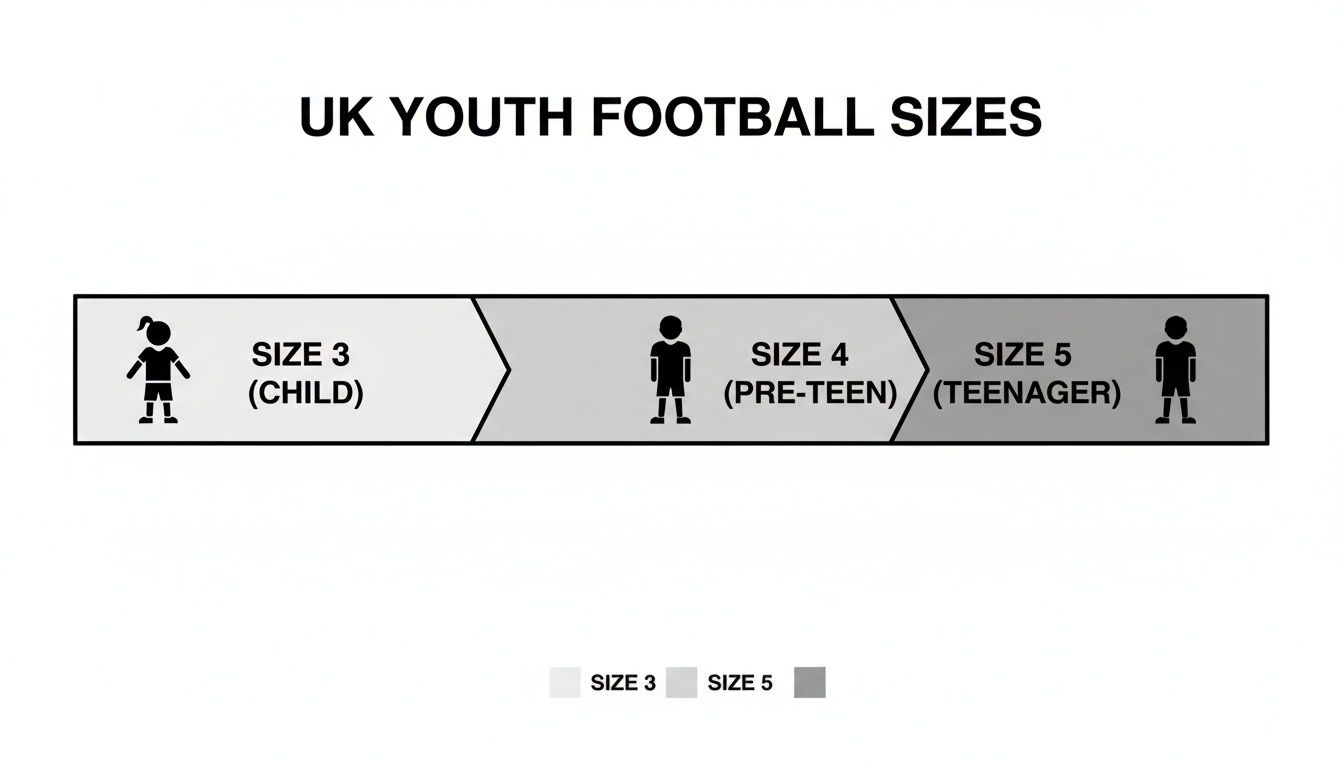
As you can see, the ball grows with the player, matching their physical development and skill level at every stage.
For a quick summary, here’s a table that breaks down the official guidelines used across the UK.
Football Size Chart by Age Group (UK Guidelines)
| Ball Size | Recommended Age Group | Approx. Circumference | Approx. Weight | Common Match Format |
|---|---|---|---|---|
| Size 1 | Ages 3–6 | 46–51 cm | 200–220 g | Fun, skills, mini-games |
| Size 2 | Ages 3–6 | 52–56 cm | 210–280 g | Training, skill drills |
| Size 3 | Ages 6–9 (U7–U10) | 58–61 cm | 290–340 g | 5-a-side, 7-a-side |
| Size 4 | Ages 10–13 (U11–U14) | 63.5–66 cm | 350–390 g | 9-a-side, 11-a-side |
| Size 5 | Ages 14+ (U15–Adult) | 68–70 cm | 410–450 g | 11-a-side |
This table is an excellent starting point for parents and coaches to ensure young players are using the right equipment for their age and match format.
Following Official Guidelines
In the UK, football authorities and clubs have a clear pathway for player progression. For the youngest players in the U7 to U10 groups (that’s kids around 6–9 years old), a size 3 ball is standard. As they get older and move into the U11 to U14 brackets (ages 10–13), they graduate to a size 4 ball. This gradual step-up is deliberate, preparing them for the demands of the full-sized game as they mature.
Using an age-appropriate ball is like giving a young musician an instrument that fits their hands. It allows them to learn the fundamentals correctly without struggling against equipment that's too big or heavy.
This structured progression is vital. It lets young players properly master skills like dribbling, passing, and shooting with a ball that’s proportionate to their size and strength. That means better control, more confidence, and a much more enjoyable experience on the pitch.
You can explore a huge range of balls for every age in our guide to football training balls.
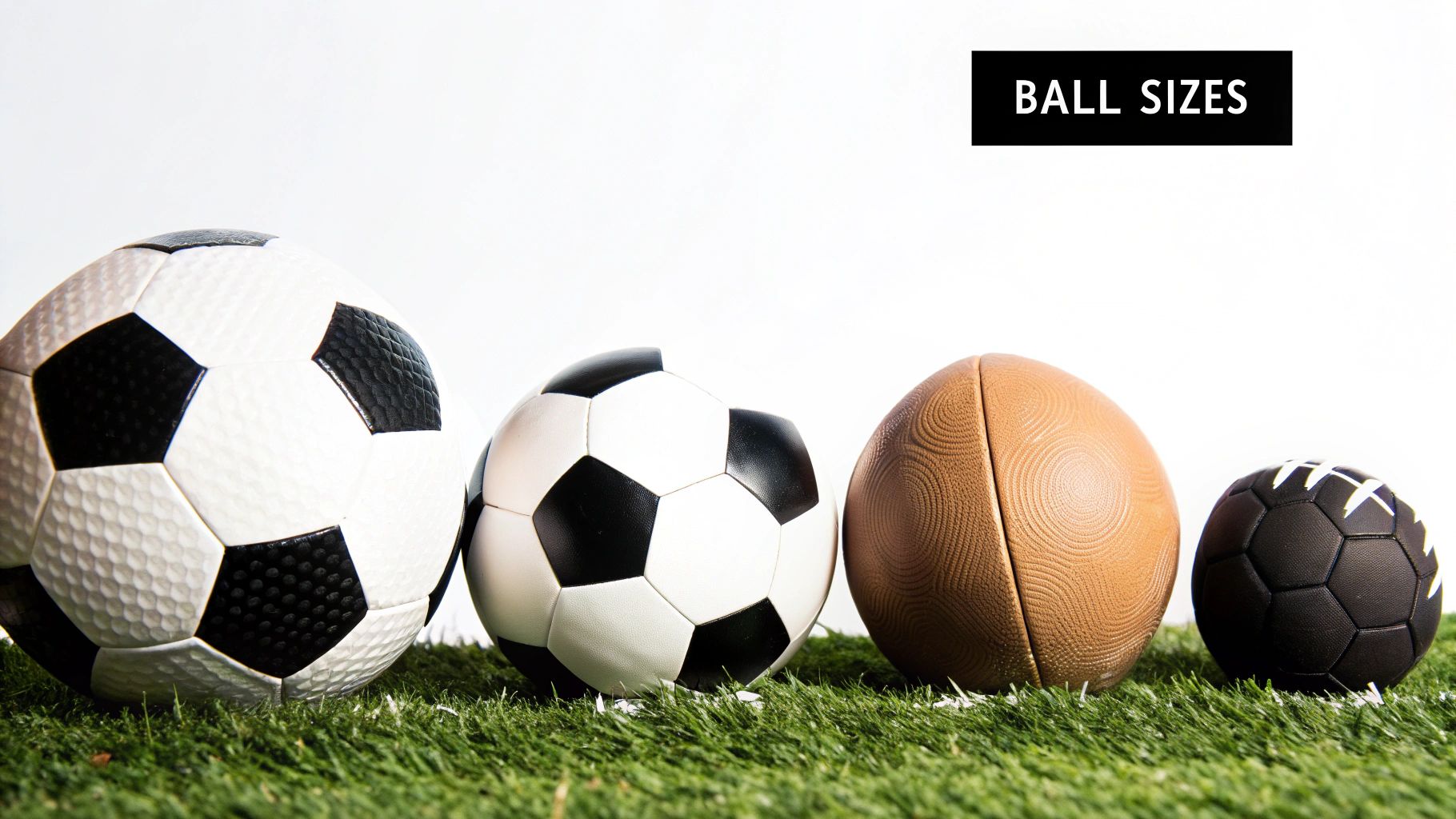
Decoding Ball Sizes From Mini to Match Day
Picking the right football for a young player isn’t just about following rules; it’s about setting them up for success. The right ball feels like a natural extension of their foot, making dribbling and passing feel intuitive. A ball that’s too big and heavy is just clumsy, killing confidence and making simple skills feel impossible.
Each ball size is designed for a specific purpose, matching a player’s strength and ability as they grow. Let’s break down what each size really means for their journey on the pitch.
The Foundation: Size 3 Ball
For children just starting out, usually between six and nine years old, the Size 3 ball is the perfect first step. It’s significantly lighter and smaller than a full-size ball, which is a huge advantage for little legs. The smaller size means they can kick, pass, and control it without putting unnecessary strain on developing muscles and joints.
Think of a Size 3 ball like the stabilisers on a bike. It gives them the confidence to learn the basic movements without a struggle. Kicking it is comfortable, so they can focus on their technique instead of trying to hoof a heavy ball designed for an adult.
This isn’t just good advice; it’s official. Football authorities across the UK set these guidelines to ensure training and matches are appropriate for player development. For players in the Under-7 to Under-9 age groups, a Size 3 is mandatory.
The Bridge: Size 4 Ball
As players reach their pre-teen years (around 10 to 13), their coordination, strength, and skills start to take off. This is the perfect time to introduce the Size 4 ball. It’s a vital bridge between the smaller Size 3 and the full-sized adult ball, preparing them for the next level of the game.
The jump to a Size 4 adds a bit more weight and a larger surface area. This change challenges players to sharpen their touch, generate more power in their shots, and refine their dribbling technique. It’s a stepping stone that pushes them just enough without feeling overwhelming.
Using a Size 4 at this age is like a chef graduating to a sharper, heavier knife. It demands more precision and respect but allows for a greater level of skill and creativity once mastered.
This transitional stage is essential for mastering ball control and preparing for the physical demands of senior football. It ensures that when they’re finally ready for a Size 5, the change feels natural rather than sudden and difficult.
The Pro Standard: Size 5 Ball
From age 14 onwards, players make the final step to the Size 5 ball. This is the official, regulation-size football used in professional leagues and international tournaments across the globe. It's the standard for all 11-a-side matches and marks the final stage of a player’s development journey with ball sizes.
Making the switch to a Size 5 means a player has developed the physical strength and technical skill to handle a full-sized ball. Its weight and dimensions are what they’ll use for the rest of their playing careers, whether they play for fun on a Sunday or go on to play professionally. If you’re looking for the right gear for this stage, check out our detailed guide on Size 5 footballs.
Finding the Perfect Fit in Football Boots
After the ball, a player's boots are their most important piece of kit. We’ve all seen it: a young player hobbling off the pitch with blisters or complaining that their boots just don't feel right. Ill-fitting boots are more than a nuisance—they can genuinely hinder a player's performance and confidence.
Getting the fit right isn't just about comfort. It's about giving them the stability and feel for the ball they need to play their best.
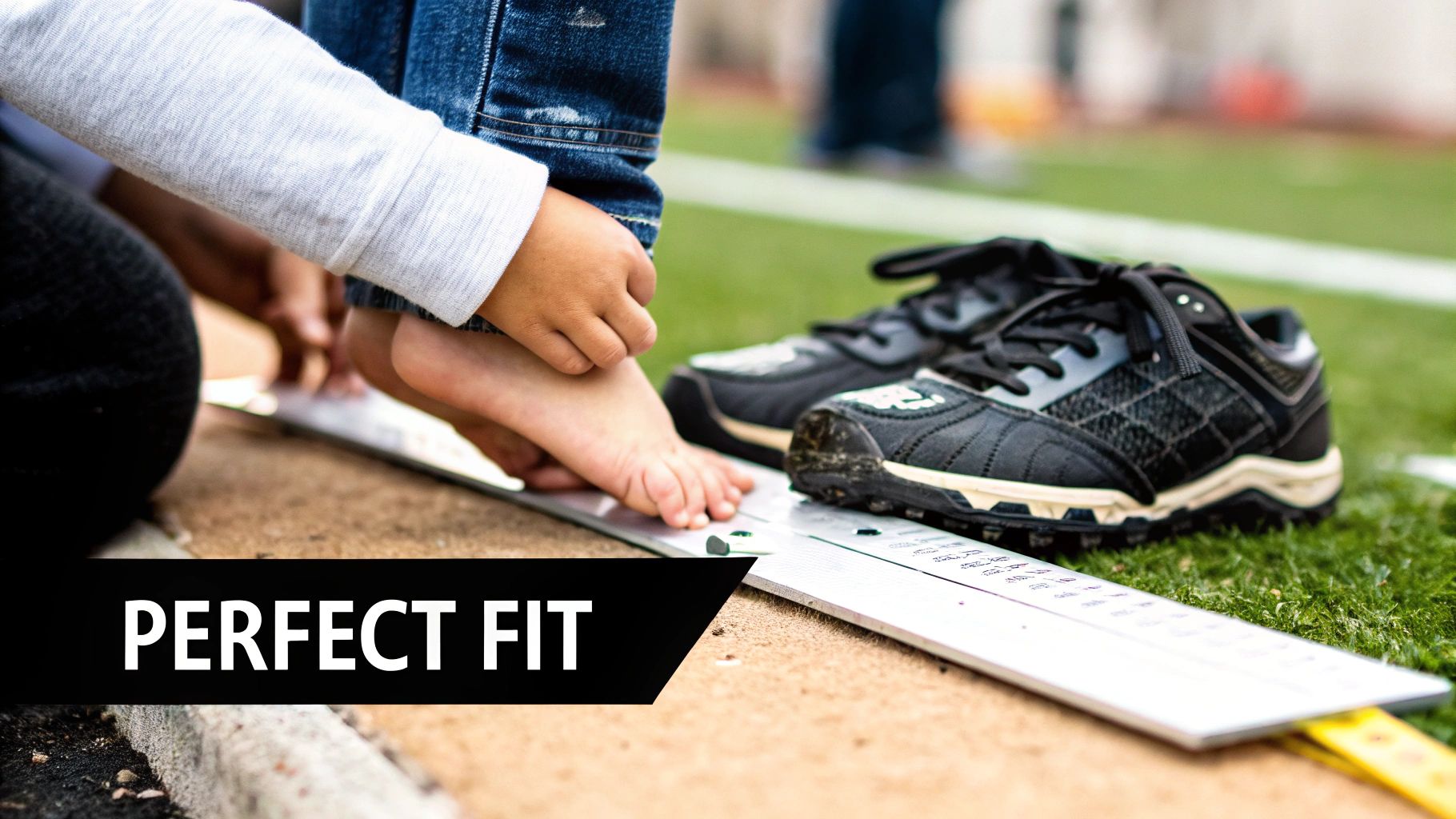
Here, we'll walk you through how to measure your child’s feet properly at home and make sense of the different boot types. Let's make sure they step onto the pitch ready for action.
How to Measure for the Perfect Fit at Home
Getting an accurate measurement is the first step to avoiding badly fitting boots. It’s a simple process you can do in a couple of minutes with things you already have at home.
Here’s a quick guide:
- Get Set Up: Have your child stand on a blank piece of paper with their heel flush against a wall. Crucially, make sure they’re wearing the same football socks they’d wear for a match, as this can make a real difference to the fit.
- Trace Their Foot: Ask them to stand with their weight spread evenly. Then, carefully trace an outline around their foot with a pen or pencil held vertically.
- Measure the Length: Use a ruler or tape measure to find the distance from the back of the heel to the tip of their longest toe.
- Check the Brand’s Chart: With your measurement in centimetres, you can check it against the sizing chart for the specific brand you're looking at. Remember that sizes can vary between manufacturers like Nike, Adidas, and Puma.
To Buy Bigger or Not
Ah, the age-old question for every parent: should you buy boots a size up to give them room to grow? It’s tempting, but it can cause more problems than it solves. Boots that are too big can make a player feel clumsy, increase the risk of tripping, and let the foot slide around inside, which is a one-way ticket to blisters.
A good rule of thumb is to leave about a thumb's width (roughly 1 cm) of space between the end of their longest toe and the front of the boot. This provides just enough room for growing feet and sock thickness without sacrificing stability.
That small gap ensures the boots are comfortable from day one while offering a bit more longevity. For a deeper dive into picking the right footwear, check out our detailed guide on the best football boots for kids.
Choosing the Right Boot for the Surface
The type of pitch your child plays on is just as important as their foot size when it comes to choosing boots. Different soleplates are designed for specific surfaces to provide the best possible grip and help prevent injuries.
- Firm Ground (FG): These are the most common boots, featuring moulded plastic or rubber studs. They are perfect for natural grass pitches that are dry and firm.
- Soft Ground (SG): Built for wet, muddy pitches, these boots have longer, often metal-tipped, screw-in studs that dig in to provide maximum traction when the ground is slick.
- Artificial Ground (AG): Designed for artificial grass surfaces, AG boots have numerous short, hollowed-out studs. These spread pressure evenly and prevent studs from getting caught in the turf.
Picking the right boot type means your young player will have the grip they need, reducing the risk of slips and falls and allowing them to play with confidence, no matter the surface.
Choosing the Right Youth Football Kit
Ever bought a 'Small Boys' kit from Nike, only to find it fits completely differently from an Adidas one in the same size? If you've nodded along, you know the headache. Relying on age labels is often a one-way ticket to a poor fit and the hassle of returns.
The most reliable way to get it right is to ditch the age tag and grab a tape measure. A child’s chest and height measurements are far more accurate than just going by their age. This simple step ensures the shirt isn’t ridiculously tight across the shoulders or hanging down to their knees, giving them that proper, ready-to-play look and feel.
Honestly, it takes all the guesswork out of it, especially when you’re buying online.
Nailing the Fit When Buying Online
When you're shopping online, the brand's own size chart is your best friend. Before you even think about adding that new Liverpool kit to your basket, find the sizing guide on the product page. Compare your child’s measurements to it. This is the single best way to avoid disappointment.
Here are a few practical tips:
- Check the Chart Every Single Time: Don't assume that this year's medium is the same as last year's, even from the same brand. Always double-check.
- Measure Over a T-shirt: Ask your child to wear a light t-shirt when you measure their chest. This mimics what they might wear underneath on a cooler day.
- Consider the 'Fit Type': Some kits are a snug 'slim-fit' while others are a more relaxed 'standard' fit. The product description will usually specify this, and it can make a big difference to which size you choose.
Planning for Match Day Layers
A football kit isn’t just a shirt and shorts; it's part of a system. On those cold, wet Sunday mornings, most young players will wear a base layer underneath for warmth. And don’t forget that bulky shin guards and thick football socks add extra volume around the legs.
A well-fitting kit should allow for complete freedom of movement without being baggy. When trying on shorts, make sure there’s enough room to comfortably fit shin guards underneath without the fabric being stretched tight.
Thinking ahead like this prevents the kit from feeling restrictive when it really matters. A comfortable player is a confident player, and getting the fit right lets them focus entirely on the game. So, whether you're buying the latest Arsenal kit or just grabbing their local team's colours, these little details ensure your young athlete looks and feels ready for kick-off.
Sizing Goalkeeper Gloves for Young Keepers
For a young keeper, their gloves are everything. They're not just a piece of kit; they're the tools that build confidence, help them cling onto a stinging shot, and protect their hands as they command the box.
Get the fit wrong, and you've got a problem. Gloves that are too tight will feel restrictive and uncomfortable, while a pair that’s too loose will feel clumsy, reducing that all-important feel for the ball. It's a bit like trying to write with a pen that's too thick or too thin—it just doesn't work properly.
Goalkeeper glove sizing is a little different from boots or shirts. It uses a simple numerical system based on a player’s hand measurement, making it surprisingly straightforward to get the perfect fit.
How to Measure for Goalkeeper Gloves
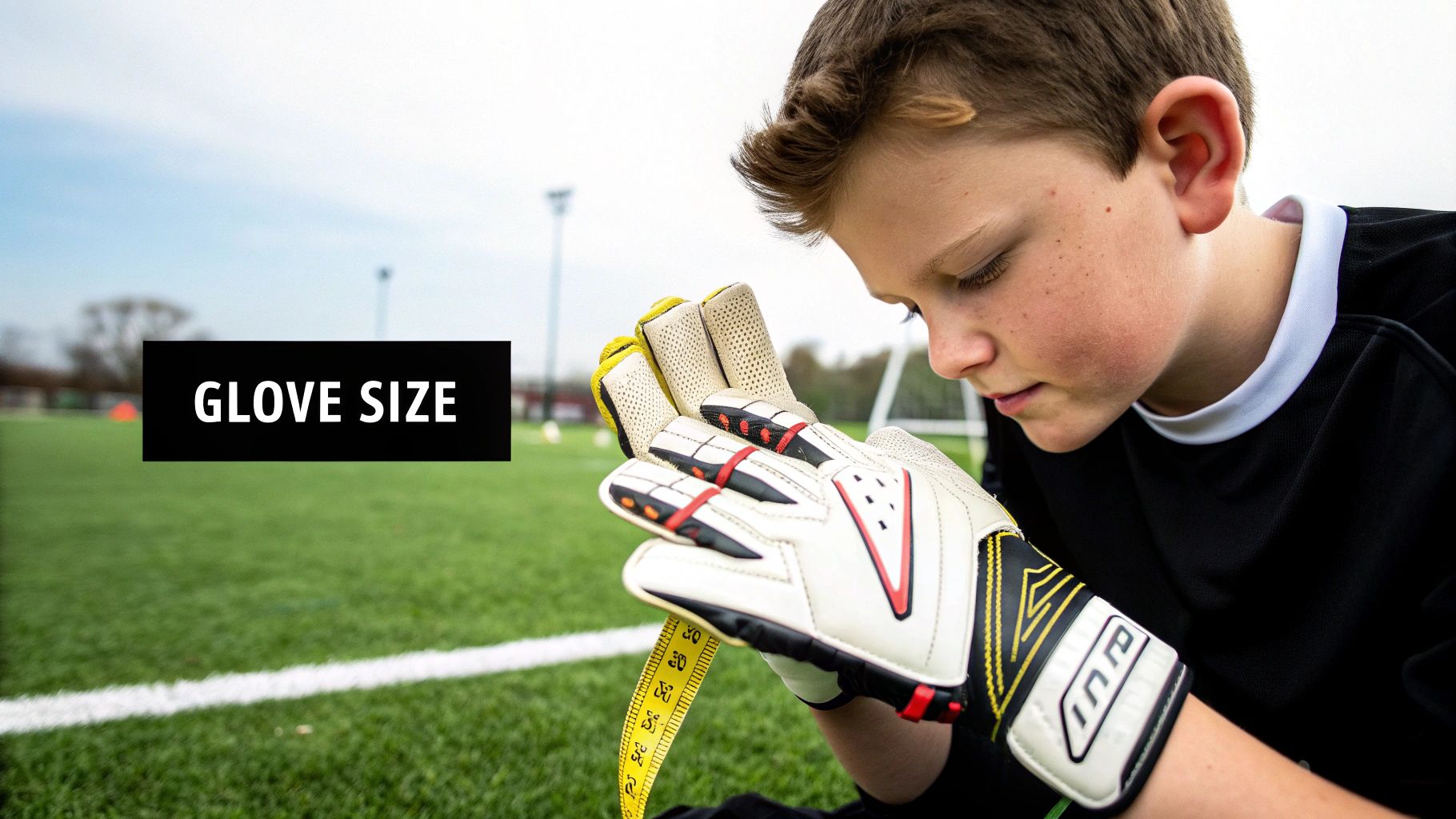
All you need is a flexible tape measure. The number you're looking for is the circumference of the palm, measured just below the knuckles.
- Wrap the tape measure around the widest part of your child’s palm, excluding the thumb.
- Note down the measurement in centimetres (cm).
- Use that number to find the right size in our chart below.
It’s always a good idea to measure both hands, as they can often be slightly different sizes. If you land between two sizes, it's almost always better to go for the larger one. A little extra room is far better than a glove that’s too tight and restrictive.
For a more detailed walkthrough, you can explore our complete goalkeeper gloves size guide.
Junior Goalkeeper Glove Size Guide
Here’s a simple chart to help you match your child’s hand measurement to the correct glove size.
| Hand Measurement (Palm Circumference) | Recommended Glove Size |
|---|---|
| 13.5 cm - 15.5 cm | Size 4 |
| 15.5 cm - 17.5 cm | Size 5 |
| 17.5 cm - 19.5 cm | Size 6 |
| 19.5 cm - 21.5 cm | Size 7 |
Just find their measurement on the left, and the corresponding size is right next to it. Simple as that.
Understanding Different Glove Cuts
Once you know the size, you'll notice that gloves come in different 'cuts'. This simply refers to how the palm material is stitched together, which affects the fit and feel.
For young keepers just starting out, the Flat Palm cut is a fantastic choice. It offers a slightly looser fit and a large surface area to make contact with the ball, which is brilliant for building confidence when catching.
As players become more experienced and comfortable with their handling, they might want to try a Roll Finger cut. This style wraps the grippy latex material around the fingers, providing a much snugger fit and enhanced ball contact.
Choosing the right cut is about balancing comfort with control. A beginner needs a forgiving glove that makes catching easier, while a more advanced player will benefit from a cut that feels like a second skin.
Why the Right Gear Matters for Training and Matches
"Does my child really need separate footballs for training and matches?" It's a question I hear all the time from parents, and the short answer is yes—it makes a massive difference. Using the right gear for the right situation isn't just about looking the part; it's fundamental to a young player's safety, skill development, and enjoyment of the game.
Think of a training ball as the team's reliable workhorse. It’s built with tough, durable materials designed to withstand endless drills, scuffs on rough ground, and countless thumps against a rebounder. Its main job is to be resilient, letting players practise day in and day out without you having to worry about it falling apart.
A match ball, on the other hand, is the high-performance tool you save for game day. These are crafted from premium materials for true flight, a better touch, and crisp responsiveness. Using a quality match ball helps players properly translate their hard-earned training skills into competitive performance, where every pass and shot counts.
It’s More Than Just the Football
This same logic applies to everything else in the kit bag. Properly sized gear is crucial across the board, not just for improving skills but for keeping players safe. The right equipment creates an "ecosystem" that supports a player's growth, from garden kickabouts to competitive weekend matches.
A few key examples come to mind:
- Shin Guards: These should be sized based on a player's height. Get it right, and they offer vital protection without getting in the way. Ill-fitting guards either slip down or don't cover enough of the shin, which is a recipe for a nasty knock.
- Training Goals: Using the right-sized goal for shooting drills helps strikers build the accuracy and confidence they need on match day. You can find a great selection of training equipment at SoccerWares to complete your setup.
Choosing the right gear isn't about spending more money; it’s about investing smartly in a player’s journey. The correct equipment builds good habits, protects against injury, and gives talent the best chance to shine.
This focus on safety and development is why we have official guidelines in the first place. The evolution of UK youth football sizes by age is a direct result of safety-first thinking, with clubs now having clear standards. For instance, U7-U10 teams use a size 3 ball, moving to a size 4 for U11-U14s, before the final step up to a size 5 for U15s and older. Each stage is designed to match physical development and reduce the risk of injury.
Your Top Football Sizing Questions Answered
To wrap things up, let's tackle a few of the common questions that always come up when kitting out a young player. Getting these details right isn't just about comfort—it's about safety, confidence, and letting them play their best game.
Can a Child Practise with a Larger Ball?
It’s tempting to think you’re giving them a head start by practising with a bigger ball, but it's best to stick to their recommended size. A ball that's too heavy or large can negatively affect their kicking technique, leading to bad habits that are hard to unlearn. More importantly, it can increase the risk of strain or injury.
Using the right size helps build proper muscle memory and control from the get-go.
How Often Should We Replace Football Boots?
During growth spurts, you might feel like you're buying new boots every few months. The key is to check the fit regularly, not just when they start complaining.
A good rule of thumb is to ensure there’s a thumb’s width of space between their longest toe and the end of the boot. The moment their toes are pressing against the front, it's time for a new pair. Pushing it any longer is a recipe for blisters and discomfort.
The real difference between a replica and an authentic kit often comes down to the material and fit. Authentic kits are the exact same ones worn by professional players, featuring a tighter, athletic cut and advanced, breathable fabrics. Replica kits are designed for fan comfort with a looser fit and are more affordable.
Are Shin Guards Mandatory for Youth Matches?
Yes, absolutely. Under FA rules for any organised youth match in the UK, shin guards are mandatory. They’re a non-negotiable piece of safety equipment, designed to protect players from kicks and impacts.
Referees will check that every player is wearing them before kick-off, and anyone without them simply won't be allowed to play. It's a simple rule that helps prevent some pretty nasty leg injuries.
At SoccerWares, we know that getting the little details right makes all the difference on the pitch. From the first pair of boots to the latest fan gear, we have everything you need to support a player's journey and share your love for the beautiful game.
Explore our full collection of high-quality football equipment at SoccerWares.com.