

Talent on the pitch is essential, but the invisible threads of unity, trust, and shared purpose are what separate good teams from great ones. In modern football, where tactical nuance and marginal gains define success, building a deeply connected squad is no longer a luxury—it's a strategic imperative. A team that trusts each other implicitly communicates more effectively, works harder for one another, and demonstrates greater resilience when facing adversity. This bond is the foundation upon which championship-winning mentalities are built.
Effective team bonding goes far beyond traditional post-match socials. It involves creating structured, meaningful experiences that forge resilience and cultivate a collective identity. When players feel connected to a common goal that is bigger than their individual aspirations, their performance on the pitch is tangibly elevated. This connection translates into better on-field decision-making, synchronised movements, and an unwavering commitment to the team's success.
This guide moves beyond generic advice to provide a blueprint of eight powerful football team bonding activities. Each activity is designed to transform a group of individual players into a formidable, unified force. From leveraging performance-tracking technology to engaging with the local community, these actionable strategies offer practical steps for coaches, captains, and club organisers. You will discover how to implement each idea, what equipment you might need—such as custom kits or advanced GPS trackers—and how to measure the impact on your squad's cohesion. Our goal is to equip you with the tools to build a winning culture from the ground up, fostering a spirit that lasts long after the final whistle.
1. Unified Team Kit Days
Creating a powerful sense of visual unity is one of the simplest yet most effective football team bonding activities. Unified Team Kit Days go beyond the standard match-day attire, designating specific training sessions, travel days, or community events where every player and staff member wears matching official club apparel. This synchronised appearance instantly transforms a group of individuals into a cohesive unit, reinforcing a shared identity and collective purpose.
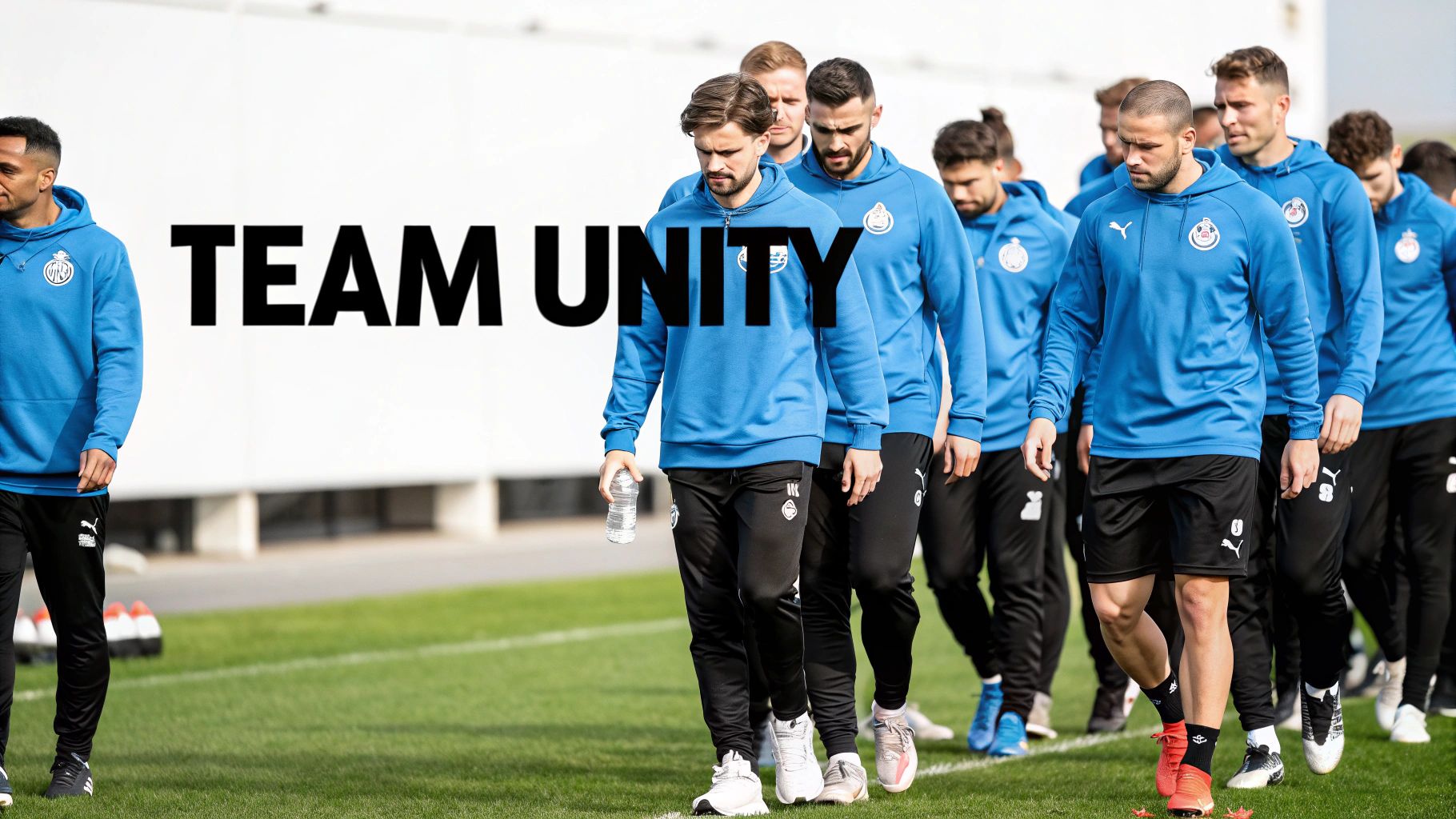
This practice, popularised by top-tier Premier League clubs, sends a clear message of solidarity and professionalism. When a team like Manchester United travels for an away fixture, their coordinated tracksuits create an imposing, unified front. Similarly, when Arsenal’s players appear for media duties in the same training wear, it projects an image of an organised and connected squad. This simple act cultivates pride and a sense of belonging, making every individual feel like an integral part of the collective.
How to Implement Unified Kit Days
Successfully organising these days requires a bit of planning but yields significant returns in team spirit.
- Schedule in Advance: Establish a clear schedule for 'kit days'. Announce them at the beginning of the month so players can prepare. Consistency is key.
- Offer Variety: Provide options beyond the main jersey. Include branded hoodies, training tops, and polo shirts from a quality retailer like SoccerWares to cater to different weather conditions and personal preferences.
- Add a Personal Touch: Elevate the experience by personalising gear. Adding player names and numbers fosters individual pride within the team structure. For a deeper dive into customisation options, you can explore the essentials of name printing on football shirts.
- Extend the Aesthetic: Encourage the use of smaller branded items like water bottles, beanies, or kit bags to complete the unified look and reinforce the team identity in subtle ways. For DIY customisation on accessories, a helpful guide on using iron-on print transfer paper can offer creative solutions for your team.
- Capture and Share: Document these moments. Post team photos on social media to build hype and showcase your squad's unity to supporters, which helps amplify team morale and public image.
2. Shared Performance Tracking Challenges
Harnessing technology for team building introduces a modern and engaging dynamic to football team bonding activities. Shared Performance Tracking Challenges use wearable GPS trackers and sports analytics to foster friendly competition centred on fitness and performance metrics. Players can track key performance indicators (KPIs) like total distance covered, sprint speed, and acceleration, competing individually or in smaller groups to achieve collective goals. This data-driven approach not only provides objective feedback but also strengthens team bonds through shared targets and mutual encouragement.
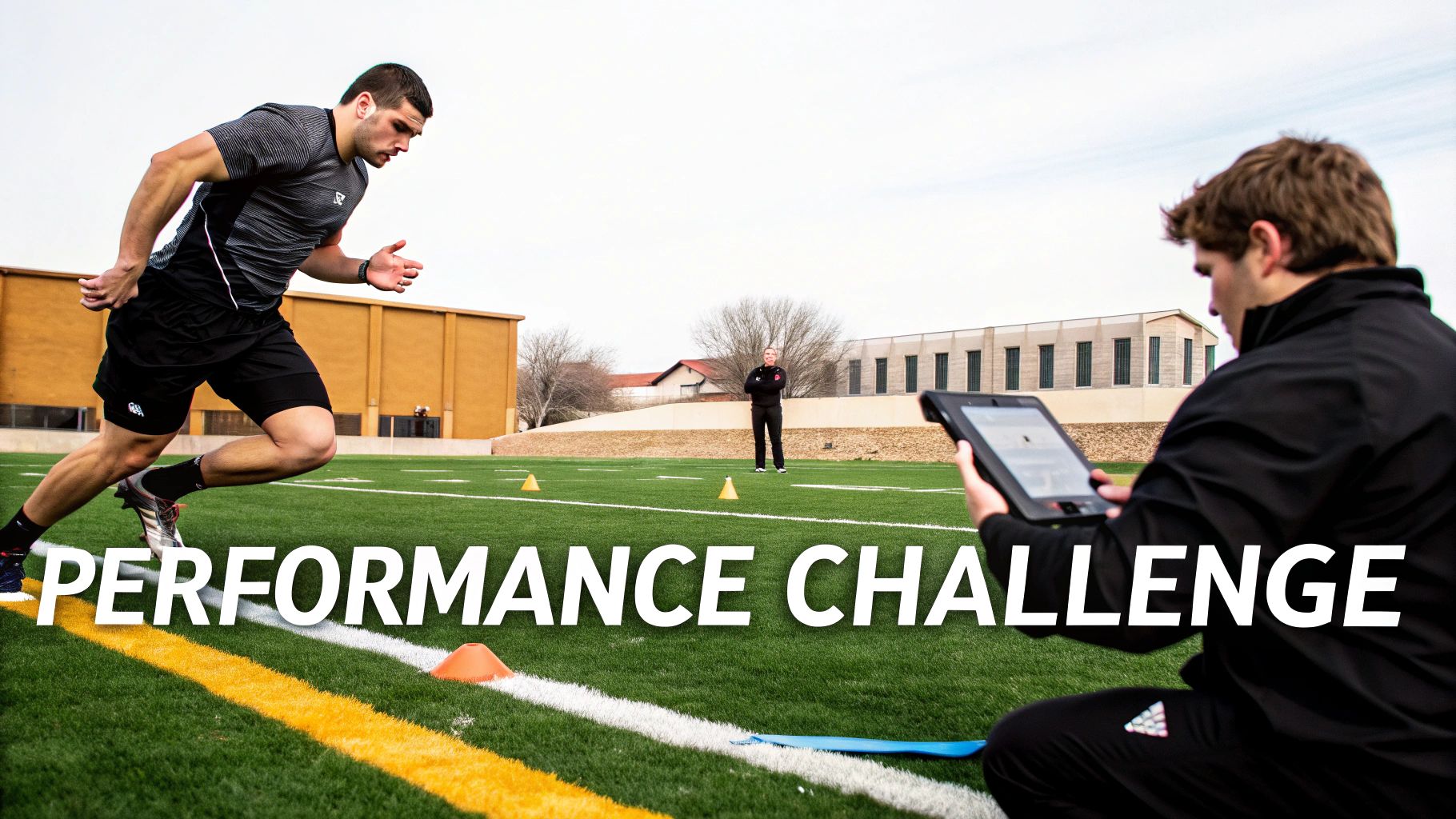
This method is heavily utilised by elite clubs like Liverpool and Manchester City, who integrate GPS data into everything from player development to tactical planning. The insights gained allow coaches to tailor training while players become more invested in their physical conditioning. By transforming individual metrics into a collective pursuit of excellence, these challenges create a culture of accountability and shared purpose, turning data points into a powerful catalyst for team cohesion.
How to Implement Performance Tracking Challenges
Organising data-driven challenges requires careful planning to ensure they remain motivational and inclusive for the entire squad.
- Set Clear and Realistic Targets: Before launching a challenge, establish achievable team and individual goals. Focus on incremental improvements, such as a 5% increase in team sprint distance over a month, rather than absolute rankings.
- Invest in Reliable Technology: Source quality GPS trackers from reputable sports-tech specialists. Consistency in data is crucial for fairness and accurate progress monitoring. Understanding the outputs is equally important; a detailed guide on how to read football GPS data can help coaches and players interpret the metrics correctly.
- Promote Transparency and Education: Share data openly with the team via leaderboards or weekly reports. Take the time to explain what each metric means and how it contributes to on-pitch success.
- Vary the Challenges: Keep engagement high by rotating the focus. One week could be about maximum speed, the next about total distance covered during small-sided games, and another on recovery rates. To effectively implement these challenges, teams can explore advanced player performance analytics for deeper insights.
- Celebrate All Forms of Progress: Acknowledge both top performers and those who show the most improvement. Celebrating collective milestones, like the entire team hitting a combined distance goal, reinforces the idea that everyone’s contribution matters.
3. Community Service Projects with Team Branding
Engaging in community service is a profound way to build character and perspective, making it one of the most meaningful football team bonding activities. By organising projects where the squad participates as a branded unit, you combine social responsibility with identity-building. Players working together on charitable initiatives, like youth coaching clinics or local clean-ups, all while wearing official club apparel, strengthens their connection beyond the pitch and builds a powerful, positive public image.
This approach is a cornerstone of professional football club philosophy. For instance, Liverpool FC’s LFC Foundation and Arsenal’s work with local youth centres demonstrate a commitment to social impact that unites players and supporters alike. When the team is seen contributing positively to society, it fosters a shared sense of pride and purpose that is difficult to replicate in a training environment. This shared experience creates a deeper respect among teammates and reinforces the club’s values.
How to Implement Community Service Projects
A well-organised community project can be transformative for team dynamics. Here's how to ensure it runs smoothly and delivers maximum impact.
- Partner with Local Charities: Collaborate with established local organisations to lend credibility and structure to your efforts. This ensures your team’s contribution is genuinely helpful.
- Align with Team Values: Choose activities that resonate with your club's ethos and player interests. This could range from environmental clean-ups to mentoring young athletes.
- Maintain Visual Unity: Ensure every player and staff member wears high-quality, branded apparel like tracksuits or training tops. This visual cohesion reinforces the message that they are working as one team.
- Schedule Strategically: Plan these events during the pre-season or on lighter training days to avoid disrupting match preparation and ensure players are fresh and engaged.
- Amplify Your Impact: Involve local media and share photos and videos on your club’s social media channels. Highlighting the team's positive actions can boost morale and community support.
- Gather Feedback: After the event, collect testimonials from players about their experience. Sharing these insights internally can reinforce the positive bonding outcomes and help plan future projects.
- Celebrate Achievements: Track and celebrate the impact your team has made, whether it's funds raised or hours volunteered. Recognising these collective achievements strengthens the team’s sense of accomplishment.
4. Custom Merchandise Design Workshops
Giving players a direct hand in creating their team's identity is one of the most powerful football team bonding activities available. Custom Merchandise Design Workshops are collaborative sessions where players and staff collectively design apparel, accessories, or training gear. This process transforms merchandise from something assigned to something owned, fostering a profound sense of psychological investment and shared accomplishment.
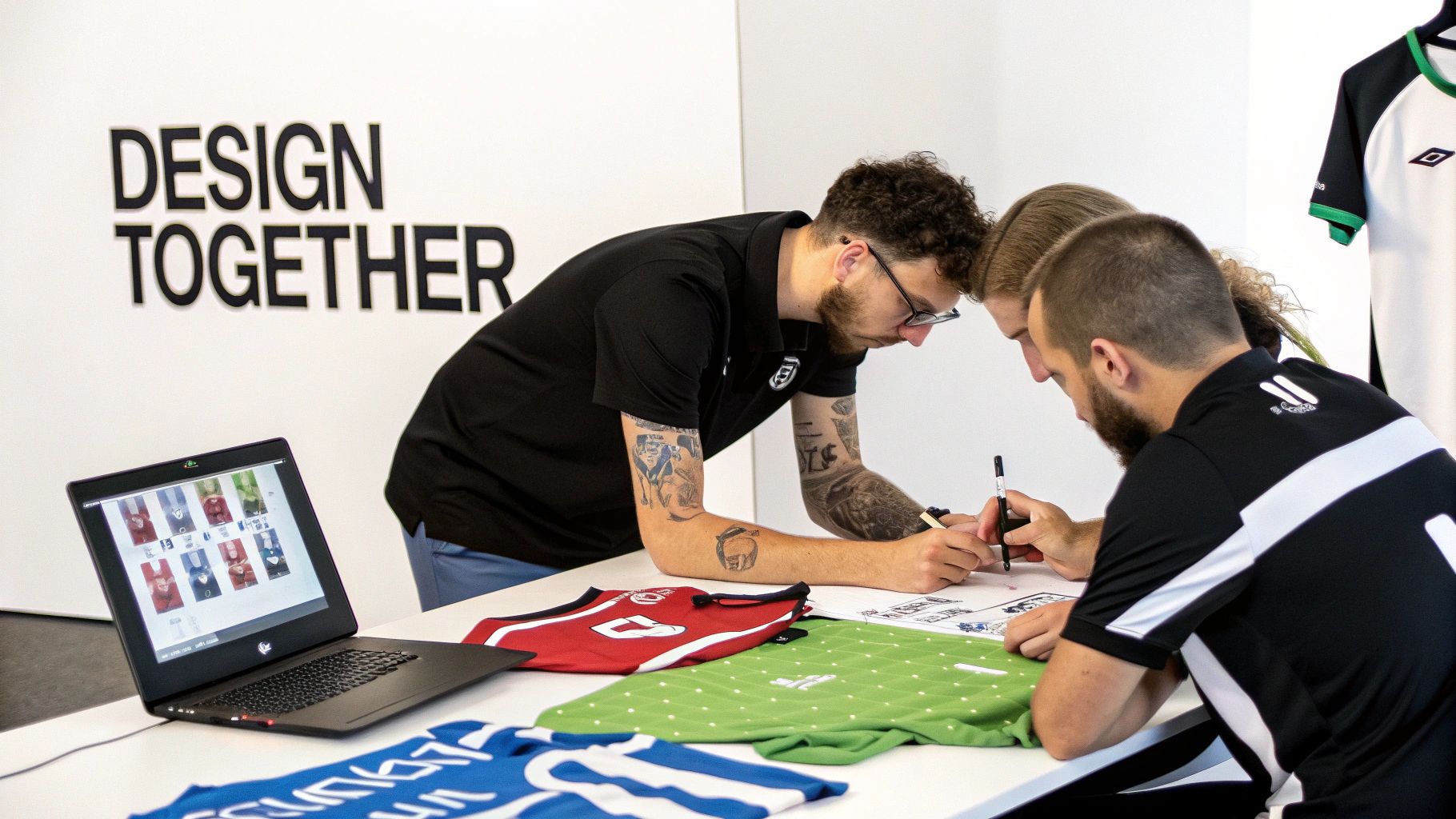
This creative exercise builds a unique connection, as players debate colours, logos, and slogans that represent their collective ethos. When a youth team designs its own pre-match warm-up top or a professional squad creates a limited-edition scarf for its supporters, the final product becomes a tangible symbol of their unity and hard work. The resulting gear is worn with a deeper sense of pride because every individual contributed to its creation, making it a true artefact of their team’s journey together.
How to Implement Custom Design Workshops
Organising a successful design workshop requires clear direction and creative freedom, turning ideas into a high-quality finished product.
- Establish Clear Parameters: Before brainstorming begins, define the project's scope. Set a clear budget, timeline, and any non-negotiable brand guidelines (e.g., club colours or crest placement) to provide a structured framework for creativity.
- Partner with Professionals: Collaborate with an experienced merchandise provider like SoccerWares who can offer expert design support, provide digital mock-ups, and guide you on material choices. This ensures the team's vision is translated into a professional-quality product.
- Use Digital Design Tools: Utilise online design platforms or software to help the team visualise concepts in real time. This allows for quick iterations and helps players see how different elements work together before committing to a final design.
- Facilitate Democratic Decisions: Implement a system for making choices, such as a vote or consensus-building exercise, to ensure every voice is heard and the final design truly represents the entire group.
- Incorporate Personalisation: Allow for individual expression within the collective design. A great way to do this is by offering customisation, like adding player names and numbers. To get this right, you can learn more about the best practices for name printing on football shirts.
- Launch with an Event: Unveil the final, custom-designed merchandise at a special team event or training session. This builds excitement and creates a memorable moment that reinforces the sense of collective achievement.
5. Equipment Investment and Training Facility Improvements
One of the most empowering football team bonding activities involves giving players a direct say in their training environment. By collectively deciding on new equipment purchases or facility upgrades, you foster a profound sense of shared ownership and mutual respect. This approach democratises spending, transforming a standard administrative task into a powerful exercise in collaboration, communication, and collective investment in the team's future.
This process allows players to vote on priorities, whether it's new training bibs, professional-grade rebounders, upgraded shin guards, or even improved changing room facilities. When the chosen items arrive, the shared celebration reinforces the connection between their collective voice and tangible team progress. This makes every player feel valued and heard, strengthening their commitment not just to the game but to the club itself.
How to Implement Collaborative Investment
Turning equipment procurement into a bonding exercise requires transparency and structure, but the payoff in morale and team unity is immense.
- Present Clear Options: Create a shortlist of potential purchases with detailed information. Compare different product features, benefits, and price points to facilitate an informed discussion.
- Establish a Democratic Process: Set up a clear and fair voting system, such as a simple ballot or a show of hands, to ensure every player's opinion is counted equally.
- Be Transparent with Budgets: Clearly communicate the available budget from the start. This manages expectations and encourages players to think strategically about what will provide the most value for the entire squad.
- Celebrate the Arrival: Organise a team "unboxing" event when the new equipment arrives. This creates a moment of shared excitement and formally marks the outcome of their collective decision.
- Collaborate on Care: Develop equipment care and maintenance guidelines together. Assigning shared responsibilities for looking after the new gear reinforces the principle of collective ownership. For an in-depth look at essential gear, explore this guide on the football training equipment every coach needs.
- Document and Share: Capture photos or videos of the team using the new equipment for the first time. Sharing these moments on social media or in a team group chat celebrates the successful collaboration and showcases the club's positive culture.
6. Team Podcast or Video Documentary Series
Creating a shared multimedia project is one of the most innovative and engaging football team bonding activities available today. A team podcast or video documentary series invites players to collaboratively capture their journey, showcasing team culture, individual personalities, and off-pitch moments. This modern approach to team building documents the squad's legacy while developing crucial communication and creative skills among players.
This idea draws inspiration from high-profile documentary series like All or Nothing, which grants fans unprecedented access to top clubs. By creating their own version, a team can foster a profound sense of shared purpose and pride. When players rotate hosting duties, interview teammates, or edit behind-the-scenes footage, they build trust and appreciate each other's unique stories and contributions. This process transforms a simple football team into a crew of storytellers, united by a common creative goal.
How to Implement a Team Media Project
Launching a successful podcast or video series requires organisation and a collaborative spirit, but the payoff in team unity is immense.
- Establish a Content Plan: Create a simple content calendar with rotating themes and hosts. Plan episodes around key matches, player spotlights, or "day in the life" features to maintain a consistent and engaging narrative.
- Invest in Basic Equipment: You don't need a Hollywood budget. Start with quality basics like a decent microphone, smartphone gimbals, and good lighting to give your content a professional feel.
- Empower Every Player: Ensure everyone gets a turn in a leading role, not just the team captain or top goalscorer. This inclusivity ensures all voices are heard and helps uncover hidden talents within the squad.
- Showcase Authentic Culture: Encourage players to share personal stories and genuine interactions. This authenticity is what truly builds connections, both within the team and with your audience of supporters.
- Integrate Team Branding: Feature players wearing official team merchandise naturally within the content. This subtly reinforces team identity and presents a unified, professional image to viewers.
- Engage with Your Audience: Share the content across social media platforms like YouTube and Instagram. Use polls, Q&A sessions, and comment replies to build a community around your team's journey, amplifying morale.
- Celebrate Milestones: Make a point to celebrate achievements together, whether it's hitting 10 episodes, reaching a subscriber goal, or capturing a memorable team win. This reinforces the project as a collective team success.
7. Peer Coaching and Skill Development Circles
Fostering a culture of shared growth is a powerful football team bonding activity that pays dividends on and off the pitch. Peer Coaching and Skill Development Circles create a structured environment where experienced players mentor younger or less-skilled teammates. This initiative reverses traditional coaching hierarchies, empowering senior players with leadership responsibilities and building profound, intergenerational bonds based on mutual respect and a shared investment in collective improvement.
This approach is highly effective in professional academies, where veterans are tasked with guiding the development of promising prospects. It reinforces the idea that every member, regardless of their status, is responsible for the team's progress. When a senior defender takes time to walk a youth player through positioning drills, it strengthens not only the mentee’s skills but also the mentor’s understanding of the game and their role as a leader. This process cultivates a supportive ecosystem where knowledge is passed down and everyone feels valued.
How to Implement Peer Coaching Circles
Organising these mentorship sessions requires thoughtful planning to ensure both mentors and mentees benefit fully from the experience.
- Establish Clear Objectives: Define specific skill goals for each coaching circle. This could be anything from improving crossing accuracy for wingers to enhancing tactical awareness for midfielders.
- Pair Players Thoughtfully: Match experienced players with learners based on position, skill needs, and personality compatibility to create a productive and positive relationship.
- Provide a Framework: Give mentors simple coaching guidelines or session plans. This ensures the advice is constructive and aligned with the head coach's overall philosophy, preventing conflicting instructions.
- Encourage Professionalism: Insist that all participants wear official team training apparel during these sessions. This reinforces a professional atmosphere and visually represents the club's unified commitment to development. For top-quality, customisable training wear, exploring the kits at SoccerWares can equip your team for success.
- Celebrate Progress: Acknowledge and celebrate peer coaching successes during team meetings or social events. Publicly recognising a mentor's contribution or a mentee's improvement reinforces the value of the programme and boosts morale.
8. Team Retreat and Wellness Days
Taking the team away from the familiar training ground for an organised off-site retreat is one of the most immersive football team bonding activities available. These dedicated getaways, whether a full day or an overnight stay, combine focused training with relaxation, personal development, and recreational fun. By removing players from the high-pressure environment of daily club life, these retreats create a unique space for authentic connections to form, strengthening the squad’s foundation from the inside out.
This approach is a staple for professional clubs, with Premier League sides often using pre-season retreats to integrate new signings and forge a resilient team culture before the campaign begins. International squads also use them to build unity quickly ahead of major tournaments. The blend of structured workshops, shared meals, and informal downtime helps break down hierarchies and encourages players and staff to interact on a more personal level, fostering trust that translates directly onto the pitch.
How to Implement Team Retreats
A successful retreat requires careful planning to balance productivity with genuine relaxation and connection.
- Strategic Scheduling: Plan the retreat during pre-season or a lighter training period to minimise disruption and maximise engagement. Avoid scheduling it immediately before a crucial match.
- Balance the Itinerary: Create a schedule that mixes structured sessions (training, mental health workshops) with ample free time. Unstructured periods are often where the most genuine bonding occurs.
- Prioritise Wellbeing: Incorporate dedicated wellness elements. This can include recovery sessions like massage or yoga, as well as workshops led by professionals on topics like mental resilience, nutrition, or sleep. Proper hydration is a key component, and you can explore more detailed football hydration tips to support player health.
- Choose the Right Venue: Select a facility that offers both quality training pitches and comfortable accommodation with recreational options. A change of scenery is crucial for a mental reset.
- Include Fun and Games: Organise light-hearted team challenges or recreational activities that are unrelated to football. This could be anything from go-karting to a simple board game tournament.
- Document and Debrief: Capture memories with photos and videos to share with the team afterwards. Conclude the retreat with a debrief session to discuss what was learned and survey players for feedback to improve future events.
8-Point Comparison of Football Team Bonding Activities
| Item | Implementation Complexity 🔄 | Resource Requirements ⚡ | Expected Outcomes 📊 | Ideal Use Cases 💡 | Key Advantages ⭐ | Primary Drawbacks |
|---|---|---|---|---|---|---|
| Unified Team Kit Days | Low 🔄 — simple scheduling | Low–Medium ⚡ — apparel purchase & inventory | Visible unity, morale boost, professional look 📊 | Training, travel, public appearances, merch promotion 💡 | Instant cohesion, stronger brand identity, merch revenue ⭐ | Cost for quality apparel; can feel superficial |
| Shared Performance Tracking Challenges | Medium–High 🔄 — tech setup & management | High ⚡ — GPS devices, apps, analytics support | Objective performance insights, increased engagement 📊 | Performance-focused teams, academies, data-driven programmes 💡 | Data-driven feedback, motivates improvement, coaching support ⭐ | Hardware cost, data skills required, risk of unhealthy competition |
| Community Service Projects with Team Branding | Medium 🔄 — coordination & partnerships | Low–Medium ⚡ — logistics, branded gear, media | Strong community relations, shared purpose, positive PR 📊 | CSR initiatives, youth outreach, local engagement events 💡 | Builds purpose, mentorship opportunities, PR value ⭐ | Scheduling logistics, needs proper planning to be meaningful |
| Custom Merchandise Design Workshops | Medium 🔄 — facilitated design process | Medium ⚡ — design tools, prototyping, production | Ownership of gear, increased wear, unique identity 📊 | Teams seeking bespoke identity, fan-engagement events 💡 | High psychological ownership, unique products, fan appeal ⭐ | Time-consuming, potential design compromise, higher per-unit cost |
| Equipment Investment & Facility Improvements | Medium 🔄 — voting, procurement process | Medium–High ⚡ — budget for equipment/upgrades | Better training environment, shared ownership, improved practice quality 📊 | Long-term development, clubs upgrading facilities, youth programmes 💡 | Tangible improvements, democratic buy-in, encourages maintenance ⭐ | Budget constraints, procurement delays, maintenance responsibility |
| Team Podcast / Video Documentary Series | Medium 🔄 — ongoing production schedule | Medium ⚡ — equipment, editing, time commitment | Amplified brand, fan engagement, documented culture 📊 | Audience growth, sponsor content, storytelling and recruitment 💡 | Showcases personalities, builds audience, develops communication skills ⭐ | Requires consistency, technical skills, privacy concerns |
| Peer Coaching & Skill Development Circles | Low–Medium 🔄 — organisation & matching | Low ⚡ — time, basic equipment, coaching frameworks | Accelerated skill growth, leadership development, stronger bonds 📊 | Youth academies, development squads, intergenerational mentoring 💡 | Builds leadership, personalised learning, empathy across squad ⭐ | Variable coaching quality, scheduling complexity, possible ego conflicts |
| Team Retreat & Wellness Days | High 🔄 — logistics & facilitation | High ⚡ — venue, facilitators, travel, accommodation | Deep bonding, improved wellbeing, long-term cohesion 📊 | Pre-season resets, wellbeing initiatives, major team milestones 💡 | Intensive relationship building, mental health focus, memorable experiences ⭐ | Significant cost and time, scheduling challenges, may not suit all players |
Integrating Bonding into Your Team's DNA
Building a championship-calibre team is about more than tactical prowess and physical conditioning. It's about forging a collective identity—a shared purpose that fuels every tackle, pass, and goal. The football team bonding activities we have explored are not just one-off events; they are strategic building blocks for creating a resilient, unified, and high-performing squad. They represent a fundamental shift from a group of individual athletes to a cohesive unit that fights for one another.
We have moved beyond the traditional team barbecue, exploring modern and impactful strategies that resonate with today's players. From the simple yet powerful visual statement of Unified Team Kit Days to the collaborative creativity of designing your own merchandise, each activity offers a unique pathway to stronger connections. The key takeaway is that effective team building must be woven into the very fabric of your team's culture, becoming as routine and essential as your pre-match warm-up.
From Activities to Culture: The Key Takeaways
The most successful teams understand that bonding is an ongoing process, not a box-ticking exercise. To truly integrate these concepts into your team’s DNA, focus on these core principles:
- Consistency is Crucial: A single team retreat is good, but a season-long schedule of varied activities is far better. Consistent effort reinforces the message that the team’s collective well-being is a top priority. A monthly Peer Coaching Circle or a bi-weekly Shared Performance Tracking Challenge creates sustained momentum.
- Player Ownership Matters: The best bonding initiatives are not dictated from the top down. Involve your players in the decision-making process. Let them vote on community service projects, lead skill development circles, or take the creative lead in a team documentary. This fosters a sense of ownership and ensures genuine buy-in.
- Purpose-Driven Bonding: Link your activities to your team’s values and goals. A Community Service Project isn't just about giving back; it's about building character and representing your club with pride. A Shared Performance Tracking Challenge isn't just about data; it’s about collective improvement and mutual accountability.
- Beyond the Pitch: True camaraderie is built when players connect as people, not just as teammates. Activities like a Team Podcast or a Wellness Retreat provide a space for personalities to shine, for vulnerabilities to be shared, and for trust to be forged in a low-pressure environment.
Your Actionable Next Steps
The journey to a stronger, more connected team begins now. Don't feel overwhelmed by the options; start by implementing one or two ideas that align best with your team's current needs, budget, and schedule.
- Conduct a Team Survey: Ask your players what they would find most engaging. Present them with a few options from this article and let them have a voice.
- Schedule Your First Initiative: Get something in the calendar immediately. A simple Unified Kit Day is a fantastic, low-effort starting point to build momentum.
- Assign Leadership Roles: Delegate responsibility for organising an activity to a small group of players. This not only lightens the load for coaching staff but also empowers your athletes.
Ultimately, investing in high-quality football team bonding activities is an investment in your on-pitch performance. A team that trusts each other communicates more effectively under pressure, supports one another through adversity, and celebrates successes with genuine shared joy. You are not just planning events; you are architecting a culture of unity and resilience that will be your greatest competitive advantage.
Ready to bring your team’s identity to life? From outfitting your squad for a Unified Kit Day to designing custom gear for your next big event, SoccerWares provides the high-quality apparel and equipment you need. Explore our customisation options and team bundles at SoccerWares to lay the foundation for a stronger, more connected team today.