

Proper football hydration is about more than just drinking water when you feel thirsty. It’s a strategic part of your training that keeps your physical and mental performance at its peak. Get it right, and it can be the secret weapon that keeps you sharp for the full 90 minutes.
Why Hydration Is Your Ultimate Competitive Edge
Don't think of hydration as simply quenching your thirst. On the football pitch, it's a non-negotiable performance tool. It directly impacts your speed, your accuracy, and how long you can last at full tilt.
Losing even a seemingly small amount of fluid—just 2% of your body weight—can seriously hinder your ability to perform. We're not just talking about feeling a bit tired; this leads to tangible, match-losing consequences.
That misplaced pass in the 80th minute? The 50/50 challenge you backed out of that you’d normally win? These moments of physical decline and mental fatigue are often a direct result of poor hydration. When your body is dehydrated, your blood volume actually decreases. This forces your heart to work much harder to pump oxygen to your muscles, resulting in a massive drop in stamina.
The Brain-Body Connection
Hydration’s impact goes beyond your muscles; it's absolutely critical for your brain. Dehydration can quickly lead to:
- Slower reaction times: That split-second delay in anticipating a play or pouncing on a loose ball.
- Impaired decision-making: Causing you to pick the wrong pass or completely misjudge a tackle.
- Reduced focus and concentration: Making it harder to track runners and stick to your tactical duties late in the game.
This is where a personalised hydration plan becomes your key to unlocking consistent, high-level performance. It turns hydration from a passive task into an active strategy for winning.
The first step is getting the right gear. A durable, reliable water bottle is essential for keeping track of your intake throughout the day, at training, and on match day. Staying properly hydrated is crucial for performance and safety in any demanding activity, not just football. You can learn more about Choosing the Right Water Containers for Performance to see why quality matters.
Proper hydration isn't just about avoiding cramp. It's about ensuring your brain and body are firing on all cylinders from the first whistle to the last, giving you a distinct advantage over less-prepared opponents.
Ultimately, mastering your fluid intake is as important as any passing drill. It directly fuels your physical output and is fundamental to building elite-level endurance. If you're serious about your game, understanding how to build stamina for football starts with what’s in your water bottle.
Creating Your Personalised Hydration Blueprint
"Drink more water" is common advice in sport, but it’s too generic to give you a real edge on the pitch. An effective hydration strategy isn’t a one-size-fits-all rule; it’s a plan built around you.
The key is to stop guessing and start measuring. The foundation of any solid plan is understanding your personal sweat rate—how much fluid you’re actually losing during training or a match. It sounds scientific, but it’s surprisingly simple to figure out with a quick weigh-in before and after a session. This measurement gives you the data you need to build a plan that works.
How To Calculate Your Sweat Rate
To get started, all you need is a reliable set of scales. The process is straightforward:
- Pre-Training Weigh-in: Just before you head out for training, weigh yourself with minimal clothing on. Make a note of this weight in kilograms (kg).
- Track Your Intake: Pay close attention to how much you drink during the session. If you finish a 750ml bottle, for example, note that down.
- Post-Training Weigh-in: As soon as the session is over, towel off any sweat and weigh yourself again in the same clothes. Jot down this second weight.
Now for some simple maths. Let’s take a 75kg player as an example. After a tough 90-minute session, he weighs in at 74.8kg and knows he drank 0.5 litres (500ml) of water.
The formula is:
(Pre-training weight - Post-training weight) + Fluid consumed = Total sweat loss.
So for our player: (75kg - 74.8kg) + 0.5kg = 0.7kg.
This means he lost 700ml of sweat. It’s that simple. This small fluid deficit is enough to trigger fatigue and cause a noticeable drop in skill.
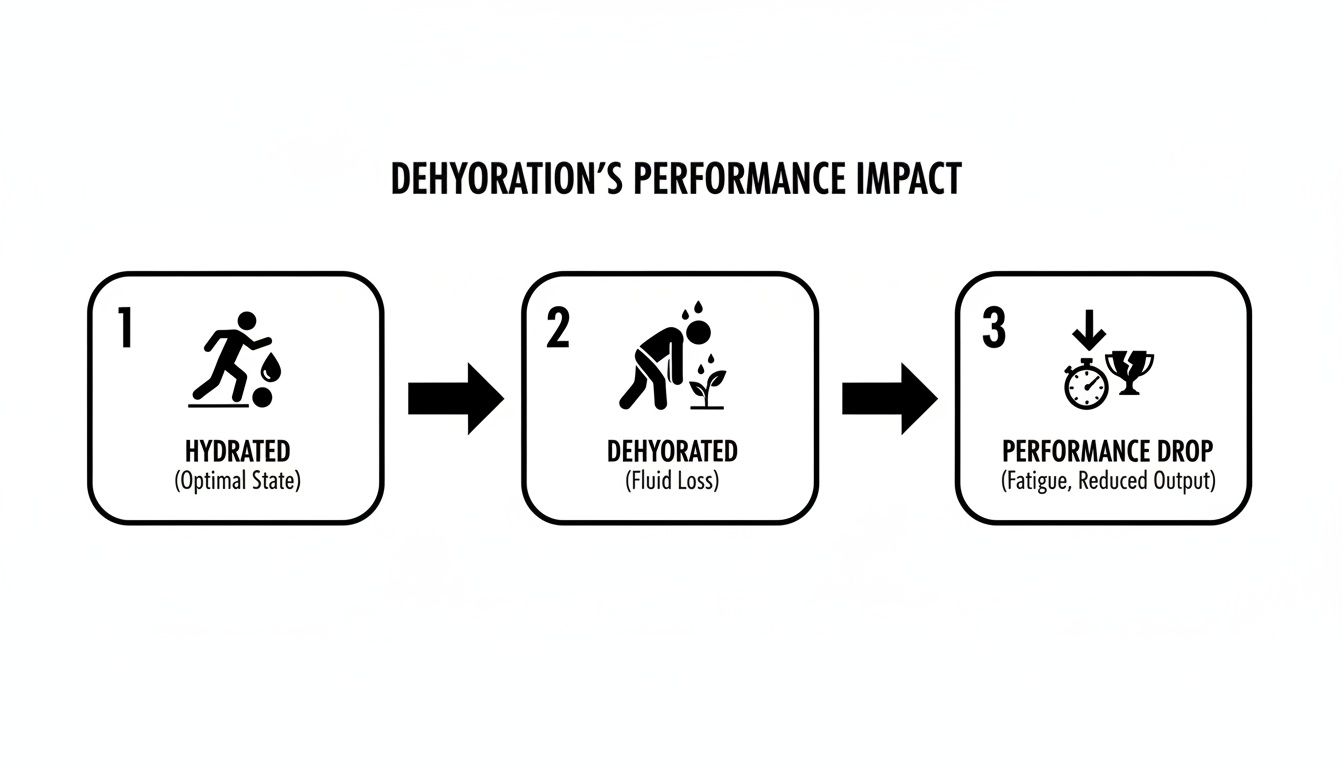
As you can see, it doesn’t take much fluid loss to have a direct, negative impact on your performance.
Your Go-To Daily Hydration Check
Calculating your sweat rate is brilliant for fine-tuning your match day plan, but you need a quicker check for day-to-day monitoring. The easiest and most reliable method is the urine colour test.
Aim for a pale straw or light yellow colour. If your urine is dark yellow or amber, that’s a clear signal you’re already dehydrated. It's time to get some fluids in, fast.
Making this a daily habit is crucial. It ensures you’re starting every training session and match from a good baseline, not trying to play catch-up when it’s already too late.
Turning Data Into Action
Once you know your sweat rate, you have a clear, actionable target. The 75kg player who lost 700ml now has a concrete goal: consume roughly that amount during similar sessions to stay properly hydrated. This data-driven approach is a cornerstone of elite performance and underpins many advanced soccer fitness workouts.
By combining your sweat rate calculations with simple daily urine checks, you create a powerful and personalised blueprint for peak performance. This isn't just about drinking water; it's about systematically managing your body's most important resource.
Mastering Your Pre-Match Hydration Ritual
Winning the hydration battle starts long before the first whistle. Arriving at the pitch properly hydrated is non-negotiable for any serious player, setting the foundation for your performance from kick-off to the final minute. A smart pre-match plan prevents you from starting at a disadvantage.
The secret isn’t downing a litre of water in the car on the way to the game. That’s a classic mistake. Instead, think of it as ‘hydration loading’—sipping fluids consistently in the 24 hours leading up to a match. This steady approach gives your body the time it needs to absorb and balance everything properly.
Your Pre-Match Hydration Timeline
Having a timeline takes the guesswork out of preparation. As a rule of thumb, aim to drink 5-7 ml of fluid per kilogram of body weight in the four hours before the game starts.
So, for a 75kg player, that works out to roughly 375-525ml. This means one standard-sized water bottle, sipped steadily, not drunk in one go.
But it's not just about water. For your body to hold onto that fluid, you need electrolytes—specifically, sodium. Including a sports drink or even adding a tiny pinch of salt to your water in these crucial hours helps your body retain the fluids you're drinking. It's a simple trick that ensures you’re not just flushing it straight through.
Don't wait until you're thirsty to start drinking on match day. By the time thirst kicks in, you're already dehydrated and a drop in performance is almost guaranteed.
This proactive approach is everything. A 2004 study found that many English Premier League players were turning up to training already mildly dehydrated. Their average fluid intake of 971ml was nowhere near their estimated sweat loss of 2033ml per session. They also lost an average of 5.8g of salt, which highlights how vital electrolyte replacement is. You can read more on that study here.
Preparing Your Kit and Your Body
Getting everything organised is part of the ritual. The night before, ensure your kit is packed and ready to go, including your water bottle. It's a small thing, but it reduces match-day stress and keeps your head in the game. Parents can be a massive help here, and our matchday checklist for football parents has some great tips for getting organised.
Your last drink before heading out should be around 200-300ml about an hour before kick-off. This final top-up gets your levels spot on without leaving you feeling bloated or heavy when you step onto the pitch. Nailing this ritual gives you the best possible chance to perform at your peak.
Smart Hydration Tactics for Match Day and Training
Staying on top of your game isn’t just about fitness; smart hydration is central to peak performance. You shouldn't wait until you’re thirsty – that’s too late. The real skill is having a proactive strategy to stay ahead of fluid loss from the first whistle to the last. The golden rule? Drink little and often.
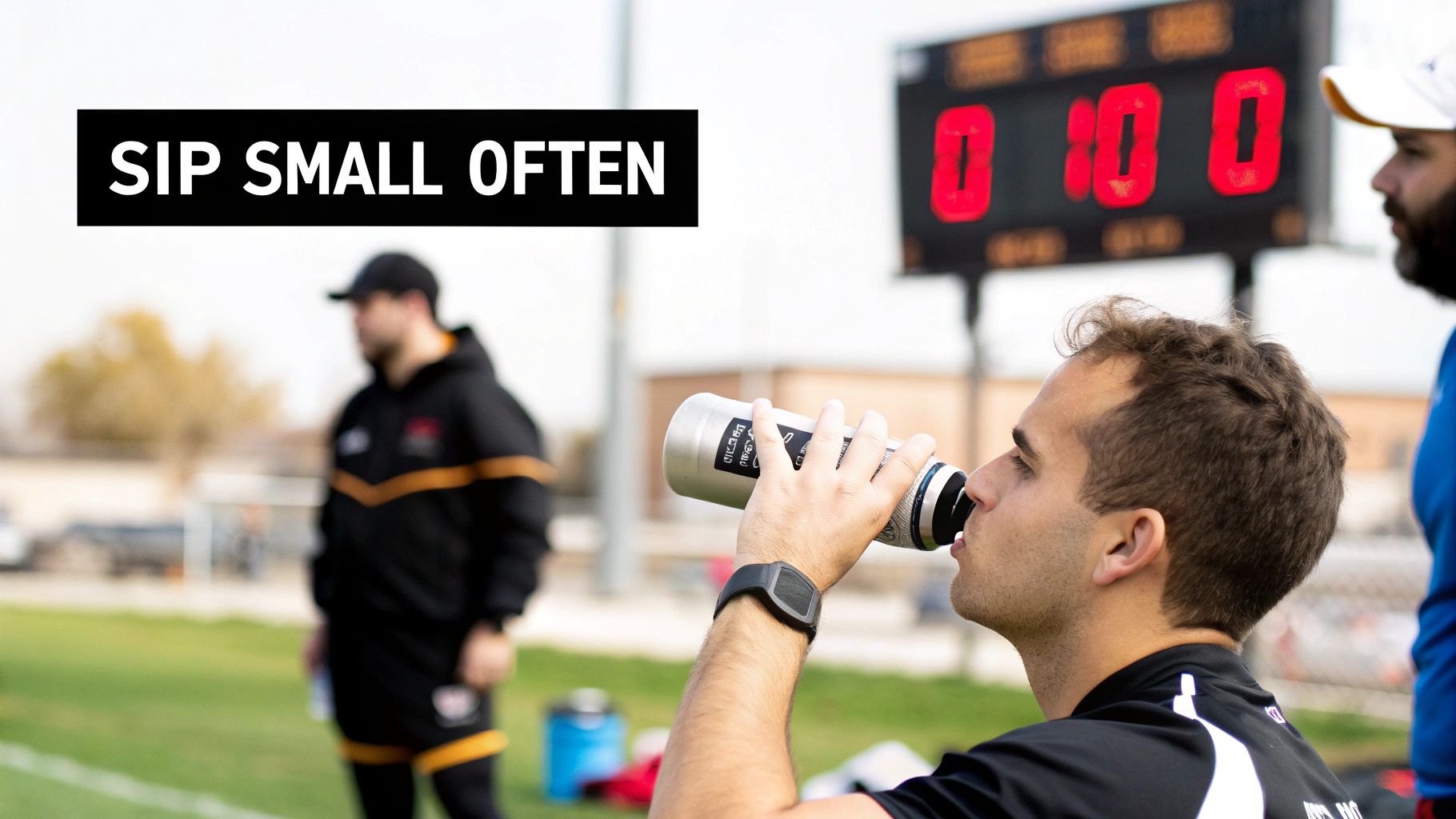
During a match or a tough training session, you should aim to sip 150-250 ml of fluid every 15-20 minutes. This small, regular intake is far more effective than drinking a huge bottle at half-time. It lets your body absorb the fluid properly without leaving you feeling bloated and sluggish.
It’s all about seizing every opportunity. Look for natural breaks in play to grab a quick sip.
- When the ball goes out for a throw-in or a goal kick.
- During an injury stoppage.
- At half-time, which is your main window to refuel properly.
Having your own, easily identifiable water bottle on the sideline is non-negotiable. It means you can grab it quickly without any confusion and stay on track with your intake. This simple bit of organisation makes a massive difference over 90 minutes.
Fuelling for the Full Ninety Minutes
For any session that goes over an hour, plain water often isn't enough. As you sweat, you’re not just losing water; you're also losing vital electrolytes like sodium and potassium. These minerals are essential for muscle function and keeping your body's fluid balance in check.
This is where sports drinks come into their own. A good one will provide three key things:
- Fluids: To replace what you’re sweating out.
- Electrolytes: To replenish lost minerals and help stave off cramp.
- Carbohydrates: To give your muscles and brain a fast-acting source of energy.
Those carbohydrates help keep your blood sugar levels stable, ensuring your energy stays up and your mind stays sharp, even deep into the second half. This is especially critical when you're grinding through a demanding football preseason training plan, where the sessions are often long and gruelling.
For athletes who need a more specialised approach, particularly during intense activity, looking into options like specialized hydration drinks can be a game-changer. These are formulated to provide rapid rehydration and a precise balance of electrolytes.
Adapting to Different Conditions
Your hydration needs are not static; they change based on playing conditions. A match on a hot, sunny afternoon demands a much more aggressive approach than a cool evening training session. Knowing how to adapt is key to performing consistently.
Plan your hydration around the conditions of the day. Heat and humidity will significantly increase your sweat rate, meaning you need to increase your fluid and electrolyte intake to compensate.
Here's a sample hydration plan for a 90-minute match. Think of it as a framework to build your own strategy around, adjusting for the specific conditions you're facing.
Sample In-Game Hydration Schedule
| Time | Action | Fluid Amount (Approx.) | Notes |
|---|---|---|---|
| Kick-off | Take a final few sips before the whistle. | 100-150 ml | Top up your levels one last time. |
| ~20 mins in | Grab your bottle during a stoppage in play. | 150-200 ml | Aim for a sports or electrolyte drink. |
| Half-Time | Your main refuelling window. Drink steadily. | 400-500 ml | Don't drink it all at once. Cold fluids can help cool you down. |
| ~65 mins in | Seize another break to take on fluid. | 150-200 ml | This is crucial for preventing a late-game energy drop. |
| ~80 mins in | Another quick sip during a throw-in or free kick. | 100-150 ml | Every little bit helps maintain focus and fight off fatigue. |
By tailoring your approach to the specific demands of each session, you turn hydration from a chore into a powerful performance tool that gives you an edge.
Your Post-Match Rehydration and Recovery Plan
The final whistle doesn't mean your job is done. In fact, it’s the start of one of the most important parts of your performance: recovery. What you do in the crucial two to four hours after a match directly impacts how quickly you bounce back, how sore you feel, and how ready you are for the next session.
Your first priority is aggressive rehydration.
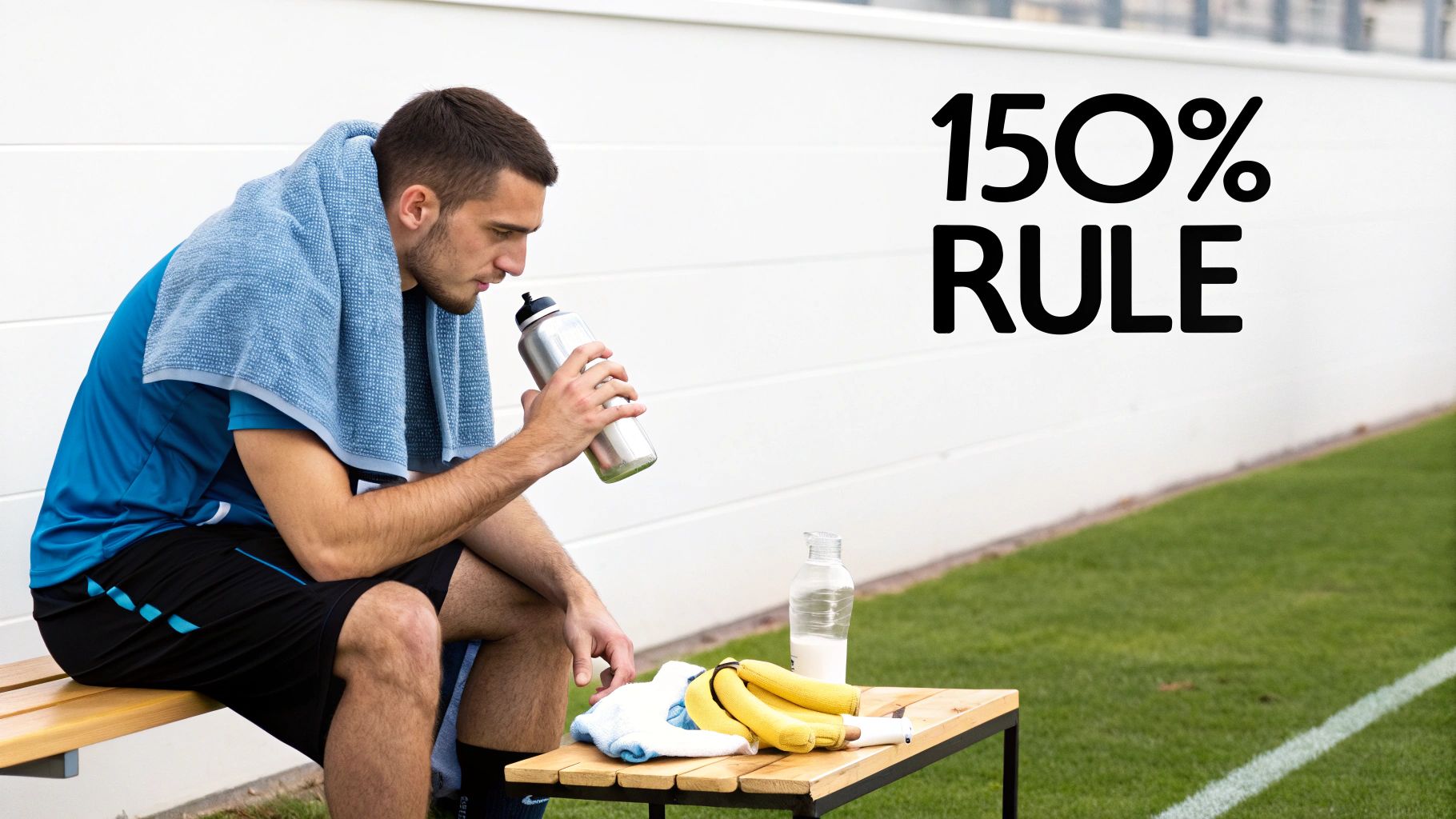
This is where you need to be more scientific than just drinking until you no longer feel thirsty. To restore what you’ve lost properly, you need a plan. The gold standard that professionals live by is the 150% rule—it’s simple but incredibly effective.
For every 1 kilogram of body weight you lose through sweat during a match, you must aim to consume 1.5 litres of fluid. This extra amount is essential to account for ongoing fluid losses through urine as your body processes the intake.
This isn't just about quenching your thirst; it's about giving your body exactly what it needs to kick-start the recovery process. If you weighed yourself before the match, a quick check on the scales afterwards gives you a precise target to hit, with no guesswork involved.
Choosing the Right Recovery Fluids
Just drinking plain water won't cut it here. After a tough match, your body is crying out for more than just H2O. Your post-match drink should be a triple threat: fluids, electrolytes (especially sodium), and a dose of carbohydrates.
- Electrolyte Drinks: These are your go-to for rapid rehydration. The sodium is the key ingredient here—it helps your body absorb and hold onto the fluid you're drinking, instead of just flushing it straight out.
- Chocolate Milk: This is close to the perfect recovery drink. You get a brilliant mix of carbs to restock your energy stores, protein to help your muscles repair, plus fluids and electrolytes all in one.
- Salty Snacks: Don't forget food. Pairing your drink with something like pretzels or a handful of salted nuts helps replace that lost sodium and gives your body another tool to improve fluid retention.
Making It a Habit
Consistency separates good players from great ones. This post-match ritual can’t be something you do now and then; it needs to be a non-negotiable part of your routine. It's the first and most important step in helping your muscles repair and reducing that dreaded next-day soreness.
Having the right gear makes tracking your intake much easier. A high-quality, reusable water bottle, like one of the durable stainless steel options from SoccerWares, lets you measure your consumption accurately. Fill it up with your recovery drink, and you have a clear, visible target to hit in that critical post-match window.
It’s a simple habit that ensures you’re not just guessing but actively managing your recovery like a professional.
Common Football Hydration Questions, Answered
Even with the best plan, questions always come up. Myths and half-truths about hydration are everywhere in football changing rooms. Let's tackle some of the most common ones so you can get your strategy dialled in.
What Are the First Signs of Dehydration During a Match?
Thirst is the obvious one, but you are often dehydrated before you even feel thirsty. The first red flags on the pitch are usually more subtle.
You might feel a strange sense of fatigue creeping in earlier than it should, or your mouth might feel dry and sticky. A little dizziness when you get up quickly from a challenge is another classic sign.
But the real giveaway is often a drop in skill. Suddenly, you're misplacing a simple 5-yard pass you could make in your sleep, or your first touch feels clumsy. That’s not just a bad day; that’s your body telling you it's running low on fluid. Muscle cramps are another big one – a clear signal that your hydration and electrolyte balance is off.
If you start to feel unusually hot, pay attention. That means your body is struggling to cool itself down, and you’re heading into a danger zone.
Is It Possible to Drink Too Much Water?
Yes, absolutely. It's rare in athletes, but it can happen. The condition is called hyponatremia, and it’s a serious issue where you drink so much plain water that you dilute the sodium levels in your blood to dangerously low levels.
This is precisely why downing bottle after bottle of plain water during a long, sweaty match isn't the solution.
The goal is planned, strategic fluid intake, not mindless consumption. Sticking to your personalised plan and replacing sweat losses with an electrolyte-containing drink is the safest and most effective approach for any session lasting over an hour.
It highlights the point: it’s about balance, not just volume. You have to replace what you lose, and that includes essential salts, not just water.
How Should My Hydration Plan Change for Hot vs Cold Weather?
A smart player knows that the environment changes everything. You can't use the same hydration plan for a pre-season friendly in August as you do for a freezing league match in December.
- Hot Weather: This one’s obvious. Your sweat rate will go through the roof. You need to be much more aggressive with your fluid and electrolyte intake to keep up. Start increasing your fluids a full 24 hours before kick-off and aim for the higher end of the recommended ranges during the game. For summer fixtures, this is non-negotiable.
- Cold Weather: This is where players get caught out. It's easy to think you don't need to drink as much when it's cold, but you lose a surprising amount of fluid just from the visible vapour in your breath. The real danger is that your thirst response is blunted in the cold, so you can become dehydrated without ever feeling thirsty. You have to stay disciplined and stick to your schedule, even when you don’t feel like you need a drink.
Get these details right, and you’ll be primed and ready for kick-off, no matter what the weather app says.
At SoccerWares, we believe that the right gear is a crucial part of any player's preparation. From training essentials to high-quality drinkware that helps you track your intake, we provide the tools you need to perform at your best. Explore our full collection and take your game to the next level at https://soccerwares.com.