

Proper football training clothing is far more than just a uniform—it's a critical piece of your performance equipment. The advanced gear once reserved for pros at clubs like Arsenal and Manchester United is now available to every player, and it has a direct impact on your comfort, safety, and ability on the pitch.
Why Your Training Clothing Is a Game Changer
Think of that standard cotton t-shirt you've trained in. It's a sponge. It soaks up sweat, gets heavy, clings to your skin, and becomes a real distraction. Modern football training clothing, on the other hand, acts like a high-tech ventilation system for your body.
This gear is engineered to work with you, not against you. It uses clever fabrics to manage your temperature, stop annoying distractions like chafing, and give you total freedom to move. When you aren't fighting your own kit, you can put all your focus into the game—whether that's making a last-ditch tackle or a lung-busting sprint down the wing. Investing in the right gear is a direct investment in your game.
Performance Benefits You Can Actually Feel
The right training attire delivers real, tangible advantages that will elevate your sessions. These aren't just for elite athletes; they're for anyone serious about improving.
- Better Comfort and Focus: Lightweight, breathable materials actively pull moisture away from your skin. This keeps you dry and gets rid of that sticky discomfort that completely breaks your concentration.
- Complete Freedom of Movement: A proper ergonomic fit means the clothing moves with you. No more feeling restricted when you stretch for a tackle or wind up for a shot. Your agility and power are never held back.
- Helping with Injury Prevention: Features like compression can give key muscle groups extra support. This helps with blood flow and reduces muscle fatigue, which in turn helps lower the risk of strains and pulls.
The demand for this kind of high-performance kit is exploding. In the United Kingdom, the football apparel market was valued at USD 204.92 million in 2024 and is expected to rocket to USD 283.42 million by 2033. For players browsing SoccerWares, picking the right kit is part of a bigger trend where performance is everything. You can explore more insights into the UK football apparel market to see how your gear choices are part of a national passion for the game.
This guide will walk you through everything you need to know, from picking the right fabrics to layering for different seasons and finding the best kit for your age and position. Think of it as your ultimate playbook for performance-enhancing gear.
Understanding the Science Behind Performance Fabrics
The difference between a good training session and a miserable one often comes down to what you’re wearing. It’s not just about club colours anymore; modern football kit is seriously smart stuff, packed with technology designed to work with your body, not against it.
Let's ditch the image of those old, heavy cotton shirts that soaked up sweat like a sponge. Today's performance wear is built from intelligent fabrics that keep you comfortable, dry, and focused. The main job of these materials is moisture management. Your old cotton top absorbs sweat and just holds onto it, getting heavier and colder. Performance fabrics are different—they act like a ventilation system, actively pulling sweat away from your skin so it can disappear into the air.
Decoding Moisture Wicking
"Moisture-wicking" isn't just a fancy marketing term; it's a real process that makes a massive difference on the pitch. Most modern kits are made from synthetic fibres like polyester, which are hydrophobic – a technical way of saying they hate water. When you start to sweat, the fabric’s unique structure pulls the moisture off your skin and spreads it across the outer surface of the garment to evaporate.
This simple bit of science gives you two huge advantages:
- Keeps You Dry and Light: By shifting sweat away, the fabric stops that horrible heavy, sticky feeling. You can move freely without feeling like your kit is weighing you down.
- Regulates Body Temperature: In hot weather, the evaporation process has a natural cooling effect. When it’s cold, it prevents a damp layer from chilling your skin, helping you stay warm.
The whole point of modern football gear is to keep your body in balance. It handles the heat and sweat so you can pour all your energy into your performance, not into fighting discomfort.
Compression and Thermal Technologies
Beyond just dealing with sweat, some fabrics offer other clever benefits. You’ll often see players wearing base layers with compression technology. Usually made with materials like spandex (or elastane), these garments apply a gentle, consistent pressure to your muscles. The idea is to improve blood flow, which helps get more oxygen to where it's needed, potentially cutting down on fatigue and even helping you recover a bit faster after a tough session.
Then there's the gear for those grim, cold winter nights. Thermal fabrics are a lifesaver. They’re designed with a soft, brushed inner layer that traps a tiny pocket of air against your skin. Your own body heat warms this air up, creating an invisible shield against the cold without you having to bulk up. You stay warm, but you can still move properly.
We've put together a quick-glance table to help break down the most common technologies you'll find in football training wear.
Football Training Fabric Technology at a Glance
| Fabric Technology | Primary Material | Key Benefit for Players | Ideal For |
|---|---|---|---|
| Moisture-Wicking | Polyester, Nylon | Pulls sweat away from the skin to keep you dry and light. | All-weather training, high-intensity drills. |
| Compression | Spandex (Elastane) | Improves blood flow, supports muscles, aids recovery. | Intense sessions, recovery, base layers. |
| Thermal Insulation | Fleece, Brushed Polyester | Traps body heat to provide warmth without adding bulk. | Cold weather, winter training, pre-match warm-ups. |
| Breathable Mesh | Polyester Mesh | Allows air to circulate freely for maximum ventilation. | Hot weather, areas prone to sweating (e.g., back panels). |
Understanding these basics helps you make much smarter choices when you're picking out your gear. It’s especially true for the smaller bits of kit where tech can make a surprising difference—you can learn more about this in our guide to the best football grip socks.
How to Layer Your Gear for All-Season Training
Let's be honest, training doesn't stop just because the weather turns nasty. The right gear is what separates a productive session from a miserable one, whether you're facing a frosty winter morning or a damp autumn evening. Mastering the art of layering is the secret weapon for year-round performance on the pitch.
The idea is brilliantly simple. Instead of throwing on one thick, bulky jacket, you use several thinner layers that work together. Each one has a job: managing sweat, trapping heat, and shielding you from the elements. This approach is all about flexibility—letting you add or remove a layer as you warm up or as the weather changes mid-session.
The gold standard is a three-layer system. Think of it as your personal climate control, with each piece playing a specific role to keep you ready for anything the British weather can throw at you.
This mind map breaks down the core fabric technologies that make layering so effective.
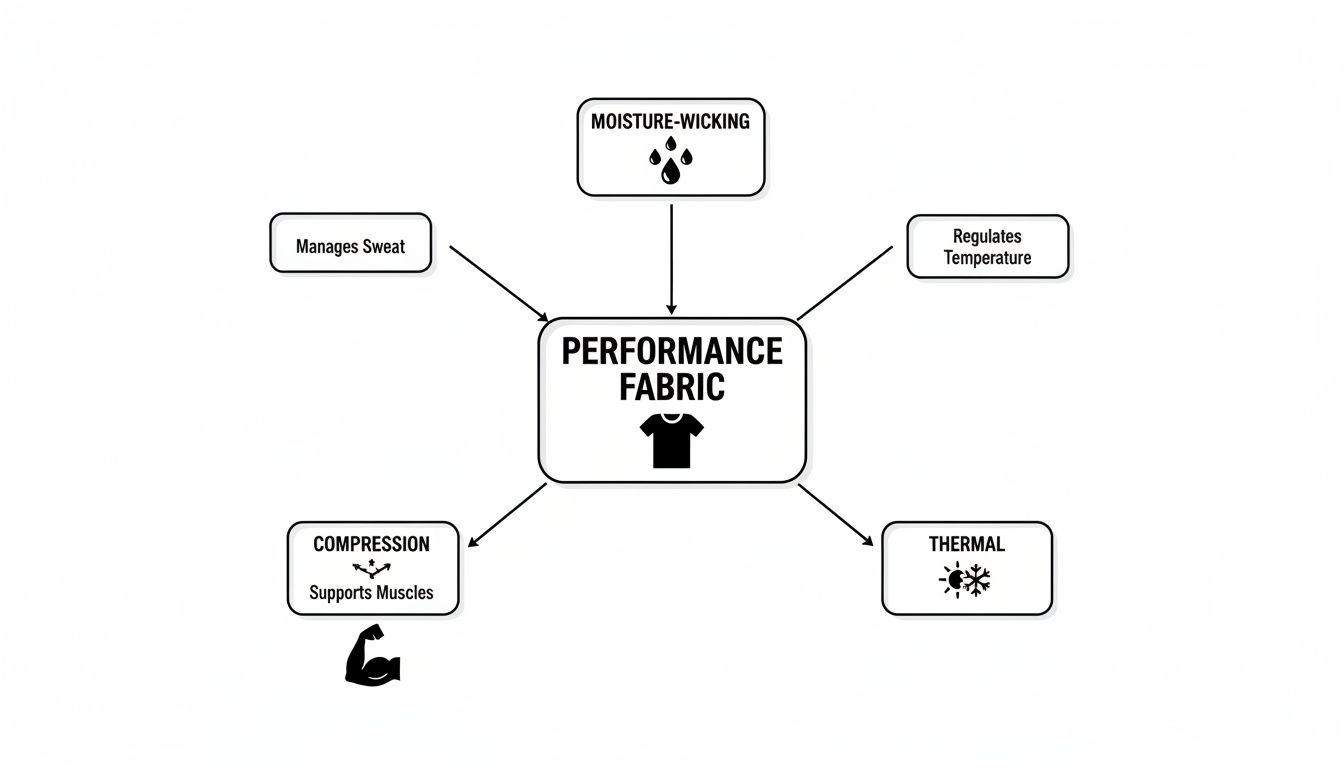
As you can see, it’s not just about piling on clothes. It’s about choosing fabrics with specific jobs—wicking moisture, providing warmth, or blocking wind—to manage how your body reacts to intense exercise.
The Three Essential Layers
Getting your head around what each layer does is the first step to building a truly all-season training kit.
- Base Layer (The Moisture Manager): This is the layer sitting right against your skin. Its number one job is to pull sweat away from your body, keeping you dry. A quality base layer, like a compression shirt or long-sleeve top, is non-negotiable for comfort.
- Mid-Layer (The Insulator): Worn over your base layer, this one is all about warmth. It traps a thin layer of your own body heat, creating an insulating pocket of air. Items like a fleece-lined top or a lightweight quarter-zip are perfect for this.
- Outer Layer (The Weather Shield): This is your defence against wind and rain. A lightweight, water-resistant jacket or gilet is ideal here. It blocks the elements without trapping sweat inside, letting the hard work of your base layer escape.
The real goal of layering isn’t just to stay warm—it’s to stay dry. A wet player gets cold fast, no matter how many layers they're wearing. A proper system always puts moisture management first.
Your Layering Strategy for Every Season
Naturally, you won't wear the same combination all year round. Your setup needs to adapt to the conditions.
Winter Training (Cold and Wet): For the depths of winter, you'll need all three layers. Start with a long-sleeve thermal base layer. Add a fleece-lined mid-layer for serious insulation, and top it off with a weather-resistant jacket to block out wind and rain. Don't forget training trousers or thermal leggings to keep your lower body protected.
Spring and Autumn Training (Mild and Unpredictable): These seasons are all about being adaptable. You'll probably only need two layers. A moisture-wicking base layer (either short or long-sleeve) combined with either a lightweight mid-layer or a protective outer shell, like a gilet, is often the perfect setup. This gives you the option to quickly shed a layer if the sun makes an appearance.
If you’re on the hunt for the right outer shell, have a look at our complete guide on choosing football rain jackets.
The demand for this kind of versatile, all-weather gear is huge. The UK sports apparel market, which includes all this essential training kit, hit USD 11.07 billion in 2024 and is expected to climb to USD 17.67 billion by 2032. This shows that more and more players are realising that the right kit is vital for training consistently.
Finding the Perfect Fit for Your Position and Play Style
It’s easy to get caught up in high-tech fabrics, but how your football training clothing fits is just as important. A poor fit is a massive distraction—it can restrict your movement, cause painful chafing, and pull your focus away from the ball. The right fit, on the other hand, feels like a second skin, working with your body to give you that extra edge.
But the ideal fit isn’t a one-size-fits-all solution. It comes down to your role on the pitch.
A speedy winger needs a streamlined, almost aerodynamic fit to cut down on drag during explosive sprints down the line. A goalkeeper, however, needs a slightly looser cut with padded elements for total, unrestricted freedom when diving, stretching, and commanding their box. Your position dictates your movement, and your gear has to support it without you even thinking about it.
Compression, Slim, or Regular Fit?
When you’re browsing for kit, you’ll generally come across three main types of fit. Each one offers something different, and knowing the purpose behind each style is key to building a training wardrobe that actually works for you.
- Compression Fit: This is your tightest option, designed to hug your muscles. It gives you excellent support, can help with muscle recovery, and is often used as a base layer to keep you warm and ready for action.
- Slim Fit: A more modern, athletic cut. It sits close to the body without feeling restrictive, offering a streamlined feel that’s a huge favourite with attacking players who value agility and speed.
- Regular Fit: This is the most traditional choice, offering the most room. It provides maximum breathability and comfort, often preferred by players in positions that don’t demand constant high-speed running, or simply by anyone who prefers a less constricting feel.
The ultimate test for any piece of kit? Your range of motion. When you’re trying something on, go through the movements you’d make on the pitch. Can you fully extend your arms, lift your knees high, and twist your torso without the fabric pulling or bunching up? If the answer is yes, you’ve found a winner.
This focus on a perfect fit goes beyond just your shirt and shorts. Just as the right top enhances your game, specialised gear like Currex Cleatpro insoles can completely change the fit and function of your boots, tailoring them to your specific role and play style.
For goalkeepers, finding gear that allows for explosive, split-second movements is non-negotiable. We dive deeper into selecting the right gear in our guide to a junior goalkeeper's kit, where fit and function are everything.
Building Your Essential Training Kit
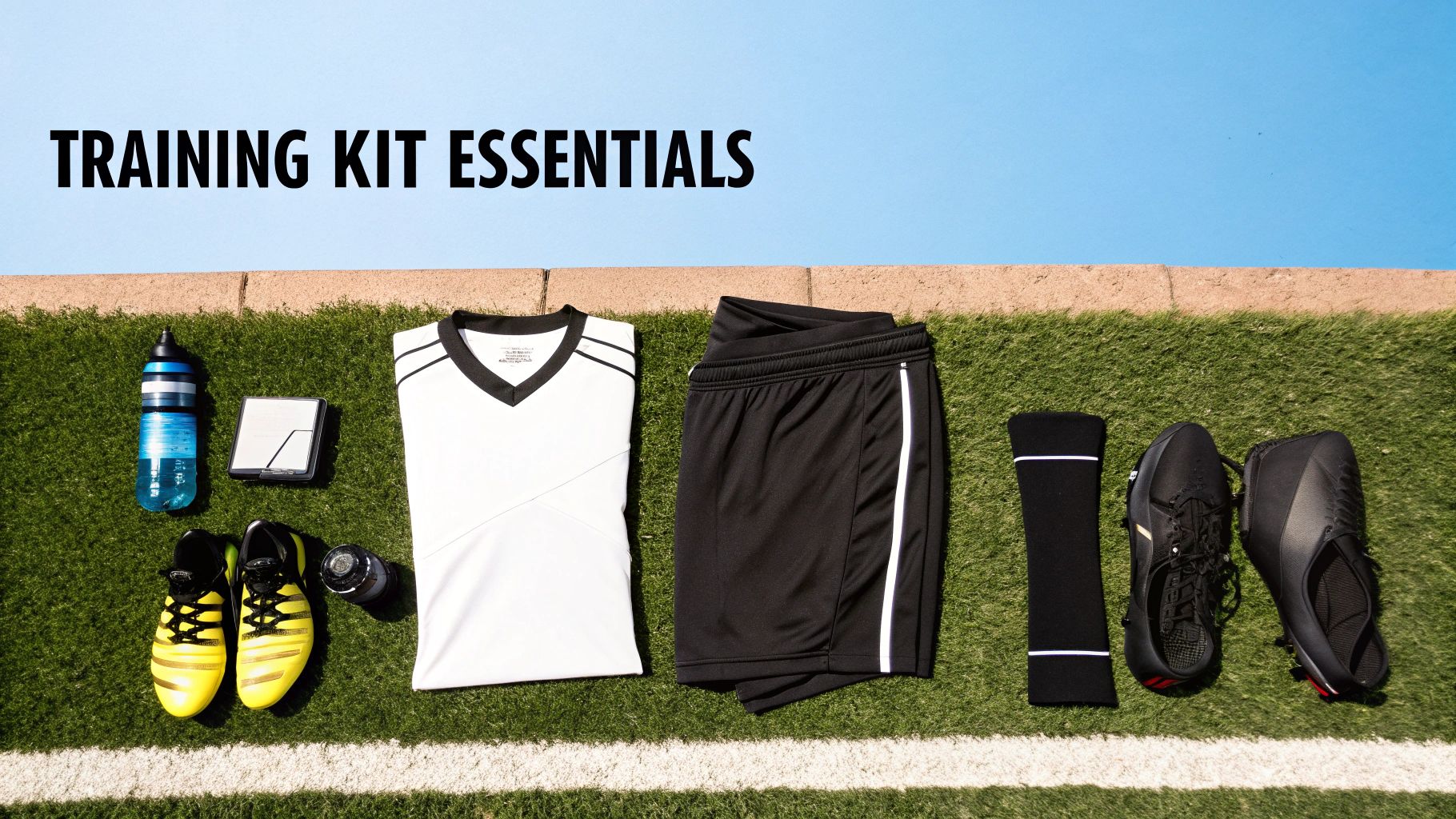
Putting together the right training kit is about more than just looking the part. It's about being ready for every drill, sprint, and surprise a tough session throws at you. The needs of a young academy prospect are a world away from those of a seasoned senior player, so let's break down the essentials for both.
Think of this as your checklist to make sure your training bag is always stocked with high-performance football training clothing and gear. When you have a solid foundation of kit you can rely on, you can step onto the pitch with total confidence, knowing you’re set up to perform.
For The Youth Academy Player
For younger footballers, it’s all about durability, comfort, and protection. Their kit has to stand up to the rough and tumble of constant training and inevitable growth spurts, all while keeping them comfortable and safe.
- Durable Training Top: Look for a high-quality, breathable shirt that can handle being thrown in the wash several times a week. Fabrics with good abrasion resistance are a smart move.
- Comfortable Shorts or Trousers: The fit should allow for a full range of movement without being baggy or restrictive. An elasticated waistband with a drawstring is a must for a secure, adjustable fit as they grow.
- Technical Football Socks: The right socks are genuinely crucial. They need decent cushioning in high-impact areas and must be made from moisture-wicking fabric to keep blisters at bay.
- Essential Protection: High-quality shin guards are completely non-negotiable. They're the first line of defence against tackles and stray kicks.
For The Senior Player
For senior players, the game changes. The focus shifts to advanced performance features, recovery, and getting the most out of every piece of kit. At this level, tiny advantages make a real difference.
- Performance Training Shirt: A lightweight, moisture-wicking top is standard issue. Look for extra features like mesh ventilation panels in high-heat zones to really help with temperature regulation.
- Technical Shorts or Trousers: Slim-fit shorts or tapered training trousers are the way to go, as they reduce drag and distraction. Fabric with four-way stretch is ideal for unrestricted movement during complex agility drills.
- Mid-Layer for Warm-Ups: A quarter-zip top is perfect for warming up and cooling down. It offers easy ventilation and a bit of insulation without adding any real bulk.
- Weather-Resistant Jacket: A lightweight, packable jacket is a must for the UK's unpredictable weather. It'll shield you from wind and light rain without making you overheat.
No matter the age or level, a complete training kit extends beyond just clothing. Proper preparation includes having all the necessary accessories on hand to support performance and safety from kick-off to the final whistle.
Beyond the clothes on your back, a well-stocked bag is the hallmark of a prepared player. This means thinking about other vital elements like high-performance hydration gear and the right protective equipment. For more tips, check out our detailed guide on assembling the ultimate football training kit.
How to Care for Your Gear to Make It Last
Think of quality football kit as an investment in your performance. You wouldn't leave a brand-new car out in the rain to rust, and the same logic applies here. The high-tech fabrics designed to wick sweat and keep you comfortable need a bit of special care to keep doing their job.
Just chucking them in the wash with your regular cotton tees can clog up the material and damage the very features that help you on the pitch. Don't worry, it's not complicated. Following a few simple rules will ensure your gear lasts for seasons, not just a few washes.
Washing and Drying Your Performance Kit
Most of the damage happens in the laundry room. Heat and harsh chemicals are the biggest enemies of performance fabrics, breaking down the fibres that make your kit stretchy and breathable.
To protect your gear, just follow these simple steps:
- Turn Everything Inside Out: This is a simple but effective trick. It protects logos and prints from getting scuffed up and exposes the sweatiest part of the garment directly to the water for a better clean.
- Wash on a Cold Cycle: Hot water is bad news for synthetic fibres. It can shrink them or damage their elasticity. A 30°C cycle is perfect.
- Use a Gentle Detergent: Go easy on the soap. Using too much can leave a residue that traps bacteria and odours over time.
If you remember one thing, make it this: never use fabric softener. It seems like a good idea, but it’s the fastest way to ruin your kit. It works by clogging the tiny pores in the fabric, which completely destroys its ability to pull sweat away from your skin.
Air-Dry for Longevity
Finally, whatever you do, steer clear of the tumble dryer. The intense heat is one of the quickest ways to wreck the elastic fibres, ruining the fit and function of your gear for good.
Instead, just hang your kit up to air-dry. Modern performance fabrics are designed to dry incredibly quickly anyway, so it won’t be long before your gear is fresh and ready for the next training session.
By following these simple care instructions, you'll make sure every piece of kit from SoccerWares keeps performing at its best, session after session.
Common Questions About Football Training Clothing
Even after breaking down all the details, there are always a few questions that pop up time and again. Think of this as a quick-fire round to tackle those last-minute queries and help you finalise your choices.
Replica Kits Versus Training Clothing
This is probably the most common one we hear: what’s the real difference?
At first glance, they can look pretty similar, but they’re built for completely different jobs. Replica kits are designed for the fans. They’re made for comfort, so you can wear your team’s colours in the stands or down the pub without feeling like you’re about to play 90 minutes.
On the other hand, football training clothing is engineered purely for the athlete. It’s all about performance. You’ll find a tighter, more athletic fit, fabrics that can take a beating, and technology designed to keep you cool and dry through the toughest drills.
Basically, wear a replica kit to show your support, but wear proper training gear to sharpen your skills.
How Often Should I Replace My Training Gear?
There’s no magic number here – it really boils down to three things: the quality of the gear, how often you’re training, and how you look after it.
A good rule of thumb is to swap out key items when you start seeing obvious signs of wear. Look for stretched elastic in the waistband, thinning fabric you can almost see through, or when it just doesn't feel like it's performing anymore (like a top that stays damp instead of wicking sweat).
For a player training two or three times a week, you’ll probably find that tops and shorts need replacing every one or two seasons to make sure you’re still getting the benefits you paid for.
Can I Just Use My Running Clothes for Football?
In a pinch, a good quality running top might do the job. But honestly, football-specific gear is always going to be the better choice.
Think about the demands of the game. Football clothing is made from tougher, more abrasion-resistant materials because it has to handle sliding, challenges, and the odd shirt-pull. The fit is also completely different; it’s cut to allow for kicking, tackling, and twisting in ways that generic gym wear just isn’t. You'll feel the difference in freedom of movement straight away.
Is Expensive Football Clothing Worth It?
Most of the time, yes. It's not just about paying for a big brand name. The top brands pour a massive amount of money into research and development, and you really do get what you pay for.
The result is gear that's more comfortable, way more durable, and far better at managing sweat and body temperature.
An investment in quality training clothing usually pays for itself. You’ll perform better on the pitch, and the garments themselves will last much longer, offering far better value over time than cheaper alternatives you’ll have to replace constantly.
Ready to build a kit that works as hard as you do? Check out the full range of high-performance gear and official fan apparel at SoccerWares.
Find everything you need to dominate your next session at SoccerWares.