

The popular advice is simple: choose stainless steel, because plastic is bad. That shortcut is easy to repeat and often wrong for the person standing on a touchline with a heavy kit bag, a young player who drops everything, or a supporter who only needs a bottle for occasional matchdays. A stainless steel water bottle can be the more dependable long-term choice, but only if you use it often enough to justify its manufacture, carry its extra weight comfortably, and clean it properly.
The useful comparison is less about declaring a universal winner and more about matching the bottle to your routine. Durability, insulation, taste, hygiene, cost, weight and end-of-life recycling all matter. The right answer for a full training schedule won't necessarily suit a child travelling to an away fixture or a fan looking for a lightweight gift.
Why This Comparison Actually Matters for Football Fans
The search usually starts with a familiar failure. A plastic bottle has picked up the smell of an old sports drink, cracked after being thrown into a kit bag, or become too warm during a long afternoon at the ground. Perhaps you're buying for a child who needs something that can survive a season, or you're trying to cut down on disposable bottles without purchasing an expensive item that sits unused in a cupboard.
Football adds practical pressure to the decision. Bottles are dropped on hard surfaces, squeezed into crowded bags, left beside muddy pitches and handled between drills. A player needs reliable hydration, while a parent needs a bottle that's straightforward to wash. A supporter may care more about portability, club identity and whether the bottle fits in a cup holder.
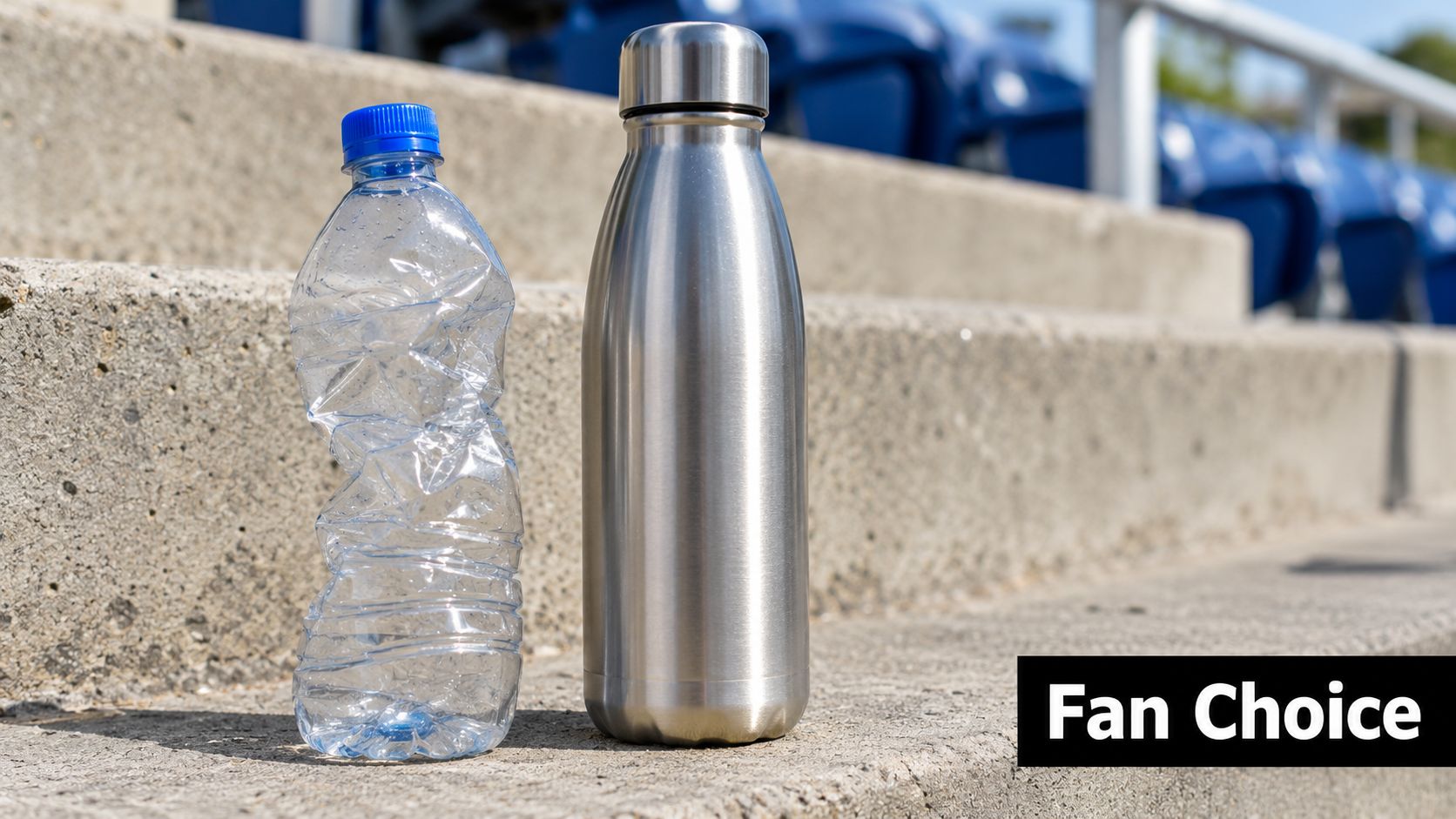
A practical guide to choosing a sports water bottle should therefore ask four questions:
- How often will you use it? Frequent use makes long service life more valuable.
- What will you carry? Water alone is easier to manage than sugary drinks or electrolyte mixes.
- Where will it sit? A sunny sideline and an indoor gym create different demands.
- Who will use it? Weight and grip matter more for younger players than for an adult supporter.
| Factor | Stainless steel | Plastic |
|---|---|---|
| Impact performance | Usually resists cracking, though it can dent | Light and flexible, but can crack or deform |
| Weight | Heavier, especially when insulated | Generally lighter |
| Temperature control | Double-wall designs can retain cold or heat | Basic bottles usually warm more quickly |
| Taste and odour | Often neutral when clean | Can absorb smells and flavours over time |
| Bottle-body microplastic concern | No polymer drinking surface | Polymer contact surface |
| End-of-life context | Steel has a strong UK household recycling record | Collection and recovery remain more difficult |
| Best fit | Frequent training, long use, temperature retention | Lightweight occasional use and younger users |
The rest of the decision comes down to trade-offs, not slogans.
Durability Differences Between Steel and Plastic Bottles
A bottle's first season tells you more than its packaging. Plastic handles weight well and feels forgiving in a child's hands, but repeated drops can create hairline cracks around the base, cap or threads. Those cracks may not leak immediately. They often appear after the bottle has been squeezed, knocked against boots or carried through several wet training sessions.
UV exposure creates another problem for plastic. A bottle left beside a sunny pitch can become brittle or discoloured over time, depending on its material and finish. Plastic may also retain the odour of isotonic drinks, especially when the bottle has narrow internal channels that are difficult to scrub.
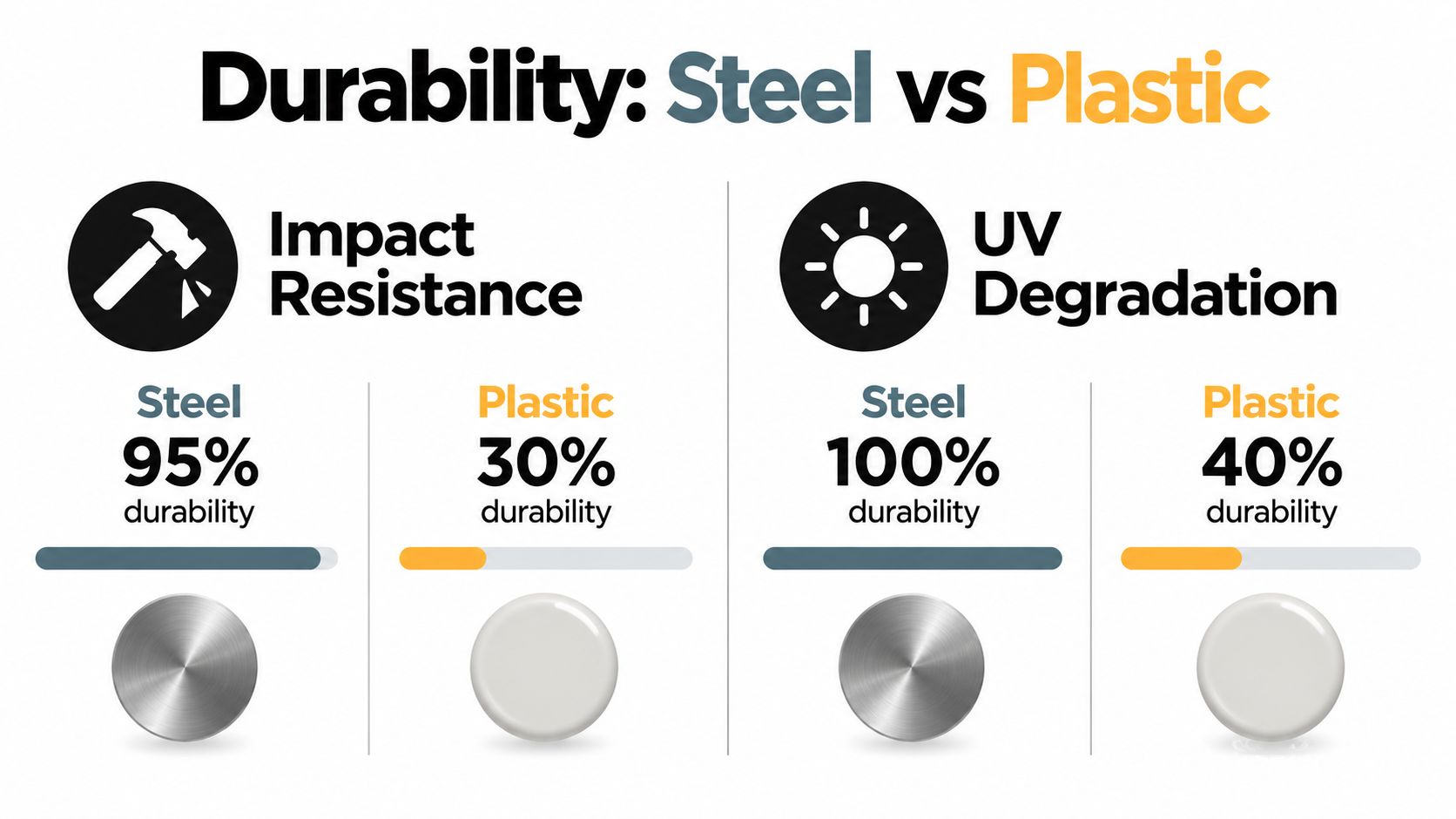
The percentages shown in the visual are illustrative comparison scores, not laboratory measurements. In practical use, stainless steel's advantage is that a hard impact is more likely to leave a dent than a structural split. That doesn't make steel indestructible. A badly dented bottle can become unstable, a cap can fail, and a damaged powder coating can make the exterior look tired.
What usually fails first
Plastic often loses the battle through gradual degradation. The bottle still looks usable, but the smell remains after washing, the cap no longer seals, or a crack appears where the wall flexes repeatedly. Those are replacement signals, particularly if the bottle leaks into a kit bag.
Steel tends to fail through accessories rather than the main body. The lid seal, straw, carry loop and thread deserve as much attention as the metal. A simple screw-top design has fewer small parts than a complex sports nozzle, which usually means fewer places for grit and residue to collect.
Practical rule: If the bottle will spend every weekend loose in a football bag, prioritise a robust body and a lid you can fully dismantle and clean.
For teams ordering branded drinkware, consistency matters too. A set of custom team water bottles is only useful if players can identify their own bottles and staff can keep the lids, seals and cleaning routine organised. Steel is a sound choice for repeated team use, but a lighter plastic option may suit very young players who struggle with heavier insulated designs.
How Insulation Performance Impacts Matchday Hydration
A basic plastic bottle mostly gives you a container. It doesn't provide much protection from the surrounding temperature, so cold water gradually approaches the conditions around it. On a mild training evening, that may not matter. During a long summer tournament, it can make the difference between a refreshing drink and water nobody wants to finish.
Double-wall vacuum insulation changes the experience. It creates a barrier between the drink and the outside air, helping cold water stay cold for hours and keeping the exterior dry. That lack of condensation matters when the bottle sits beside a phone, match programme or goalkeeper gloves.
Choose insulation for the routine, not the label
A player who drinks between warm-up, halves and recovery will appreciate cold water throughout a long session. A parent carrying drinks for training gets similar value when the bottle goes into the car early and remains there until the final whistle. A fan in the stands may prefer insulation if they expect to spend hours at the stadium, but not if they need to walk a long distance with a full bottle.
The trade-off is weight. Stainless steel is already heavier than plastic, and a vacuum-insulated version adds more material. A large bottle also takes up space, so check the holder, bag pocket and cup holder before buying.
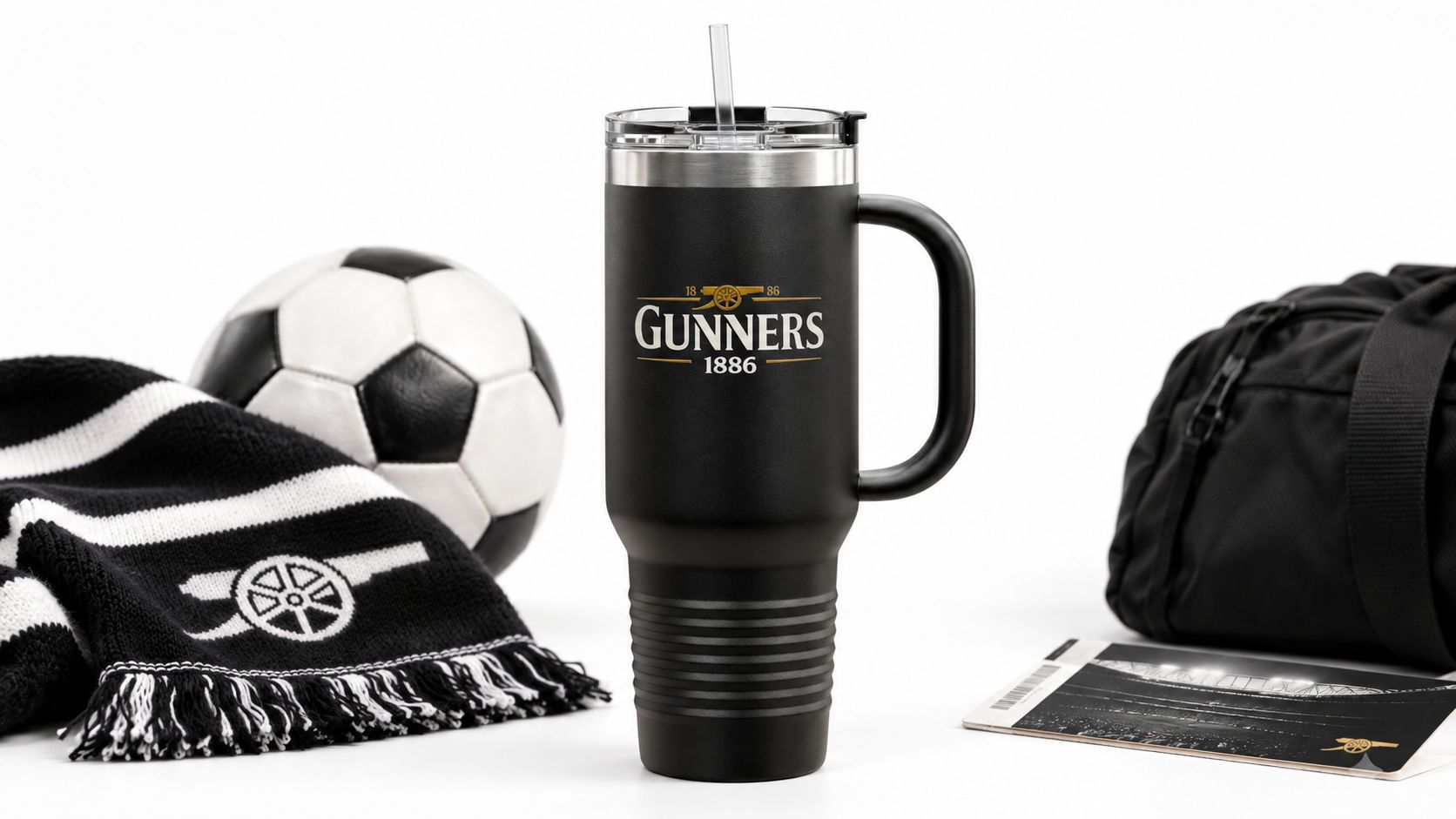
The Arsenal 1886 Insulated 40oz Travel Mug has a 40oz stainless steel body, double-wall insulation, an ergonomic handle and a push-on lid with straw. Its listed dimensions are 9.84 inches in height, 5.79 inches wide including the handle, and 4.02 inches in diameter. The product information also specifies a powder-coated finish, a UV-DTF printed design, eight colour options, BPA-free materials and hand-wash guidance, with dishwasher cleaning listed for the top rack.
Some matchday accessories solve a different problem. If you're keeping a can or cup comfortable in your hand rather than trying to retain a bottle's temperature for hours, guidance on fast turnaround koozie printing may be more relevant for an event or supporter group.
For a broader look at choosing an insulated design, SoccerWares also covers insulated sports bottles. The sensible test is simple: if your bottle normally gets consumed quickly, insulation may be unnecessary; if it sits through a full session, it earns its extra bulk.
Understanding BPA, Microplastics, and Health Safety Concerns
“Plastic” describes a wide range of bottles, so one health verdict cannot cover them all. An older bottle, a modern reusable design and a food-grade copolyester bottle may differ in formulation, durability and care requirements. BPA-free labelling is useful, but it does not answer every question about heat, cleaning, wear or particle release.
The relevant issue is the material touching the drink. Stainless steel has no polymer drinking surface, so the bottle body does not present the same plastic surface that can shed particles. Reusable plastic bottles have a polymer contact surface that can wear through brushing, handling and heat. For a closer look at whether stainless steel water bottles are safe, check the body, lid and finish rather than relying on the material name alone.
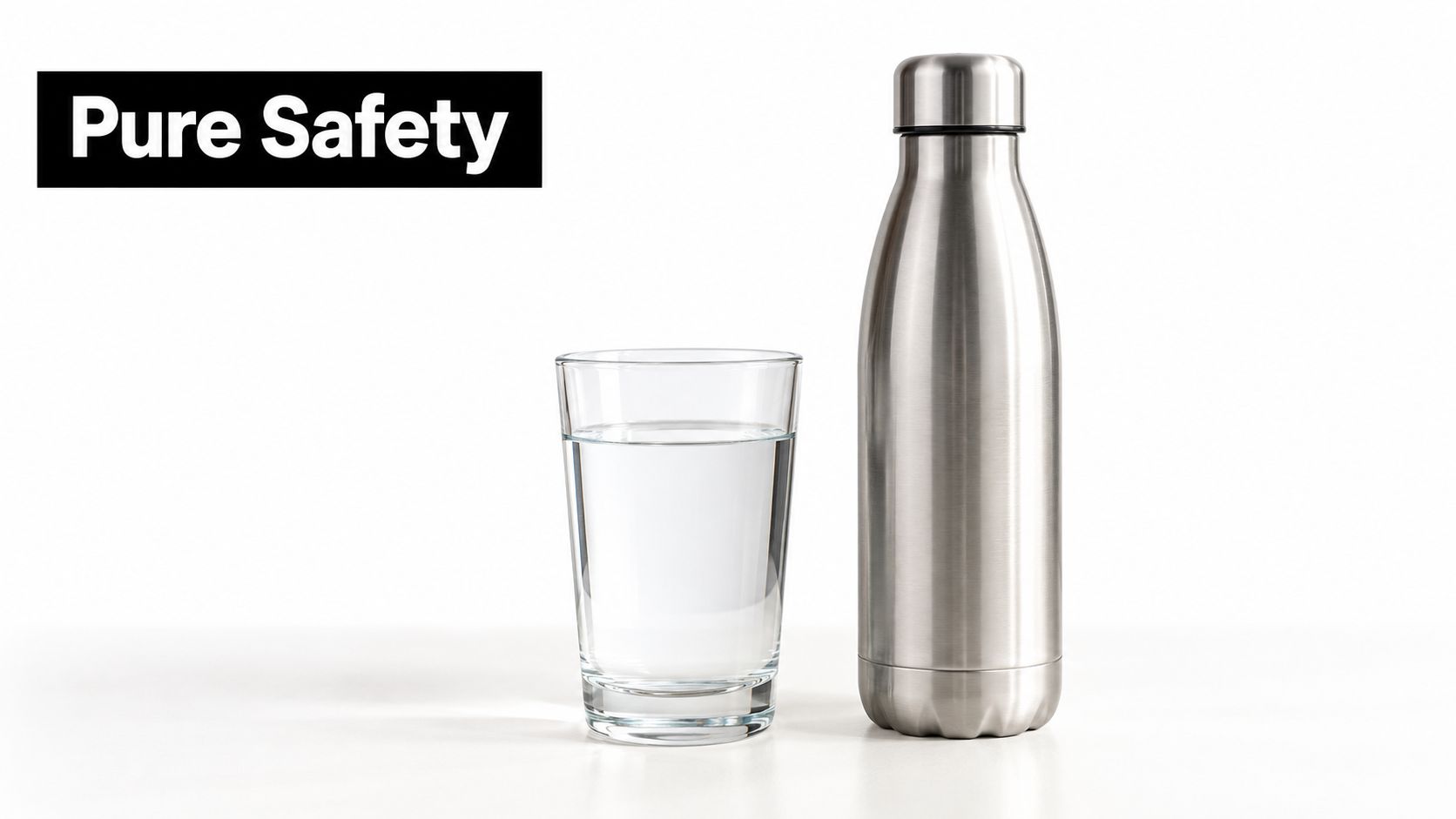
UK-focused guidance reports that microplastic shedding from plastic containers can increase with heating and repeated handling. Stainless steel avoids that particular mechanism because its drinking surface contains no polymer. It still needs inspection: the lid, seal, straw, coating and internal finish can all affect safe use.
A UK study of tap and bottled water found microplastics in all sampled drinking water, including fragments and fibres. Polypropylene and polyethylene were among the most abundant polymer types, according to the study published through the University of Birmingham research repository. The result does not show that a particular reusable bottle caused those particles. It does explain why some users prefer a steel body, while others accept plastic for its lower weight and cost.
Sensible safety checks
- Inspect the inside: Replace a bottle if its lining is peeling, heavily scratched or damaged.
- Control heat: Keep plastic away from hot conditions and follow the manufacturer's instructions.
- Clean the lid: Wash the straw, gasket and nozzle as carefully as the main chamber.
- Read material guidance: Information on non toxic water bottle materials helps shoppers compare labels without treating every plastic product as identical.
The practical choice is clear. Steel reduces concern about particles from the bottle body, while a well-made plastic bottle can still make sense when low weight and lower cost matter. Cleaning and replacing damaged parts matter for both.
The Hidden Taste Factor Most Guides Ignore
Taste often decides whether a bottle becomes part of your kit or disappears into a cupboard. Water can pick up a faint synthetic note from plastic, particularly after the bottle has held sports drinks, juice or flavoured electrolyte mixes. The odour may remain in the lid and seal even after the main chamber looks clean.
Stainless steel usually keeps a more neutral profile, especially when the inside is smooth and undamaged. Some cheaper or poorly finished bottles can give water a metallic aftertaste, but that isn't an unavoidable property of every steel bottle. Residue, detergent and a damp lid can create stronger flavour problems than the body material itself.
Acidic drinks expose the difference
Sports drinks are more demanding than plain water. Their acids, sweeteners and flavourings can cling to seals and textured surfaces, and repeated washing can leave behind traces if the cap has narrow channels. Plastic's ability to absorb odours makes this particularly frustrating. A bottle can taste fine with water in the morning and still carry yesterday's citrus drink by afternoon.
For either material, use a simple routine:
- Rinse promptly: Don't let a sugary drink sit in the bottle after training.
- Wash the complete lid: Remove the seal and straw if the design allows it.
- Dry open: Air needs to reach the chamber and cap before storage.
- Separate uses: If one bottle is for water and another for sports drinks, flavour transfer becomes less likely.
A metallic taste that appears suddenly may indicate a damaged finish or residue rather than a normal feature. A persistent plastic smell after thorough cleaning is a stronger reason to replace the bottle, particularly if the wall has become cloudy, scratched or brittle.
For football families, the best material is the one that supports a routine you will sustain. Stainless steel gives you a useful head start on neutral taste, but it still needs a clean lid and a dry storage method.
Environmental Impact and the Real Break-Even Question
The greener choice isn't automatically the bottle made from the most durable material. A stainless steel bottle has a higher upfront manufacturing footprint than a lightweight plastic alternative, particularly when it includes double-wall insulation. If you buy one, use it occasionally and replace it with another design soon afterwards, the environmental case becomes much weaker.
UK waste data provides a useful material contrast. The government's 2024 statistics recorded a household-material recycling rate of 85.5% for steel, while the rate for all household waste was 44.5% in the same release, as shown in the UK statistics on waste. A separate UK source reports that 61% of all plastic bottles are collected for recycling, with PET drinks bottles performing better at 75%, according to the British Plastics Federation evidence.
The wider plastic system remains high volume. Parliament's Environment, Food and Rural Affairs Committee reported that the UK uses about 13 billion plastic bottles each year, with 7.5 billion recycled and roughly 5.5 billion not recovered through household recycling. The same evidence said the recycling rate had plateaued at around 57 to 58% since 2012, despite household plastic-bottle recycling beginning in 2001 when the rate was about 1%, as documented in the committee's plastic bottles evidence.
Count real uses, not hopeful uses
Independent UK guidance places the environmental break-even point for non-insulated reusable bottles at 10 to 30 uses. Insulated stainless steel bottles may require 30 to 90 uses because their production footprint is higher, according to KeepCup's reusable bottle guidance.
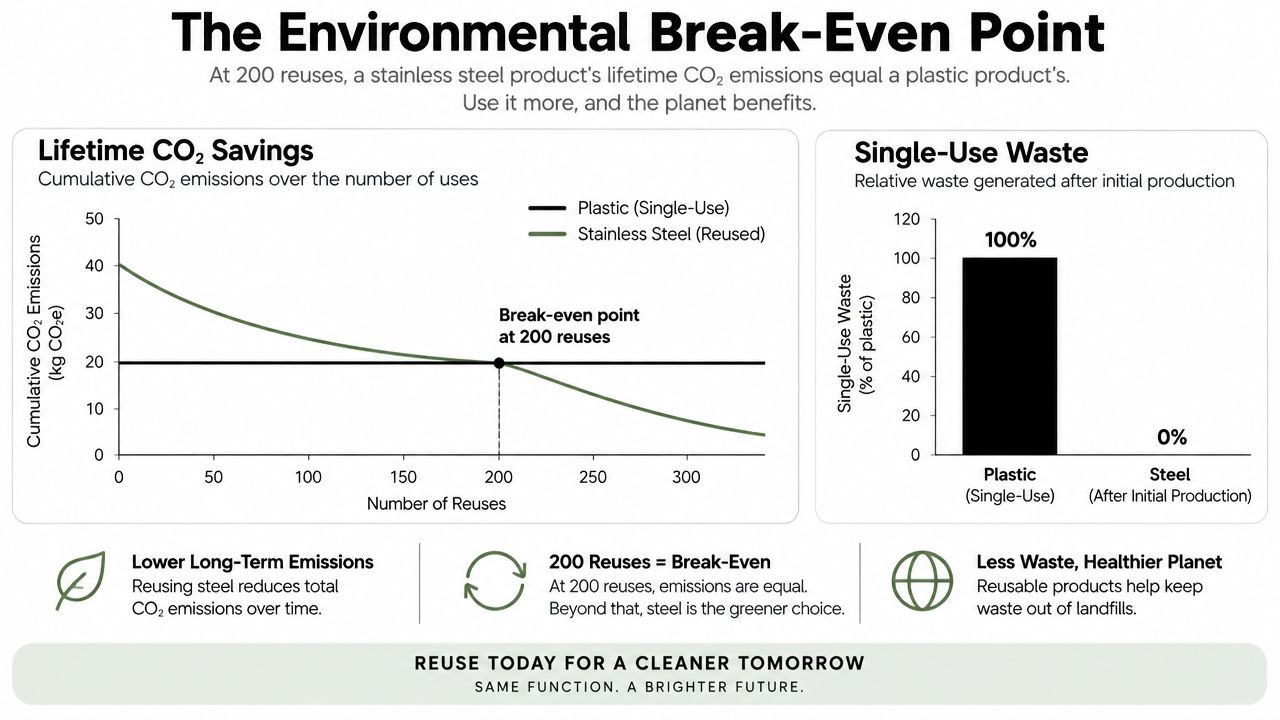
The visual's 200-reuse crossing is not part of the verified UK guidance and shouldn't be treated as a universal calculation. Your real break-even depends on the bottle's construction, what it replaces, how often you use it, and whether you keep it for years.
For a regular player, steel can make practical environmental sense because frequent refilling spreads the manufacturing impact across many sessions. For an occasional buyer, a lighter reusable plastic bottle may be the more honest choice if it gets used consistently rather than replaced by a succession of aspirational steel bottles.
Best Use Cases for Players, Fans, and Gift Buyers
Different users notice different weaknesses. A player carrying water to every training session will usually value longevity and temperature retention more than the lightest possible load. A fan walking through a crowded stadium may care about a manageable bottle that doesn't dominate a small bag.
Players and parents
Choose stainless steel when the bottle will face regular drops, long sessions or changing temperatures. An insulated model is especially useful for tournament days and extended travel, provided the player can comfortably carry it when full. Keep the lid design simple. A bottle with fewer crevices is easier to clean after water, squash or an electrolyte drink.
Plastic has a legitimate role for younger players. It weighs less, costs less in many product ranges and is easier to replace if it disappears at a training ground. For a child who struggles with a heavier bottle, a high-quality plastic design may support better hydration than a steel bottle left at home.
Supporters and travellers
A fan who needs water for a short walk, a commute or an occasional fixture may not gain much from heavy insulation. Lightweight plastic is convenient for that use, while a slim steel bottle suits someone who wants a more substantial everyday item and expects to reuse it frequently.
A bottle gift should match the recipient's habits, not just their club allegiance. Branded stainless steel drinkware feels more lasting when the recipient uses it at work, on the journey to matches and during training. If the recipient already owns several bottles, a compact design with a practical lid may be more useful than a large insulated format.
The decision in one sentence
- Regular training: Steel, particularly if cold water matters.
- Young players: Lightweight plastic if weight and replacement risk dominate.
- Long matchdays: Insulated steel when carrying capacity is acceptable.
- Occasional stadium visits: Plastic or a slim non-insulated bottle.
- A durable supporter gift: Steel if the person will use it repeatedly.
The bottle that gets refilled is more valuable than the bottle with the most impressive specification.
How to Choose the Right Bottle for Your Situation
Start with usage, not material. Ask how many football sessions, commutes or matchdays the bottle will realistically cover, then decide which features remove the problems you experience.
Use this decision filter
- Do you need cold water for hours? Choose double-wall insulated stainless steel. If you drink quickly and refill often, a basic reusable bottle may be enough.
- Will a child carry it all day? Prioritise low weight, a secure cap and a shape that fits their hand. Plastic may be the better practical answer.
- Do you use sports drinks? Pick a bottle with a lid that comes apart easily, regardless of body material. Sweetened residue creates a cleaning problem if it sits in seals and straws.
- Does taste matter to you? Stainless steel is usually the safer choice for a neutral bottle-body taste, but cleaning remains decisive.
- Will you keep it for a long time? Spend attention on the seal, lid availability, coating and repairable parts, not only the metal or plastic label.
- Is this an occasional purchase? Avoid buying an insulated steel bottle just because it sounds more sustainable. Use frequency determines whether its larger manufacturing footprint is justified.
| Your priority | More suitable starting point | What to check |
|---|---|---|
| Minimum weight | Quality plastic | Heat exposure, odour retention and cracking |
| Long-term everyday use | Stainless steel | Dent resistance, lid seal and cleaning access |
| Cold drinks for a long session | Insulated stainless steel | Carry weight, dimensions and condensation control |
| Lowest maintenance | Simple bottle design | Few parts, removable seal and wide opening |
| Young player's kit bag | Lightweight plastic or slim steel | Grip, cap security and replacement practicality |
| Supporter gift | Reusable steel if used often | Capacity, branding, hand-wash needs and storage |
The stainless steel water bottle vs plastic decision comes down to behaviour. Steel is the stronger all-round option for frequent users who want durability, a neutral contact surface and temperature control. Plastic remains sensible when lightness, affordability and occasional use matter more, particularly if the bottle is kept clean, protected from heat and replaced when damaged.
SoccerWares offers club-inspired drinkware alongside football apparel and training essentials, including stainless steel bottles for supporters and players who want team identity in everyday gear. Visit SoccerWares to compare the available drinkware with your routine, then choose the bottle you're most likely to refill, wash and keep using.