

Football technology now spans several very different jobs: player analytics, GPS load monitoring, automated video capture, tactical analysis, and global scouting databases. That matters because the best tool for an academy player is not the best tool for a scout or coach. In this list, we focus on the companies that lead those categories in 2026, with particular attention to football and soccer analytics, player tracking, scouting workflows, and video analysis.
Quick decision aid
- Individual players who want touch counts, left/right foot balance, and kick data: start with Playermaker.
- Teams focused on sprint output, total distance, and workload management: look first at STATSports or Catapult.
- Clubs that need matches recorded without a camera operator: Veo is the obvious fit.
- Scouts, agents, and analysts building reports across leagues and competitions: Hudl Wyscout is the specialist tool here.
- Coaches who want tactical telestration and visual teaching tools: Metrica Sports makes the most sense.
Editorially, the main split is simple: some products help you measure the athlete, while others help you understand the match. The companies below are the clearest leaders in those lanes, and this guide is built to help you choose by use case rather than by marketing claims.
How We Picked These Top Football Tech Companies
Selection was based on six practical criteria: whether the product solves a distinct football job, how deep the analytics go, how realistic the setup is for players or clubs, pricing structure, reliability, and whether the platform is used in the sport rather than merely advertised to it. Coverage across the main categories commonly compared includes technical player tracking, physical load monitoring, AI video capture, scouting databases, tactical analysis, and cognitive training.
A company did not make this list if it was too generic, lacked a clear football use case, or overlapped heavily with a better-known option without offering a meaningful advantage. We also favoured tools with transparent product pages, established adoption, or credible documentation over vague claims.
In our review, some selections are informed by product research, public documentation, and market adoption rather than years of hands-on use with every platform. Where that is the case, we have kept the judgment grounded: who the tool is for, what it does better than alternatives, and where it is probably poor value. That matters more than pretending every product fits every buyer.
1. Playermaker
Leading our list of the top football tech companies for 2026 is Playermaker, because it answers a different question from most wearables. Instead of focusing mainly on how hard a player ran, the Playermaker UNO{data-product-impression-tracked="true" data-product-link-position="1" data-impression-id="cad85459-29ce-4e79-bc7c-6aa4bed01571" data-above-fold="false" data-product-click-tracked="true"} is built to show what actually happened on the ball. Its boot-mounted sensor design is the key differentiator, because the device sits where touches, strike patterns, and foot usage can be measured directly rather than inferred from torso movement. Playermaker outlines those technical outputs on its official product materials.

Best for technical player tracking
Playermaker is the strongest option here for players and coaches who care about ball interactions, weaker-foot development, and session-by-session technical output. Standard vest-based GPS units are excellent at showing distance, speed, and repeated sprint work, but they do not tell you much about whether a midfielder avoided their left foot all session or whether a striker's touch volume collapsed late in the game.
In our review, that is the reason Playermaker stands apart: it changes the coaching conversation from "you worked hard" to "you barely used one foot and your touch volume dropped under fatigue." For youth development and individual training blocks, that is often more actionable than another sprint chart.
What the boot-mounted data actually tells you
Because the sensors are attached to the boots, Playermaker can report technical metrics such as touches, touches by foot, kick velocity, time on ball, and possession patterns, alongside physical outputs like distance and speed as described on the Playermaker support and product pages. The practical value is not the dashboard itself; it is what the numbers reveal over several weeks.
A winger with strong top speed but a low touch count may need a different role or better involvement patterns. A young player showing a heavy right-foot bias gets an objective target for weaker-foot work. Editorially, left/right foot data is the standout feature here, because it gives coaches a measurable way to justify training decisions that are usually based on feel alone.
Where it fits better than vest-based GPS
Compared with STATSports or Catapult, Playermaker is not the best tool for team-wide load management. If you are a performance coach monitoring high-speed running, acceleration exposure, and recovery loads across a squad, vest-based systems remain the more natural choice. But if your question is, "What did this player do technically, and how balanced are they on the ball?" then Playermaker covers a blind spot that standard physical trackers leave open.
That distinction matters. A player can post strong sprint numbers and still have a poor technical session. A vest will confirm the running load; Playermaker is far better at showing whether the session improved football actions. For clubs combining data sources, that makes it a useful complement rather than a direct replacement.
There is also a wider ecosystem angle. If your workflow includes automated clipping or session video, a separate Video Automation API from RenderIO can help teams think about how footage and data outputs might be processed together, although Playermaker itself is primarily a player-tracking product rather than a video platform.
Purchasing through a trusted retailer like SoccerWares.com{data-product-link-position="1" data-impression-id="cad85459-29ce-4e79-bc7c-6aa4bed01571" data-product-click-tracked="true"} ensures you receive genuine hardware backed by reliable customer support and fast shipping.
Key Information
| Feature | Details |
|---|---|
| Primary Use | Individual player performance tracking (technical & physical) |
| Unique Selling Point | Boot-mounted sensors for precise on-ball metric tracking |
| Included | Two smart sensors, charging case, straps, app membership |
| Availability | Available directly from SoccerWares.com{data-product-link-position="1" data-impression-id="cad85459-29ce-4e79-bc7c-6aa4bed01571" data-product-click-tracked="true"} |
| Pros | Comprehensive data, unique technical insights, comfortable design |
| Cons | Requires consistent charging and active engagement with the app |
2. STATSports
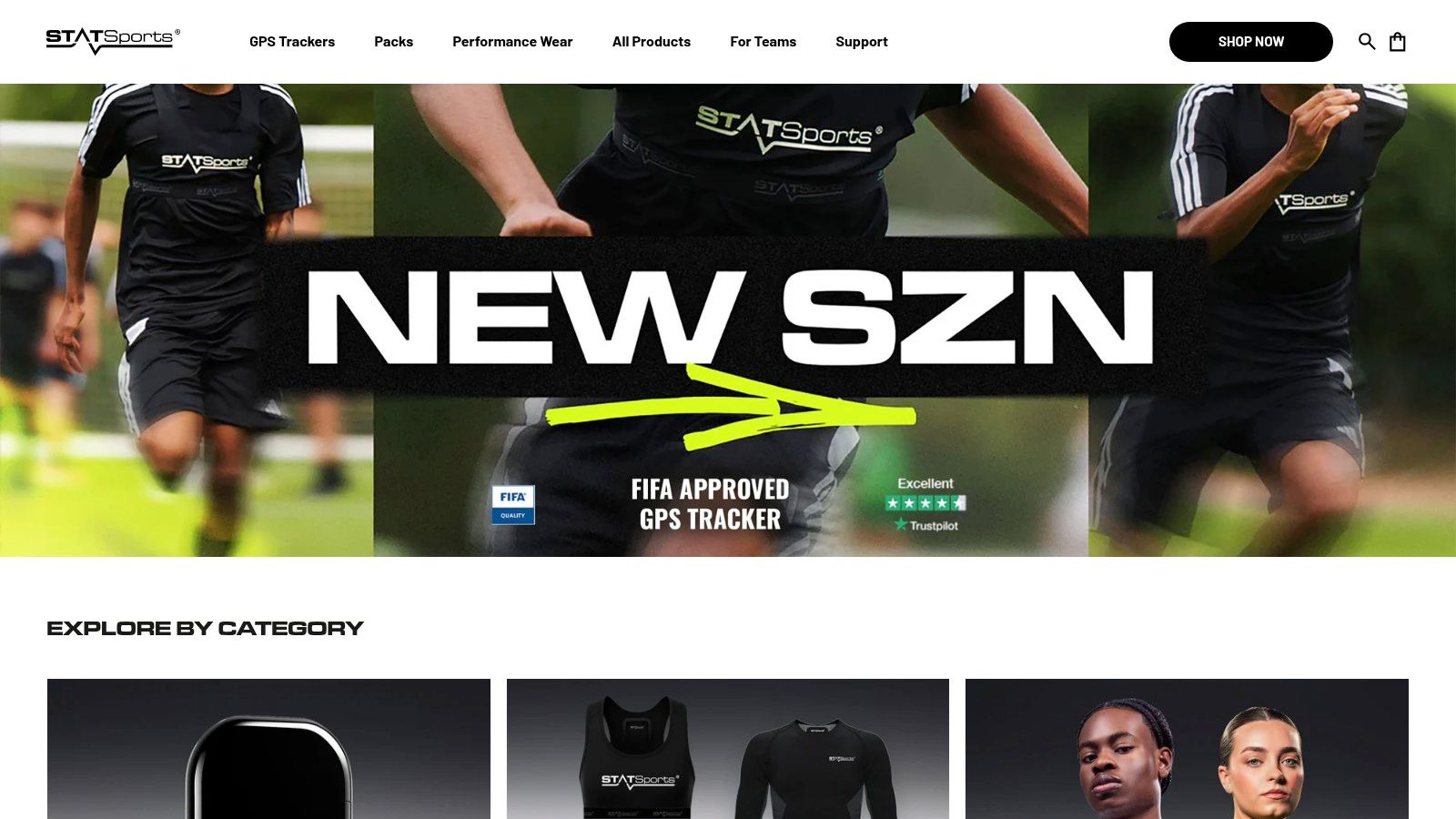
STATSports remains one of the clearest choices for players and coaches who care most about physical output rather than on-ball detail. The Apex system is built around vest-based GPS tracking, and the company positions the product around metrics such as distance, speed, sprints, and high-speed running on its Apex Athlete product pages. For readers comparing football analytics tools, this is one of the most accessible options in the category.
Best for physical output and load monitoring
If the main goal is to understand running demands, STATSports is stronger than Playermaker. It is better suited to tracking total distance, max speed, sprint count, and high-speed exposures over time. For coaches, that means cleaner visibility on whether a player is underloaded, overcooked, or not hitting match-like outputs in training.
In practice, this is the kind of data that matters most for return-to-play blocks, conditioning benchmarks, and managing weekly load. Editorially, STATSports makes the most sense when you already know the football problem and need objective evidence about the athlete's engine.
What you get without a subscription
One reason STATSports stays popular with individuals and families is its purchase model. The Apex Athlete line is sold as hardware rather than a membership-first platform, and the company presents the package and pricing directly on its UK store. It also notes governing-body approvals on its product materials, including FIFA Quality approval information.
For buyers who dislike recurring software fees, that matters. In our review, the one-time-purchase approach is easiest to justify for self-motivated players who want reliable physical metrics but do not need a deeper club ecosystem. If you expect constant squad dashboards, coaching content, and subscription-style development features, Catapult may feel more complete.
Trade-offs versus Catapult and Playermaker
Against Catapult, STATSports is the simpler buy if you want to avoid ongoing payments and get straight to performance tracking. Against Playermaker, it is the stronger choice for sprint, distance, and high-speed running analysis, but clearly weaker for technical on-ball analytics. It will tell you how much a player ran and how intensely; it will not tell you whether they used their weaker foot or how many meaningful touches they had.
That trade-off is the whole buying decision. If your sessions revolve around athletic load and conditioning, STATSports is a very clean fit. If your sessions revolve around technical development, it is not enough on its own. I would choose STATSports over a membership platform when the buyer is an individual player, parent, or small team that wants good physical data without another monthly commitment.
Website: STATSports UK store
3. Catapult
Catapult brings elite, data-driven performance analysis to the ambitious player and team, positioning itself as a subscription-based powerhouse in the GPS tracking market. Used by clubs at all levels, from grassroots to the Premier League, its system is designed to provide not just data, but actionable insights into performance, workload management, and injury prevention, solidifying its place among the top football tech companies in 2025.
The platform operates through a familiar GPS pod and vest system, syncing performance metrics to a companion app. Catapult One differentiates itself with team-centric features and an ongoing membership model, which includes personalised training plans and detailed squad analytics for coaches.
Key Features and User Experience
Catapult One is heavily geared towards structured improvement, making it ideal for teams and dedicated players committed to a long-term development plan. The subscription model ensures users receive continuous software updates, fresh training content, and access to a detailed team dashboard.
- Core Metrics Tracked: Total Distance, Sprint Distance, Top Speed, Power, and Player Load. It also provides detailed pitch heat maps.
- User Interface: The app is clean and powerful, allowing players to track progress over time. The team dashboard is a standout feature, enabling coaches to compare player stats, monitor fatigue, and tailor sessions accordingly.
- Unique Offerings: Membership includes access to training plans from professional coaches and the ability to pause your subscription if you get injured, preventing unnecessary charges during recovery.
Pricing, Support, and Practical Tips
The Catapult One website clearly outlines its membership pricing for the UK market. An individual membership starts from £15.99 per month with a £30 starter kit fee, while team packages offer scalable pricing for squads. While this recurring cost is a significant commitment compared to a one-off purchase, its extensive team tools provide clear value for clubs.
Pro Tip: Utilise the team dashboard to its full potential by setting weekly and monthly performance benchmarks for each player. This helps in tracking development, managing player load effectively, and making informed decisions for match day selection.
Although the subscription model isn't for everyone, and some users have reported mixed experiences with customer support regarding renewals, the platform’s detailed analytics are hard to beat. For those weighing their options, comparing it against other trackers is a wise move. You can read a detailed analysis in this Catapult One vs Playermaker breakdown to see how it stacks up. The powerful, club-focused features make Catapult a leading choice for organised teams.
Catapult’s wider market position also remains significant. A recent industry profile notes deployment across 3,700+ professional and amateur teams in 137 countries, underlining how embedded the company is in performance tracking workflows across football according to Football Analytics 101.
Website: Catapult One overview
4. Veo
Veo has revolutionised matchday recording for teams at every level, from grassroots to semi-professional. Its AI-powered camera system automatically records and follows the on-pitch action, completely removing the need for a human camera operator. This technology makes capturing full matches for analysis, highlights, and player development more accessible than ever, solidifying its place among the top football tech companies for 2025.
The system consists of a durable, portable camera with two 4K lenses that capture a 180-degree panoramic view of the pitch. Once the match is recorded and uploaded to Veo's cloud platform, its advanced AI software stitches the footage together and produces a broadcast-style video where the "camera" automatically follows the ball.
Key Features and User Experience
What sets Veo apart is its integrated ecosystem. It's not just a camera; it's a complete video analysis platform designed for coaches and players. The hardware purchase is linked to a subscription model, which unlocks the platform's full potential, including tactical analysis, highlight creation, and live streaming capabilities.
- Core Functionality: Automated recording and AI-powered ball tracking, 4K video quality, and a dedicated cloud platform for storage and analysis.
- User Interface: The Veo Editor platform is user-friendly, allowing coaches to draw on the screen, tag players, and create custom highlights to share with the team or on social media.
- Team and Club Focus: Designed for team-wide use, Veo simplifies the entire process of recording, analysing, and distributing match footage. Learn more by checking out a detailed Veo camera review.
Pricing, Support, and Practical Tips
The Veo website clearly outlines its pricing, which involves an initial hardware cost for the camera and an annual subscription fee for the platform. UK-based clubs can often find promotions and bundled offers, making it a cost-effective investment for teams that play frequently. While the initial outlay is significant, it removes the recurring cost and logistical hassle of hiring camera operators.
Pro Tip: For the best recording results, position the camera on a tripod at the halfway line and elevate it as high as possible. This gives the AI the best panoramic view to track play accurately and deliver professional-looking footage.
The primary drawback is the subscription model, which can be a commitment for smaller clubs. However, the value provided through consistent, high-quality match footage and powerful analysis tools is often seen as a worthy investment for serious development. The company’s support is well-regarded for helping new users get set up and troubleshoot any technical issues.
Website: Veo
5. Hudl
Hudl, through Wyscout, is one of the clearest answers to anyone looking for a true football analytics and scouting platform rather than a simple video library. This is not a player tracker and it is not an AI camera. It is a research and decision-making tool for recruitment, opposition analysis, and player discovery, built around searchable match footage, player profiles, event data, and reporting workflows.
That distinction matters because football technology often gets lumped into one bucket. Player tracking tools measure what your own athletes did physically or technically. Match video tools capture and review games. Scouting analytics databases like Wyscout help clubs, scouts, and analysts search across players, competitions, and actions at scale. If your job involves finding talent or profiling opponents, this category is the one that fits.
Why scouts use Wyscout for player discovery
Wyscout is built for narrowing a huge market into manageable shortlists. Hudl presents it as a platform for video scouting, player evaluation, and competition analysis on its Wyscout product pages. The value is not just access to footage; it is the ability to move from broad search to specific evidence quickly.
A scout can filter by position, competition, age range, and profile, then move into clips and reports without stitching everything together manually. For clubs without huge recruitment departments, that time saving is often the product. Editorially, that is why Wyscout remains so sticky in the professional market: it reduces the cost of being thorough.
Analytics depth versus simple highlight platforms
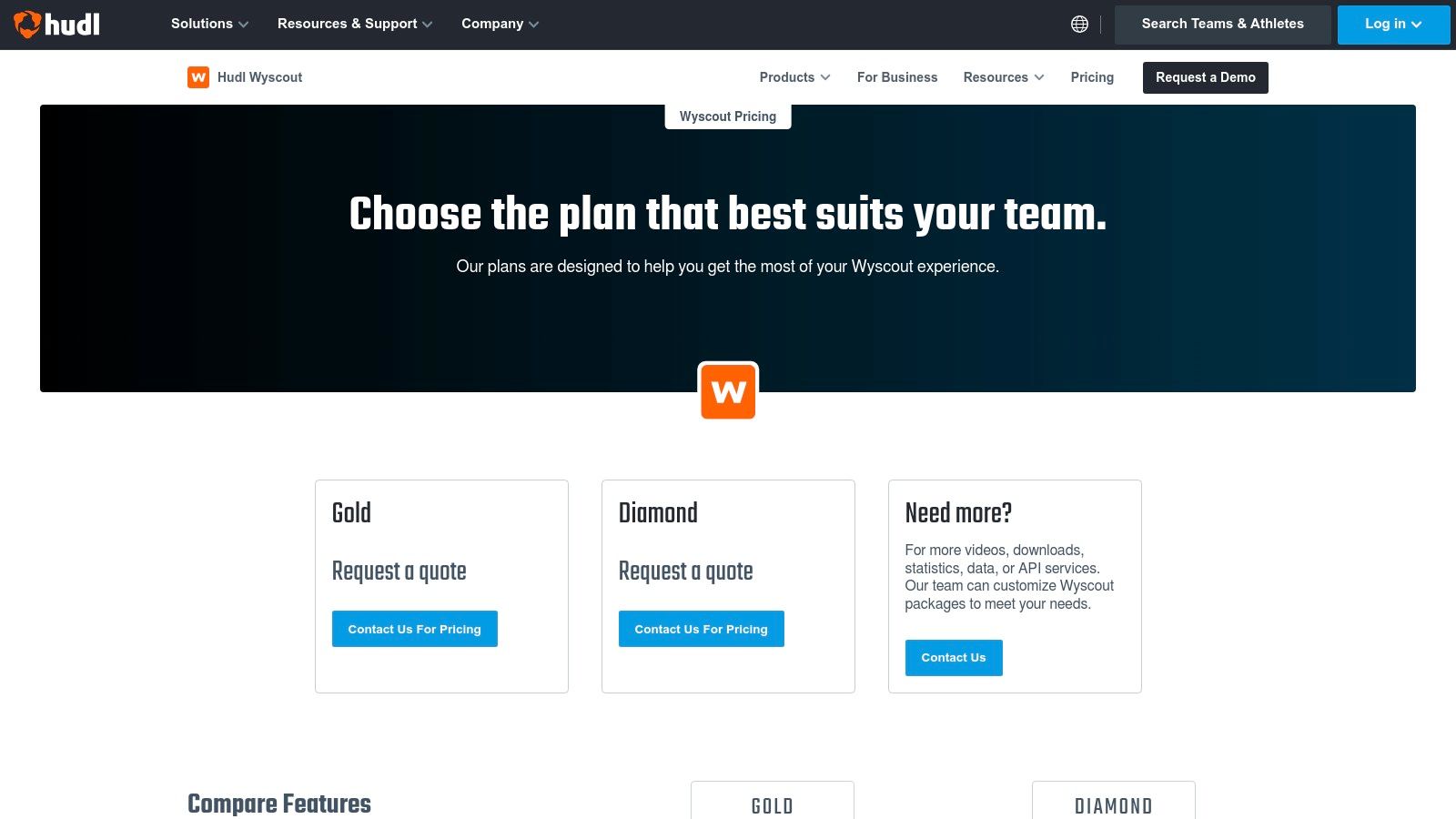
Compared with generic highlight tools, Wyscout is much deeper. It is designed for full workflows: watch matches, isolate actions, build lists, compare players, and export reports. Hudl also provides plan details and access levels through its pricing information, which makes clear that the product is aimed at professionals and serious analysts, not casual fans.
This is also where the article’s broader analytics intent comes into focus. Football analytics is not only wearables and GPS. It also includes event-based and video-linked analysis used for recruitment and tactical work. At the higher end of that market, companies like Stats Perform combine event data and AI tracking at scale across clubs and media partners, illustrating how important data infrastructure has become in football operations as noted by MarketsandMarkets.
Who should not pay for this
Wyscout is poor value for most grassroots teams, parents, and individual players. If all you need is to record matches or build highlights, Veo or standard video software is a much more sensible spend. If all you want is personal performance data, buy a tracker instead.
In our review, Wyscout earns its place when football analysis is part of your work, not just your interest. Scouts, agents, recruitment staff, and ambitious clubs can justify the subscription because they repeatedly use the search, video, and reporting stack. Everyone else is likely to underuse it.
Website: Hudl Wyscout pricing
6. Rezzil
Rezzil has carved out a unique niche by taking elite cognitive training from the training ground and placing it directly into the homes of players via virtual reality. Their Rezzil Player software, available on Steam for PC VR headsets, offers a series of engaging, football-specific drills designed to improve reaction times, decision-making, and technical skills like heading. It represents a significant step in the future of football training technology, making immersive practice accessible to a wider audience.
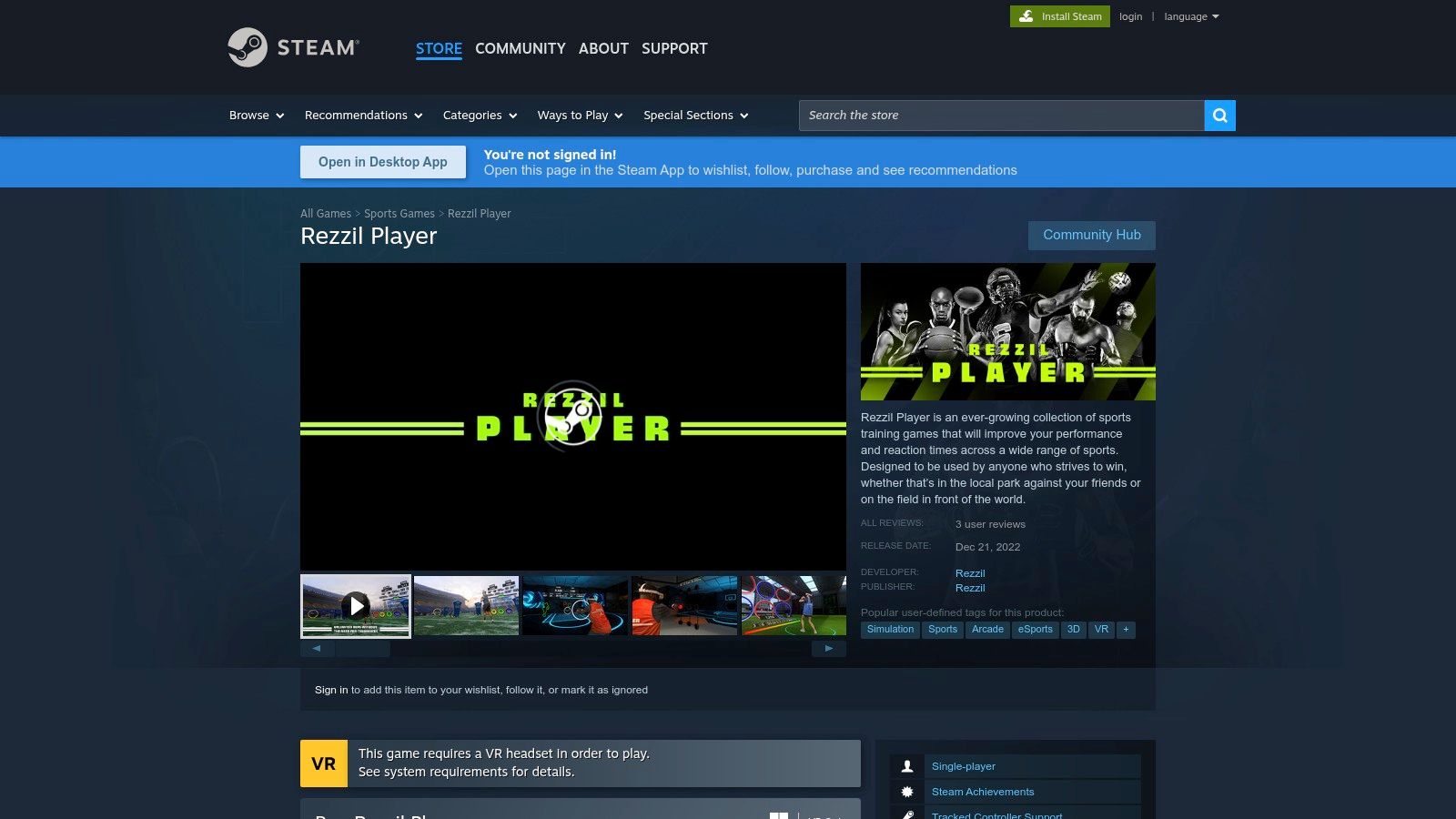
The platform gamifies cognitive development, allowing players to work on skills that are difficult to isolate and repeat on a physical pitch. By using a VR headset, users can practise heading drills without physical impact or train their goalkeeping reactions in a controlled, endlessly repeatable environment, making it a powerful supplement to traditional training.
Key Features and User Experience
What makes Rezzil Player a standout among the top football tech companies in 2025 is its affordability and accessibility compared to professional-grade systems. It leverages existing consumer VR hardware to deliver high-level training principles. The platform’s modular approach allows users to start with a base game and expand with branded content.
- Core Drills: Includes finishing challenges, heading practice, and goalkeeper reaction tests designed to sharpen cognitive skills.
- User Interface: The game-like interface on Steam is familiar to many users. Drills are intuitive, with clear objectives and performance feedback provided instantly.
- Expansion Content: Optional DLC packs from partners like adidas and Manchester City add licensed kits and balls, enhancing the immersive experience.
Pricing, Support, and Practical Tips
Rezzil Player's core game is priced affordably on the Steam store, with the platform frequently featuring it in sales and bundles. This low entry cost makes it an excellent tool for individual players looking to gain a mental edge. While it requires a compatible PC and VR headset, it avoids the ongoing subscription fees common with other training software. The core game itself provides substantial value, with DLC offering cosmetic and branding upgrades rather than essential features.
Pro Tip: Before starting a session, ensure your play area is clear of obstacles. VR training is immersive, and it's easy to forget your physical surroundings while focusing on in-game drills. A safe space is crucial for effective and injury-free practice.
The main drawback is its reliance on specific hardware and its focus purely on virtual skill development, as it doesn't track on-pitch physical metrics. However, for safe heading practice and improving cognitive speed, Rezzil Player is a highly effective tool that democratises elite training methodologies.
Website: Rezzil Player on Steam
7. Metrica Sports
Metrica Sports is at the forefront of tactical analysis, providing advanced video and data solutions that help coaches understand the game at a deeper level. Unlike hardware-focused companies, Metrica's strength lies in its powerful software tools, such as Metrica Play and Metrica Hub, which allow teams to telestrate, animate, and share tactical insights with clear detail. This focus on the 'why' behind the on-field action positions them among the leading football tech companies for 2025.
Key Features and User Experience
Metrica's software turns standard match footage into a dynamic tactical whiteboard. Coaches can easily add graphics, player tracking visualisations, and tactical annotations to video clips, making complex concepts easy for players to understand.
- Metrica Play: An intuitive video analysis tool that allows coaches to draw directly onto footage, creating professional-looking presentations that highlight tactical patterns, player positioning, and set-piece organisations.
- Automated Tracking Data: For elite clubs, Metrica offers tracking technology that automatically identifies every player on the pitch, generating XY data that can be used to analyse team shape, distances between players, and pressing intensity without manual tagging.
- Accessibility: While their high-end solutions are used by top European clubs, the Metrica Play software is designed to be accessible, offering a free version that provides significant value to coaches at all levels.
Pricing and Practical Application
Metrica Sports operates on a tiered subscription model. Coaches can start with the free version of Metrica Play to get a feel for the platform's capabilities. Paid subscriptions provide access to more advanced features, such as additional drawing tools and cloud storage for sharing projects with players and staff. This tiered approach allows clubs of all sizes to integrate professional-level tactical analysis into their workflow.
Pro Tip: Use the telestration features in Metrica Play to create short, impactful video clips for pre-match briefings. Focusing on 2-3 key tactical points with clear visual aids is far more effective than a long, text-heavy presentation.
By focusing on making tactical analysis visual and accessible, Metrica Sports equips coaches with the tools they need to communicate their vision effectively, bridging the gap between strategy and execution on the pitch.
Frequently Asked Questions
Which football tech company is best for player analytics?
It depends on what you mean by player analytics. For technical, on-ball data such as touches, foot usage, and kick patterns, Playermaker is the most distinctive option in this list. For physical metrics such as sprint distance, top speed, and training load, STATSports and Catapult are better fits.
What is the difference between GPS trackers and football analytics platforms?
GPS trackers mainly measure movement and physical output: distance, speed, sprinting, and workload. Football analytics platforms can go much further, including event data, video-linked analysis, scouting filters, and tactical reporting. A wearable helps you understand the athlete; a scouting or analysis platform helps you understand matches, opponents, or recruitment choices.
Are these tools useful for grassroots teams?
Yes, but only if the club buys for a clear reason. Grassroots teams often get the best return from one practical tool rather than a full stack. Veo is useful when recording matches is the bottleneck. STATSports or Catapult are useful when player load and conditioning matter. Wyscout is usually overkill unless recruitment or high-level analysis is part of the club's actual workflow.
Which option is best for video analysis versus scouting?
For capturing and reviewing your own matches, Veo is the better choice because it solves the recording and basic analysis problem directly. For discovering players, researching opponents across competitions, and building reports, Hudl Wyscout is the more suitable platform.
Is Catapult or STATSports better for teams?
Catapult is often the stronger fit for organised teams that want a longer-term platform with subscription features and squad management tools. STATSports is easier to justify when the priority is straightforward physical tracking without an ongoing membership. In our review, the better choice usually comes down to budget tolerance and whether the club wants an ecosystem or just reliable GPS data.
Who are the bigger analytics players beyond this list?
At the enterprise end of sports analytics, companies such as Stats Perform and Sportradar are major forces because they operate large-scale data, video, and integrity infrastructure across global sport. Sportradar, for example, is identified as one of the leading sports analytics companies by revenue in a recent market overview from Emergen Research.
The market is no longer one category. The best football tech companies are solving different problems: Playermaker for technical player tracking, STATSports and Catapult for physical load data, Veo for automated match capture, Hudl Wyscout for scouting and analytics, Rezzil for cognitive training, and Metrica for tactical communication. That is the most useful way to buy.
If you are choosing only one tool, start with the bottleneck in your current setup rather than the most advanced-looking product. In our view, that single decision prevents more wasted spend than any feature comparison. A player who needs touch data should not buy a scouting platform, and a club that cannot record matches consistently should not start with recruitment software.
Ready to gear up with the latest in performance technology? At SoccerWares, we curate the best football equipment and tech, including many GPS trackers and training aids. Explore our collections to find the perfect tools to improve your game at SoccerWares.