

Playing football is one of the best things a child can do for their all-round development. It’s a powerful mix of physical, mental, and social learning wrapped up in a game they will love. Think of it as more than just a sport; it’s a toolkit for life that builds strong bodies, sharp minds, and crucial teamwork skills. That first kick of a ball starts a journey that helps shape confident, well-rounded kids.
Why Football Is More Than Just a Game
Beyond the sheer thrill of scoring a goal, football creates a unique and energetic environment for children to learn and grow. What starts as a weekend hobby quickly becomes a classroom for life, teaching lessons that stretch far beyond the pitch. It gives kids a structured way to challenge themselves, figure out what they are capable of, and push their limits in a supportive setting.
This journey is about laying the foundations for a healthy, active future. Every training session and match adds to your child's physical strength, mental agility, and emotional intelligence.
A Holistic Approach to Development
Football is not just about getting exercise; it's a holistic activity that nurtures the whole child. While all that running and kicking builds a strong body, the tactical thinking and split-second decisions required during a match really sharpen the mind. This infographic gives a great snapshot of how football’s benefits spread across physical, mental, and social growth.
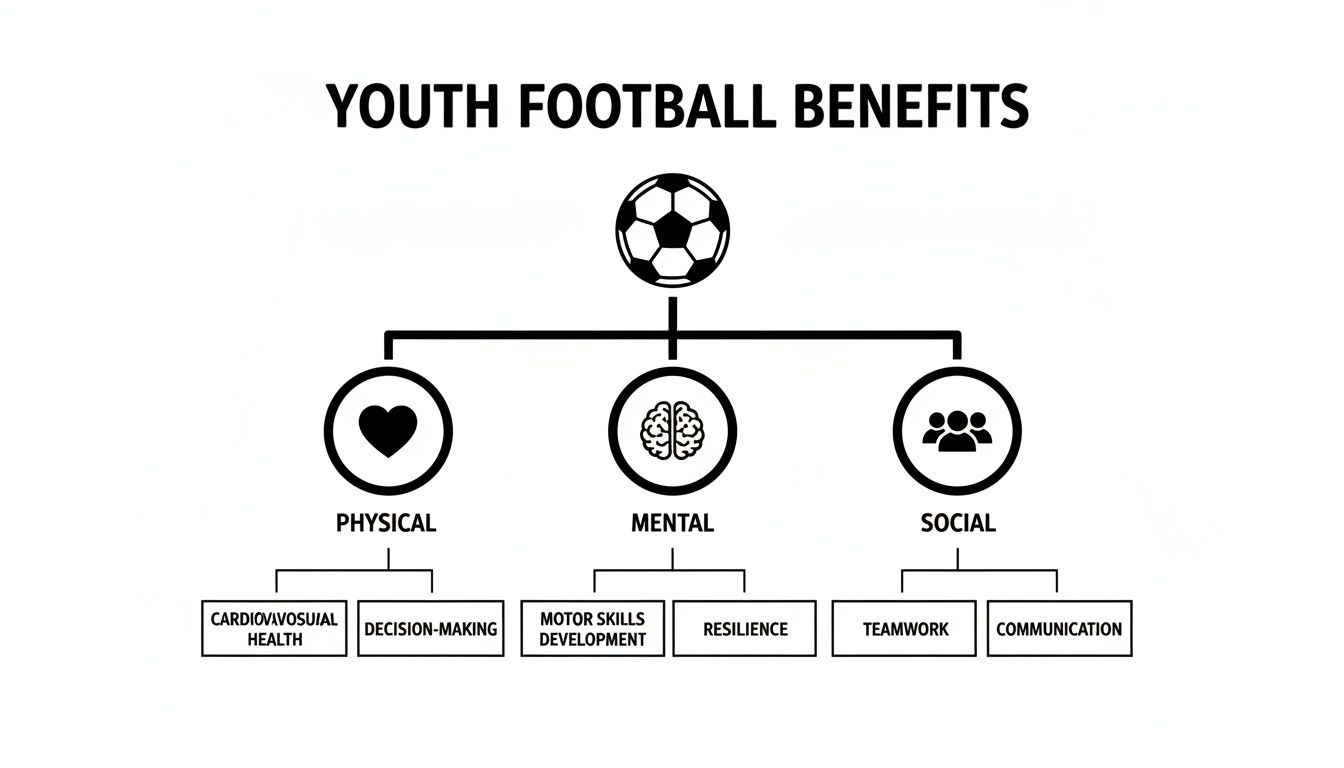
As you can see, these core areas are all linked. Progress in one area often gives a boost to the others. On top of that, being part of a team teaches social lessons you just cannot get anywhere else. Kids learn how to communicate with their teammates, work towards a shared goal, and handle both winning and losing with a bit of grace.
"Football teaches you to win with humility and lose with dignity. It’s a microcosm of life, building character through shared effort, resilience, and the joy of playing together."
This unique combination of advantages makes football one of the most enriching activities a child can get involved in. To give you a clear overview of how the beautiful game can enrich your child’s life, we have put together a quick summary table.
Youth Football Benefits at a Glance
This table breaks down the key benefits we will explore in more detail throughout this guide. It’s a handy reference to see the main advantages at a glance.
| Benefit Area | Key Advantages for Your Child |
|---|---|
| Physical Health | Builds strong muscles and bones, improves cardiovascular fitness. |
| Cognitive Skills | Enhances decision-making, concentration, and strategic thinking. |
| Emotional Growth | Teaches resilience, sportsmanship, and how to manage emotions. |
| Social Skills | Develops teamwork, communication, and a sense of belonging. |
| Life Skills | Fosters discipline, time management, and a strong work ethic. |
As you can see, the impact of playing football is far-reaching. It’s not just about what happens on the pitch, but about building skills and character that will last a lifetime.
Building a Strong and Healthy Body
Beyond the buzz of match day, one of the best things about football is the incredible impact it has on a child's physical development. Football is that rare kind of exercise that never feels like a chore. Kids are just running around, having a laugh with their friends, all while building a brilliant foundation for a healthy life.
This sport is a genuine full-body workout. The constant motion—sprinting for a loose ball, jogging back into position, and making those sharp, sudden turns—gives their heart a fantastic workout and seriously boosts their stamina. Every pass, shot, and tackle helps build muscle strength and power, from their legs right up to their core.
More Than Just Running
The physical perks of football go way beyond basic fitness. The game’s demands are perfect for developing key motor skills that kids will use in every part of their lives.
- Improved Coordination and Agility: Think about it: dribbling a ball while running at pace requires some serious foot-eye coordination. Quick turns and dodges to get past opponents sharpen their agility and balance, making them more coordinated and confident in how they move.
- Stronger Bones and Joints: Football is a weight-bearing exercise, which is absolutely vital for growing bodies. The physical impact from running and jumping actually stimulates bone growth and increases density. This is huge for reducing the risk of fractures and issues like osteoporosis later on.
This mix of cardio and skill-based movement makes football an incredibly effective way for kids to stay active. It's no surprise that in England alone, around 40% of children aged 5-16 get involved in the sport. And it's making a difference. Data from Sport England shows that nearly half of all children are now hitting the recommended 60 minutes of daily physical activity, with grassroots football playing a massive part.
A Foundation for Lifelong Health
Getting a child to love being active from a young age is one of the best gifts you can give them. Football makes exercise fun, which encourages them to stick with it as they get older. These early habits often last a lifetime, leading to better overall health and well-being down the road.
Playing football gives kids a positive and engaging way to meet their daily activity needs. It’s not just about improving fitness for today, but about building the physical literacy and passion that supports a healthy, active future.
Of course, with all this running, kicking, and tackling comes the need for proper protection. Making sure your child is safe allows them to play with confidence and get all the physical rewards from the game. Essential gear like durable shin guards is non-negotiable for protecting against kicks and knocks. To learn more about keeping your young player safe on the pitch, check out our comprehensive guide on football injury prevention tips. Protecting them properly is the key to making sure their football journey is a positive one.
Developing a Resilient and Confident Mind
While football is brilliant for getting kids fit, its role as a mental workout is just as important. The pitch is one of the best classrooms for the mind, teaching children resilience, focus, and a self-belief that stays with them long after the final whistle.
Every match is a series of small challenges and triumphs. Learning how to handle a tough loss with grace or a big win without bragging is part of the journey. This emotional rollercoaster builds a resilient mindset, teaching kids to dust themselves off after a setback and keep going.
True confidence is forged in this process of overcoming obstacles, whether that is finally mastering a tricky dribble or playing a key part in a team victory. It is not about hollow praise; it’s the deep-down satisfaction that comes from achieving something through pure effort.
Building Mental Toughness on the Pitch
The very structure of a football match teaches kids how to stay focused under pressure. When the game is on the line, players learn to block out distractions, concentrate on their job, and make smart decisions in a split second.
This ability to stay composed is a skill that translates directly into better concentration in the classroom and sharper problem-solving in everyday life.
Football is a mental gymnasium where children build the strength to face challenges head-on. They learn that mistakes are not failures but opportunities to learn, adapt, and come back stronger for the next play.
This cycle of effort, feedback, and improvement fosters a positive outlook. Kids learn that dedication pays off, which is a powerful motivator. Keeping that drive alive can sometimes be tricky, but there are simple ways parents can help. For more ideas, explore our guide on how to keep kids motivated in football.
The Proven Impact on Happiness and Well-being
The psychological benefits of playing football are not just talk; they're backed by solid evidence. Research from The FA has uncovered just how profoundly the sport affects children's mental health.
The study found that grassroots football participation leads to 92% of children feeling happier and 86% feeling more confident. These are not small numbers—the positive effects are credited with directly cutting thousands of potential cases of depression and anxiety. On top of that, 80% of teachers saw better school engagement from kids who played.
This boost in well-being comes from a few key places:
- A Sense of Accomplishment: Scoring a goal, making a great pass, or just seeing their own skills improve week-on-week gives kids tangible proof that their hard work matters.
- Emotional Regulation: The game is a safe space to learn how to manage big feelings—from the frustration of a missed shot to the pure joy of a win.
- Stress Relief: The simple act of running around a pitch is a natural and healthy outlet for stress and pent-up energy.
By its very nature, football helps kids face challenges and learn to bounce back, which supports many other strategies for building resilience in children. It provides a structured, supportive environment where they can build a strong and confident mind, one match at a time.
Learning Lifelong Teamwork and Social Skills
On a football pitch, no player is an island. The game itself is a powerful, real-world lesson in collaboration, teaching kids vital social skills that will stick with them for life. It is right there, amongst the passes, tackles, and goal celebrations, that they truly learn what it means to work together.
Every single training session is an opportunity for social growth. Children have to listen to their coaches, communicate clearly with teammates to ask for a pass, and learn to trust that others will be in the right position. It’s teamwork in its purest form, where every success is shared and everyone has a part to play.

More Than Just Passing the Ball
True teamwork in football goes way deeper than just the mechanics of the game. It is about building a foundation of respect and empathy that extends far beyond the white lines of the pitch.
When a child supports a teammate who has just made a mistake instead of criticising them, they are learning compassion. When they celebrate a goal scored by someone else with genuine excitement, they are practising selflessness. These small, repeated actions build character and strengthen their ability to form positive relationships in all areas of life.
Football teaches that individual talent is important, but a team that works together is unstoppable. This lesson in collective effort and mutual respect is one of the most valuable benefits of playing football for kids.
The social skills picked up on the pitch transfer directly to the classroom, family life, and eventually, the workplace. Kids who play football learn to:
- Communicate Effectively: They quickly learn how to give and receive instructions clearly and concisely—a crucial skill for any group setting.
- Resolve Conflicts: Disagreements happen. Football provides a structured environment where they learn to handle them constructively.
- Show Respect: Players are taught to respect their teammates, opponents, coaches, and referees, which is the very heart of good sportsmanship.
Forging Strong Friendships
Beyond just learning skills, football creates a powerful sense of belonging. Being part of a team means sharing the highs and lows together, which forges incredibly strong bonds and lasting friendships. This social connection is absolutely vital for a child’s emotional well-being and development.
These friendships are built on a shared passion and mutual support, providing a network that can be a huge source of confidence. Coaches and parents can help strengthen these bonds even further. If you are looking for creative ways to build that team spirit, exploring some fun football team bonding activities can make a huge difference.
Ultimately, these experiences help shape well-rounded, socially adept individuals who are ready to contribute positively to any team they join in the future.
How Parents Can Best Support Their Young Player
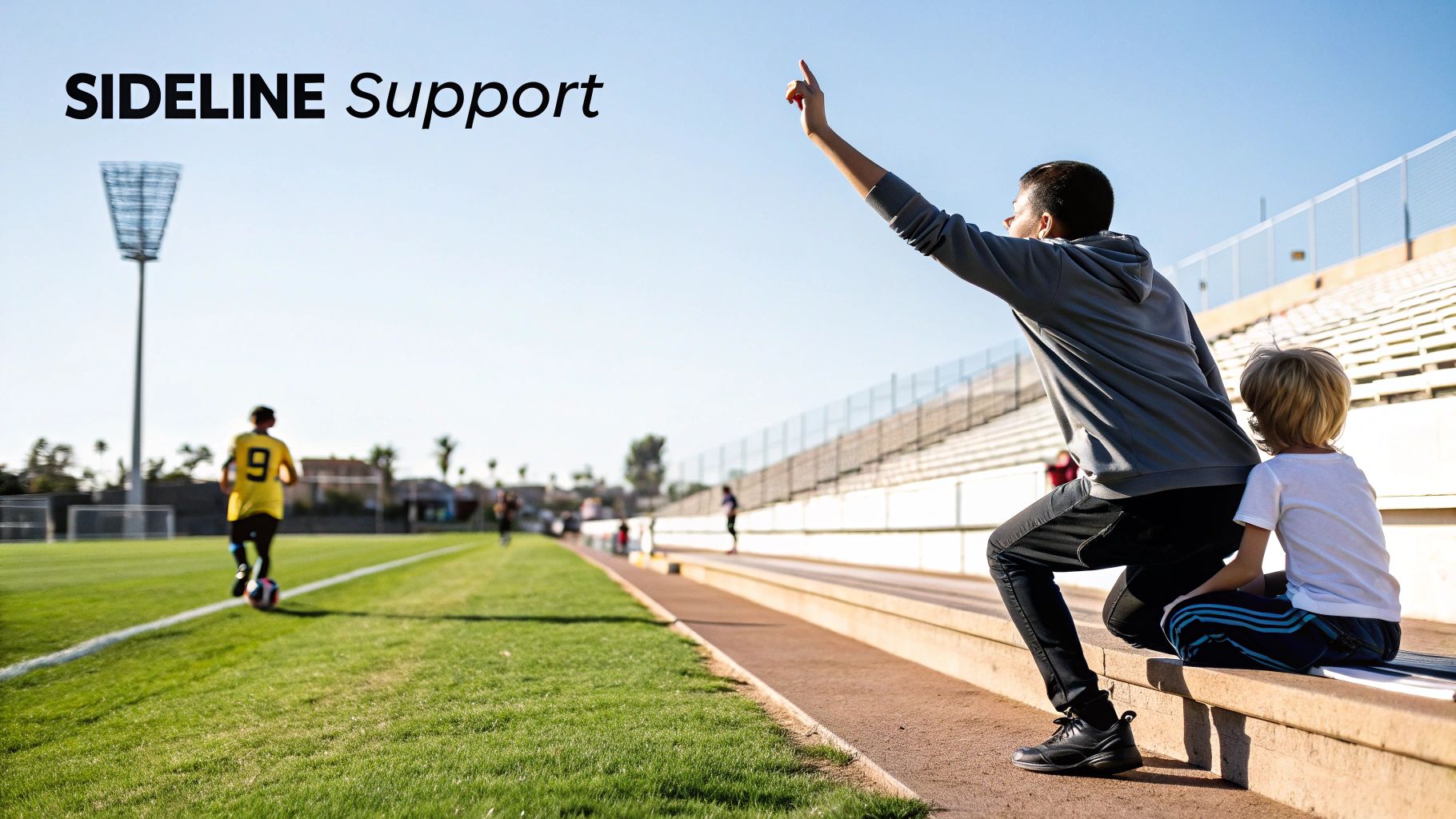
Your support from the sidelines is one of the most powerful factors in your child’s football journey. Seriously. Being a positive, encouraging presence helps build their confidence and makes sure the whole experience stays fun, which is the secret ingredient to fostering a lifelong love for the game.
Your role is not about shouting instructions from the touchline. It’s about creating a supportive space where they feel safe to try, fail, and grow. This means celebrating their effort and improvements just as much—if not more—than the final score.
Focusing on Fun and Development
One of the best things you can do is find the right club—one that prioritises enjoyment and player development over a win-at-all-costs mentality. Look for clubs with accredited coaches who create a positive atmosphere where every child gets a chance to play and learn.
When your child knows that their value is not tied to winning, they are free to develop their skills without fear. This focus on personal growth is what builds genuine self-esteem and resilience.
The most supportive parents are the ones who praise the effort, not just the outcome. Saying "I loved watching you play today" is far more powerful than asking "Did you win?" It shifts the focus from performance pressure to pure enjoyment.
This supportive mindset is absolutely essential for their mental well-being. If you are looking to understand this better, a parent's guide to sports psychology for young athletes offers excellent insights into building confidence in young players.
Providing the Right Tools for the Job
Part of your support role is making sure your child is safe and properly equipped for training and matches. Having the right gear is not just about preventing injuries; it helps them feel like a confident, ready member of the team.
Here's the essential kit list:
- Supportive Football Boots: Make sure they are right for the specific playing surface (like firm ground or artificial turf) and fit well to prevent blisters and give them proper stability.
- Well-Fitting Shin Guards: This is non-negotiable. A quality pair of shin guards is essential to protect against kicks and hard tackles.
- Comfortable Kit: Breathable and weather-appropriate clothing means your child can focus on the game without being distracted by being too hot, too cold, or just uncomfortable.
Balancing football with schoolwork and rest is also vital for preventing burnout and making sure the sport remains a positive part of their life. You can also stay informed about new ways to support their progress by exploring resources like our guide on football training technology for parents.
By providing encouragement, finding the right environment, and ensuring they have the correct gear, you set them up for a happy and successful football experience.
More Than Just a Game
When you boil it all down, football is so much more than just a sport. It's a launchpad for a healthy, happy life. We have seen how it builds strong bodies, sharp minds, and the kind of social skills that last a lifetime. It’s a journey that helps shape confident, well-rounded kids who understand the value of hard work and what it truly means to be part of a team.
The lessons learned between those white lines—bouncing back from a tough loss, staying humble after a big win, and the sheer dedication it takes to improve—will stick with your child for years. These are not just football skills; they're life skills that will help them in the classroom, with friends, and eventually, in their careers.
By encouraging their passion for football, you’re giving them a gift that genuinely lasts a lifetime. The joy, friendships, and confidence they find on the pitch become a core part of who they are.
Supporting them on this journey also means making sure they have the right tools to play safely and feel their best. To help your young star get started on the right foot, have a look at the essential training gear and equipment at soccerwares.com and fuel their passion for the beautiful game.
Still Have Questions? Let's Clear a Few Things Up
Dipping your toes into the world of youth football can feel a bit overwhelming, and it is natural for parents to have a few questions. Here are some quick, straight-to-the-point answers to the things we get asked most often. The main goal is always to keep it fun, safe, and positive for your child.
What's the Best Age for a Child to Start Playing Football?
Most kids are ready for organised football somewhere between 5 and 7 years old. At this age, the best programmes are all about fun, getting used to running with a ball, and learning to be part of a team. Forget intense competition—it’s about smiles and simple skills.
The single most important thing is finding a club that is positive and pressure-free. Look for local teams with FA-accredited coaches who know how to work with young kids. Their first taste of the sport should be a brilliant one.
How Can I Make Sure My Child Stays Safe on the Pitch?
Safety is non-negotiable. The first step is getting the right gear, especially a good pair of properly fitting shin guards. They're going to get kicked—it is part of the game—so this is essential protection.
Decent football boots designed for the right surface are also a must for stability and preventing slips and twists. Beyond the kit, check that the club has certified coaches, a proper safeguarding policy, and someone trained in first aid at every single session.
What if My Child Is Not a Natural Athlete? Should They Still Play?
Absolutely. Grassroots football is for everyone, regardless of whether they are the next superstar or just want to run around with their mates. The benefits we have talked about—the confidence, the teamwork, the fitness—are for every single child who wants to give it a go.
Good clubs will have teams for different ability levels, so every child can play, have fun, and improve at their own pace. At this stage, it is all about joining in and loving the game, not winning trophies.
At SoccerWares, we believe every kid deserves to play football safely and feel confident doing it. Make sure your young player is kitted out with the best protective gear and training essentials to help them chase their passion. Explore our collection of high-quality football gear at SoccerWares today.