

Picking the right size football seems simple, but it’s one of those small details that makes a massive difference to a young player’s development. Get it wrong, and they’re battling a ball that’s too big and heavy. Get it right, and they can focus on what really matters: skill, control, and having fun.
The basic rule of thumb is pretty straightforward: players under 10 use a size 3, those aged 10 to 14 use a size 4, and anyone 14 and older uses a size 5. This simple progression ensures the ball always feels right for their size and strength.
Your Quick Guide to Football Sizes by Age
Think of it like this: you wouldn't give a child an adult-sized cricket bat or a full-sized tennis racket. A football is no different. Using a ball that fits their feet allows a young player to learn how to pass, dribble, and shoot properly without building bad habits trying to compensate for equipment that's too big.
This graduated approach is fundamental to youth football in the UK. With around 40 percent of children in England taking part in football during the 2023-24 school year, having these standards ensures a level playing field and helps kids develop their technique safely and effectively.
The infographic below shows this clear journey, moving up in size as the player grows.
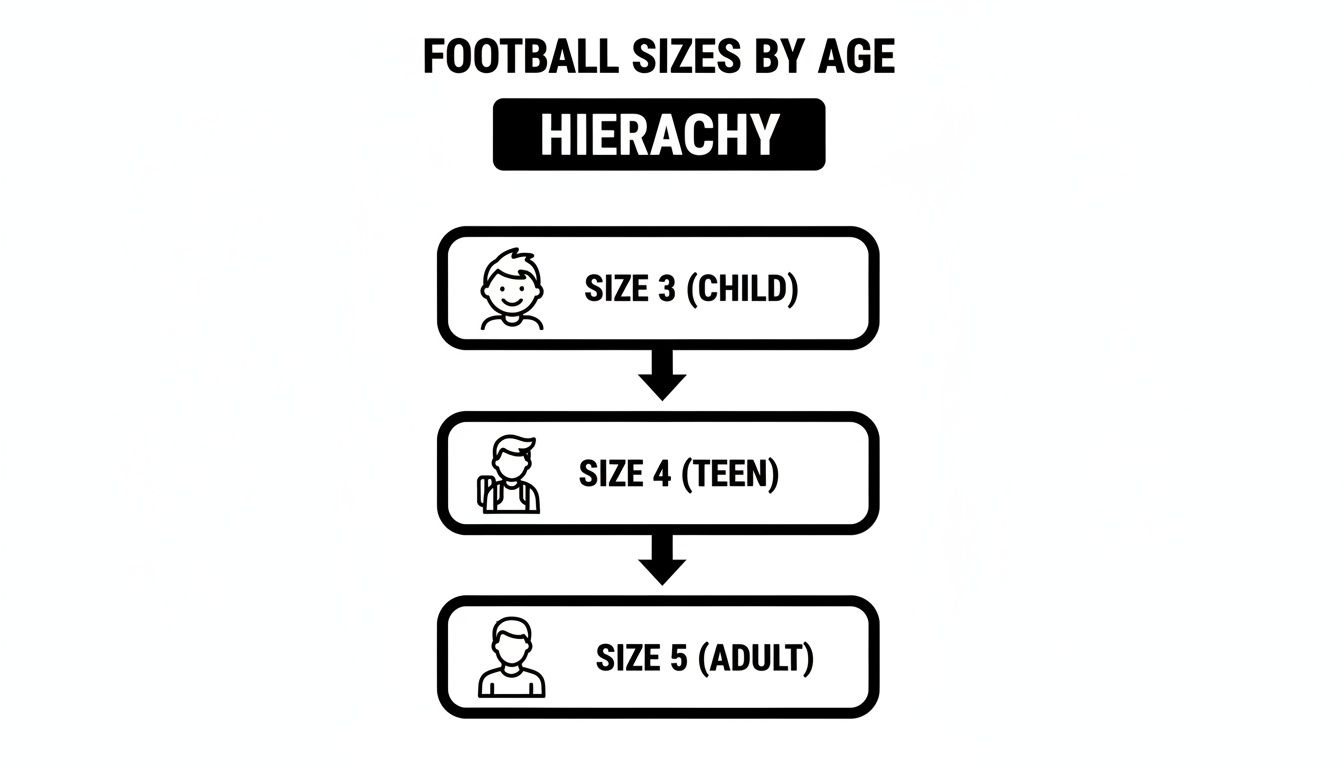
It’s a simple, logical system designed to help young players succeed at every stage of their footballing journey.
Football Size and Age Group Quick Reference Chart (UK)
To make things even easier, here’s a quick-reference chart breaking down the official UK recommendations for youth football. Keep this handy when you’re next buying a ball.
| Football Size | Recommended Age Group (UK) | Circumference (inches) | Weight (grams) |
|---|---|---|---|
| Size 3 | Under-7 to Under-10 (U7-U10) | 23–24 | 312–340 |
| Size 4 | Under-11 to Under-14 (U11-U14) | 25–26 | 340–390 |
| Size 5 | Under-15 and older (U15+) | 27–28 | 410–450 |
As you can see, the jump between sizes is significant in both weight and circumference, which is why sticking to the age guidelines is so important for a player's development.
Why Does It Matter for Young Players?
Choosing the correct size isn’t just about following rules. It has a real impact on how a child learns and enjoys the game.
- Proper Skill Development: A smaller, lighter ball is far easier for little feet to control. It helps them master the fundamentals of dribbling, passing, and shooting without struggling.
- Building Confidence: When a child can kick and control the ball properly, they feel successful. That success builds the confidence they need to stay motivated and fall in love with the game.
- Preventing Injury: Forcing a child to kick a ball that's too heavy can put unnecessary strain on their joints, ligaments, and developing muscles. The right size is a simple safety measure.
While we're focused on footballs here, the idea of matching equipment to a child's size is a universal principle in kids' sports. If you want to dive deeper into the general logic of understanding size charts, there are plenty of resources out there. But for now, let's stick to the beautiful game.
Why the Right Ball Size Is a Game-Changer
Ever tried writing with a pen that’s way too big for your hand? It’s awkward, clumsy, and your handwriting ends up a mess. That’s exactly what it’s like for a young kid trying to use a football that’s too large and heavy. It makes learning the fundamentals incredibly difficult.
Using the correct football size for a child’s age goes far beyond just ticking a box for league rules. It’s one of the most critical factors in their skill development, safety, and whether they actually have fun playing. Think of it as an investment in their future on the pitch.
Accelerating Skill Development
When a child plays with a ball that actually fits their body, they can focus on proper technique instead of just trying to hoof it forward. An oversized ball forces them into bad habits—like kicking with their toe—which are a nightmare to correct later on.
A correctly sized ball makes mastering the basics possible. Suddenly, things like dribbling, controlling a first touch, and making a crisp pass become manageable. They can learn to wrap their foot around the ball to make it curl or generate backspin simply because the ball is proportionate to their size.
"A child who can control the ball feels empowered. This control is the foundation of every advanced skill they will ever learn. The right size ball makes that control possible from their very first kick."
This early success builds a solid technical foundation, letting them progress smoothly as they grow. It’s all about giving them the right tools for the job from the very beginning.
Reducing the Risk of Injury
Safety should be the number one priority in youth sports, and ball size plays a huge part here. A kid’s body is still growing, and forcing them to repeatedly kick a ball that's too heavy puts a ton of unnecessary stress on their developing muscles, tendons, and joints.
Think about the repetitive motion of kicking. Using a ball that's too heavy is a recipe for common problems like:
- Hip and Knee Strain: The extra force needed to move a heavy ball can easily strain the major joints in their legs.
- Ankle and Foot Injuries: A heavier ball means a bigger impact, increasing the risk of sprains when tackling or shooting.
- Groin Pulls: Over-exerting to generate power is a classic way to pull a groin muscle.
By sticking to the recommended football sizes, you’re making sure the equipment is working with their body, not against it. This one simple choice helps protect them from preventable injuries, keeping them on the pitch and enjoying the game.
Boosting Player Confidence and Enjoyment
Finally, let’s talk about the psychological side of things. Football is supposed to be fun, especially for kids. When a child can barely kick a ball a few feet or can't get it off the ground, the game quickly turns into a frustrating chore.
But hand them a ball they can actually manage, and everything changes. They see their passes reach teammates. Their shots actually trouble the keeper. This visible success is a massive confidence booster. It makes them feel capable and encourages them to keep trying, experimenting, and ultimately, falling in love with the game. A confident player is an engaged player, and that's what we all want to see.
Exploring Each Football Size In Detail
Understanding the move between football sizes is crucial. It’s not just about the ball getting bigger; it’s about matching the equipment to a child's physical development. Think of it as a carefully planned ladder—each size is a step up, designed to build skills and confidence without overwhelming a young player.
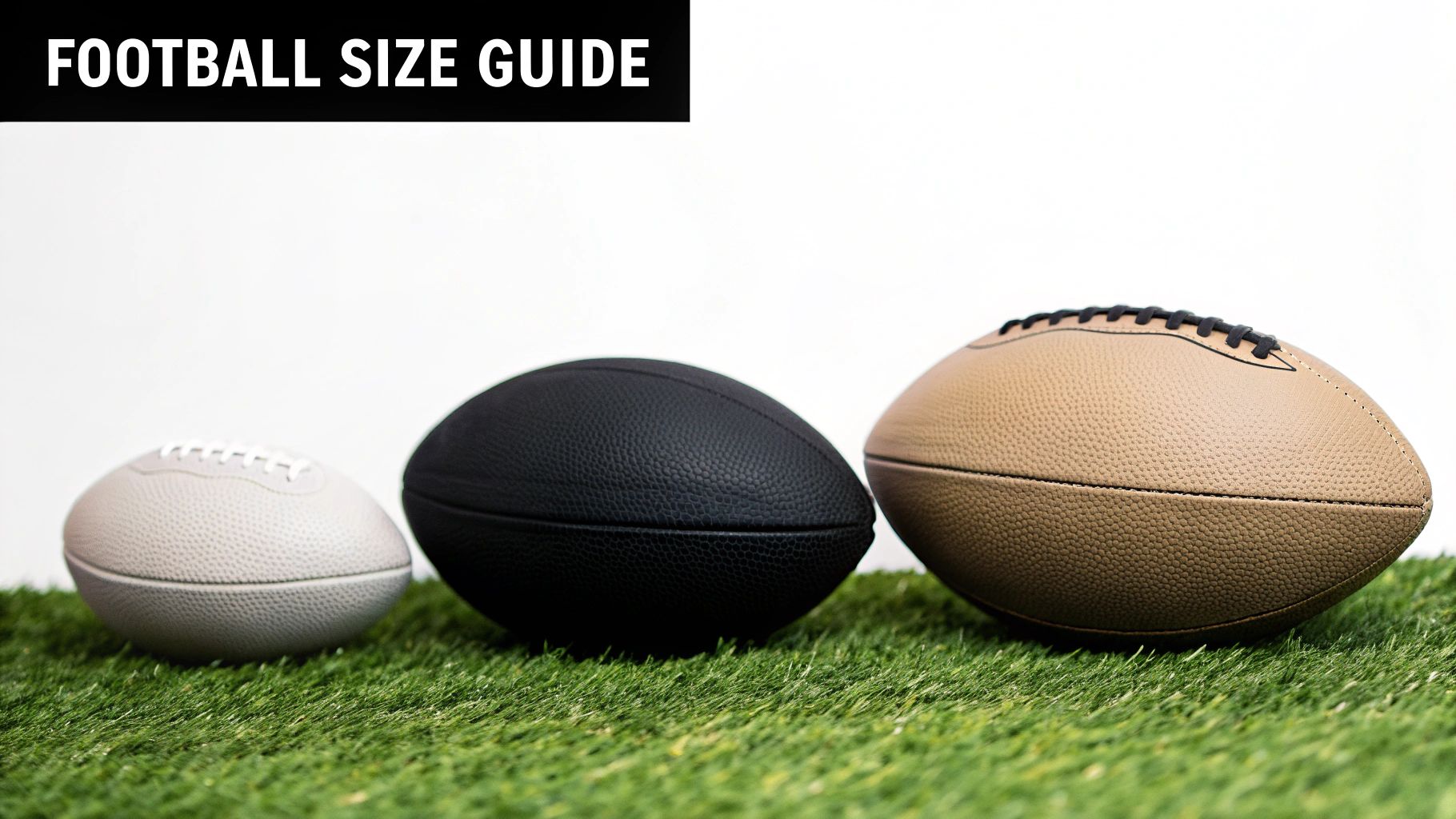
Let's break down the three main football sizes—Size 3, Size 4, and Size 5—and see what role they play on a player's journey from their first kick to senior football.
Size 3: The Foundation Builder
This is where the magic starts. The Size 3 football is the first proper ball for most young players, typically from Under-7s to Under-10s. Its small, lightweight design is completely intentional. It’s like the stabilisers on a bike; it removes unnecessary difficulty so kids can focus purely on the fundamentals.
With a Size 3, a young player can:
- Develop Ball Mastery: The smaller circumference and weight mean little feet can actually get around the ball, making it far easier to learn basic dribbling and close control.
- Learn Proper Technique: Kids can pass and shoot with the correct form. They don't have to resort to toe-punting just to get the ball moving, which prevents bad habits from forming early on.
- Build Confidence: The ball is manageable. A five-year-old can kick it and see it fly. That immediate success is what makes football fun and keeps them coming back for more.
Size 4: The Essential Bridge
Once a player hits the Under-11 to Under-14 age groups, they graduate to a Size 4. This ball is a vital stepping stone, bridging the gap between the starter ball and the full-sized adult one. It introduces a bit more weight and a larger surface area, preparing players for the increased physical demands of the game as they head into their teenage years.
The Size 4 helps players get used to:
- Increased Power and Pace: The added weight means players have to generate more power to pass and shoot. This naturally helps them build strength in their legs.
- More Advanced Skills: A slightly bigger ball challenges their first touch and demands greater precision, pushing their technical ability to the next level.
- The Feel of a 'Real' Match: It feels much closer to a senior ball, giving young teens a sense of progression and getting them ready for the final step.
Moving from a Size 3 to a Size 4 is a player's first real taste of the physicality needed for the adult game. It's a managed step-up that builds both their physical strength and technical skills at the same time.
Size 5: The Final Step
From the Under-15s age group onwards, players make the final switch to a Size 5 football. This is it—the standard, official size and weight used in every professional match across the globe, from the Premier League to the World Cup. Mastering a Size 5 is the last piece of the equipment puzzle, and it signals a player's readiness for senior football.
Its dimensions require adult-level strength, technique, and control. Using a Size 5 means a player has finished their developmental journey in terms of equipment and is now ready to compete on a level playing field with adults. For a more detailed look at ball specifications, check out our guide on how to choose the right soccer ball size for your needs.
To make this all a bit clearer, here's a simple table that lays out the differences side-by-side.
Detailed Comparison of Standard Football Sizes
This table breaks down the key specs and roles for each of the main football sizes, showing the clear progression as a player gets older and stronger.
| Feature | Size 3 Football | Size 4 Football | Size 5 Football |
|---|---|---|---|
| Recommended Age Group | U7–U10 | U11–U14 | U15 and Older |
| Circumference (inches) | 23–24 | 25–26 | 27–28 |
| Weight (grams) | 312–340g | 340–390g | 410–450g |
| Primary Developmental Role | Building fundamental skills and mastering the ball. | Bridging the gap to the adult game by introducing more power. | Preparing players for senior and professional-level play. |
As you can see, each size has a specific job to do, helping players build the right skills at the right time.
Connecting Ball Size with Modern Safety Guidelines
Player safety is the absolute top priority in youth football. Choosing the right size ball isn't just about helping your kid develop better skills—it's a critical piece of the safety puzzle. The Football Association (FA) has put a lot of thought into this, introducing specific guidelines on heading that are directly linked to the recommended football sizes for each age group.
This isn't just a random set of rules; it's a science-backed strategy. The whole system is designed to reduce the risk of head injuries by making sure the equipment is appropriate for a child’s physical development. Using the correct ball is one of the simplest and most effective things you can do to keep your child safe on the pitch.
How Ball Size and Heading Rules Work Together
You can really see the link between ball size and safety when you look at the FA’s heading guidelines. The rules create a gradual introduction to a skill that we now know carries potential risks, making sure players are physically ready for each stage. The size and weight of the ball are key ingredients in this formula.
The FA's protocols are a perfect example of this. Heading practice is completely banned for children from Under-7s right through to Under-11s. This rule is made even more effective because these age groups use the lighter Size 3 footballs, which naturally reduces the force of any accidental impact.
As players get older, stronger, and more physically developed, the guidelines adapt alongside them:
- Under-12s: Heading is introduced for the first time, but it’s a low priority. Players are allowed just one session per month with a maximum of five headers. This change coincides with their move up to a bigger Size 4 ball.
- Under-13s: The frequency bumps up slightly to one session per week, but still with only five headers allowed, continuing with the Size 4 ball.
- Under-14s to Under-16s: Sessions stay at one per week, but the limit doubles to ten headers as players transition to, or are now fully using, a Size 5 ball.
This progressive system shows that the official football sizes for different ages are part of a much wider safety strategy, all designed to protect the long-term health of young players.
A Broader Approach to Player Safety
Following these guidelines is a massive step towards ensuring your child’s well-being on the pitch. The logic is simple and clear: a lighter ball for a younger child reduces the force of any head contact, while a gradual introduction to heading allows their neck and core muscles to develop properly.
Choosing the correct ball is one of the easiest and most effective safety decisions a parent can make. It works hand-in-hand with official guidelines to create a safer environment for every young player.
Of course, safety is about more than just the ball. Making sure your child has high-quality protective gear, like shin pads and the right boots, is just as important. For more advice on keeping young players safe from knocks and sprains, check out our expert football injury prevention tips, which cover everything from proper warm-ups to essential equipment.
Choosing Between Match, Training, and Indoor Balls
Once you’ve figured out the right size football for your player’s age, you’ll quickly realise there’s another choice to make. Not all footballs are created equal, even if they’re the same size. The ball used in a Premier League final is a completely different beast to the one built to survive daily kickabouts in the park or a fast-paced game of futsal.
Understanding the difference between match, training, and indoor balls is the key to getting the best value for your money. A high-end match ball, for instance, probably won’t last five minutes on a concrete playground. Picking the right type ensures it performs as it should and lasts as long as possible.
Match Balls: Built for Performance
Match balls are the top of the range. They’re made with premium materials and often use technology like thermal bonding instead of old-school stitching. This gives them a perfectly round shape, a predictable flight path, and a fantastic feel when you kick them.
These balls are designed to shine on well-kept grass or high-quality artificial pitches. They're less durable than training balls, so it’s best to save them for competitive games where that little bit of extra quality can genuinely make a difference. If you're curious about what sets the best apart, you can read more about the best footballs for match play in our detailed guide.
Training Balls: Built for Durability
Training balls are the workhorses of the football world. Think of them as the reliable family car—they’re designed to be tough, durable, and ready for daily use. They can handle countless hours of practice sessions, drills, and casual games without giving up.
While they don’t offer the elite performance of a match ball, their main job is to last. Key features usually include:
- A tougher outer casing: This helps them shrug off scuffs and scrapes from constant use.
- Strong machine stitching: This makes sure the ball holds its shape over time.
- Cost-effectiveness: They are much more affordable, making them the perfect choice for garden kickabouts and team training sessions.
Indoor and Futsal Balls
Playing football indoors on a hard court calls for a completely different kind of ball. A standard outdoor football will bounce all over the place on surfaces like wood or vinyl, making it almost impossible to control.
An indoor or futsal ball is specifically designed with a filled, heavier bladder to reduce its bounce. This keeps the ball glued to the floor, encouraging the close control, quick passing, and technical skill that defines the small-sided game.
These specialised balls are a must-have for anyone playing in a sports hall. They completely change the game for the better, making it faster and more skill-based.
Your Guide to Buying and Looking After a Football
Okay, you’ve figured out the right size football for your child’s age. That’s the first step. But picking a decent ball and keeping it in good condition is just as important to make sure it performs well and lasts more than a few kickabouts.
Here’s a simple checklist for buying a quality football and keeping it ready for every match and training session.

What to Look For When You're Buying
Whether you’re in a sports shop or browsing online, a few small details can tell you a lot about a ball's quality. Paying attention to these little things can make a huge difference in how long the ball lasts and how it feels to play with.
- Quality Stitching: Take a close look at the seams. You want to see tight, even stitching. On higher-quality balls, the stitches are often less visible. The best ones use thermal-bonded seams (no stitching at all), which offer incredible durability and stop the ball from getting waterlogged.
- A Reliable Valve: The valve is the heart of the football. It needs to be airtight. A good ball will hold its pressure for days without you needing to constantly top it up.
- Surface Material: The outer casing should feel tough and durable. A slightly textured or dimpled surface is a massive plus, as it gives players much better grip and control, especially when the pitch is a bit slick.
Proper Inflation and Maintenance
A well-maintained ball doesn’t just last longer—it performs better and is safer to use. Getting the inflation right is the most important part of this, but a bit of simple cleaning and sensible storage goes a long way too.
A football's inflation is measured in PSI (Pounds per Square Inch). You don’t need to guess, as most balls have the recommended pressure range printed right next to the valve. It's usually somewhere between 8.5 and 15.6 PSI. An under-inflated ball feels heavy and sluggish, while an over-inflated one is like a rock—hard to control and puts a lot of stress on the seams.
The only way to get it spot-on is to use a pump with a pressure gauge. If you want to get into the nitty-gritty, you can learn more about why football pressure (PSI) matters in our detailed guide.
After a muddy game, just give the ball a quick wipe with a damp cloth to get the worst of the grit off, then let it dry naturally indoors.
Knowing When to Move Up a Size
Finally, always stick to the guidelines from your child's league or club when it comes to football sizes. It can be tempting to get them a bigger ball to "grow into," but this can actually slow down their development and make it harder to master skills.
The progression from Size 3 to Size 5 is there for a reason—it’s designed to match their physical growth and help them build their technical ability step by step.
And remember, after a tough session, hydration is key! Don't forget to pair their new football with an essential accessory like a durable stainless steel water bottle to keep them refreshed and ready for the next match.
Got Questions? Let’s Clear a Few Things Up
To make sure you feel totally confident picking out the right football, here are some quick answers to the questions we hear most often from parents and players.
Can My Child Just Use a Bigger Ball a Bit Early?
It’s tempting, especially if they’re strong for their age, but it’s really best to stick to the recommended sizes. Using a ball that's too big and heavy, like a size 4 for a six-year-old, can slow down their progress. It makes simple things like dribbling and first touches much harder and can force them into bad habits. More importantly, it can put extra strain on their growing joints and muscles. Plus, most youth leagues and clubs in the UK have strict rules on ball sizes, so you’ll need the right one for match day anyway.
What’s the Real Difference Between a Cheap Ball and an Expensive One?
It really comes down to three things: the materials, the construction, and the durability. The pricier match balls are often thermally bonded instead of stitched. This means no seams, a perfectly round shape, and they don't soak up water on a wet pitch. They also use better outer materials that give a truer flight and a nicer feel off the foot. For a young player who's just starting out, a good quality, durable training ball is usually the best value for money.
A solid training ball is built to take a beating on different surfaces without losing its shape or going flat. It's the perfect workhorse for skill development without the hefty price tag of a professional match ball.
Does the Playing Surface Actually Matter When Choosing a Ball?
Yes, absolutely! A standard football made for grass or astroturf will get shredded on rough surfaces like concrete or tarmac. If your kid spends most of their time playing street football, you’ll want to look for a specific 'street' or 'caged' football designed to handle the abuse. Likewise, if they're playing indoor football or futsal on a hard court, you need a special low-bounce ball. Using a regular ball indoors is a recipe for chaos – it’ll be bouncing off the walls and ceiling constantly!
How Do I Know if the Ball Is Pumped Up Correctly?
This one’s easy. Almost every football has the recommended pressure printed right next to the valve. It’s usually shown in PSI (pounds per square inch) or BAR. The best way to get it right is with a simple pump that has a pressure gauge. An under-inflated ball feels dead and sluggish, while pumping it up too much makes it rock-hard, difficult to control, and can even damage the seams over time.
At SoccerWares, we know getting the right gear is the first step to loving the game. From training essentials to supporter kits, check out our full collection to find everything your young star needs to shine on the pitch. Come see what we have at https://soccerwares.com.