

So, you want to start a Sunday league team? It all begins with a simple idea, probably kicked around with a few mates down the pub. But turning that beer-mat blueprint into a proper, pitch-ready club takes a bit of graft. It's a journey from casual chat to managing a real team, and it all starts with getting organised.
From Pub Talk to Pitch Ready

Every great Sunday league story starts the same way. This guide is here to take that ambition and turn it into reality, breaking down exactly how to get your team off the ground without the usual headaches.
We'll skip the fluff and give you a proper manager's-eye view of what it takes. This is about building a club that's not just competitive on the pitch but is also fun, sustainable, and something your players are proud to be a part of.
Laying the Groundwork
The road from an idea to your first kick-off can feel like a long one, but it's much easier when you break it down into manageable chunks. The first job is to build a solid foundation. Forget about tactics or signing that mate-of-a-mate who "played a bit of semi-pro" for a minute—you need to get the core structure right first.
The most successful new clubs are the ones that get organised early. This means having a clear plan for recruitment, finances, and admin long before a ball is kicked. A strong off-pitch setup prevents on-pitch chaos.
When you create a new side, you're joining a massive community. The FA reckons there are around 140,000 grassroots teams in England, with millions of us playing affiliated football. You can get a sense of the scale of Sunday league over at londonfootball.uk.
This early stage is also your chance to build a good team culture. A squad that actually enjoys playing together is far more likely to stick around when you're 3-0 down in the pouring rain. For a few early ideas, have a look at our guide on football team bonding activities.
Ultimately, this guide will walk you through those crucial first steps, help you set a realistic timeline, and create a club identity that makes the lads buzz for a Sunday morning.
Building Your Squad and Club Identity
Right, you’ve had the big idea. Now for the two things that turn a pub chat into a proper football club: the players who’ll pull on the shirt, and the identity that shirt represents. This is where it gets real.
Finding players is almost always the first big headache. Just relying on your immediate mates is a risky game because what you need more than anything is commitment. A good first season isn't built on wonder goals; it's built on having a core group who will drag themselves out of bed on a Sunday morning, whatever the weather or what they got up to the night before.
Assembling a Reliable Squad
Naturally, you'll start with friends and colleagues. They're the easy ones to get on board and usually the most hyped at the beginning. But to build a squad that’ll last a full, gruelling season, you need to cast your net a bit wider.
You should be aiming for a squad of 16 to 18 players. That number isn't random—it gives you just enough cover for injuries, work commitments, and the classic "something's come up" texts an hour before kick-off.
Here are a few places to look:
- Local Community Groups: Jump on Facebook and post in local community pages or five-a-side football groups. Be upfront about the commitment, the standard you're aiming for, and what it's likely to cost.
- Social Media: Get a simple Instagram or X (formerly Twitter) page set up for your new club. It becomes a central hub for new players to find you and helps build a bit of a buzz from day one.
- Word of Mouth: Get your first few signings to ask their own mates. Good, reliable players tend to know other good, reliable players.
Before you get anyone to sign on the dotted line, arrange a couple of informal kickabouts. It's the perfect way to suss out ability, attitude, and—most importantly—who actually turns up. You’re not just scouting a winger; you’re looking for someone who won’t be a nightmare in the changing room.
Building a squad is less like a fantasy football draft and more like an exercise in people management. Always prioritise a good attitude and commitment over raw talent. A team of dedicated players who get on well will always achieve more than a group of gifted individuals who can't stand each other.
The person pulling all this together—usually the gaffer—needs to be organised and a decent communicator. If that’s you, it pays to understand what the role involves. Our article on how to become a football coach has some great pointers that are just as useful for a Sunday league manager.
Forging Your Club's Identity
Once you've got a group of players interested, you need to give them something to belong to. A proper club identity pulls everyone together and makes the whole thing feel official. We're talking name, colours, and a badge.
Choosing a Name and Badge
Your team name can be a classic nod to the pros (think 'Newbury Rovers') or something more personal or funny that reflects where you all came from. The main thing is to pick something everyone’s happy with—run a quick poll with the lads to make it a democratic choice.
The same goes for a club badge. It doesn't need to be a Premier League-level design. There are plenty of free online tools that can knock up a simple, clean crest in minutes. It’s a small touch, but it adds a layer of professionalism and gives you something to stick on your kits and socials.
Selecting Your Colours and Kit
Your kit is the most visible part of your identity. When picking colours, think about what's going to stand out on a muddy pitch. It's also worth a quick check to see what colours other teams in your league wear to avoid annoying clashes. A distinctive kit makes your team instantly recognisable.
The kit itself needs to do more than just look good. It's got to survive wet pitches and hefty challenges. At SoccerWares, we know a Sunday league kit has to be that perfect mix of quality and affordability. Look for materials that are breathable but tough. Don't forget to factor in the cost of printing names, numbers, and your shiny new club badge. This is what turns a group of mates into a team.
In grassroots football, adult 11-a-side is still the heart of the game. In London alone, a typical division has 9–12 teams, meaning you’ll play 16–22 league games plus another 6–14 cup matches. All in, a new team can expect around 22–30 competitive fixtures between September and May. Suddenly, that squad of 18 players makes a lot of sense. You can see more stats on this in research about London's Sunday football leagues.
Navigating League Rules and Finances
Right, you've got a squad taking shape and a name you're all happy with. Now for the serious bit – turning your group of mates into a proper football club. This is where you handle the admin, from picking a league to sorting out the money. It might feel like paperwork, but getting this right is the foundation of a successful first season.
Making your team official means you’re plugging into an established system. The first big decision? Choosing which local Sunday league to join. This choice sets the tone for your entire season, so it’s worth a bit of research.
Choosing Your League and Getting Affiliated
Most areas have a few different Sunday leagues, often with multiple divisions to suit all skill levels. A quick search for your local County Football Association (FA) website is the best place to start. They list all the affiliated leagues, giving you a clear map of what’s available.
When you're looking, think about a few key things:
- Location: How far are you and your players realistically willing to travel for away games? Some leagues are super local, others span half the county.
- Standard: Be honest about your team's ability. It’s a lot more fun being competitive in a lower division than getting a pasting every single week in a league that's out of your depth.
- League Fees and Reputation: Check the entry costs and try to get a feel for the league's reputation. Are they organised? Do they communicate well with clubs? A quick chat with another team secretary can be invaluable here.
Once you’ve picked a league, the next step is County FA affiliation. This is non-negotiable. Affiliation is your club's official registration, and it comes with some vital responsibilities and protections.
The process is usually done online through the FA's Whole Game System portal. You’ll need your club's name, colours, and contact details. Crucially, affiliation requires you to have proper insurance in place – typically public liability and personal accident insurance for your players. Don't see this as red tape; it's a safety net that protects you and your players if something goes wrong.
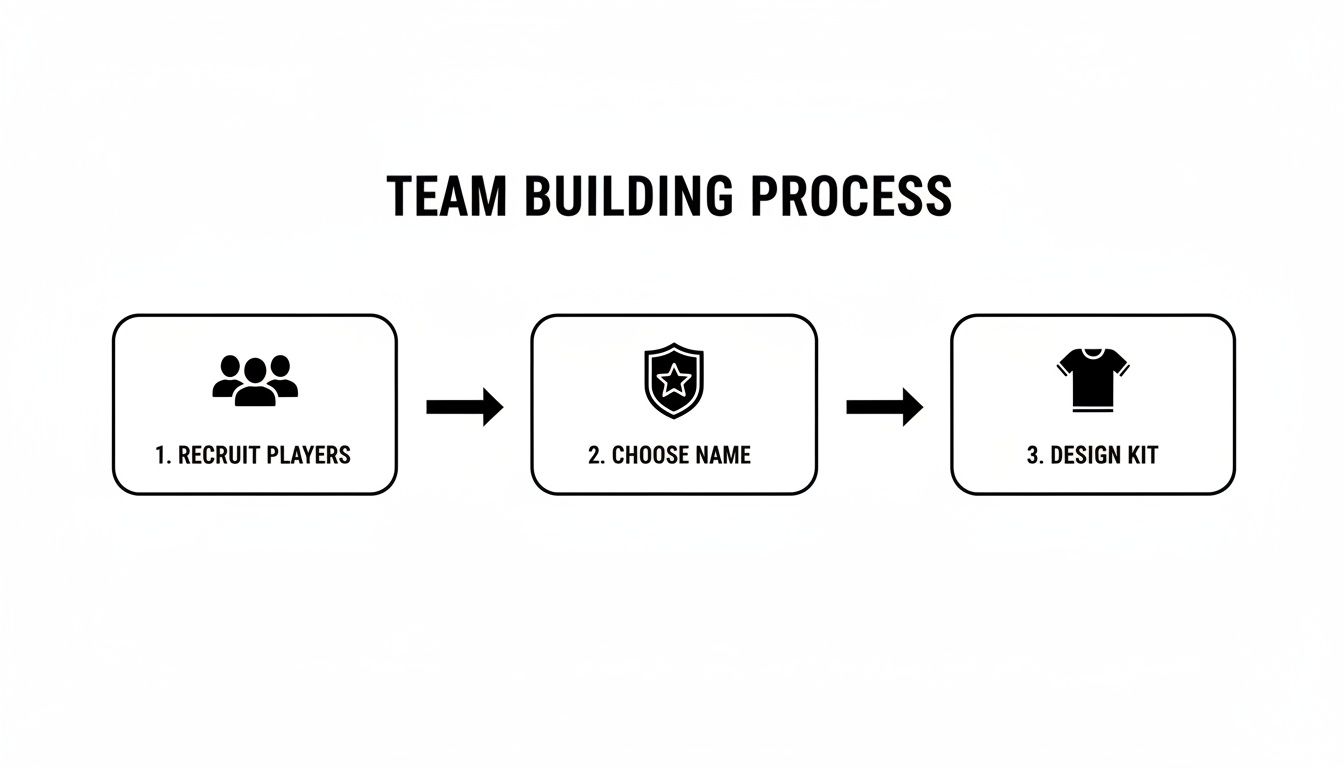
This process shows how the fun stuff—recruiting players, picking a name, and designing a kit—forms your team’s identity before you dive into the admin.
Managing the Club Finances
Now for the big one: money. Running a Sunday league team isn’t free, and being disorganised with cash is the fastest way for a new club to fold. Transparency is everything; your players deserve to know exactly where their money is going.
The best thing you can do is map out a simple budget for the season. This helps you figure out your total costs and then calculate what you need to charge each player. I’d strongly recommend setting up a dedicated club bank account. It keeps everything clean, separate from your personal funds, and makes tracking who has paid what a whole lot easier.
Think of your budget as your club's financial roadmap. A good one stops you from having those awkward mid-season cash panics and makes sure every cost is covered, from the ref’s fees to the end-of-season awards night.
To give you a realistic idea, here’s a sample breakdown of what a first-year budget might look like.
Sample First-Year Sunday League Budget
This table provides an estimated breakdown of the essential costs for a new Sunday league team for one season. Costs can vary a lot depending on your location and the league you join, but this is a solid starting point.
| Expense Item | Estimated Cost (GBP) | Notes |
|---|---|---|
| County FA Affiliation | £50 – £100 | Annual fee, usually includes mandatory insurance cover. |
| League Entry Fees | £100 – £300 | A one-off fee to register your team for the season. |
| Pitch Hire | £800 – £1,600 | Based on £50-£100 per game for around 16 home games. |
| Referee Fees | £480 – £800 | Based on £30-£50 per game for around 16 home games. |
| Full Team Kit | £400 – £800+ | A home kit for 16 players. An away kit will be extra. |
| Equipment | £100 – £200 | Match balls, training balls, a decent first-aid kit, bibs. |
| Total Estimated Cost | £1,930 – £3,800 | A realistic range for a new club's first season. |
As you can see, the costs add up quickly. Getting this on a spreadsheet early makes the next step much clearer.
Funding Your Season
So, how do you cover these costs? The most common way is by charging players 'subs'. This is usually a mix of an annual signing-on fee and a smaller match fee each week. For instance, you could charge £40 per player at the start of the season, and then £10 per game they play.
But relying only on subs can put a lot of pressure on your players and your treasurer. Finding a local sponsor can be a total game-changer, often covering a big one-off cost like your new kit.
To find one, put together a simple sponsorship proposal. Think about local businesses – pubs, builders, estate agents – and explain what's in it for them:
- Their company logo proudly displayed on the front of your team's shirts.
- Regular shout-outs and tags on your club's social media pages after a win.
- A framed team photo they can hang up in their office or shop.
By showing them clear value, you’re not just asking for a handout; you’re offering a genuine community partnership. It’s the kind of support that can secure your club’s finances and let you focus on what really matters: the football.
The Essential Kit and Equipment Checklist
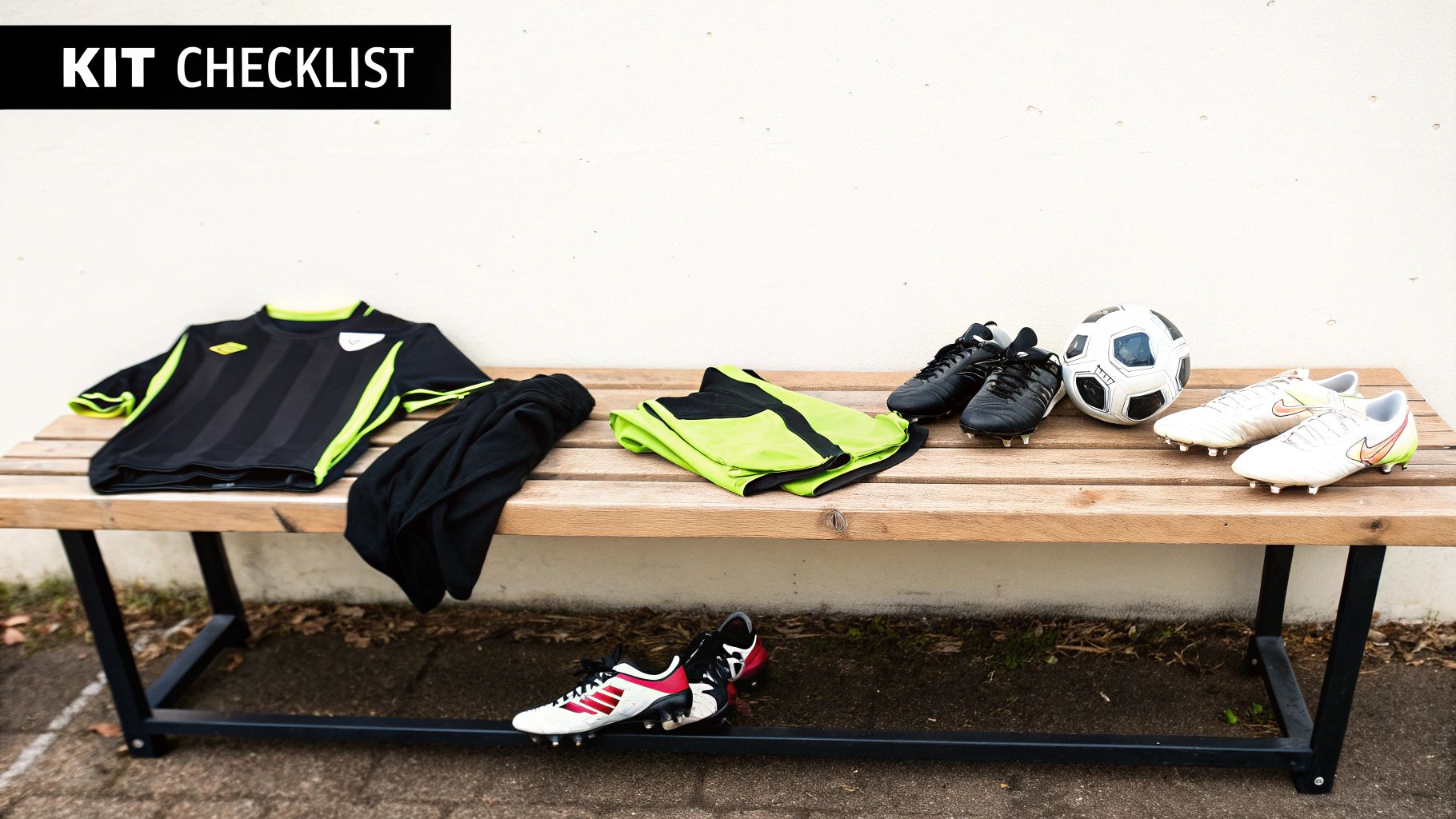
Let's be honest, looking the part is half the battle. A smart, unified kit doesn't just make your team look professional; it gives you an identity. Having the right equipment ensures you’re ready for anything the season throws at you, from a boggy pitch in November to a sun-baked cup final.
This is your definitive checklist for all the gear you'll need. We're focusing on value, durability, and practicality—everything a new Sunday league team needs to get started without breaking the bank.
Your team kit is your most visible asset. It’s more than just a shirt; it’s your club’s identity printed on fabric. Every extra game, cup run, or final means more exposure for your club colours and that all-important sponsor logo.
Matchday Kit Essentials
First things first: getting your matchday attire sorted is top priority. A full set of matching shirts, shorts, and socks for every player is the bare minimum. You'll need to think about both an outfield kit and a completely separate goalkeeper kit.
Here’s a simple breakdown of what to aim for:
- Home Kit: You'll need at least 16 outfield sets (shirts, shorts, and socks) in your primary club colours. Make sure they are clearly and correctly numbered.
- Away Kit: While it might not be mandatory for your very first season, having an away kit saves so much hassle. Even just a set of different coloured shirts is often enough to avoid clashing with the home team.
- Goalkeeper Kit: A dedicated keeper's kit is non-negotiable. This means a distinctively coloured jersey (usually long-sleeved and padded), with matching shorts or trousers, and a decent pair of gloves.
When you're picking a supplier, look for that sweet spot between cost and quality. You need kits that can handle muddy pitches, weekly washes, and the odd crunching tackle.
Training Gear And Equipment
A good training session needs more than just a couple of footballs. Being organised with the right gear means you can run drills that are actually productive and engaging, which is crucial for building team chemistry and fitness.
Once you have your gear, knowing how to use it properly is key. This principle applies whether you're setting up cones for a passing drill or assembling various types of sports equipment.
A solid training setup should include:
- Training Bibs: Get two sets in contrasting, bright colours. They're perfect for splitting into teams for small-sided games.
- Cones and Markers: A set of 20-30 cones or flat markers is invaluable for marking out drills, setting up sprints, or creating makeshift pitch boundaries.
- Weatherproof Tops: A set of rain jackets or drill tops is a brilliant investment for those cold, wet Tuesday nights. They keep morale up and, more importantly, body temperatures from dropping.
Having the right gear makes sessions run smoothly and shows your players that the club is taken seriously. For more ideas on getting your squad ready for practice, have a look at our guide on the perfect football training kit.
A well-stocked kit bag is a manager’s best friend. It’s the difference between a chaotic kickabout and a structured, beneficial training session that gets your team sharp for Sunday.
Footballs And Player Safety
Finally, you need the most important piece of equipment of all: the footballs. A common mistake new teams make is just buying one or two. You need a clear difference between your precious match balls and the ones that get blasted around in training.
Here’s what to get:
- Match Balls: Invest in two or three high-quality, FA-approved footballs (size 5). Keep these strictly for matchdays to make sure they stay in good nick.
- Training Balls: A bag of 5-10 durable training footballs is essential. These are going to take a beating, so focus on resilience rather than pristine quality.
Player safety has to be a top priority, too. While players are responsible for their own boots and shin pads, a well-stocked first-aid kit is the club's job. It needs to be at every single match and training session, containing everything from antiseptic wipes and bandages to freeze spray and sterile dressings. It's a non-negotiable part of your duty of care to the players.
Mastering Matchday Operations
So, you’ve sorted the admin, got the gear, and registered with a league. The paperwork is done. Now for the real stuff: the football.
A well-run team doesn't just stumble into success on a Sunday morning. It’s the result of solid, week-in, week-out organisation that makes everything run like clockwork. Getting your matchday operations dialled in is what separates the chaotic, one-season wonders from the clubs that last.
It all boils down to running decent training sessions, having a bulletproof pre-match routine, and sorting your post-match jobs efficiently. Get this right, and you can actually focus on winning games.
Organising Productive Training Sessions
Training is your secret weapon in Sunday league. It’s not just about getting fit; it’s your best chance to build a bit of team spirit, walk through some basic tactics, and get everyone singing from the same hymn sheet. Honestly, even one good session a week makes a world of difference.
Finding a decent place to train can be a headache. Start by looking at local school astroturf pitches, council-owned facilities, or even dedicated five-a-side centres. The goal is to find somewhere affordable and easy for most of your squad to get to.
Once you have a pitch, have a plan. Don’t just turn up and hope for the best. A bit of structure goes a long way:
- Warm-up: Kick off with dynamic stretches and light jogging. It gets the muscles ready and, more importantly, helps avoid those classic Sunday league hamstring pulls.
- Drills: Keep it simple and sharp. Passing triangles, shooting practice, and possession games like a 'rondo' are brilliant for improving touch and getting players thinking.
- Match Practice: Finish with a small-sided game, like 7v7. This is where you can test out formations and see if players understand their roles in a real-game scenario.
Most importantly, keep it fun and energetic. A good atmosphere at training is what builds the camaraderie you'll rely on when you're 2-1 down with ten minutes to go.
The Manager's Matchday Checklist
A smooth matchday is all about doing the prep work. The last thing you need is a mad panic an hour before kick-off because the kit's missing or you're two players short. Get a routine and stick to it religiously.
A simple checklist can be an absolute lifesaver. Think of it as your pre-flight inspection before the big game.
Your job as manager is to remove every possible excuse for a poor performance. A well-prepared team is a confident team. You handle the off-pitch details so your players can focus entirely on their jobs on it.
Remember, most leagues have promotion and relegation. Your results in the first year will decide which division you’re in next season. That's why having a reliable core of at least 14–16 registered players is so crucial—it helps you avoid forfeiting games and getting hit with fines. You can find out more about why squad depth is king over on londonfootball.uk.
Here’s a simple weekly checklist that just works:
- Confirm Availability (Mid-week): Get a message in the team WhatsApp group by Wednesday night. The poll feature is perfect for this: "Are you in for Sunday's game? Yes/No/Maybe." It gives you plenty of time to chase the stragglers.
- Sort the Kit (Saturday): Get the kit washed, packed, and ready to go the day before. Count the shirts, shorts, and socks. Don't forget the keeper's gloves and the first-aid kit.
- Prepare the Team Sheet (Saturday night): Once you know who's available, pick your starting XI and subs. Writing it down avoids any last-minute arguments or confusion in the changing room.
- Handle the Finances (Pre-match): Have the ref's fee in cash, ready in an envelope. If you're the home team, make sure you've got the pitch fee sorted too.
- Final Comms (Sunday Morning): Send one last message confirming the kick-off time, where you're meeting, and what colours you're playing in. Simple.
Crucial Post-Match Duties
The final whistle isn’t the end of your job. A few quick post-match tasks will keep your club in good standing with the league and make you look like a proper, professional setup.
First, you have to report the score. Most leagues have an online portal or a number you text the result to. You usually have to do it within a couple of hours of the final whistle. Forgetting is an easy way to pick up a fine, so make it a habit.
Thinking about the performance is also a great way to improve. Filming the match, even just on a phone, can help you analyse tactics and show players where they went right or wrong. For some great pointers, check out our guide on how to record your football matches like a pro.
Finally, the bit everyone hates: washing the kit. Don't get stuck with it yourself! Create a rota so a different player is responsible each week. Sharing the load keeps everyone invested and stops it from becoming one person’s thankless chore.
Your Sunday League Questions Answered
Starting a Sunday league team is a massive undertaking with a ton of moving parts. To cut through the noise, we’ve put together some straight-talking answers to the questions that every new manager asks. Think of this as your cheat sheet for the nitty-gritty of running your club.
How Much Does It Realistically Cost to Run a Sunday League Team?
Let’s get the big one out of the way first: the budget. This is often the biggest headache for a new club, and honestly, it varies. A typical first-year budget can land anywhere between £1,500 and £3,000, depending massively on your league and where you’re based.
This figure covers the non-negotiables you'll be hit with in your first season.
- County FA Affiliation: Budget for around £50-£100 for your annual registration. It's the first hurdle.
- League Entry Fees: This is a one-off payment, usually falling somewhere between £100-£300.
- Pitch Hire: Often the biggest drain on the bank account. Expect to pay £50-£100 for every single home game.
- Referee Fees: You can't play without one. Set aside about £30-£50 for every home match.
- Team Kit & Equipment: A full team kit will probably set you back £400-£800. You’ll also need another £100-£200 for decent footballs and a first-aid kit.
So how do you cover all that? Most teams do it through player subs. This usually means a one-off signing-on fee at the start of the season, followed by a weekly match fee of around £10-£15.
What Are the Core Responsibilities of the Team Manager?
As the gaffer, you’re the glue that holds the entire operation together. Your role is central to whether the team succeeds or falls apart, so being organised isn’t just a good idea—it’s essential.
Your main jobs include registering the club with the County FA and your league, sorting out all the player registrations, and keeping a firm grip on the finances. That means chasing subs from the lads and making sure the league and refs get paid on time. You'll also be the one arranging fixtures, booking pitches, and sending out the weekly WhatsApp message to the squad.
Don't try to be a one-person show. The best managers delegate. Appointing a club treasurer to handle the money or a social secretary to organise the end-of-season do is a game-changer. It prevents burnout and gets more people invested in the club.
What Happens if We Cannot Field a Team?
Forfeiting a match is the absolute last resort. Seriously, avoid it at all costs. Leagues are incredibly strict about this, and failing to show up for a fixture will almost certainly land you a fine, usually in the ballpark of £50-£100.
On top of the fine, you can expect a points deduction. Even worse, you might be forced to cover your opponent's pitch hire costs. This is exactly why building a reliable squad of 16-18 players from day one is so important; it gives you a buffer for injuries, holidays, and the inevitable last-minute dropouts. If you forfeit games regularly, you risk getting kicked out of the league. If you're struggling for numbers, always give the league and your opposition as much warning as you can.
How Can We Find a Local Sponsor?
Landing a local sponsor can feel like winning the lottery, especially as it can cover a huge initial cost like your first team kit. Start by hitting up businesses in your local area—think pubs, estate agents, takeaways, or construction firms.
Put together a simple, one-page sponsorship proposal that clearly spells out what’s in it for them. It has to be a two-way street. Show them what they get for their money.
- Brand Exposure: Their logo on your kits, seen by hundreds of people every weekend.
- Social Media Promotion: Offer to give them regular shout-outs and tags on your team’s Instagram and Twitter.
- Community Goodwill: Make it clear their money is supporting a local community team. It’s great for their image.
A smart move is to offer different sponsorship tiers. A main kit sponsor is the big one, but you could also have a training kit sponsor or a player-of-the-month sponsor to attract businesses with smaller budgets. And a small gesture, like giving them a framed team photo for their office wall, goes a long way.
Building a Sunday league team from scratch is a rewarding grind. From finding enough players to turn up on a cold November morning to celebrating your first scrappy win, every step becomes part of your club's story. To make sure your team looks the part, SoccerWares has all the high-quality gear you'll need. Check out our range of customisable kits, training wear, and top-tier equipment at https://soccerwares.com.