

A complete junior goalkeeper kit is more than just a different coloured shirt; it's a specialised set of armour built for safety, confidence, and performance. Unlike an outfield player, a keeper's gear must withstand high-impact dives and provide a reliable grip, giving young players the tools they need to command the penalty area.
What Every Young Goalkeeper Needs in Their Kit Bag
Stepping onto the pitch for the first time is a massive moment for any young footballer, but for a goalkeeper, it requires a unique kind of bravery. The position demands courage and lightning-fast reflexes, and having the right equipment is the first step in building the confidence to pull off that match-winning save.
A proper kit isn't just about looking the part—it’s about protecting a young player from the scrapes, bruises, and jarring impacts that come with the territory. From the gloves that cling to the ball to the padding that cushions a fall, every piece has a job to do. Understanding these components helps parents make informed choices, ensuring their child is safe, comfortable, and ready for action.
Before we dive deep, here’s a quick overview of what a young keeper needs in their bag. Think of this as their essential toolkit for the goal line.
Junior Goalkeeper Kit Essentials at a Glance
| Kit Component | Main Purpose | Key Feature to Look For |
|---|---|---|
| Goalkeeper Gloves | Grip and hand protection | Latex palm for grip, finger protection if needed |
| Padded Jersey | Impact absorption for upper body | Elbow padding is a must |
| Shorts/Trousers | Hip and thigh protection | Padded hip panels for hard landings |
| Football Socks | Holding shin guards in place | Long, durable, and snug-fitting |
| Shin Guards | Lower leg protection from kicks | Hard outer shell, comfortable inner lining |
Now, let's break down why each of these items is so important.
The Five Core Components
Every junior goalkeeper's kit bag should have five essential items that work together as a complete protective system. Think of them as the fundamental building blocks for any aspiring shot-stopper.
- Goalkeeper Gloves: This is a keeper's most critical tool. They provide the grip needed to catch and hold the ball securely while protecting palms and fingers from stinging shots. Honestly, for protecting their hands and guaranteeing a firm grip, investing in high-quality youth football gloves is one of the best decisions you can make.
- Padded Jersey: A goalkeeper's jersey is usually long-sleeved and features padding on the elbows, and sometimes the shoulders, to absorb the shock from diving saves.
- Durable Shorts or Trousers: Goalkeeper bottoms, whether shorts or full-length trousers, come with padding on the hips. This is vital for protecting them against hard landings on all types of surfaces.
- Supportive Socks: Long football socks are a must for holding shin guards tightly in place throughout a match. Nothing is more distracting than a shin pad that keeps slipping.
- Shin Guards: This is a non-negotiable safety item for every player on the pitch. Shin guards protect the lower legs from kicks, tackles, and stray boots.
With youth football booming here in the UK, the demand for this kind of specialised gear has shot up. FA data shows a massive 28% increase in under-12 registrations since 2020, with an estimated 45,000 of these young players pulling on the gloves. This trend is part of a much bigger global market for kids' sports equipment, which topped USD 4.9 billion in 2023.
Keeping all this essential gear in one place is simple with the right bag. Check out our guide on finding the best football bags with a boot compartment to keep their muddy boots separate from the rest of their kit.
Finding the Perfect Fit for Growing Keepers
A goalkeeper's kit should feel like a second skin, not a parachute that gets in the way of a crucial save. For young players, the right fit is about more than just comfort; it ensures protective padding stays exactly where it’s meant to be during a dive and allows for complete freedom of movement. Nailing the measurements is the first step to finding a kit that boosts both confidence and performance.
This simple flowchart breaks down the key areas to measure, starting with the most important tool a keeper has: their gloves.
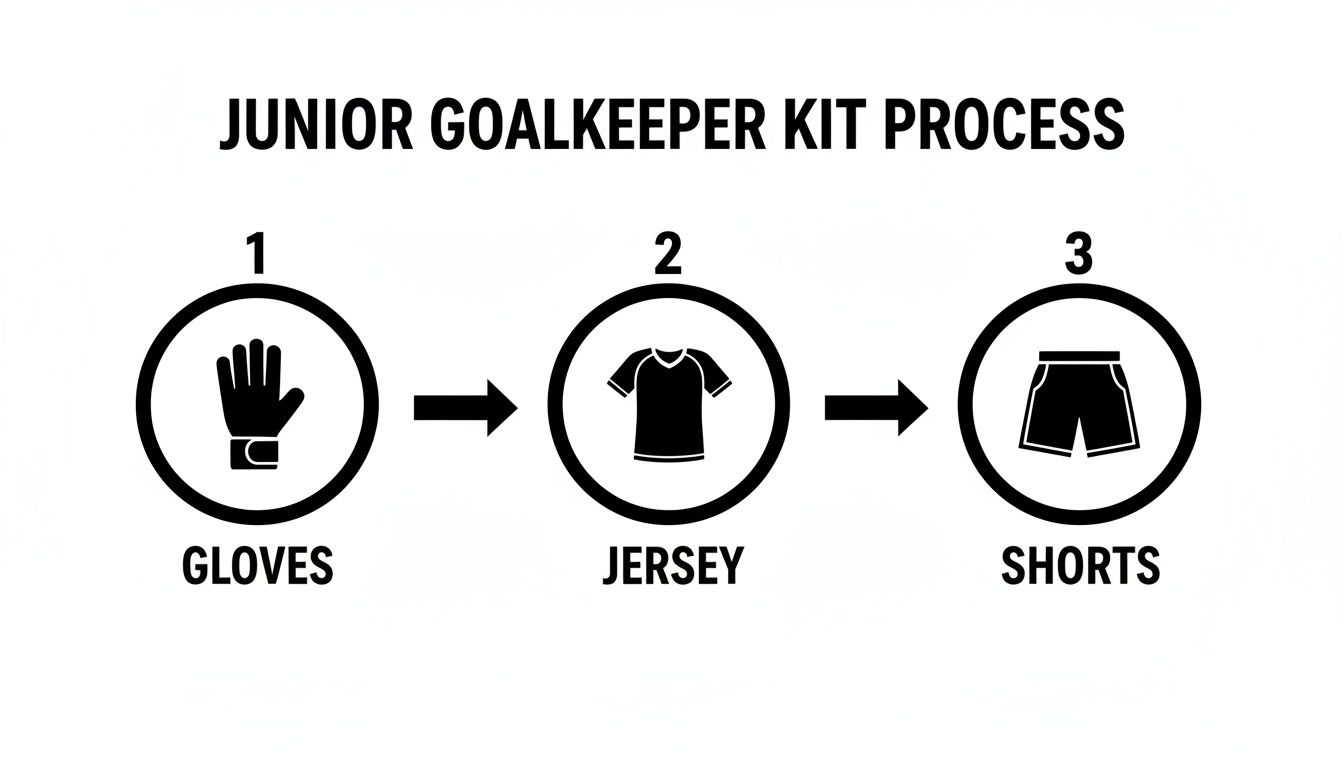
As you can see, the process starts with the hands and moves on to the jersey and shorts, ensuring each piece is measured correctly for a perfect fit.
Measuring for Success
Accuracy is key here, but don't worry—you don't need to be a professional tailor. A simple tape measure and a few minutes are all you need to get this right.
Start with the most specialised item: the goalkeeper gloves. Hand sizes can be tricky, so it's best to measure precisely. You can learn everything you need to know from our detailed SoccerWares goalkeeper gloves size guide, which makes finding the perfect pair dead simple.
For the jersey and shorts, you just need to focus on three main measurements:
- Chest: Measure around the fullest part of your child’s chest, keeping the tape nice and level.
- Waist: Measure around their natural waistline, which is usually just above the hips.
- Height: Having an accurate height measurement gives you a great baseline for the overall kit size.
With these numbers in hand, you can confidently check them against the sizing charts you'll find on our product pages. It completely takes the guesswork out of shopping online.
Finding the Right Balance Between Snug and Spacious
The ideal junior goalkeeper kit fits snugly enough that the padding on the elbows and hips doesn't shift around during play. If the kit is too loose, that protection becomes pretty much useless, sliding away from the impact zones just when a keeper dives.
However, it can't be restrictive. A young keeper needs to stretch, jump, and dive without their clothing pulling or bunching up. A good rule of thumb is to look for a fit that allows a full range of motion while keeping all the protective features securely in place.
When choosing a junior goalkeeper kit, aim for what's often called a "performance fit." This means the jersey and shorts should contour to the body without feeling tight, allowing the player to move explosively without any hindrance from their gear.
It's also wise to leave a little room for growth, but not too much. A kit that’s one size too big can be just as problematic as one that’s too small. The goal is to find gear that will last the season without compromising safety or mobility in those first few months. When it comes to boots, using a definitive sizing guide for athletic footwear can also help you find that perfect balance between comfort and performance.
Understanding the Materials in Modern Goalkeeper Gear
What really separates a good junior keeper kit from a great one? It’s not just the badge or the bright colours—it’s the materials it's made from. Understanding these materials helps you choose gear that’s comfortable, durable, and actually helps them play better.
Modern kits are impressive pieces of engineering. They're designed to keep players dry, protect them from knocks, and let them move freely. Looking beyond the surface helps you appreciate the thought that goes into crafting equipment for one of football's toughest positions.
The Science Behind the Shirt
Gone are the days of heavy, sweat-soaked cotton jerseys. Today’s keeper shirts are made from advanced synthetic fabrics, and polyester is king for some very good reasons.
- Moisture-Wicking Power: Polyester fibres don’t soak up sweat. Instead, they pull it away from the skin and push it to the surface of the shirt to evaporate. This keeps your young keeper dry, light, and focused on the game, not on a damp, clingy top.
- Breathability and Ventilation: You’ll often find mesh panels cleverly placed in high-heat areas, like under the arms and across the back. This simple design lets air flow through, stopping them from overheating during a frantic last ten minutes.
- Durability: Let’s face it, a keeper's jersey takes a beating. Polyester is incredibly resilient and stands up to the constant diving, stretching, and washing without losing its shape or vibrant colour.
This shift to high-performance gear is a big part of the booming youth football scene. It’s no surprise that the global football shirts market is projected to jump from USD 12.6 billion in 2023 to USD 20.3 billion by 2031. Here in the UK, youth football spending hit an estimated £450 million, with goalkeeper shirts making up a chunky £36 million of that. If you're interested in the numbers, you can find out more on Verified Market Research.
Decoding Glove Technology
A keeper’s gloves are their most important tool, and the palms are almost always made from latex. But not all latex is the same.
The grip of a goalkeeper's glove is its superpower. A quality latex palm creates the friction needed to snatch a fast-moving ball out of the air, giving a young player the confidence to catch cleanly instead of just punching it away.
Different types of latex offer a trade-off between amazing grip and long-lasting durability. Softer latex gives you that incredible, sticky grip but wears out faster, so it’s best saved for matches. A harder, more durable latex is perfect for training, where the gloves will face hundreds of shots.
On top of that, many junior gloves now come with ‘finger save’ technology. These are rigid spines that sit in the back of the fingers to stop them from bending backwards when facing a powerful shot—a brilliant safety feature for still-developing hands.
Prioritising Safety with the Right Protective Features
For any parent watching from the sidelines, your child’s safety is everything. Football is a fantastic sport, but the goalkeeper position comes with some unique physical demands. This is precisely why a junior goalkeeper kit is built with specific protective features that are non-negotiable for young players learning the ropes.
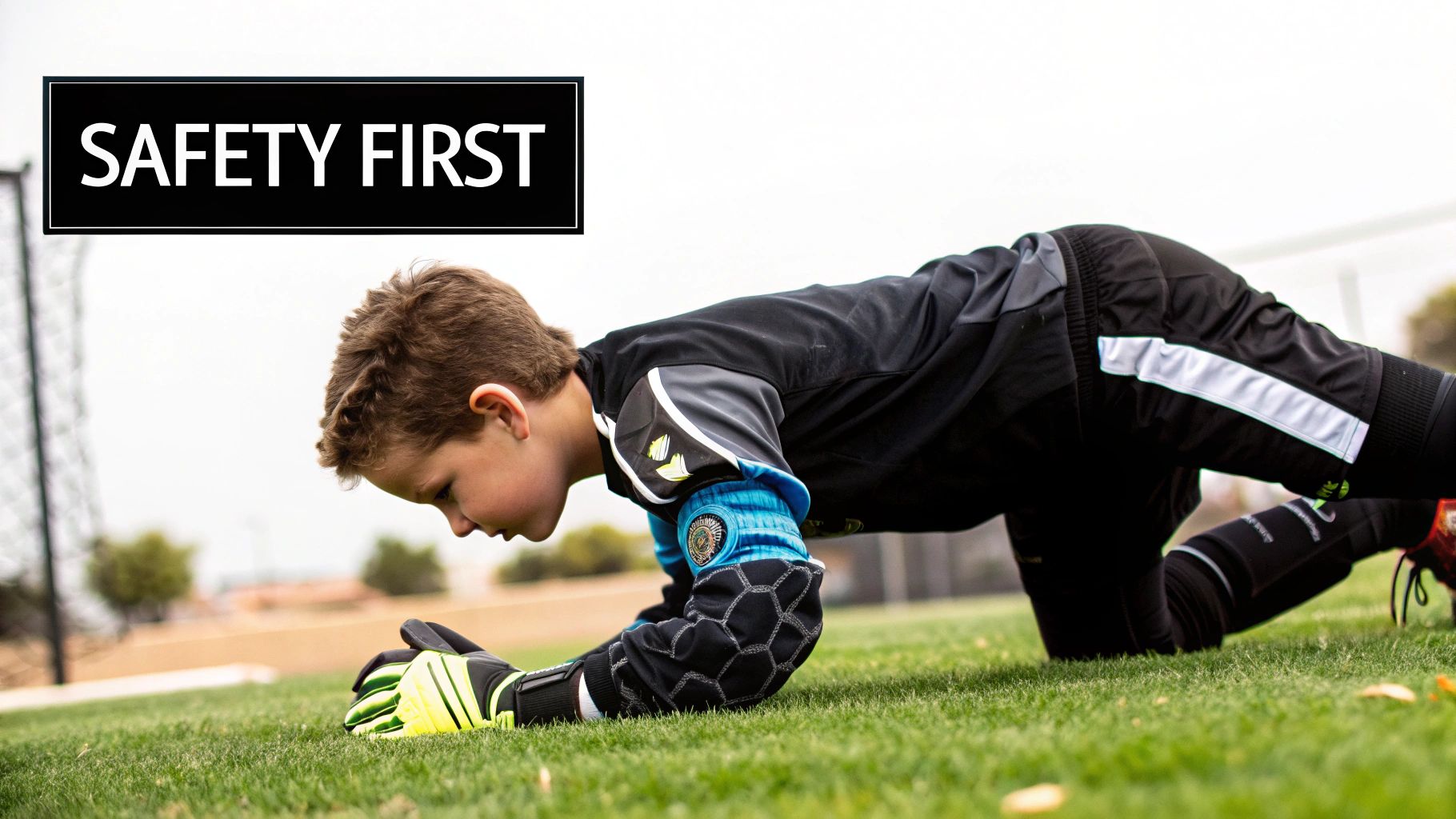
These features aren't just cosmetic add-ons; they are properly integrated components designed to absorb impact and reduce the risk of scrapes, bruises, and more serious injuries. Knowing what to look for gives you peace of mind that your young star is well-protected out there.
Thankfully, the focus on safety in youth football has grown, influencing everything from coaching methods to equipment design. In fact, the UK's soccer uniform market, which includes these vital kits, was valued at a huge USD 571.48 million in 2024 and is only expected to grow. This is partly driven by updated safety rules from bodies like the English Youth FA, which now mandate features like padded collars and reinforced elbows on keeper jerseys. These changes have made a real difference, with concussions in youth matches dropping by 18% following the adoption of better gear. You can dig into more data on the UK's growing soccer uniform market on Deep Market Insights.
Core Protective Elements
When you're looking at a potential kit, there are a few key areas where protection is absolutely paramount. These are the high-impact zones that take a real battering during a match or training session.
- Reinforced Elbow Padding: This is a must-have. When a keeper dives sideways, their elbow is often one of the first things to hit the ground. Good quality padding here cushions the blow, preventing painful jarring and nasty scrapes.
- Padded Hip Panels: Whether on shorts or full-length trousers, padding on the hips is crucial. Diving to smother a low shot means landing hard on your side, and this protection absorbs the shock, especially on firm ground or artificial pitches.
- Durable Materials: The fabric itself is a protective feature. A good kit uses tough, abrasion-resistant materials that won't easily rip or tear after a few slides, offering a reliable barrier between your child's skin and the turf.
Beyond the Basic Kit
While the jersey and shorts cover the upper and lower body, a complete safety system includes a couple more essential items. These pieces work together with the main kit to provide comprehensive, all-round protection.
Think of a goalkeeper's protective gear as a layered system. Each piece has a specific job, and when combined, they create a shield that gives a young player the confidence to be fearless and commit to every save.
An often-overlooked but hugely beneficial item is a padded base layer. Worn underneath the jersey, these compression-style tops can offer extra protection on the ribs and shoulders—areas not always covered by standard jersey padding.
And of course, properly fitted shin guards are non-negotiable for every player on the pitch. They're especially important for keepers who often face close-range shots and chaotic goalmouth scrambles. Make sure they fit snugly and cover the entire shin area without slipping. For a deeper dive into staying safe, we've put together some excellent football injury prevention tips you might find useful.
How to Care for Your Kit and Make It Last
A quality junior goalkeeper kit is an investment in your child's love for the game. With a little bit of care, you can easily make that gear last the entire season, keeping it looking sharp and performing brilliantly right up to the final whistle.
Getting the maintenance right doesn't just save you money; it ensures their kit is always in top condition for match day.
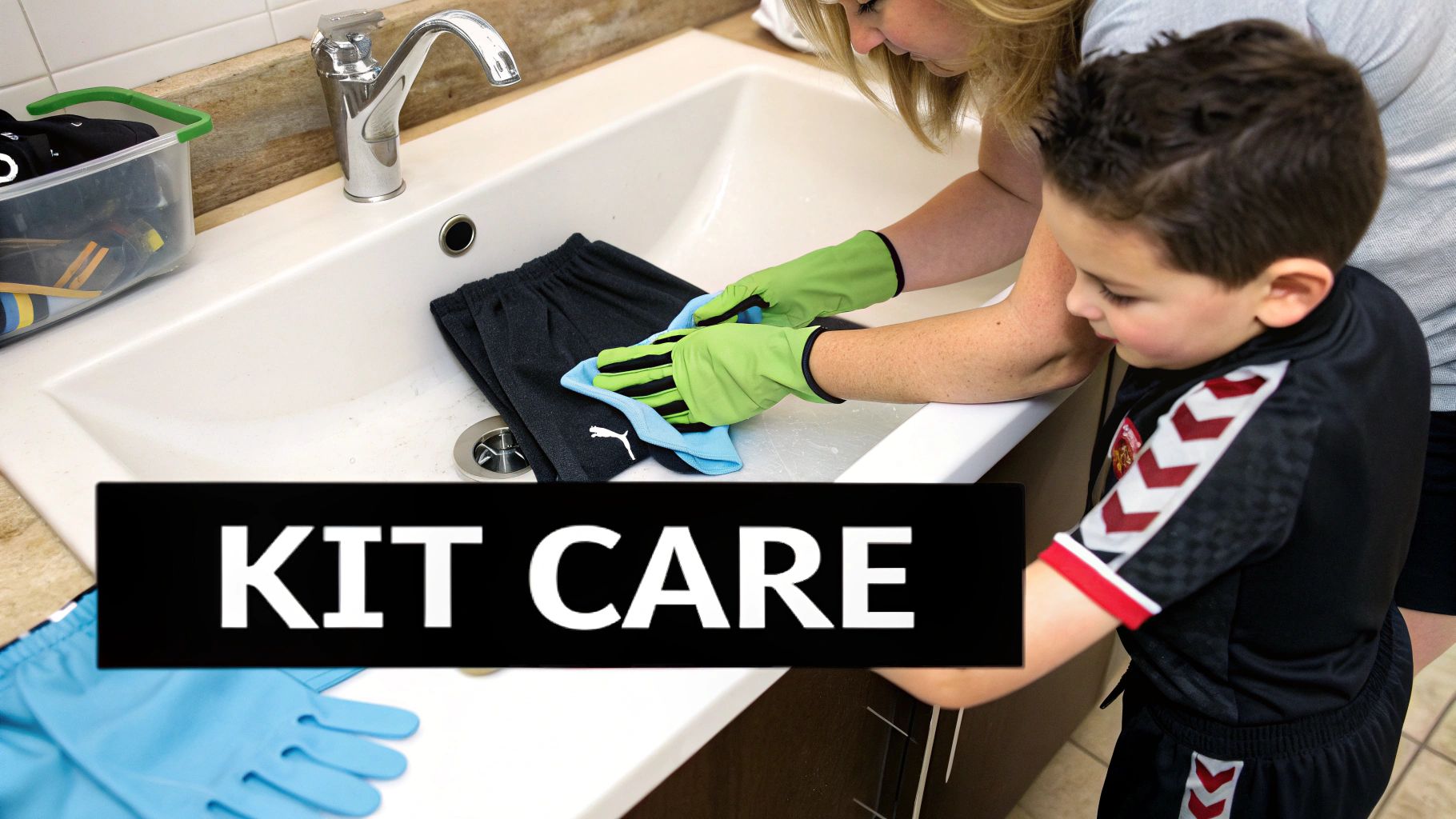
The most delicate part of any keeper’s setup is the gloves. Those soft latex palms that provide such fantastic grip are also the first to get damaged by dirt and improper washing. Nailing the cleaning process is the secret to keeping that all-important stickiness alive.
Washing Goalkeeper Gloves the Right Way
Whatever you do, never throw goalkeeper gloves into a washing machine or tumble dryer. The heat and harsh detergents will destroy the delicate latex, leaving it brittle and useless. Hand-washing is the only way to go.
Just follow these simple steps after every single use:
- Rinse Immediately: Get them under some lukewarm water to rinse off the worst of the mud and grass. Avoid hot water, as it can damage the latex.
- Gentle Clean: Squeeze a tiny amount of specialist glove wash or mild soap into your palm. Gently rub the palms of the gloves together, working up a light lather to lift out the grime.
- Rinse Thoroughly: Hold the gloves under running lukewarm water and squeeze gently until all the soap is gone and the water runs clear.
- Squeeze, Don't Wring: Carefully squeeze out the excess water. Never wring or twist the gloves, as you'll risk tearing the seams and damaging the foam.
Pro Tip: Keeping goalkeeper gloves slightly damp is a trick of the trade. Once they've air-dried, storing them in a proper glove bag stops the latex from drying out and becoming brittle. This one small step can extend their grippy lifespan significantly.
Caring for Jerseys and Shorts
Thankfully, the rest of the keeper kit is much easier to look after. The durable polyester fabrics are designed to be machine washable, but a few simple habits will keep them looking their best.
- Wash Inside Out: Turning jerseys and shorts inside out is a must. It protects any logos, club badges, and padded areas from getting battered in the machine.
- Use a Cool Cycle: Always wash the kit on a cool setting (around 30°C) with a gentle detergent. This stops the colours from fading and protects the structure of the padding.
- Air-Dry Only: Just like the gloves, keep the kit well away from the tumble dryer. The intense heat can shrink the material and damage the foam padding. Hang everything on a line or drying rack away from direct sunlight.
Essential Training Gear to Complement the Kit
Once you’ve got the core junior goalkeeper kit sorted, the right accessories can really sharpen a young keeper’s skills. Think of this gear as the next level of support—tools designed to make training sessions more effective and a lot more fun.
Investing in a few key pieces of equipment can make a massive difference in their development. These tools help bridge the gap between just having the gear and actively improving their technique between the posts.
Building a Better Goalkeeper
Certain training aids are specifically designed to hone a goalkeeper’s unique skills, focusing on things like reaction time, agility, and handling.
- Football Rebounder: This is a fantastic tool for solo practice. It sends the ball back at different angles and speeds, forcing a keeper to think fast and perfect their diving and catching technique without needing a teammate.
- Agility Cones and Ladders: Setting up simple drills with cones or a ladder is brilliant for improving footwork. Quick feet are crucial for getting into the right position for a save.
- Durable Kit Bag: Keeping everything organised is half the battle. A sturdy kit bag with different compartments ensures their gloves, boots, and kit stay protected and are easy to grab before a match.
The best training gear doesn't just build muscle; it builds confidence. When a young keeper knows they have the tools to practise effectively, they're far more likely to push themselves and see real progress.
To fully equip your young star, don't forget the essentials that fuel their performance. A high-quality, size-appropriate football from the SoccerWares range allows for realistic practice, while a dedicated stainless steel water bottle ensures they stay properly hydrated throughout every session. These simple additions complete their setup, providing everything they need to train like a pro.
For more ideas on how to use this gear effectively, you can find a range of excellent goalkeeping training drills to try out.
Got Questions? Let's Get Them Answered
Choosing the right kit for a young keeper can throw up a few last-minute questions. To make sure you’re picking the perfect gear with confidence, we’ve tackled some of the most common queries we hear from parents.
Goalkeeper Shorts or Trousers: Which is Better for My Child?
This often comes down to personal preference and where they're playing. Goalkeeper trousers are fantastic for offering full-leg protection and extra warmth, which is a lifesaver for training on rougher surfaces like astro-turf or during those chilly British winter months.
On the other hand, shorts give them more freedom of movement and are usually the top choice for matches in milder weather. A great strategy is to have both in their kit bag. That way, they can adapt to whatever the pitch or the weather forecast throws at them.
What’s the Best Goalkeeper Glove Cut for a Young Player?
For junior keepers just starting out, the 'Flat Palm' and 'Roll Finger' cuts are the most popular and practical choices. They each bring something different to the table for a developing goalie.
- Flat Palm: This cut has a slightly looser feel and gives a large, flat surface area for catching the ball. It’s a brilliant starting point for absolute beginners learning the ropes.
- Roll Finger: This style wraps the latex right around the fingers for a much snugger fit. That extra latex boosts both grip and cushioning, which is great for taking the sting out of powerful shots.
Think of it like this: the Flat Palm is perfect for learning the basics of handling, while the Roll Finger often becomes the go-to as a young keeper's confidence and technique grow.
How Often Should I Replace a Junior Goalkeeper Kit?
This really boils down to two things: how fast your child is growing and the amount of wear and tear the kit gets. Jerseys and shorts will usually last a full season, but it's time for a replacement once they start looking too small or if the padding is visibly flattened or worn down.
Goalkeeper gloves, though, are a different story. They have a much shorter lifespan because of the constant friction on the delicate latex palms. For a child training once or twice a week, a decent pair might see them through the season. But having a separate, higher-quality pair just for match days is always a smart move.
Ready to build the perfect junior goalkeeper kit? You can find everything you need at SoccerWares. Dive into our collection of top-quality training gear and fan essentials to support your young star on their football journey. Shop the full range today at SoccerWares.