

A size 3 football is the official ball for young players aged 6 to 9. It’s not just a smaller version of an adult ball; it's a specialised piece of equipment, carefully designed to match their smaller frames and developing skills. Choosing the right size is the first step in setting any aspiring young footballer on the path to success.
Understanding the Size 3 Football
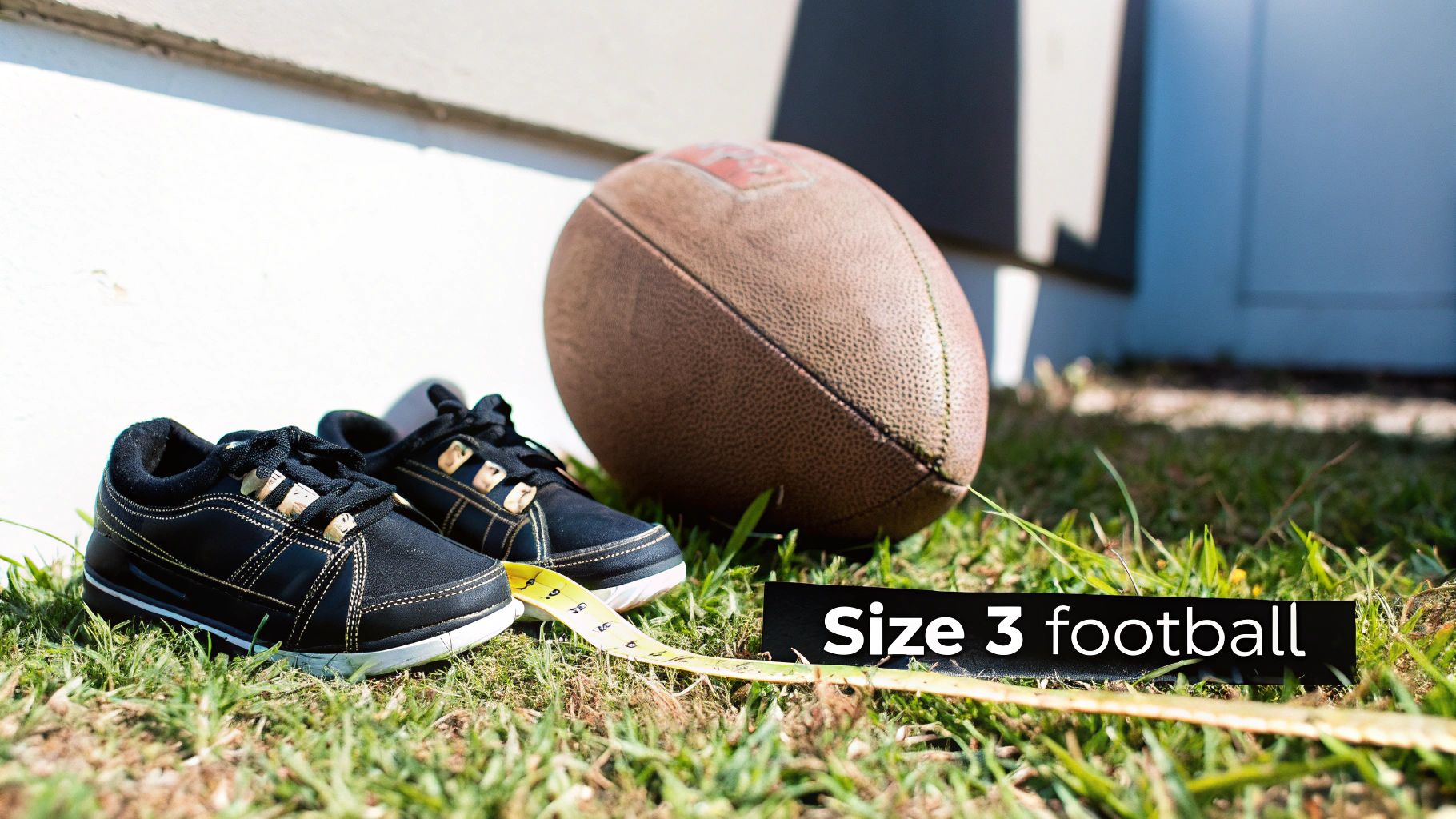
Think of a size 3 football as a child's first proper bicycle. It’s small enough, light enough, and manageable enough for them to learn the fundamentals correctly and safely. Using the right-sized ball is crucial for building a solid foundation in the sport.
When young players are forced to use a ball that's too big or heavy, they compensate. They might kick with their toe or swing their body awkwardly, leading to bad habits that are difficult to unlearn and can even risk injury. A size 3 ball, however, allows them to pass, dribble, and shoot with proper technique and confidence. It makes the game more enjoyable and encourages them to keep playing.
Size 3 Football at a Glance
The design of a size 3 football is specifically calibrated for young players. Its size and weight are the two most important factors, making it perfect for smaller feet and developing muscles.
Here’s a quick summary of the key specifications for a size 3 ball.
| Specification | Measurement | Recommended Age Group |
|---|---|---|
| Circumference | 23–24 inches (58–61 cm) | 6–9 years old |
| Weight | 11–12 ounces (310–340 grams) | 6–9 years old |
These specifications ensure the ball is light enough to kick properly without strain and small enough for young players to get their foot around for better control.
Why It's the Standard for Youth Football
In the UK, the size 3 football is a cornerstone of youth development, especially for the under-7 to under-9 age groups, aligning perfectly with grassroots initiatives from The Football Association (FA). This focus ensures young talent is nurtured with the correct equipment from their very first kick.
A size 3 ball is engineered to give young players a positive first experience with football. Its lighter weight and smaller size reduce the fear of impact and make skills like heading and shooting feel much more approachable for children.
This tailored approach is vital for long-term player development. It can be confusing trying to understand all the different sizes, which is why we have created a complete breakdown. Check out our guide on the different football sizes by age for more detailed comparisons.
Ultimately, the goal is simple: give young players a ball that feels natural, builds their confidence, and helps them fall in love with the beautiful game.
Why Ball Size Is Crucial for Young Players
Picking the right football isn't just about following league rules. It's one of the most important decisions you can make for a young player's safety, skill development, and, most importantly, their enjoyment of the game.
Handing a child a ball that’s too big or heavy is like asking them to run a race in oversized shoes. They might manage it, but their form will be all wrong, they'll tire quickly, and they're far more likely to get hurt.
A size 3 football is engineered to prevent that. Its lighter weight and smaller circumference are designed to work with a child's body, not against it. This simple but critical choice protects their joints and muscles from the strain that comes with kicking a heavy, adult-sized ball.
Nailing the Right Technique from Day One
When a child tries to use a ball that’s too big, they naturally start to compensate. You'll see them toe-poking it just to make it move or taking a huge, clumsy swing for a simple pass. These aren't just bad habits; they become ingrained muscle memory that's difficult to correct later on.
A size 3 ball, on the other hand, encourages proper form right from the start. Because it's a manageable size, young players can learn to:
- Strike the ball cleanly with the correct part of their foot, not just their big toe.
- Develop a delicate first touch that doesn’t send the ball bouncing miles away.
- Pass and shoot with accuracy, because they don't have to sacrifice technique just to generate power.
By giving them equipment that fits, you're setting them up to learn the fundamentals properly from their very first training session.
Building Confidence and Slashing Injury Risk
Confidence is everything in football. A young player who feels in control of the ball is one who will be more creative—they'll take a player on, experiment with turns, and won't be afraid to make mistakes. A size 3 ball feels natural at their feet, encouraging that creativity and removing the frustration that comes with wrestling a bigger ball. This positive reinforcement is what builds a genuine love for the sport.
Using the right-sized ball is also a massive safety issue. An oversized ball puts significant stress on a child’s knees, ankles, and hip flexors, increasing the risk of sprains and strains. The correct size ensures the game's physical demands match their stage of development.
This focus on safety and development is finally getting the recognition it deserves across the UK. Youth league data shows that 68% of under-12 matches now mandate the use of age-appropriate balls, a huge jump from just a few years ago.
This shift has been directly linked to a 15% reduction in injury rates, primarily because players have better control and there’s less strain on their growing muscles. If you want to dive deeper into the data, you can explore the full report on youth football standards here. Ultimately, the right ball does more than just teach skills; it keeps our children safe on the pitch.
Comparing Size 3 Footballs to Other Sizes
To truly appreciate why a size 3 football is so important, you need to see where it fits in a player's journey from their first kickabout to stepping onto a full-sized pitch. Footballs aren't a one-size-fits-all product. Each size is a deliberate stepping stone, designed to match a player's physical and technical development at every stage.
Think of it like learning to ride a bicycle. You wouldn't put a five-year-old on a full-sized adult bike. They’d start with stabilisers, move to a smaller frame, and gradually work their way up. Footballs follow the same logic, ensuring children can build skills, confidence, and a love for the game without struggling against equipment that's too big for them.
Official Football Size Guide
The size 3 football is the official match ball for young players taking their first steps into organised team football. It’s a crucial part of a structured system that supports their growth. This quick guide puts the size 3 into context, showing you the complete progression from toddler-friendly balls to the professional standard.
Having the right ball isn’t just a recommendation; it's fundamental to proper development. As a player gets stronger and more coordinated, they graduate to a bigger, heavier ball that offers the right level of challenge. This keeps them learning effectively and, just as importantly, safely.
| Ball Size | Recommended Age | Circumference (Inches) | Weight (Ounces) |
|---|---|---|---|
| Size 1 | All Ages (Skill/Fun) | 18–20 in | ~7 oz |
| Size 2 | Ages 3–6 (Training) | 20–22 in | 7.5–10 oz |
| Size 3 | Ages 6–9 (Matches) | 23–24 in | 11–12 oz |
| Size 4 | Ages 9–14 (Matches) | 25–26 in | 13–15 oz |
| Size 5 | Ages 14+ (Professional) | 27–28 in | 14–16 oz |
A quick look at the numbers highlights how big the jumps are. Imagine a seven-year-old trying to kick a size 5 ball. At nearly 16 ounces, it's far too heavy, which can strain their muscles, compromise their kicking technique, and ultimately make the game less fun.
The infographic below reinforces how a size 3 ball is the perfect tool for building core skills in young players, focusing on control, technique, and safety.
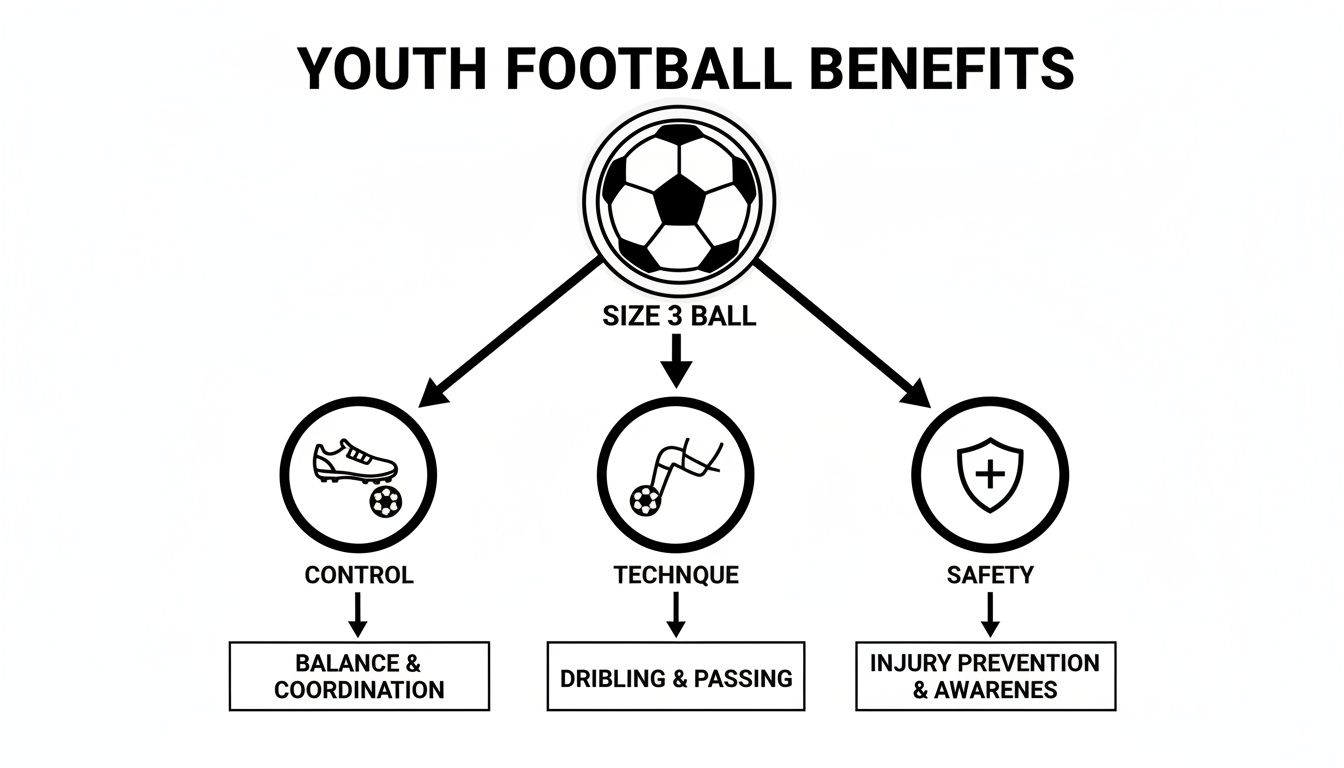
As you can see, getting the ball size right isn't a minor detail—it's the foundation for building a confident and competent young player.
From Size 3 to the Next Step
As children reach the age of 8 or 9, they begin preparing for the next level. This stage in their football education involves a slightly bigger and heavier ball, designed to ready them for the faster, more physical game they'll encounter as they get older.
Moving from a size 3 to a size 4 ball is a significant milestone for a young player. It signifies that they have built the foundational strength and control needed to handle more without their technique suffering.
This gradual, logical progression is key to long-term development. If you want to get ahead of the curve, check out our in-depth guide to the size 4 soccer ball. It explains everything you need to know about the next phase for players aged 9 to 14. This structured pathway gives every child the best chance of developing a lasting passion for the beautiful game.
How to Choose the Best Size 3 Football
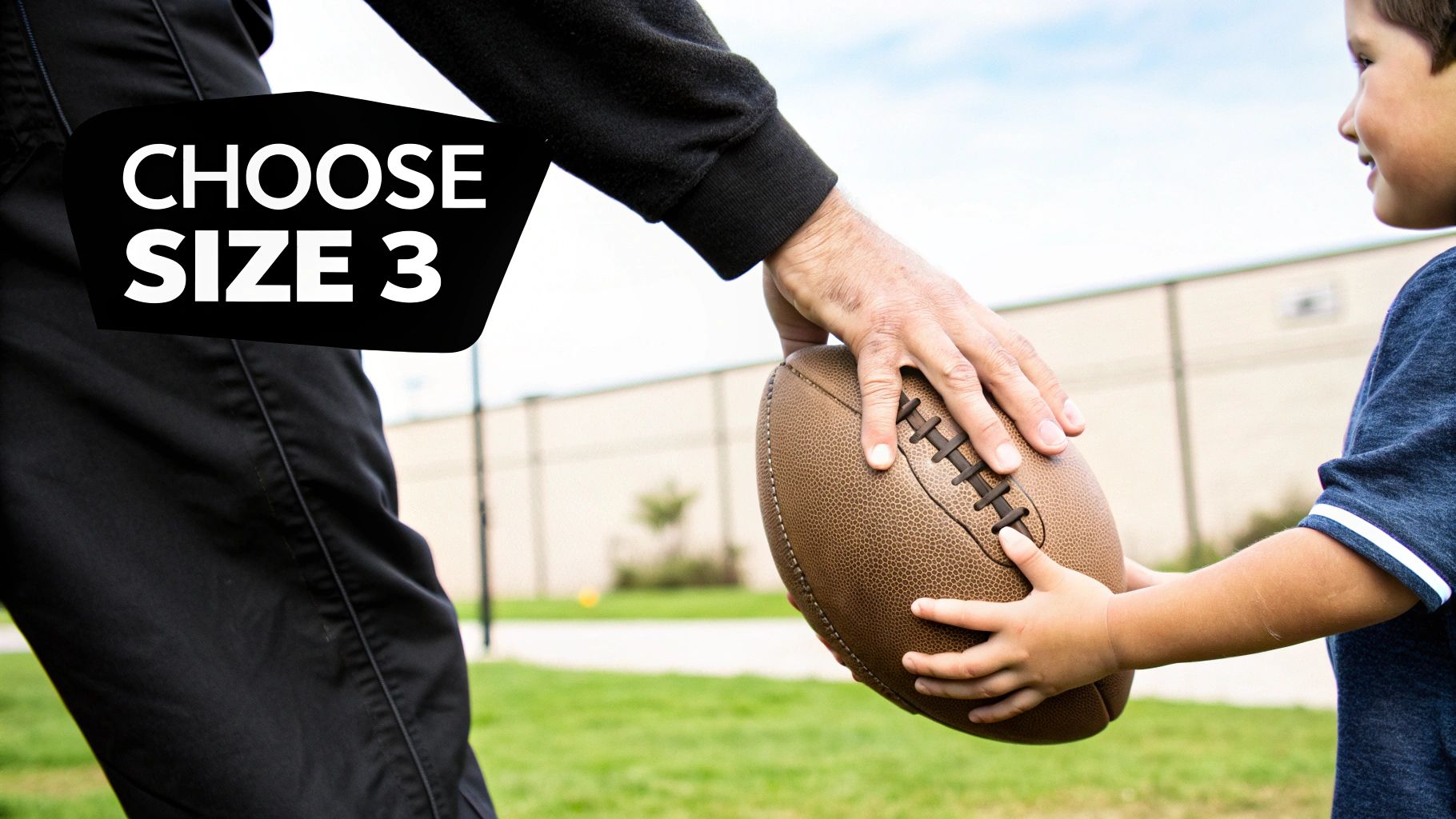
Choosing the right size 3 football involves more than just picking the first one you see. While the size itself is standard, the materials, construction, and design can make a huge difference to a young player's game. The right ball will not only perform well but also withstand countless training sessions and kickabouts in the garden.
When you start looking, you’ll notice balls are made from various materials. Most modern training balls have a TPU (thermoplastic polyurethane) outer casing. This is a workhorse material—it’s tough, durable, and excellent at resisting scuffs and scrapes. Others might have a synthetic leather cover, which provides a softer touch that can be fantastic for building confidence in younger players learning to control the ball.
Materials and Construction Matter
How a size 3 ball feels and how long it lasts comes down to its construction. From the outer panels to the internal bladder, every component plays a role.
Here’s what to look out for:
- Outer Casing: As mentioned, TPU is your go-to for durability, perfect for regular use on grass or artificial turf. Synthetic leather offers a more premium feel but may show wear more quickly.
- Stitching: Machine-stitched balls are common, affordable, and ideal for casual play. For something more advanced, thermally bonded balls have seamless panels, which means they absorb less water and fly more predictably through the air.
- Bladder Type: This is the internal part that holds the air. A butyl bladder is fantastic at air retention, so you won’t be reaching for the pump every five minutes. In contrast, a latex bladder offers a softer feel and a better bounce but tends to lose air faster.
Choosing the right ball is often a trade-off between durability and feel. For a young player who's just starting out, a tough, machine-stitched ball with a butyl bladder is a brilliant low-maintenance choice that will stand up to plenty of use.
Finding the Perfect Ball for Your Player
Technical specifications aside, never underestimate the appeal of a great-looking ball. For a young fan, a ball featuring their favourite club’s crest can be all the motivation they need to get outside and practise. For clubs like Arsenal and Manchester United, a size 3 ball is often the first step towards a lifelong passion for the game.
Data shows that 42% of UK children aged 8-12 in academy systems use these balls every week to hone crucial skills like dribbling and passing. For a deeper look into the youth football market, you can find more insights on Mordor Intelligence.
Ultimately, the best size 3 football is the one that gets your child excited to play. Whether it's a top-tier training model or one in their team's colours, the right ball can make all the difference. To help you narrow down the options, feel free to explore our detailed guide on the best football training balls available today.
Fun Drills Using a Size 3 Football
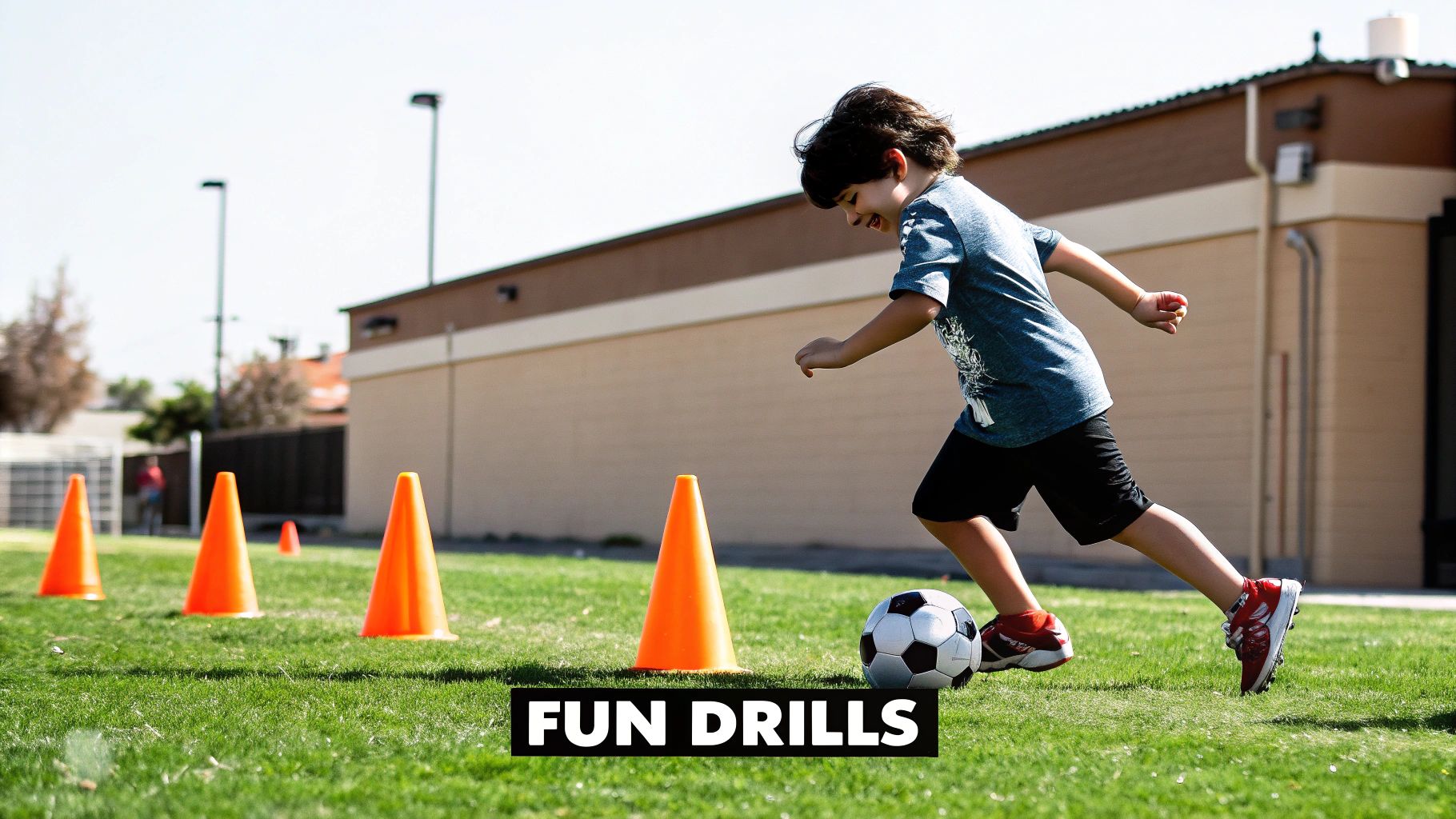 The best way to get a young player hooked on football is to make practice feel like play. Having the right size 3 football is the first step, but turning drills into fun games is what builds a lifelong passion for the sport. Forget boring laps; these simple activities teach core skills while keeping children engaged and excited.
These drills focus on the fundamentals—dribbling, first touch, and passing—and can be set up with items you likely already have. They are perfect for the back garden, a local park, or as part of an organised training session.
Dribbling Maze Challenge
This is a classic for a reason. It's all about close control and quick changes of direction—skills every young footballer needs. It teaches them to keep the ball close while navigating obstacles, just like in a real match.
How to set it up:
- Scatter a few cones (or jumpers and water bottles) in a random pattern across a small area.
- The mission is simple: dribble their size 3 football through the maze without touching any of the obstacles.
- Encourage them to use both feet and to try and keep their head up, even for a second or two at a time.
- Add a stopwatch to make it a race against the clock. A little friendly competition always adds to the fun.
This drill is brilliant because it closely mimics a real game situation where players must weave through defenders. The smaller size 3 ball makes it much easier for little feet to execute sharp, nimble turns. As they become more advanced, you can introduce drills like football crossing play drills to build their attacking awareness.
Passing Gates for Accuracy
Precision is what separates good players from great ones, and this drill hones a player's ability to pass the ball exactly where it needs to go. It’s a simple concept that has a huge impact on their passing technique.
Set up several "gates" by placing two cones a few feet apart. The aim of the game is for the player to pass their football cleanly through as many gates as they can from different distances and angles. This helps them learn to judge the weight and direction of their passes.
By turning accuracy into a target-hitting game, you take the pressure off making a "perfect" pass and replace it with the fun of scoring points. It's a fantastic way to build that all-important muscle memory for passing.
Ready to take these drills to the next level? Add a target. Our range of mini goals at Soccerwares.com are perfect for finishing a dribbling run with a satisfying shot or as the ultimate target for the Passing Gates game. A goal provides a clear objective and makes any practice feel more like a real match.
How to Properly Care for Your Football
A good quality size 3 football can easily last a few seasons, but only with proper care. A little maintenance goes a long way, not just in extending the ball’s life but also in ensuring it performs correctly for your young player on the pitch.
Think of it this way: simple care protects your investment and keeps the ball in top condition.
Key Maintenance Tips
Taking a moment after a match or training session to give the ball a quick clean will prevent the material from cracking or losing its shape over time. It’s very simple.
- Clean It Properly: After a muddy game, wipe the ball down with a damp cloth to remove dirt and grit. Avoid harsh chemicals or abrasive cleaners, as they can damage the outer casing. Let it air dry naturally—never place it on a radiator or use direct heat.
- Inflate Correctly: A ball that’s rock-hard or too soft is difficult to play with and won’t perform as it should. Always inflate it to the manufacturer's recommended pressure, which is usually printed next to the valve. To get this spot on, check out our guide on the correct football pressure (PSI).
- Store It Sensibly: When not in use, keep your football indoors at room temperature. Extreme heat or cold can make the material brittle. Leaving it in a damp shed or the boot of a car for weeks is a surefire way to shorten its lifespan.
Common Questions About Size 3 Footballs
When you're new to the world of youth football, it's completely normal to have questions. Getting the right gear is a big first step, and understanding something as fundamental as a size 3 football can make all the difference.
This section answers some of the most common queries, clearing up confusion around when to move up a size and the difference between match and training balls, so you can feel confident in your choice.
When Should My Child Move to a Size 4 Ball?
Official guidance suggests moving up to a size 4 ball around the age of nine, but this isn't a strict rule. The best time to switch depends more on your child's physical development and confidence than their age.
Watch them play. If you notice your child is consistently striking the size 3 ball with significant power and control, it might be a good time to introduce a size 4 in training sessions. A gradual transition is often the smoothest path, allowing them to get used to the slightly bigger and heavier ball without disrupting their technique.
Is There a Difference Between Training and Match Balls?
Yes, there’s a definite difference, which mostly comes down to materials and durability.
- Training Balls: These are the workhorses. They're built to be tough, often with a hard-wearing TPU outer casing and machine-stitched panels designed to withstand endless drills on various surfaces.
- Match Balls: These are designed for performance on game day. They usually feature a softer synthetic leather cover and thermally bonded panels, which gives them a truer flight and a better feel. The trade-off is they are less durable and not intended for daily grind.
For a young player who is just starting out, a good quality training ball is more than sufficient for both practice and their weekend matches.
Can We Use a Size 3 Ball on Any Surface?
You can, but it’s not always the best idea. Using a standard football on rough, abrasive surfaces like concrete or old artificial turf will wear down its outer casing far more quickly than playing on grass.
If your child will be playing regularly on a hard court or in the street, look for a ball specifically marketed as a "street" or "durable" model. They are designed to withstand more punishment.
A ball's lifespan is directly linked to the surfaces it's used on. A standard grass ball might only last a few months on concrete, so choosing one designed for the environment is a smart move.
While buying a ball from a local shop is still a great option, the convenience of online retail is undeniable. Retailers like SoccerWares make it easy to find specialised gear, including custom Arsenal or Liverpool-branded size 3 balls for the dedicated young fan. You can even find modern tools like GPS trackers to monitor a young player’s progress. Learn more about the football retail market on mordorintelligence.com.
At SoccerWares, we are passionate about getting the right equipment into the hands of young players to help them fall in love with the game. Explore our full collection of youth footballs and training gear to give your child the perfect start on their football journey. Visit us today at https://soccerwares.com.